Antibiotic-Related Liver Injury: Hepatitis and Cholestasis Explained
 Sep, 4 2026
Antibiotic Liver Injury Type Estimator
This tool helps you explore how different types of antibiotic-induced liver injury present. Select your primary symptoms or hypothetical lab results to see which type of injury (Hepatocellular vs. Cholestatic) is more likely associated with those signs.
Select symptoms or enter lab values to see the potential liver injury pattern.
You take a course of antibiotics for a stubborn sinus infection or a urinary tract issue. A week later, you feel off-maybe your skin looks slightly yellow, or you’re exhausted in a way that sleep doesn’t fix. You might assume it’s just the lingering bug, but there’s another possibility: your liver is reacting to the medication. Antibiotic-related liver injury, also known as Drug-Induced Liver Injury (DILI), is a real and surprisingly common complication. In fact, studies show that antibiotics account for up to 64% of all drug-induced liver injury cases in intensive care settings. It’s not rare, and it’s not something to ignore.
This isn’t about scaring you off life-saving drugs. Antibiotics are still the gold standard for treating bacterial infections. But understanding how they can stress your liver helps you spot trouble early. The two main ways this happens are through hepatitis (inflammation of liver cells) and cholestasis (a blockage of bile flow). Knowing the difference, recognizing the signs, and knowing when to call your doctor can prevent minor discomfort from becoming a serious health event.
Why Antibiotics Stress Your Liver
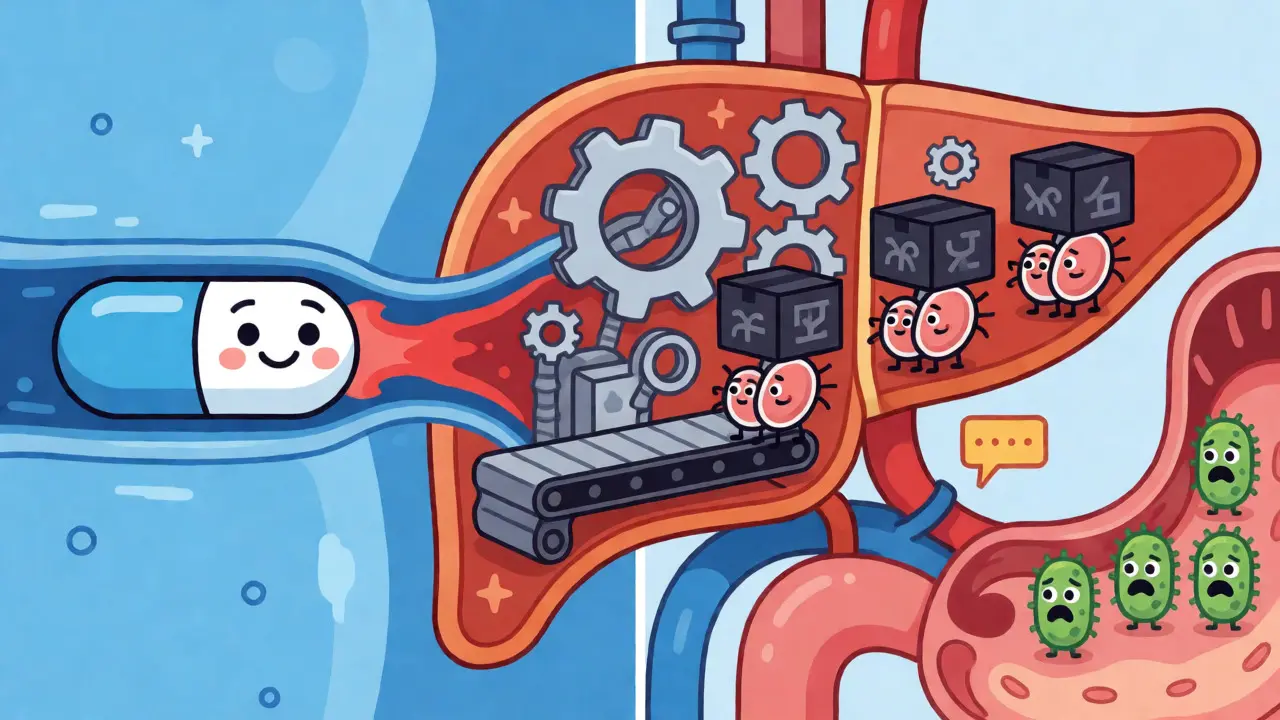
Your liver is your body’s primary chemical processing plant. When you swallow an antibiotic, it enters your bloodstream and heads straight to the liver to be broken down so your body can eliminate it. For most people, this process is smooth. But sometimes, the breakdown creates toxic byproducts, or the drug itself interferes with how liver cells function.
The mechanism often involves mitochondrial dysfunction. Mitochondria are the powerhouses of your cells. Some antibiotics inhibit their ability to burn fat for energy, leading to a buildup of reactive oxygen species-basically cellular rust-that damages liver tissue. Another major factor is your gut microbiome. Antibiotics don’t discriminate; they kill bad bacteria but also wipe out the good ones. This imbalance, called dysbiosis, can weaken the intestinal barrier, allowing toxins to leak into the portal vein and hit the liver directly. Research published in *Frontiers in Medicine* linked low levels of beneficial gut bacteria like *Faecalibacterium prausnitzii* to a 3.7-fold increased risk of liver injury.
Hepatitis vs. Cholestasis: Spotting the Difference
Not all antibiotic-related liver issues look the same. Doctors classify them based on which enzymes spike in your blood tests. This distinction matters because the symptoms and recovery paths differ.
| Feature | Hepatocellular Injury (Hepatitis) | Cholestatic Injury |
|---|---|---|
| Primary Enzyme Spike | Alanine Aminotransferase (ALT) | Alkaline Phosphatase (ALP) |
| R-Ratio | > 5 | < 2 |
| Common Symptoms | Fatigue, nausea, abdominal pain | Itching, dark urine, pale stools, jaundice |
| Typical Culprits | Isoniazid, Nitrofurantoin | Amoxicillin-Clavulanate, Erythromycin |
| Recovery Time | Usually weeks after stopping drug | Can take months due to bile duct healing |
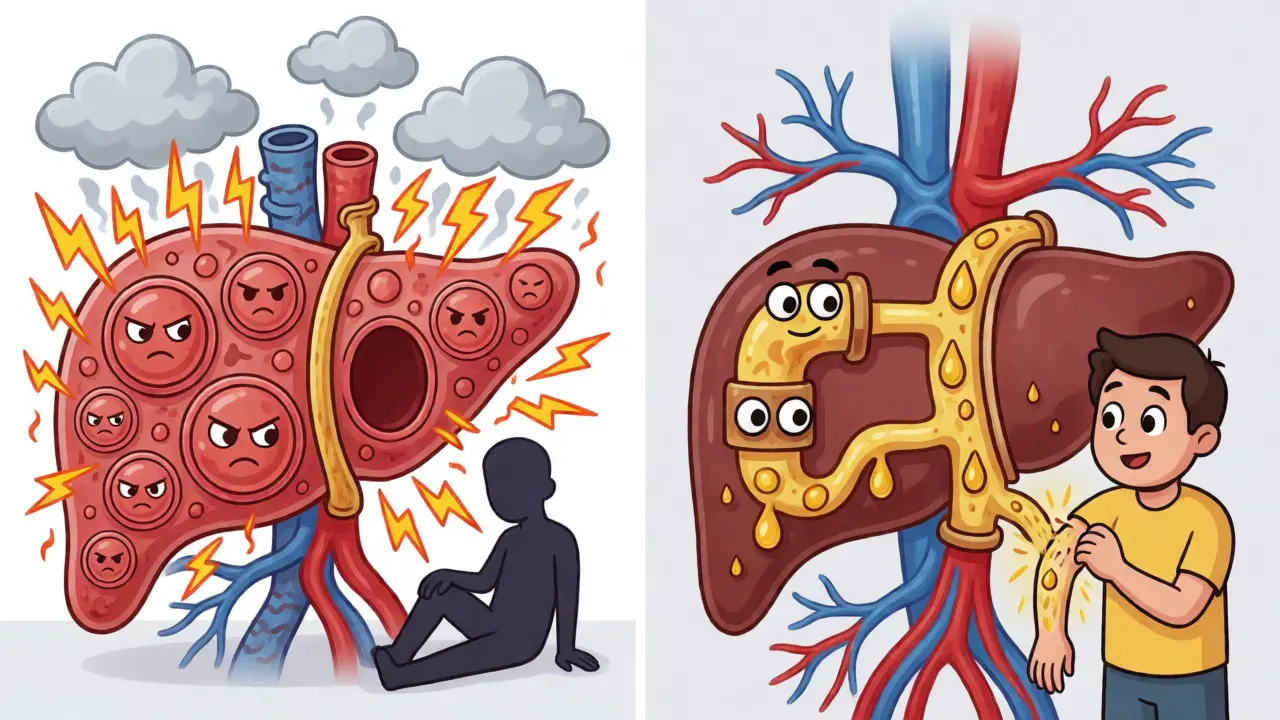
In hepatocellular injury, the liver cells themselves are inflamed or dying. Think of it as a bruise on the inside. You’ll likely feel tired, maybe nauseous, and have some tenderness under your right ribs. Blood tests will show high ALT levels. If the R-ratio (a calculation doctors use) is greater than 5, it’s classified as hepatocellular.
Cholestatic injury is different. Here, the liver cells work fine, but the tiny tubes that carry bile get blocked or irritated. Bile backs up into the blood, causing itching (which can be intense), dark tea-colored urine, and pale, clay-colored stools. Jaundice (yellowing of eyes/skin) is more common here. Amoxicillin-clavulanate, one of the most prescribed antibiotics globally, is notorious for this type of injury, accounting for 70-80% of its liver-related side effects.
The Usual Suspects: Which Antibiotics Are Riskiest?
While any antibiotic *can* cause issues, some have higher population-attributable risks. According to the LiverTox database maintained by the NIDDK, certain classes stand out.
- Amoxicillin-Clavulanate: Often sold as Augmentin. It has the highest incidence of DILI among antibiotics, estimated at 15-20 cases per 100,000 prescriptions. The clavulanic acid component is often the culprit.
- Piperacillin-Tazobactam: Commonly used in hospitals for severe infections. Studies show a 28.7% incidence of liver injury in ICU patients receiving this combo for seven days or more.
- Fluoroquinolones (e.g., Ciprofloxacin): These tend to cause mixed patterns of injury. While less frequent than amoxicillin-clavulanate, the onset can be rapid, sometimes within 1-2 weeks.
- Nitrofurantoin: Used for UTIs. It carries a moderate risk, particularly with long-term use, and can cause chronic liver damage if not caught early.
Duration matters. Shiraishi et al. (2024) found that antibiotic courses lasting seven days or longer increase the likelihood of liver injury by 3.2 times compared to shorter courses. If you’re on a prolonged regimen, vigilance is key.
Symptoms That Should Trigger a Call
Many cases of antibiotic-related liver injury are asymptomatic, detected only via routine blood work. However, when symptoms do appear, they can mimic other conditions. Don’t dismiss these signs as "just feeling under the weather":
- Unexplained Fatigue: Not just being sleepy, but a deep exhaustion that doesn’t lift after rest.
- Nausea and Loss of Appetite: Food suddenly seems unappealing, or smells trigger queasiness.
- Dark Urine: If your urine looks like cola or strong tea despite drinking plenty of water.
- Jaundice: Yellow tint in the whites of your eyes or skin.
- Abdominal Pain: Specifically in the upper right quadrant, under the rib cage.
- Itching: Generalized itching without a rash, often worse at night.
If you experience these while on antibiotics, contact your prescriber immediately. Do not stop taking the medication abruptly unless advised, as untreated infection poses its own risks, but seek guidance quickly.

Diagnosis and Monitoring Protocols
How do doctors confirm it’s the antibiotic? They rely on the "rule of exclusion." Since critically ill patients often have multiple reasons for liver enzyme elevation (like sepsis or heart failure), pinpointing the drug requires careful timing analysis.
The American Association for the Study of Liver Diseases (AASLD) suggests specific thresholds for concern. Generally, if ALT exceeds five times the upper limit of normal, or if ALP exceeds two times the upper limit with symptoms, discontinuation of the drug is recommended. Baseline liver function tests before starting high-risk antibiotics are ideal. For those on broad-spectrum IV antibiotics in hospital settings, weekly monitoring is standard practice.
Genetics play a role too. Emerging research highlights Human Leukocyte Antigen (HLA) associations. Certain genetic markers make individuals more susceptible to idiosyncratic reactions. While routine genetic testing isn’t yet standard for every prescription, it explains why one person tolerates a drug perfectly while their sibling develops jaundice.
Managing Recovery and Prevention
The good news? Most cases resolve once the offending agent is stopped. Mild elevations often normalize within weeks. Cholestatic injuries can take longer-sometimes months-to fully clear because bile ducts heal slowly.
Supportive care includes hydration and avoiding alcohol, which adds extra stress to the liver. Some clinicians recommend probiotics to help restore gut flora, though evidence is still evolving. Clinical trials (such as NCT05217834) are currently investigating whether specific probiotic strains can mitigate liver injury by preserving the gut-liver axis.
For future prescriptions, inform your doctor about any past liver issues. If you’ve had DILI from one antibiotic, you may need to avoid that entire class or structurally similar drugs. Pharmacogenomics-the study of how genes affect drug response-is advancing rapidly. Experts predict that within 5-7 years, personalized risk assessments could reduce DILI incidence by 30-40%, allowing doctors to choose the safest option for your specific biology.
How common is antibiotic-related liver injury?
It is relatively uncommon but significant. Amoxicillin-clavulanate causes liver injury in about 15-20 out of every 100,000 prescriptions. In hospital ICU settings, the rate can be much higher, affecting up to 28% of patients on certain broad-spectrum combinations for extended periods.
Can I take antibiotics again if I had liver injury before?
Yes, but with caution. Your doctor will likely avoid the specific antibiotic that caused the problem and potentially others in the same class. They may choose a different mechanism of action or monitor you more closely with blood tests during the new course.
What does cholestasis feel like?
Cholestasis primarily causes intense itching, often all over the body. Other signs include dark urine, pale stools, and yellowing of the skin or eyes (jaundice). Unlike hepatitis, you might not feel much abdominal pain initially.
How long does it take for liver enzymes to return to normal?
For mild hepatocellular injury, enzymes often normalize within 1-4 weeks after stopping the drug. Cholestatic injury can take several months to fully resolve because the bile ducts require time to repair.
Are natural supplements safe to take with antibiotics?
Not always. Some herbal supplements (like green tea extract or kava) can also stress the liver. Combining them with antibiotics might increase the risk of injury. Always check with your pharmacist before adding supplements during antibiotic therapy.
Aliyu Summaiyya
September 5, 2026 AT 15:1764% in ICU?? that seems way to high for general pop but i guess critcal patients are diffrent. still, my doc never mentions this stuff when he prescribes amoxi-clav. feels like we are just guinea pigs waiting for the liver to give out. its not just "feeling off", its actual organ damage and nobody talks about it enough.
Michelle Wright
September 6, 2026 AT 09:56Stop blaming the meds. It's the modern diet and alcohol use that wrecks livers, not a few pills. People want excuses for their poor lifestyle choices instead of taking responsibility for their own health decisions.
James Clarke
September 6, 2026 AT 21:35I think both perspectives have merit here!! The article highlights a real physiological mechanism with mitochondrial dysfunction and gut dysbiosis, which is fascinating science... At the same time, lifestyle factors absolutely play a huge role in baseline liver resilience... Maybe it isn't an either/or situation but rather a cumulative load on the organ?? We should definitely appreciate the research while also encouraging healthy habits for everyone involved... Its all connected ultimately!!!
Paige! :) Bremer
September 8, 2026 AT 00:04It is so important to know these signs because I had a friend who took antibiotics for a bad ear infection and she started feeling really tired and her eyes looked a little yellow after a week or two and she thought it was just the stress from work but it turned out to be her liver reacting to the medicine and if she hadn't gone back to the doctor they might have missed it until it got much worse and now she always tells people to check their urine color and look at their skin in good light because sometimes the signs are very subtle and easy to ignore if you don't know what to look for specifically like dark tea colored urine or pale stools which are big red flags that something is wrong with how your body is processing the bile and it makes me feel better knowing there are ways to recover fully once you stop the medication and drink lots of water and avoid alcohol so please share this info with anyone who takes pills often because knowledge is power and safety first always.
Will Ryan
September 8, 2026 AT 17:52The existential dread of chemical dependency. We trade one death (infection) for another (organ failure). The liver bears the sin of our survival instinct. Idiosyncratic reactions are fate's cruel joke.
Emily Hinckley
September 10, 2026 AT 11:17🙄 Another fear-mongering piece. 🤡 Most people tolerate antibiotics fine. 📉 Over-medicalizing normal bodily responses. 💊 Just take the pill. 😑
James Ego
September 12, 2026 AT 04:04I appreciate the nuance. It’s valid to be cautious without being alarmist. Let’s keep the discussion respectful and focused on patient education rather than blame.
Equipment Strategy Strategy
September 13, 2026 AT 06:55One must consider the pharmacokinetic variability inherent in human populations Furthermore the hepatic clearance rates vary significantly based on CYP450 enzyme polymorphisms which dictates the half-life of these antimicrobial agents Therefore monitoring protocols must be personalized rather than standardized across all demographics This approach ensures optimal therapeutic outcomes while minimizing adverse events