Antitrust Issues in Generic Substitution: Legal Concerns and Enforcement
 Jul, 30 2026
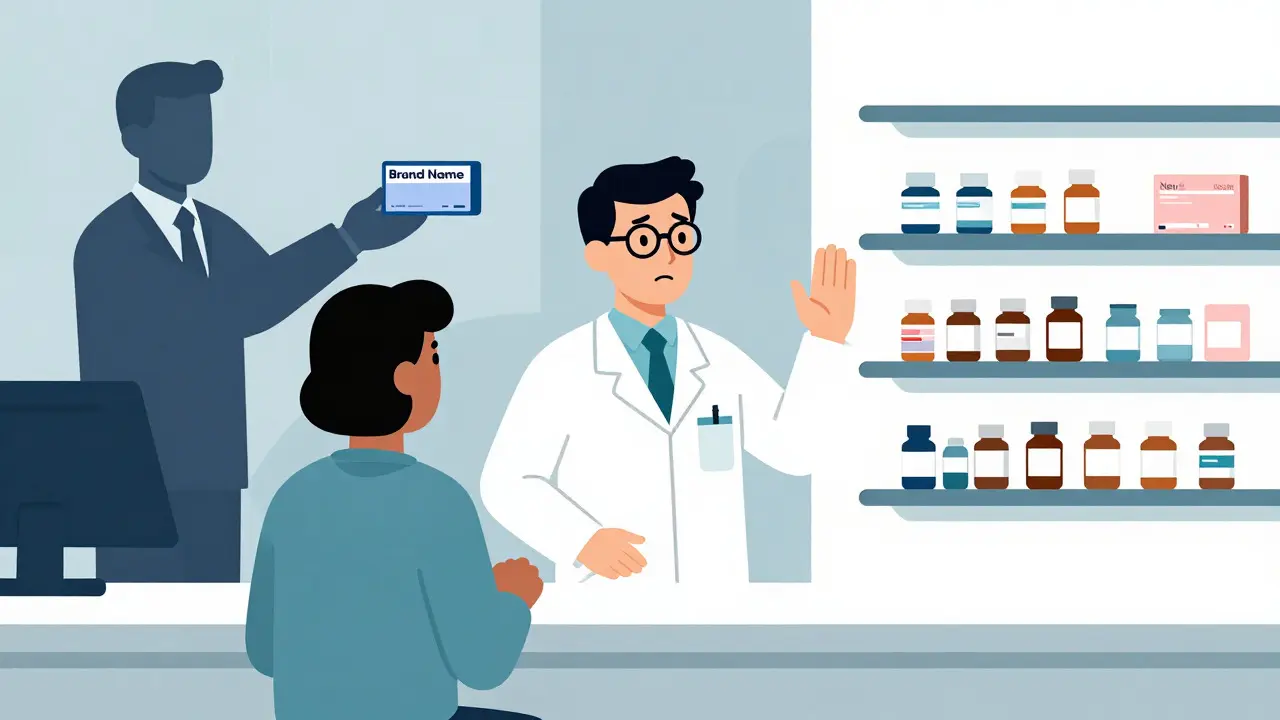
Imagine your doctor prescribes a medication you’ve taken for years. You walk into the pharmacy, expecting to pay a fraction of the original price because a generic version is available. Instead, the pharmacist tells you there is no generic option. Why? Because the brand-name manufacturer quietly pulled the old drug from shelves and replaced it with a slightly tweaked version just days before the patent expired. This isn’t a glitch; it’s a calculated strategy known as product hopping, and it sits at the center of a growing legal battle over antitrust issues in generic substitution.
The promise of lower drug prices hinges on state laws that allow pharmacists to automatically substitute generic drugs for brand-name prescriptions. But when manufacturers manipulate these systems to block competition, they don’t just hurt consumers-they violate the core principles of fair market competition. Understanding how these tactics work, why courts are divided, and what regulators are doing about them is crucial for anyone navigating the complex landscape of pharmaceutical pricing and law.
How Product Hopping Blocks Generic Competition
To understand the legal conflict, we first need to look at the mechanism itself. The modern framework for generic drugs was established by the Hatch-Waxman Act of 1984. This legislation created a pathway for generic manufacturers to get approval without repeating costly clinical trials, provided their drug was bioequivalent to the brand name. In return, innovator companies received extended patent protections. The system worked well until brands realized they could exploit loopholes to delay generic entry indefinitely.
The most common tactic is "hard switching" or product hopping. Here’s how it plays out in real life:
- The Setup: A brand-name drug approaches its patent expiration date. Generic competitors are lined up to enter the market immediately after.
- The Switch: Weeks or months before the patent expires, the brand manufacturer introduces a new formulation-perhaps an extended-release version (XR) instead of immediate-release (IR), or a different dosage form like a film instead of a tablet.
- The Withdrawal: Crucially, the company stops selling the original formulation. They withdraw it from the market entirely.
- The Blockade: State substitution laws typically only allow pharmacists to swap generics for the exact drug prescribed. If the original drug is gone, the automatic substitution chain breaks. Patients must see their doctor again to get a new prescription for the new formulation, which is protected by a fresh patent.
This strategy effectively resets the clock on competition. Even if a generic version of the old drug exists, patients rarely switch back due to the hassle of getting a new prescription and potential insurance hurdles. The brand maintains its monopoly, and prices stay high.
Key Legal Precedents: The Court Split
For years, courts were inconsistent in how they treated these practices. Some judges viewed product hopping as legitimate innovation, arguing that companies have a right to improve their products. Others saw it as an anticompetitive maneuver designed solely to stifle generics. This split reached a critical juncture with two landmark cases.
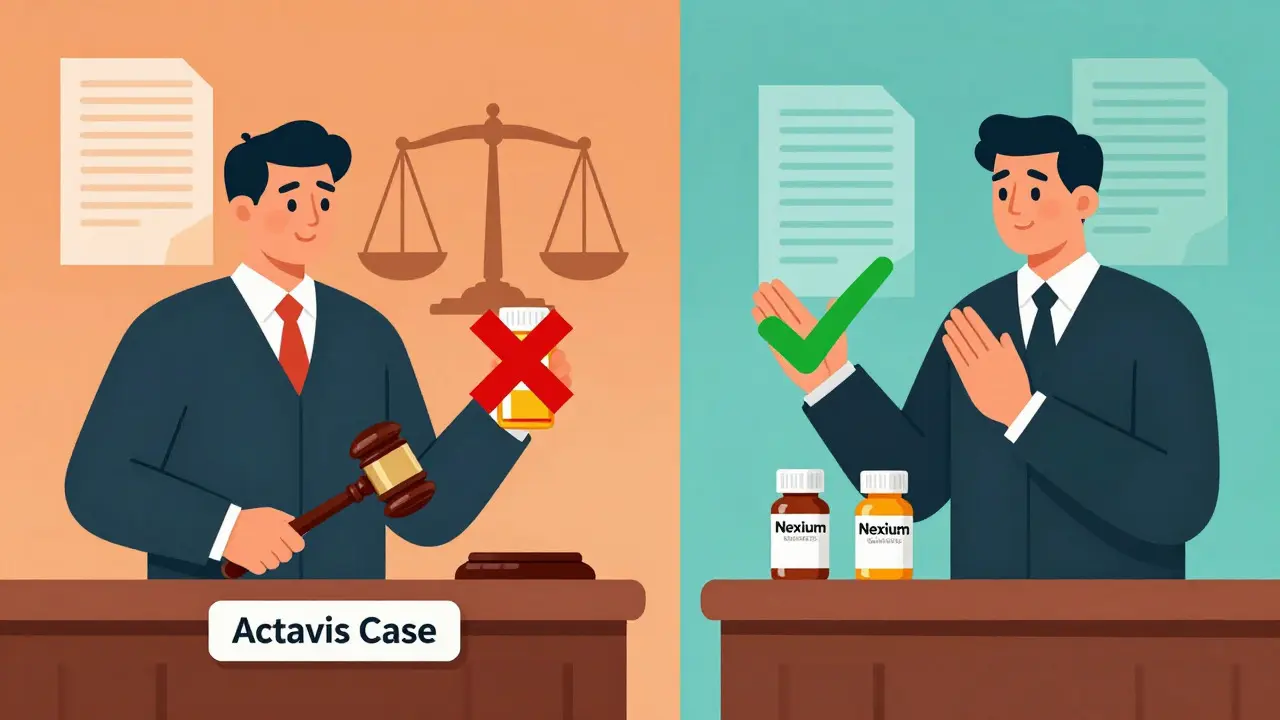
In New York v. Actavis (2016), the Second Circuit Court of Appeals delivered a decisive blow to hard switching. The case involved Actavis’s Alzheimer’s drug, Namenda. As the patent for Namenda IR neared expiration, Actavis introduced Namenda XR and withdrew the IR version just 30 days before generic entry. The court ruled this conduct exclusionary. Judge Robert Katzmann wrote that by withdrawing the original product, Actavis prevented generic manufacturers from relying on state substitution laws, which he called "the only cost-efficient means of competing available to generic manufacturers." The court issued an injunction requiring Actavis to keep selling the older drug for 30 days post-generic entry.
Contrast this with In re Nexium Antitrust Litigation (2009). There, AstraZeneca switched patients from Prilosec to Nexium but kept Prilosec available on the market. The court dismissed antitrust claims, viewing the introduction of a new product as procompetitive. The key distinction? Availability. When the original drug remains purchasable, courts often side with the brand. When it vanishes, the scales tip toward antitrust liability.
| Case | Drug Involved | Tactic Used | Original Drug Available? | Court Ruling |
|---|---|---|---|---|
| New York v. Actavis (2016) | Namenda | Withdrawed IR, launched XR | No | Anticompetitive; Injunction granted |
| In re Nexium (2009) | Prilosec/Nexium | Launched Nexium, kept Prilosec | Yes | Procompetitive; Claims dismissed |
| FTC v. Reckitt Benckiser (2019) | Suboxone | Disparaged tablets, pushed films | Initially Yes, then coerced switch | Coercive; Settlement reached |
Beyond Formulation: REMS Abuse and Disparagement
Product hopping isn’t limited to changing pill shapes or release mechanisms. Manufacturers also exploit regulatory frameworks to block generics. One major hurdle is the Risk Evaluation and Mitigation Strategy (REMS). For certain high-risk drugs, the FDA requires a safety program to ensure proper handling. To test a generic for bioequivalence, manufacturers need samples of the brand-name drug. Often, these samples are restricted under REMS programs.
Brand companies sometimes collude with generic firms or use REMS restrictions to deny sample access, effectively locking out competition. Professor Michael A. Carrier noted in his 2017 analysis that more than 100 generic firms complained about sample access issues. A study of 40 drugs under restricted access programs estimated that this barrier cost consumers over $5 billion annually. The FTC has increasingly scrutinized these arrangements, viewing them not as safety measures but as artificial barriers to entry.
Another tactic involves disparagement campaigns. In the Suboxone case, the brand manufacturer allegedly spread fabricated safety concerns about the tablet version while promoting the film version. The FTC found this constituted a coercive measure that prevented patients from making a real choice. This led to settlements in 2019 and 2020, signaling that misleading marketing combined with supply manipulation can trigger antitrust enforcement.
The Financial Stakes: Billions Lost to Delayed Entry
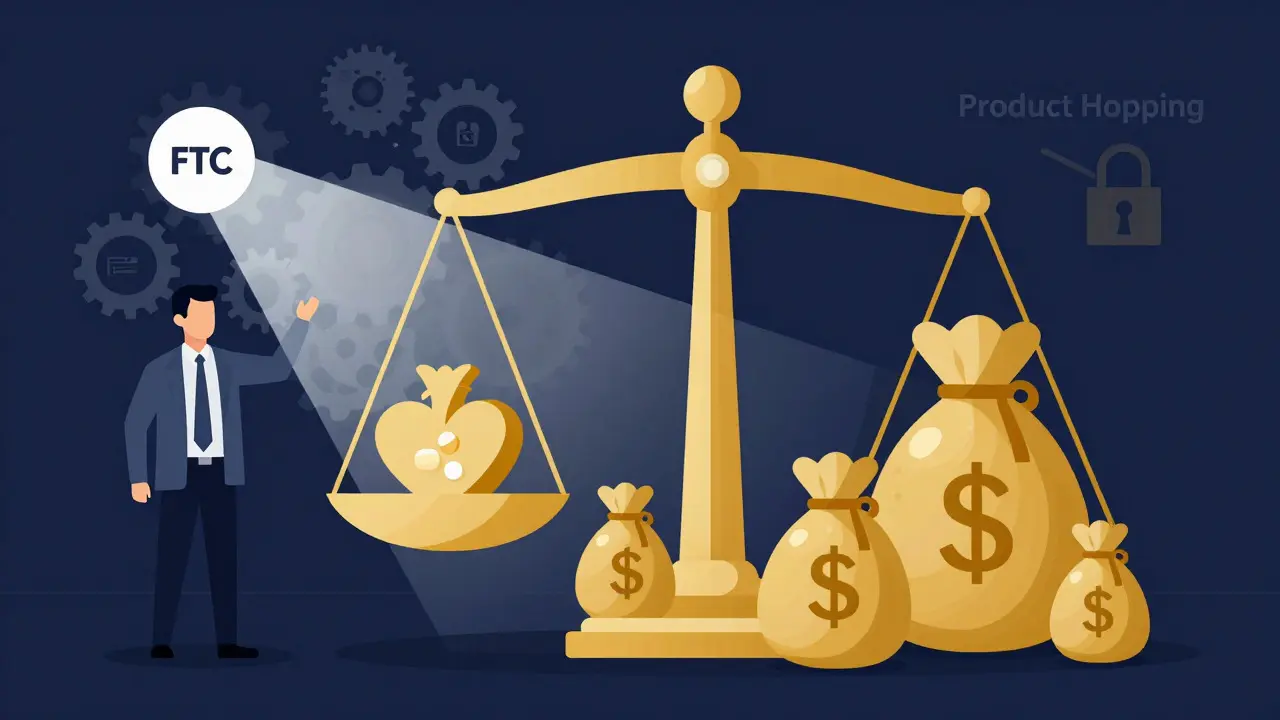
Why do companies go to such lengths? The financial rewards are massive. When generics enter the market freely, prices typically drop by 80-90% within months. By delaying this entry through product hopping, brands maintain monopoly pricing for years. The FTC’s October 2022 report highlighted staggering figures: Revlimid’s price increased more than 300% over 20 years due to delayed generic competition. An estimated $167 billion was wasted on just three drugs-Humira, Keytruda, and Revlimid-because generics entered the U.S. market much later than in the European Union.
These aren’t abstract numbers. They represent billions paid by taxpayers, insurers, and patients for drugs that should have been affordable. The FTC concluded that product hopping strategies often lack any procompetitive justification. They don’t offer significant therapeutic improvements; they merely create new patent protections to shield revenue streams.
Enforcement Actions and Regulatory Shifts
Regulators are waking up to these tactics. Under Chair Lina Khan, the Federal Trade Commission (FTC) has renewed its focus on pharmaceutical antitrust violations. The agency’s 2022 report outlined actions taken over the past 15 years, emphasizing a shift toward aggressive litigation and legislative advocacy. The FTC is now challenging product hopping not just in court but by pushing state legislatures to strengthen substitution laws.
The Department of Justice (DOJ) has also stepped up, pursuing criminal charges against generic manufacturers for price-fixing cartels. Teva Pharmaceuticals paid a $225 million criminal penalty-the largest ever for a domestic antitrust cartel-in 2023. While this targets generic collusion, it reflects a broader crackdown on market manipulation across the board.
State attorneys general remain vital allies. New York’s AG secured the initial injunction in the Actavis case, setting a precedent that other states followed. However, enforcement remains uneven. As legal scholar Peter H. Jones noted, some courts still allow product hopping schemes to continue, creating a patchwork of legal outcomes that benefits sophisticated corporations with deep pockets.
What Comes Next for Generic Substitution Laws?
The future of antitrust enforcement in this space depends on three factors: judicial consistency, legislative reform, and regulatory vigilance. Courts need to recognize that withdrawing a drug before generic entry is inherently suspect. Legislators must clarify that state substitution laws protect consumer choice, not just pharmacist convenience. And regulators like the FTC must continue to expose hidden tactics like REMS abuse and covert supply agreements.
For patients, the message is clear: your right to affordable medicine is under constant pressure. But thanks to landmark rulings and increased scrutiny, the tools to fight back are strengthening. The next decade will likely see more lawsuits, stricter regulations, and potentially federal laws that close the loopholes currently exploited by brand-name manufacturers.
What is product hopping in the pharmaceutical industry?
Product hopping is a strategy where a brand-name drug manufacturer introduces a slightly modified version of a drug (like a new dosage or delivery method) just before the original patent expires, then withdraws the original formulation. This blocks pharmacists from automatically substituting cheaper generic versions, forcing patients to switch to the new, patented product and maintaining high prices.
How does the Hatch-Waxman Act relate to generic substitution?
The Hatch-Waxman Act of 1984 established the legal framework for generic drug approval. It allows generics to enter the market once patents expire, provided they are bioequivalent to the brand name. It also grants patent extensions to innovators. However, manufacturers have exploited gaps in this law to delay generic entry through tactics like product hopping, undermining the act’s goal of affordable medicines.
Why did the court rule against Actavis in the Namenda case?
In New York v. Actavis, the court ruled that Actavis’s withdrawal of the original Namenda IR formulation before generic entry was anticompetitive. By removing the original drug, Actavis prevented generic manufacturers from using state substitution laws to compete efficiently. The court found this tactic excluded competition rather than offering genuine innovation.
What role does the FTC play in enforcing antitrust laws for drugs?
The Federal Trade Commission (FTC) investigates and prosecutes anticompetitive practices in the pharmaceutical industry. Recently, under Chair Lina Khan, the FTC has intensified efforts against product hopping and REMS abuse. The agency uses litigation, settlements, and policy reports to challenge tactics that delay generic entry and keep drug prices artificially high.
Can generic manufacturers be held liable for antitrust violations?
Yes. While most attention focuses on brand-name manufacturers, generic companies can also face antitrust charges. For example, the DOJ pursued criminal cases against generic firms for price-fixing cartels. Teva Pharmaceuticals paid a $225 million penalty in 2023 for colluding to raise prices, showing that both sides of the market are subject to strict enforcement.
How much money is lost due to delayed generic entry?
Delayed generic entry costs consumers and taxpayers billions annually. Estimates suggest that $167 billion was wasted on just three drugs (Humira, Keytruda, and Revlimid) because generics entered the U.S. market much later than in Europe. Individual drug prices, like Revlimid, have increased over 300% due to these delays.
What is REMS abuse in the context of antitrust?
REMS (Risk Evaluation and Mitigation Strategies) are FDA-mandated safety programs for certain drugs. Brand manufacturers sometimes abuse these programs by restricting access to drug samples needed for generic testing. Without samples, generic companies cannot prove bioequivalence, effectively blocking market entry. The FTC views this as an artificial barrier to competition.