Autoimmune Medications & Immunosuppression: Risks, Complications, and Safety Guide
 Jul, 9 2026
Autoimmune Medication Risk & Monitoring Profile
Select a medication class or specific drug to view its associated complication risks, infection rates per 100 patient-years, and required monitoring protocols based on current rheumatology guidelines.
Drug Name
Risk LevelContext description goes here.
Primary Complications
Required Monitoring
You take your medication to stop your immune system from attacking your body. It works. Your joints stop hurting, your skin clears up, or your gut inflammation settles down. But there is a catch. By dialing down the immune response that causes your disease, you also lower the shield that protects you from infections and other health threats. This state is called immunosuppression, which is the reduction of the activation or efficacy of the immune system.
It’s not just a vague warning on a label. According to the CDC, about 5 million people in the U.S. are on these therapies, and that number is growing by 12% every year. The trade-off is real: you gain control over your autoimmune disorder, but you must actively manage the new risks that come with it. Ignoring them can turn a simple cold into a hospital stay. Knowing exactly what those risks are-and how to avoid them-is the difference between living well with your condition and struggling with preventable complications.
Understanding the Trade-Off: Why Immunosuppression Happens
Autoimmune diseases like rheumatoid arthritis, lupus, and Crohn's disease happen when your immune system gets confused. It thinks your own tissues are invaders. Medications designed to treat this don't just target the bad actors; they often calm down the entire immune army. Think of it like turning down the volume on a stereo because one speaker is screeching. You fix the noise, but now you can't hear the music as clearly either.
The goal of drugs like corticosteroids (such as prednisone) or biologics is to reduce inflammation and prevent permanent damage to organs and joints. However, this suppression means your body reacts slower to bacteria, viruses, and fungi. For most people, this isn't an immediate crisis. But if you get sick, your body might not fight it off quickly enough, leading to more severe illness. The key isn't to fear these medications, but to respect their power and monitor for specific side effects.
Drug Classes and Their Specific Complication Profiles
Not all immunosuppressants work the same way, and they don't carry the same risks. Grouping them all together as "dangerous" misses the nuance you need to stay safe. Different classes affect different parts of your immune system, leading to distinct complications.
- Corticosteroids (Prednisone, Budesonide): These are broad-spectrum suppressors. If you take more than 20 mg of prednisone daily for over two weeks, you are considered significantly immunocompromised. The risk lasts for about four weeks after you stop taking them. They increase susceptibility to almost all types of infections, including opportunistic ones like tuberculosis.
- JAK Inhibitors (Tofacitinib/Xeljanz, Baricitinib/Olumiant): These block specific pathways inside cells. While they offer mild overall immunosuppression, they have a unique signature risk: reactivation of herpes zoster (shingles). Clinical trials show 3 to 5 cases per 100 patient-years, compared to 1 to 2 for TNF inhibitors. They also carry a higher risk of blood clots and heart issues in older adults.
- Calcineurin Inhibitors (Cyclosporine, Tacrolimus): Often used in transplants but sometimes in severe autoimmune cases, these hit the kidneys hard. Between 25% and 40% of patients develop renal impairment within two years. Monitoring kidney function is non-negotiable here.
- mTOR Inhibitors (Sirolimus, Everolimus): These mess with cell growth signals. The big side effects are high cholesterol (hyperlipidemia affects 65-80% of users) and poor wound healing. If you need surgery, your doctor needs to know you're on these, as wounds may not close properly.
- IMDH Inhibitors (Azathioprine, Mycophenolate): These suppress bone marrow production. About 15-20% of patients see drops in white blood cells or platelets. You will need monthly blood tests to ensure your body is still making enough protective cells.
- Biologics (Adalimumab/Humira, Rituximab/Rituxan): These are targeted missiles. Rituximab, for example, wipes out B-cells. This leaves you severely immunocompromised for up to six months after treatment. It specifically raises the risk of Hepatitis B reactivation (1.8% incidence) and rare brain infections like PML.
Infection Risk: Comparing the Big Players
If you are choosing between treatments, understanding the infection data helps you weigh the options. It’s not just about "safe" vs. "unsafe." It’s about which type of infection you are most likely to face.
| Drug Class / Example | Primary Complication Risk | Infection Rate (per 100 patient-years) | Key Monitoring Requirement |
|---|---|---|---|
| TNF Inhibitors (Adalimumab) | Serious bacterial infections | 15.2 | Screen for TB before starting |
| JAK Inhibitors (Tofacitinib) | Shingles, Blood Clots | 18.7 | VZV antibody testing, Lipid panel |
| B-Cell Depleters (Rituximab) | Hepatitis B Reactivation, PML | Variable (High severity) | IgG levels every 3 months |
| Methotrexate | Liver toxicity, Mild infection | ~1.2x general population | Monthly CBC, Liver enzymes |
| Hydroxychloroquine | Eye toxicity (rare) | No significant increase | Annual eye exam |
Notice that Methotrexate and Hydroxychloroquine sit at the safer end of the spectrum. Hydroxychloroquine shows minimal immunosuppression, making it a great first-line defense for milder conditions. Methotrexate, while requiring liver monitoring, only increases infection risk slightly above the general population. Biologics and JAK inhibitors offer stronger disease control but demand stricter vigilance.

The Vaccination Window: Timing Is Everything
This is where most people make mistakes. You cannot just walk into a clinic and get vaccinated while you are fully immunosuppressed. Your body won't build the antibodies. In fact, some live vaccines can cause the actual disease in suppressed patients.
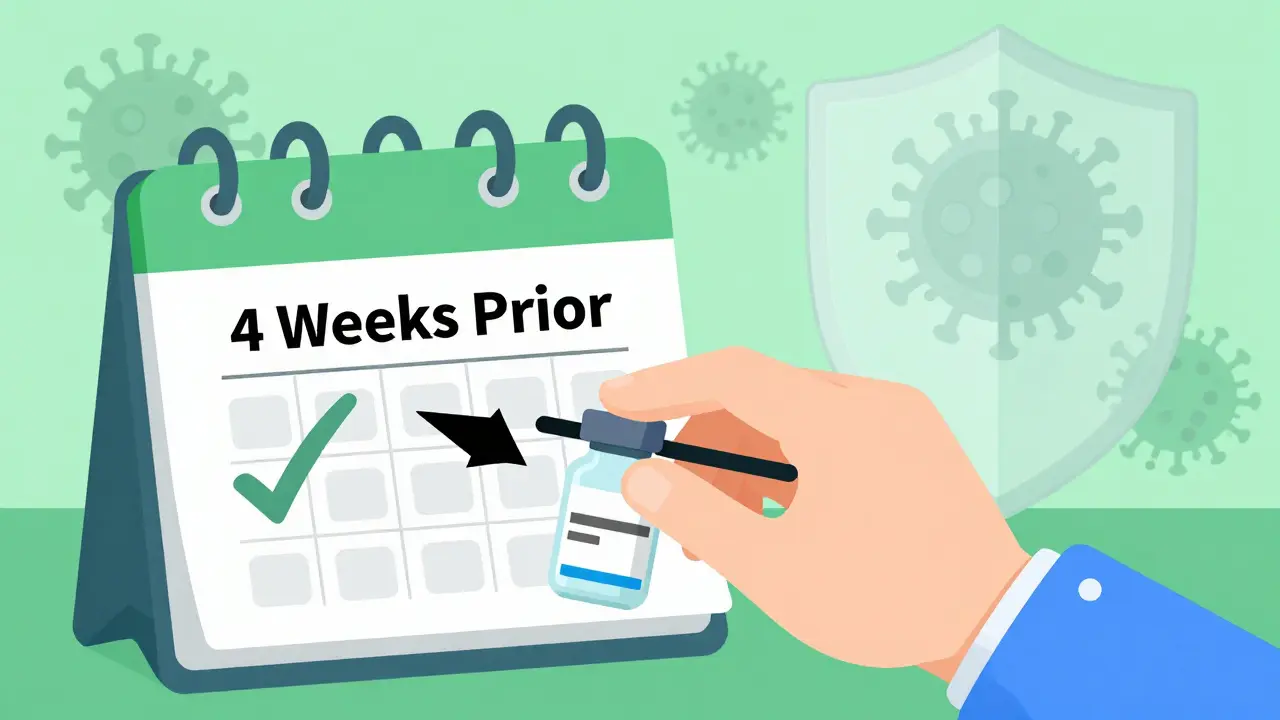
The golden rule? Get everything done before you start strong therapy. Dr. Emily Somers from the University of Michigan found that 68% of serious infections in immunosuppressed patients could be prevented simply by timing vaccines correctly. Specifically, you should complete all recommended vaccines at least four weeks before starting B-cell depleting therapy like Rituximab.
Here is the practical checklist:
- Pre-Treatment: Ask your rheumatologist for a "vaccine holiday" plan. Get the flu shot, pneumonia vaccine, shingles vaccine (Shingrix), and any catch-up shots.
- Confirmation: Four to eight weeks after vaccination, get your antibody titers checked. This proves your body actually responded. If it didn't, you might need a booster before starting meds.
- During Treatment: Avoid live vaccines (like the nasal flu spray or MMR) unless explicitly approved by your specialist. Inactivated vaccines (like the flu shot) are generally safe but may be less effective.
Monitoring Protocols: What Your Doctor Should Be Checking
You are the manager of your health team. Your job is to ensure the right checks are happening. The American College of Rheumatology (ACR) has moved away from generic advice to stratified monitoring. This means the tests you need depend entirely on the drug you take.
If you are on JAK inhibitors, you need annual varicella zoster virus (VZV) antibody testing to check your shingles immunity. If you are on B-cell depleting therapy, quantitative immunoglobulin levels should be checked every three months to ensure you aren't dropping too low. For corticosteroid users on high doses, twice-yearly TB screening (PPD test) and monthly blood counts are standard.
Don't wait for symptoms. Many complications, like rising creatinine levels from calcineurin inhibitors or dropping white blood cells from azathioprine, are silent until they become emergencies. Regular labs are your early warning system.
Real-World Experiences: Lessons from Patients
Data tells us the odds, but stories tell us the impact. On forums like MyRheumaticLife.org and Reddit’s r/AnkylosingSpondylitis, patients share raw experiences that highlight common pitfalls.
One patient described getting shingles that lasted four months after their second Rituximab infusion. "My rheumatologist didn't warn me about the 6-month window of highest risk," they wrote. This highlights a communication gap. Another user on PatientsLikeMe shared how liver enzyme spikes on Methotrexate forced a switch to Sulfasalazine, which was safer for their liver but less effective for joint pain.
These stories underscore a critical point: satisfaction and safety are linked. A survey by the Arthritis Foundation found that 42% of patients discontinued biologics due to infection concerns. Meanwhile, Drugs.com reviews show Hydroxychloroquine has the highest safety satisfaction rating (7.8/10) compared to biologics (6.2/10). Understanding these real-world trade-offs helps you set realistic expectations with your doctor.
Malignancy Risks: Beyond Infections
Infection isn't the only long-term worry. Suppressing the immune system can allow abnormal cells to grow unchecked, leading to cancer. The European Medicines Agency (EMA) issued warnings in January 2023 regarding JAK inhibitors, noting a 1.44-fold increased risk of lymphoma and a 1.34-fold increased risk of lung cancer in patients over 65 who smoke.
This doesn't mean you should never take a JAK inhibitor. It means the decision requires a deeper conversation about your age, smoking history, and personal cancer risk. For many younger, healthy patients, the benefit of stopping rapid joint destruction outweighs the small absolute increase in cancer risk. But for older patients with comorbidities, the scale tips differently. Always discuss your personal malignancy risk profile with your specialist.
Future Directions: Precision Immunosuppression
The field is moving fast. The era of "blunt force" immunosuppression is fading. The FDA’s REMS program now mandates education for prescribers of JAK inhibitors, and insurance companies like Medicare require proof of infection prevention measures before approving biologics. This regulatory pressure is driving innovation.
New therapies in development focus on targeting specific immune pathways rather than shutting down the whole system. The NIH launched a $28 million consortium in 2023 to find biomarkers that predict individual infection risks. Imagine a future where a simple blood test tells your doctor exactly how much drug you can safely take without risking pneumonia. We are getting closer. Mayo Clinic’s AI prototype already showed a 22% reduction in serious infections in pilot studies by analyzing electronic health records to personalize dosing.
Until then, the best tool you have is knowledge. Understand your drug, know its specific risks, stick to your monitoring schedule, and never hesitate to ask your doctor, "What is my specific risk profile?" Your health depends on being an active participant, not just a passive recipient of care.
How long does immunosuppression last after stopping medication?
It depends heavily on the drug. Corticosteroids typically leave you immunocompromised for less than 4 weeks after discontinuation. However, B-cell depleting agents like Rituximab can suppress your immune system for up to 6 months or longer, as it takes time for your body to regenerate B-cells. JAK inhibitors usually clear from the system within days, but immune function recovery varies.
Can I get the shingles vaccine while on JAK inhibitors?
Ideally, you should receive the Shingrix vaccine at least 4 weeks before starting JAK inhibitors. If you are already on them, consult your doctor. Shingrix is an inactivated vaccine, so it is generally considered safe, but your immune response might be weaker. Some doctors recommend checking VZV antibody titers to see if you need a booster.
What are the signs of a serious infection in immunosuppressed patients?
Watch for fever (over 100.4°F or 38°C), chills, persistent cough, shortness of breath, painful urination, or unusual skin rashes. Because your immune system is dampened, you might not show classic signs of inflammation like redness or swelling. Any unexplained fatigue or feeling "off" warrants a call to your healthcare provider.
Is Methotrexate safer than biologics?
Generally, yes, regarding infection risk. Methotrexate causes moderate immunosuppression, with infection rates only about 1.2 times higher than the general population. Biologics and JAK inhibitors tend to have higher rates of serious infections. However, Methotrexate carries risks of liver toxicity and lung inflammation, so regular monitoring is still essential.
Do I need to avoid crowds or sick people completely?
You don't need to isolate yourself, but you should practice heightened hygiene. Wash hands frequently, wear masks in high-risk settings (like hospitals or crowded public transport during flu season), and avoid close contact with anyone showing signs of active infection. If someone in your household gets sick, try to separate spaces and wear a mask around them.