Fexofenadine and Fruit Juice: Why Your Allergy Med Isn't Working
 Aug, 14 2026
Fexofenadine Juice Interaction Calculator
Your Inputs
Calculating...
Please wait
Advice will appear here.
Select a beverage and time gap to see how it affects your allergy medication.
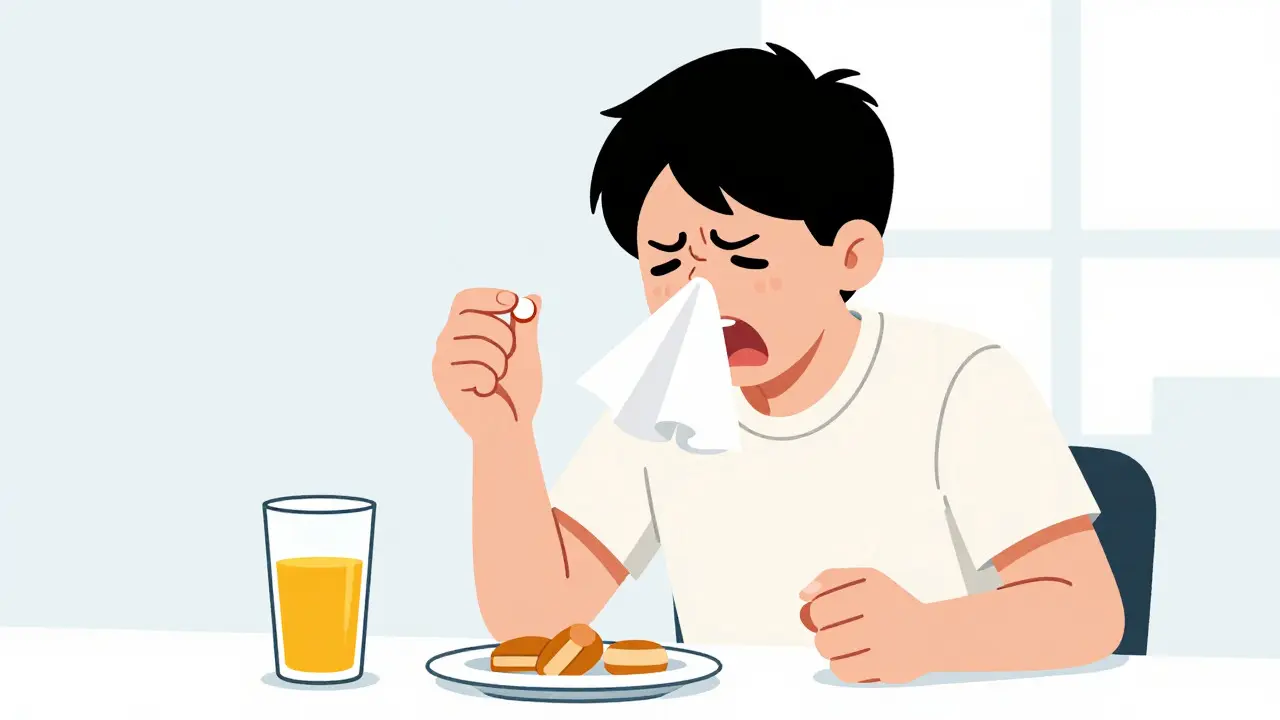
You take your Fexofenadine is a second-generation H1 antihistamine used to treat seasonal allergic rhinitis and chronic idiopathic urticaria without causing drowsiness. every morning. You’ve got your coffee, your toast, and that big glass of orange or apple juice you love. But lately, your sneezing hasn’t stopped. Your eyes are still itchy. You wonder if the medicine has stopped working. It hasn’t. The problem isn’t the drug; it’s what you’re drinking with it.
This isn’t just a minor side note in the instruction leaflet. It is one of the most significant food-drug interactions known in modern pharmacology. When you mix fexofenadine with certain fruit juices, you can lose up to 77% of the drug’s effectiveness. That means you might be taking a placebo instead of medicine, all because of a breakfast beverage choice.
The Science Behind the Interaction
To understand why this happens, we have to look at how your body absorbs medication. Most drugs pass through your intestinal wall by dissolving into fat cells or using specific protein channels called transporters. Fexofenadine relies heavily on these transporters to get from your gut into your bloodstream.
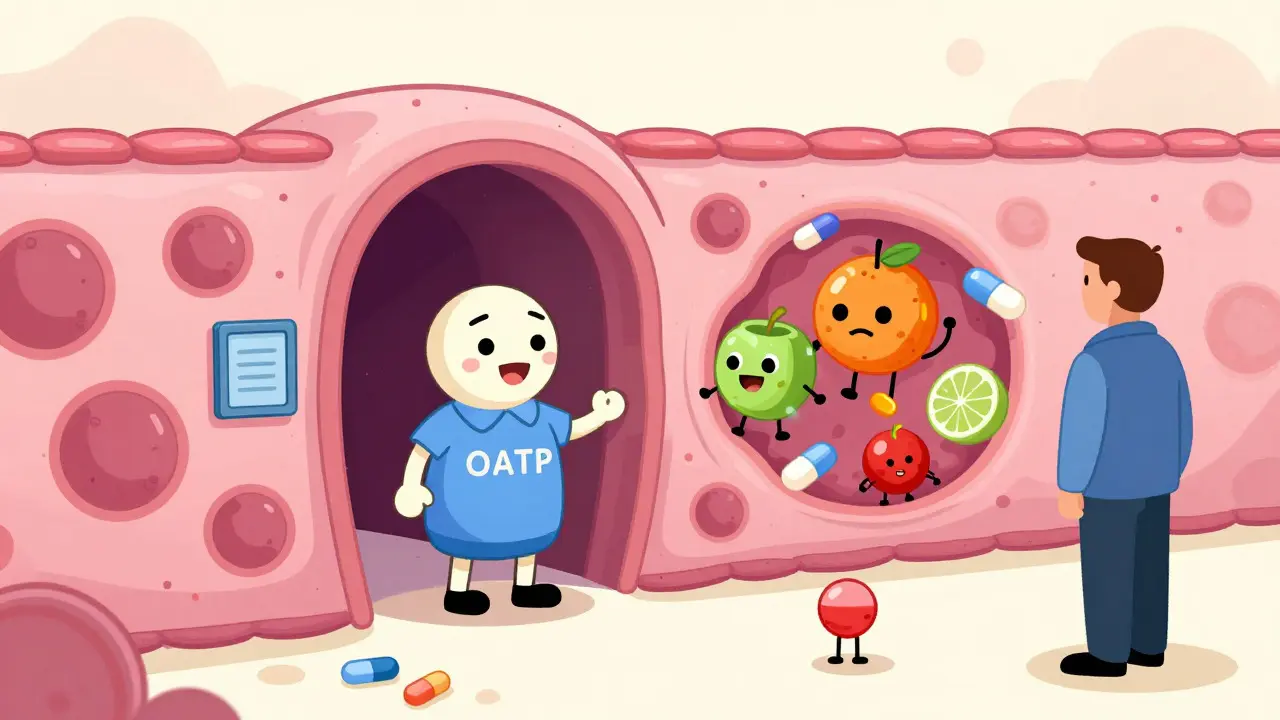
Specifically, fexofenadine uses proteins known as Organic Anion-Transporting Polypeptides (OATPs) are membrane transport proteins located in the intestine and liver that facilitate the uptake of various substances, including drugs like fexofenadine, into cells.. Think of OATPs as doormen who let guests into a building. Without them, fexofenadine stays outside in your gut and gets flushed out before it can help your allergies.
Certain compounds found in grapefruit, orange, and apple juices act like bouncers who kick the doormen out of their jobs. These compounds, primarily flavonoids like naringin and hesperidin, block the OATP transporters. When you drink juice, these inhibitors coat your intestinal lining. When you swallow your pill, the "doormen" are blocked. The drug cannot enter your system efficiently.
This mechanism is unique. Most people know about grapefruit juice interfering with enzymes (like CYP3A4) that break down drugs, which usually makes drugs *more* potent and dangerous. With fexofenadine, the opposite happens. The interaction prevents absorption, making the drug *less* effective. This discovery was made by researchers at the University of Western Ontario, led by Dr. Gail K. Dresser and Dr. David G. Bailey, in the early 2000s. Their work, published in Clinical Pharmacology & Therapeutics, changed how we understand food-drug interactions forever.
Which Juices Are the Culprits?
Not all juices are created equal when it comes to blocking fexofenadine. Research has quantified exactly how much each juice reduces the amount of drug in your blood (measured as Area Under the Curve, or AUC).
| Juice Type | Absorption Reduction (%) | Key Inhibitor Compound |
|---|---|---|
| Apple Juice | 77% | Phloridzin and other polyphenols |
| Orange Juice | 72% | Hesperidin |
| Grapefruit Juice | 67% | Naringin and Bergamottin |
| Water (Control) | 0% | None |
As you can see, apple juice is actually the worst offender, followed closely by orange juice. Grapefruit juice, while famous for drug interactions, is slightly less potent against fexofenadine than the others, though still highly problematic. Tomato juice, despite tomatoes being botanically fruits, does not significantly inhibit OATPs and is generally safe to consume near dosing time.
It is also important to note that concentration matters. Dilute juice still causes issues. Studies show that even half-strength grapefruit juice can reduce absorption by 23%. If you think watering it down makes it safe, you are likely mistaken.
Timing Is Everything: How to Avoid the Interaction
You don’t have to give up juice entirely. You just need to manage the timing. The inhibition of OATP transporters is temporary but persistent enough to matter. The effect lasts between 2 to 4 hours after consumption.
The FDA labeling for fexofenadine explicitly states: "Do not take with fruit juices." To be safe, follow this protocol:
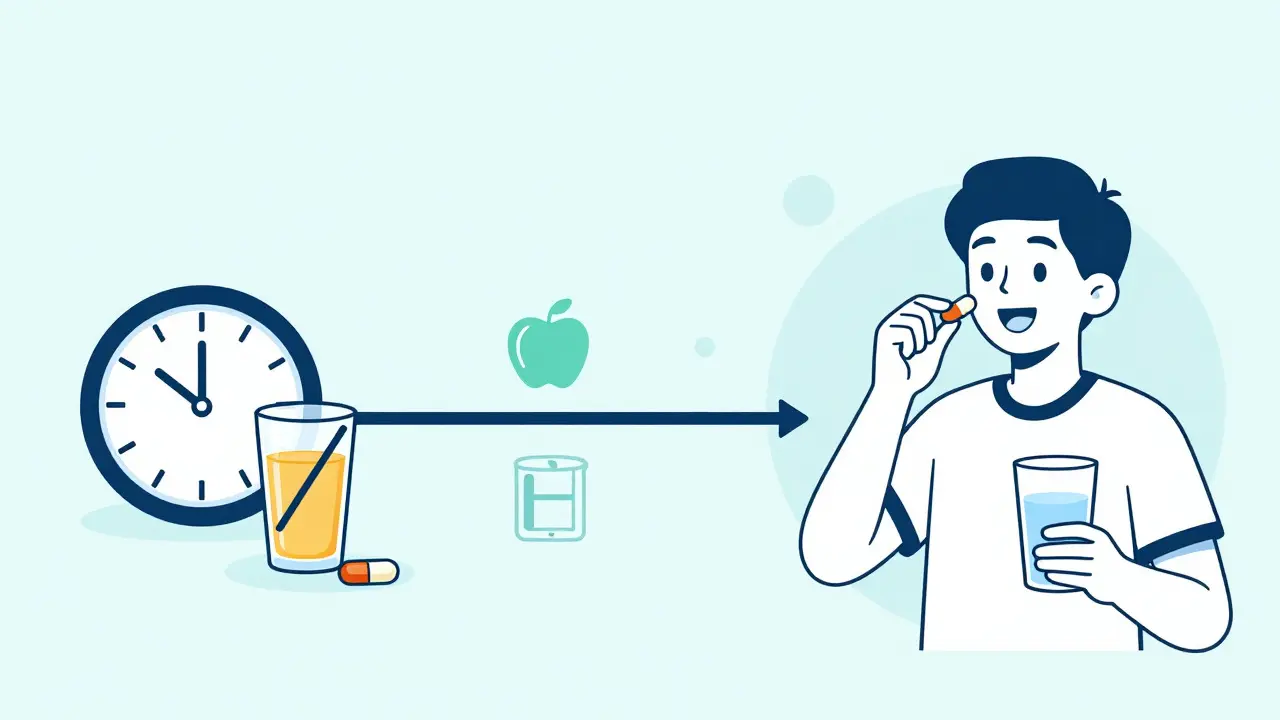
- Separate by 4 hours: Wait at least 4 hours after drinking grapefruit, orange, or apple juice before taking your fexofenadine.
- Wait after dosing: Do not drink these juices for 1 to 2 hours after taking your pill.
- Use water only: Always swallow the tablet with a full glass of plain water.
If you take your allergy medication in the morning, consider shifting your juice habit to lunch or dinner. Alternatively, switch your medication time to evening. Many users report better symptom control simply by ensuring there is a wide gap between their morning juice routine and their pill intake.
Does This Affect Other Antihistamines?
A common question is whether this applies to other popular allergy medications. The answer is no. This interaction is specific to fexofenadine due to its reliance on OATP transporters for absorption.
Cetirizine is a second-generation antihistamine sold under brand names like Zyrtec, which is absorbed differently and does not interact with fruit juices. and Loratadine is another non-sedating antihistamine marketed as Claritin, which also lacks the OATP dependency seen in fexofenadine. do not share this vulnerability. They are absorbed through different mechanisms that are not blocked by flavonoids in fruit juice. This distinction has been highlighted in marketing campaigns by competitors since 2015, noting that their products do not have this dietary restriction.
However, fexofenadine remains a top choice for many because it has the lowest risk of sedation among second-generation antihistamines. For patients who are sensitive to drowsiness, the trade-off of managing juice timing is often worth it.
Real-World Impact and User Experiences
In clinical trials, participants drank large volumes of juice (up to 1.2 liters) to prove the point. Some experts argue that typical consumption (one 8-ounce glass) might have a smaller impact. However, recent meta-analyses suggest that even moderate consumption can reduce efficacy by 35-45%, which is clinically significant for someone trying to control severe hay fever.
User forums and community discussions reflect this reality. On platforms like Reddit and the Asthma and Allergy Foundation of America forums, countless users describe the "aha!" moment when they realized their morning orange juice was neutralizing their medication. One common pattern emerges: patients take fexofenadine for years with no issues, start adding juice to their morning routine, and suddenly experience a return of symptoms. Once they separate the two, relief returns within days.
A survey by Sanofi found that 63% of fexofenadine users were unaware of this interaction, and 41% regularly consumed juice within an hour of dosing. This lack of awareness explains why so many people believe the drug "stopped working" over time.
Other Interactions to Watch
While fruit juice is the biggest culprit, it is not the only thing that affects fexofenadine. Keep these additional factors in mind:
- Antacids: Medications containing magnesium or aluminum (like Maalox or Mylanta) can bind to fexofenadine and reduce absorption. Take antacids at least 2 hours apart from your antihistamine.
- Green Tea: Emerging research suggests green tea may also inhibit OATP transporters, though data is less robust than for fruit juices. Caution is advised.
- Whole Fruit: Eating whole grapefruits or apples near dosing time can have similar effects, as the bioactive compounds are present in the flesh, not just the juice.
Conclusion: Small Change, Big Relief
The interaction between fexofenadine and fruit juice is a classic example of how biology dictates pharmacology. It is not a defect in the drug, nor is it a rare anomaly. It is a predictable chemical reaction that can be easily managed.
If your allergy symptoms are breaking through despite consistent use of fexofenadine, check your breakfast menu. Swap that morning juice for water, or move your juice consumption to later in the day. You might find that your medication works exactly as well as it did on day one.
Can I take fexofenadine with tomato juice?
Yes. Unlike grapefruit, orange, and apple juices, tomato juice does not contain high levels of the flavonoids that inhibit OATP transporters. It is generally considered safe to consume with fexofenadine.
How long does the fruit juice interaction last?
The inhibitory effect on OATP transporters lasts approximately 2 to 4 hours after consumption. To be safe, wait at least 4 hours after drinking juice before taking your dose, or wait 1-2 hours after taking your dose before drinking juice.
Does this interaction happen with Cetirizine or Loratadine?
No. Cetirizine (Zyrtec) and Loratadine (Claritin) are absorbed via different mechanisms that do not rely on OATP transporters. They are not affected by fruit juice consumption.
Is diluted juice safer to take with fexofenadine?
Not necessarily. Even dilute grapefruit juice (50% concentration) has been shown to reduce fexofenadine absorption by 23%. While less potent than full-strength juice, it still compromises efficacy. Water is the only guaranteed safe option.
Why does grapefruit juice affect some drugs differently than others?
Grapefruit juice contains multiple compounds. Naringin and bergamottin inhibit CYP3A4 enzymes, which breaks down drugs, leading to higher drug levels. However, other compounds in grapefruit inhibit OATP transporters, which blocks absorption, leading to lower drug levels. Fexofenadine is affected by the latter mechanism.