Geriatric Polypharmacy Interventions: How to Reduce Adverse Events in Older Adults
 Aug, 28 2026
Geriatric Polypharmacy Risk & Intervention Estimator
Adjust the number of daily medications to see how fall risk climbs, then explore which interventions actually cut hospital readmissions.
- Beers Criteria (2023): medications to avoid; strong evidence base but doesn't flag undertreatment.
- STOPP/START (v3, 2021): balances inappropriate prescribing (STOPP) with missing indicated therapy (START).
- FORTA List: grades each drug by benefit/harm evidence; less familiar to some clinicians.
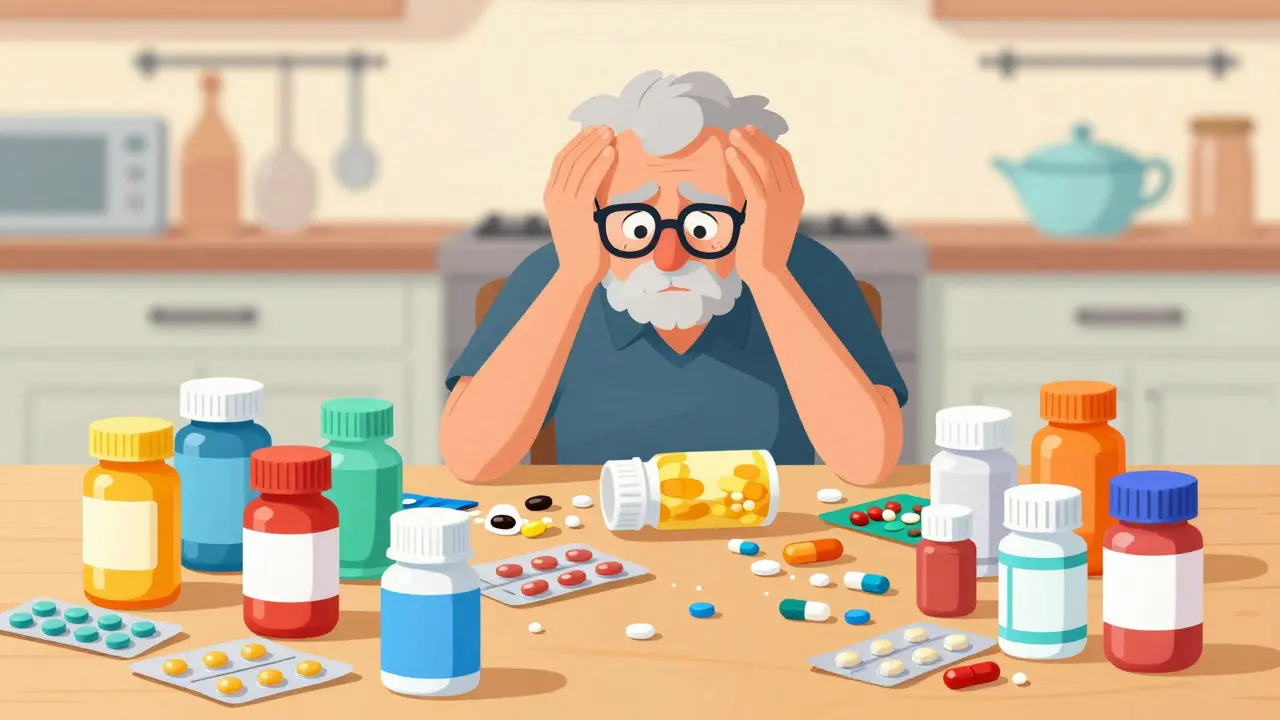
Imagine a patient who is 78 years old and takes twelve different pills every day. For many of us, that sounds like a recipe for disaster, and in geriatric medicine, it often is. Polypharmacy is the routine use of five or more medications by an individual, which significantly increases the risk of adverse drug events (ADEs) in older adults. While taking multiple drugs might seem necessary for managing chronic conditions like diabetes, heart failure, and arthritis, the cumulative effect on an aging body can lead to falls, confusion, and hospitalizations. The good news? There are proven ways to cut through the noise and keep patients safe.
The stakes are high. In the United States alone, the number of adults aged 65 and older grew from 35 million in 2000 to 56 million in 2020, with projections hitting 80 million by 2040. As this demographic expands, so does the burden of polypharmacy. Research shows that patients taking more than four medications face a 30-50% higher risk of injurious falls. Every additional pill adds roughly 8% to that risk, regardless of what the drug actually does. This isn't just about counting pills; it's about understanding how they interact within a fragile system.
Understanding the Risk: Why More Isn't Always Better
Many clinicians operate under the assumption that if a doctor prescribed it, it must be beneficial. But in older adults, the balance between benefit and harm shifts dramatically. A key metric here is the Adverse Drug Event (ADE), defined as an injury caused by medical drug therapy during normal use. These aren't just minor side effects; they are serious incidents that require treatment or lead to hospital admission. According to the Institute for Safe Medication Practices, medication-related issues account for approximately 27.7% of all hospital admissions among older adults.
The danger lies in the complexity. When you add a fifth or sixth medication, you're not just adding one variable; you're creating a web of potential interactions. For example, combining certain blood pressure medications with pain relievers can increase the risk of kidney strain. Adding a sedative to a regimen already containing antihistamines can lead to dangerous drowsiness and fall risks. This is why simple prescription lists are no longer enough. We need active management strategies that look at the whole picture, not just the individual drugs.
The Three Levels of Intervention: What Actually Works?
Not all medication reviews are created equal. Systematic reviews have classified interventions into three distinct types, and the difference in outcomes is stark. Understanding these levels helps healthcare providers choose the right tool for the job.
- Type I: Prescription List Review Only. This involves checking the list of drugs against a database. It’s quick but misses the human element. Studies show this type rarely leads to significant changes in patient outcomes.
- Type II: List Review Plus Adherence Assessment. Here, we check if the patient is actually taking their meds. It’s better than Type I, but still lacks deep clinical context.
- Type III: Comprehensive Face-to-Face Consultation. This is the gold standard. It involves a direct conversation with the patient (in person or via video), evaluating both the medications and the underlying clinical conditions. A 2023 study in JAMA Network Open found that only Type III interventions significantly reduced unplanned hospital readmissions by 18.3%.
If you’re looking to reduce adverse events, skip the paperwork-only approaches. Invest time in the conversation. That’s where the real insights come from.

Tools for Deprescribing: Cutting the Clutter Safely
Deprescribing isn’t about stopping everything; it’s about stopping what doesn’t work or causes harm. To do this safely, clinicians rely on validated tools. The most prominent ones include the Beers Criteria, updated by the American Geriatrics Society (AGS) in 2023, and the STOPP/START Criteria (version 3, 2021). The Beers Criteria lists medications to avoid in older adults, while STOPP/START identifies potentially inappropriate prescribing (STOPP) and missing indicated treatments (START).
However, using these tools requires nuance. Dr. Michael Steinman, a professor at UCSF and co-author of the Beers Criteria, advocates for "individualized medication reviews that consider life expectancy, goals of care, and evidence of benefit." Rigidly applying a checklist without considering a patient’s specific situation can lead to errors. For instance, stopping a statin in a patient with severe cardiovascular history might be appropriate if their life expectancy is short, but doing so in a younger, healthier senior could be risky. The goal is personalized care, not blanket rules.
| Tool | Primary Focus | Key Advantage | Limited Use Case |
|---|---|---|---|
| Beers Criteria (2023) | Medications to avoid | Widely recognized, strong evidence base | Does not address undertreatment |
| STOPP/START (v3) | Inappropriate & missing meds | Balanced view of over/under-treatment | Complex to apply manually |
| FORTA List | Evidence-based grading | Clear categorization of benefit/harm | Less familiar to some clinicians |
The Role of Pharmacists and Technology
You don’t have to do this alone. Pharmacists are becoming central figures in geriatric care. Under Collaborative Practice Agreements (CPAs), pharmacists have demonstrated 37.6% higher deprescribing rates than physician-only approaches. They bring specialized knowledge of drug interactions and can spend the time needed for thorough reviews-averaging 45-60 minutes per comprehensive assessment.
Technology is also stepping in. In April 2024, Epic Systems launched a 'Polypharmacy Risk Score' that uses AI to predict adverse events with 87.3% accuracy. This tool integrates with electronic health records (EHRs) to flag high-risk combinations before they become problems. While AI won’t replace the clinician-patient relationship, it acts as a powerful safety net, catching issues that might slip through the cracks in a busy clinic.

Overcoming Barriers: Time, Cost, and Fear
Why isn’t everyone doing this yet? Time is the biggest hurdle. A survey by the American Academy of Family Physicians found that 78% of primary care physicians report spending less than five minutes on medication review per patient. That’s barely enough to count the pills, let alone understand their impact. Reimbursement is another issue; only 15% of Medicare Advantage plans specifically pay for comprehensive medication reviews, making it hard for practices to justify the staff time required.
Then there’s the patient factor. Many older adults fear that stopping a medication means their condition will return. A national poll found that 68.4% of older adults express concern about stopping medications. Addressing this fear requires clear communication. Explain *why* a change is being made, what to expect, and how to monitor for side effects. Transparency builds trust, and trust leads to better adherence and fewer adverse events.
Practical Steps for Clinicians
If you’re ready to implement these changes, start small. Here’s a practical workflow:
- Reconcile the Medication List. Get an accurate, up-to-date list of all medications, including over-the-counter drugs and supplements. This step alone takes about 22.7 minutes on average.
- Apply Validated Tools. Use STOPP/START or Beers Criteria to identify potential issues. Don’t guess; let the data guide you.
- Conduct a Face-to-Face Review. Sit down with the patient. Ask about their goals, their daily routine, and any side effects they’ve noticed. Listen more than you talk.
- Plan Tapering Protocols. If discontinuing a medication, especially psychotropics, taper slowly. Abrupt discontinuation can cause withdrawal effects in up to 23.7% of cases.
- Follow Up. Schedule a follow-up visit or call within two weeks to check for adverse reactions or disease exacerbation.
By following these steps, you can transform a chaotic medication regimen into a manageable, safe plan. It’s not just about reducing the number of pills; it’s about improving quality of life and keeping patients out of the hospital.
What is the safest way to stop a medication in an older adult?
The safest approach is a gradual taper rather than abrupt discontinuation. This is particularly important for psychotropic medications, where sudden stops can lead to withdrawal symptoms. Always consult with a pharmacist or geriatrician to create a personalized tapering schedule based on the specific drug and the patient’s health status.
How often should medication reviews be conducted for patients on polypharmacy?
Ideally, comprehensive reviews should happen at least annually, or whenever a new medication is added, a hospitalization occurs, or a significant change in health status takes place. For patients with complex regimens involving ten or more medications, quarterly checks may be beneficial to catch emerging issues early.
Do over-the-counter drugs count toward the polypharmacy threshold?
Yes. All substances that affect physiology, including over-the-counter pain relievers, supplements, and herbal remedies, should be included in the medication count. These can interact with prescription drugs and contribute to adverse events, even if they aren't formally prescribed by a doctor.
Is deprescribing always beneficial for older adults?
Not always. Deprescribing is beneficial when a medication offers little benefit relative to its risks, or when the patient’s life expectancy has changed. However, inappropriate deprescribing can lead to disease exacerbation. The key is to make decisions based on individualized assessments, not just general guidelines.
How can technology help manage polypharmacy?
AI-driven tools like the Epic Polypharmacy Risk Score can analyze patient data to predict adverse drug events with high accuracy. These systems integrate with EHRs to alert clinicians to potential interactions or inappropriate prescriptions, acting as a second pair of eyes in a fast-paced clinical environment.