Gut Microbiome and Autoimmunity: How Gut Bacteria Drive Disease and New Treatments
 Jun, 26 2026
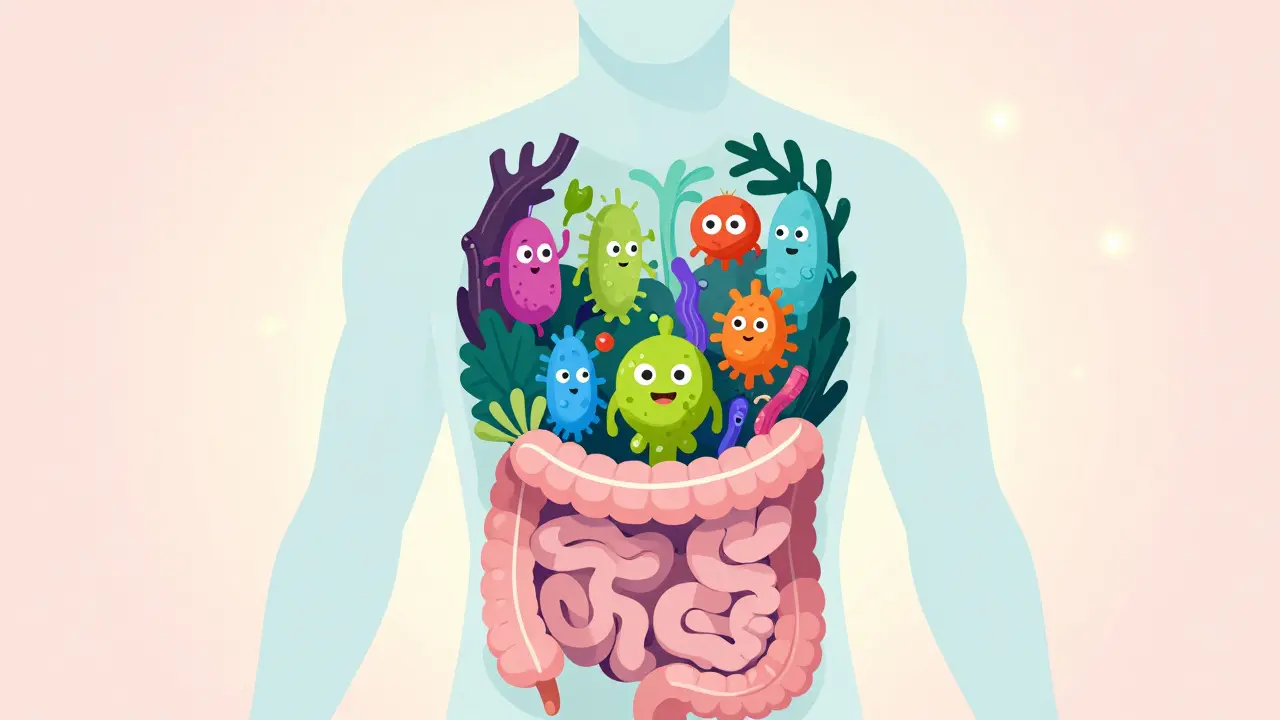
Imagine your immune system isn't just fighting invaders from the outside world. Imagine it's also being influenced by trillions of tiny organisms living inside your digestive tract. This isn't science fiction; it is the new reality of medical research. For years, doctors treated autoimmune diseases as isolated glitches in the body’s defense mechanism. Now, emerging evidence points to a deeper culprit: the gut microbiome. The connection between what lives in your gut and how your immune system behaves is no longer just a theory. It is a rapidly evolving field that has shifted from simple observation to understanding cause and effect. If you have been diagnosed with an autoimmune condition, or if you know someone who has, this shift changes everything. It suggests that treating the gut might be just as important as suppressing the immune system. Let’s look at what the latest research tells us about this hidden link and what it means for treatment.
The Core Problem: Loss of Diversity
To understand why autoimmunity happens, we first need to look at health. A healthy gut is like a dense rainforest-full of different species working together. Scientists measure this variety using a metric called "alpha diversity." When this diversity drops, trouble follows. A major meta-analysis published in Frontiers in Microbiomes in February 2025 looked at data from over 12,000 patients. The finding was stark: people with autoimmune diseases showed a consistent 23.7% reduction in microbial diversity compared to healthy individuals. This wasn't limited to one disease. Whether the patient had rheumatoid arthritis, multiple sclerosis, or type 1 diabetes, the pattern held true. Less variety in the gut seems to create an environment where the immune system gets confused and starts attacking the body’s own tissues.
How Gut Bacteria Trigger Immune Attacks
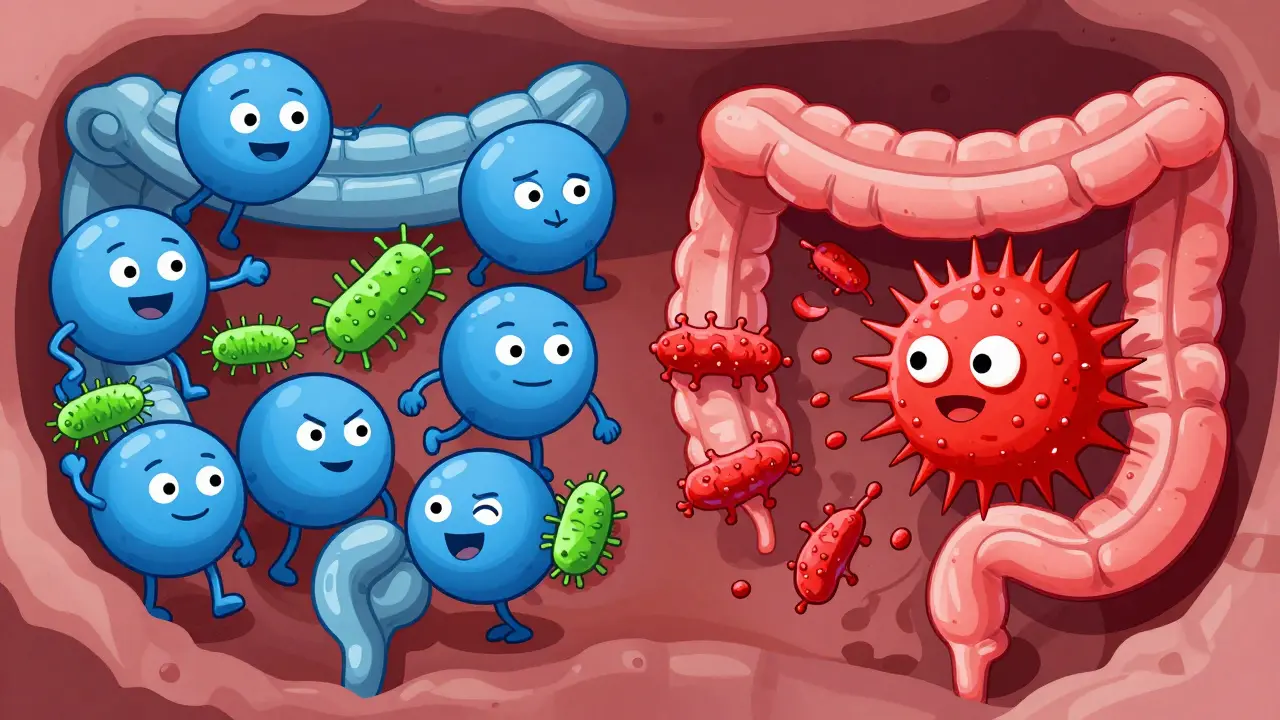
It’s not just about having fewer bacteria; it’s about which ones are there and what they do. Research has identified specific mechanisms through which these microbes influence our health. One key player is the regulatory T-cell. These cells act as the peacekeepers of the immune system, stopping other cells from going rogue. Certain gut bacteria help produce and maintain these peacekeepers. When the microbiome is unbalanced (a state known as dysbiosis), these signals get disrupted. Another mechanism involves "antigenic mimicry." Some bacteria have surface proteins that look surprisingly similar to human proteins. Your immune system attacks the bacteria, but because the shapes are so alike, it accidentally attacks your own joints, nerves, or organs too. This explains why inflammation often spreads far beyond the gut.
Disease-Specific Patterns: One Size Does Not Fit All
While low diversity is a common theme, each autoimmune disease has its own microbial fingerprint. Understanding these differences is crucial for personalized medicine.
| Disease | Key Microbial Change | Specific Finding |
|---|---|---|
| Rheumatoid Arthritis (RA) | Decreased Faecalibacterium prausnitzii | Reduced by 41.2% on average; linked to joint inflammation |
| Multiple Sclerosis (MS) | Unique IgA-binding patterns | Immune antibodies bind specifically to certain gut bacteria, altering CNS immunity |
| Type 1 Diabetes (T1D) | Lower butyrate producers | 32% lower levels of butyrate-producing bacteria compared to RA patients |
| Lupus | Presence of Enterococcus gallinarum | Found in extraintestinal tissues of 63% of lupus patients vs. 8% of healthy controls |
The Role of Specific Bacteria: Friends and Foes
Not all bacteria are created equal. Some protect you, while others fuel the fire. Faecalibacterium prausnitzii is considered a hero in the gut. It produces anti-inflammatory compounds. As seen in the table above, its levels drop significantly across several autoimmune conditions. Conversely, Ruminococcus gnavus tends to increase by 37.5% in these same patients. This bacterium is associated with higher inflammation and intestinal permeability, often referred to as "leaky gut," which allows toxins to enter the bloodstream and trigger immune reactions. However, complexity remains. Take Lactobacillus reuteri. Often marketed as a probiotic, recent research in Nature Immunology (2025) showed it can actually exacerbate central nervous system autoimmunity by 28% in experimental models. This highlights a critical point: adding more "good" bacteria blindly isn't always safe. Context matters. What helps one person might hurt another depending on their existing microbial landscape.
New Therapies: Beyond Probiotics
If gut bacteria drive autoimmunity, can changing them cure it? The answer is yes, but it’s complicated. Traditional probiotics-capsules containing live bacteria-are showing mixed results. While some strains are promising, only 22 specific strains are currently in clinical trials for autoimmune conditions, suggesting a long road ahead for standardized supplements. More exciting are targeted approaches:
- Prebiotics: These are fibers that feed good bacteria. Galactooligosaccharides, for example, increased regulatory T cells by 34% in phase II trials for rheumatoid arthritis. By feeding the right bugs, you boost the immune system’s peacekeepers.
- Fecal Microbiota Transplantation (FMT): This involves transferring stool from a healthy donor to a patient. Early trials suggest it can reset the gut ecosystem, though standardization is still a challenge.
- Targeted Bacterial Elimination: Instead of adding bacteria, researchers are exploring ways to remove specific pathogens like E. gallinarum. Yale scientists suggest future treatments might target these triggering bacteria directly, rather than broadly suppressing the entire immune system.

Challenges in Clinical Practice
Despite the promise, implementing this science in a doctor’s office is hard. Here is the reality check for patients today: Cost and Time: Getting a comprehensive metagenomic sequencing test costs between $1,200 and $3,500 as of late 2025. While prices have dropped 63% since 2020, it is still expensive for many. Furthermore, establishing a personalized microbiome profile takes an average of 78 days. That is nearly three months before you even know what your baseline looks like. Methodological Issues: A review noted that 68% of existing studies use inconsistent sampling protocols. One lab might collect stool samples differently than another, making it hard to compare results. Only 12% of human trials include longitudinal monitoring beyond six months, meaning we don’t yet know if these changes last. Adoption Rates: Adoption varies wildly by disease. According to a 2024 survey by the Autoimmune Institute, 38% of academic medical centers now incorporate gut microbiome analysis into lupus treatment protocols. However, only 22% do so for rheumatoid arthritis, and a mere 15% for multiple sclerosis. If you see a specialist, ask if they are tracking your gut health-it may depend entirely on your specific diagnosis.
The Future: Personalized Microbiome Medicine
The trajectory is clear. Global funding for microbiome-autoimmunity research hit $847 million in 2024, up 22% from the previous year. Companies like Vedanta Biosciences and Seres Therapeutics are racing to develop microbiome-based drugs. Experts predict that by 2030, microbiome profiling will be standard in autoimmune diagnosis. Imagine walking into a clinic and getting a gut test alongside your blood work. Your treatment plan wouldn't just be a drug prescription; it would include a dietary protocol and possibly a targeted bacterial therapy designed for your unique microbial makeup. This shift moves us away from a "one-size-fits-all" approach to true personalized medicine. It acknowledges that your biology is unique, and your gut reflects that uniqueness. While we are not there yet, the foundation is being laid daily by researchers connecting dots between the microscopic world in our guts and the macroscopic symptoms we feel in our bodies.
Can fixing my gut cure my autoimmune disease?
Currently, there is no guarantee that fixing your gut will completely cure an autoimmune disease. However, research shows that modulating the microbiome can significantly reduce disease activity. For example, prebiotic interventions improved disease scores by 45% in early trials. Think of it as a powerful adjunct therapy that supports overall immune regulation, rather than a standalone magic bullet.
Are probiotics safe for everyone with autoimmunity?
Not necessarily. Recent studies show that some common probiotic strains, like Lactobacillus reuteri, can worsen certain types of autoimmunity, such as those affecting the central nervous system. Because individual microbiomes vary greatly, it is essential to consult with a healthcare provider before starting any new probiotic regimen, especially if you have a complex autoimmune condition.
What is the cost of gut microbiome testing?
As of late 2025, comprehensive metagenomic sequencing typically costs between $1,200 and $3,500. Prices have decreased significantly over the last five years, but insurance coverage remains limited. Most patients pay out-of-pocket for these tests unless they are part of a specific clinical trial.
Which autoimmune diseases are most linked to gut health?
Research has established strong links between the gut microbiome and Rheumatoid Arthritis, Multiple Sclerosis, Type 1 Diabetes, and Lupus. Lupus shows particularly distinct markers, such as the presence of Enterococcus gallinarum in tissues outside the gut. Rheumatoid Arthritis and MS also show consistent patterns of reduced microbial diversity and specific bacterial imbalances.
Will microbiome testing become standard care soon?
Many experts believe so. A survey in Nature Reviews Immunology predicted that by 2030, microbiome profiling will be standard in autoimmune diagnosis. Currently, adoption is uneven, with lupus clinics leading the way (38% adoption) followed by rheumatology and neurology departments. As technology becomes cheaper and protocols standardize, expect wider availability in the coming decade.