How Generic Drugs Cut Healthcare Costs: The Real Impact of Generics and Biosimilars
 Jul, 17 2026
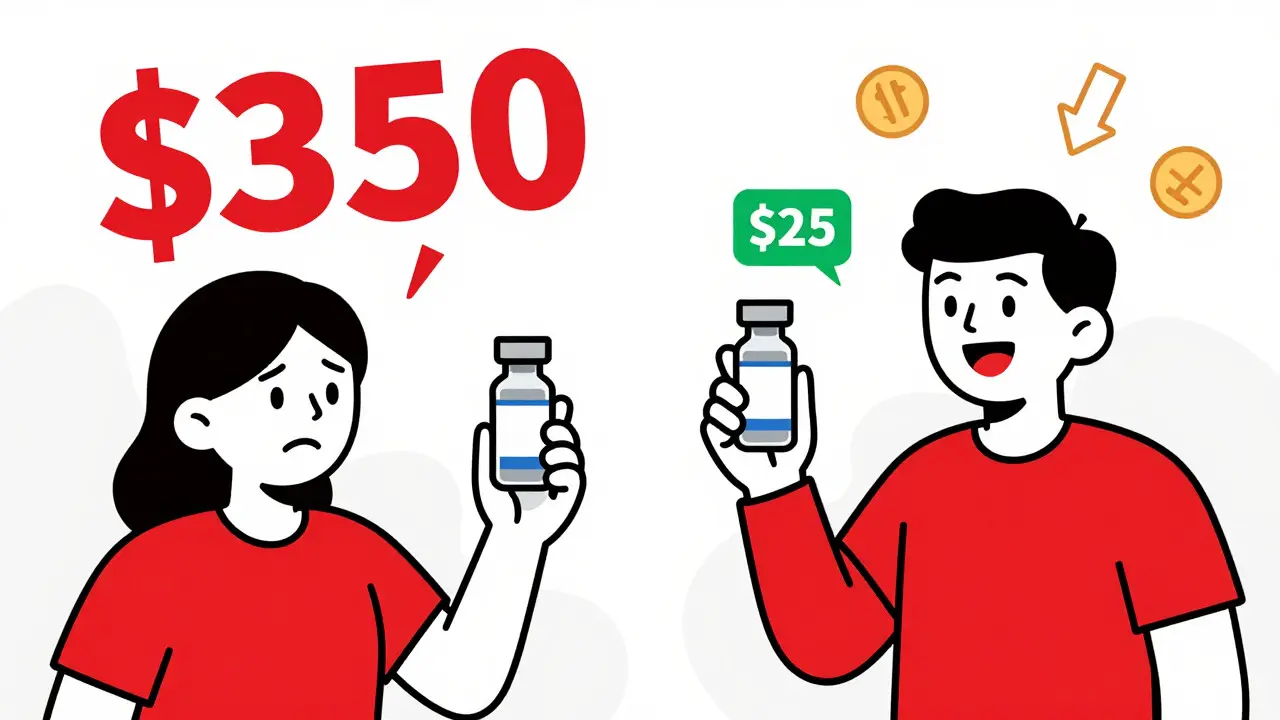
Imagine paying $350 a month for insulin, only to find out that a chemically identical version costs $25. This isn't a hypothetical scenario; it’s the reality for millions of patients who have switched from brand-name medications to generic drugs, which are medications with the same active ingredients as brand-name drugs but sold at significantly lower prices after patent expiration. In 2024, generics made up 90% of all prescriptions filled in the United States-roughly 3.9 billion pills-yet they accounted for just 12% of total drug spending. Meanwhile, brand-name drugs represented only 10% of prescriptions but consumed 88% of the money. That massive gap is where the real story of healthcare economics lies.
We often hear about rising medical bills, but few people look closely at how generic competition acts as the primary brake on those costs. Without these affordable alternatives, the financial burden on families, insurers, and government programs like Medicare would be unmanageable. But it’s not just about cheap pills. It’s about a complex system involving FDA regulations, patent laws, and market dynamics that determine whether you get that life-saving medication at a price you can afford. Let’s break down exactly how generics work, why they save so much money, and what stands in their way.
The Economics of Generic Competition
To understand why generics are so powerful, we need to look at the numbers. When a brand-name drug loses its patent protection, the monopoly ends. Suddenly, other manufacturers can step in. According to the 2025 U.S. Generic & Biosimilar Medicines Savings Report, this shift creates immediate savings. In 2024 alone, cumulative savings from generics reached over $445 billion. That’s half a trillion dollars kept in patients’ pockets and hospital budgets.
Why is the price drop so drastic? Brand-name pharmaceutical companies spend an average of $2.6 billion and 10-15 years developing a new drug. They need to recoup that investment through high prices. Generic manufacturers, however, don’t start from scratch. They use the existing safety and efficacy data from the original drug. Their job is simply to prove their version works the same way. This process takes 10-12 months and costs around $1 million per application. The result? A price tag that is typically 80-85% lower than the brand-name equivalent.
| Feature | Brand-Name Drug | Generic Drug |
|---|---|---|
| Average Development Cost | $2.6 Billion | $1 Million (ANDA Fee) |
| Time to Market | 10-15 Years | 10-12 Months |
| Clinical Trials Required | Full Phase I-III Trials | Bioequivalence Studies Only |
| Typical Price Discount | N/A (Reference Price) | 80-85% Lower |
This economic model relies on competition. The more generic manufacturers enter the market, the lower the price goes. Research shows that each additional generic entrant reduces prices by another 11-15%. However, this doesn’t always happen smoothly. Sometimes, only one or two generic makers appear, leading to “duopoly” pricing where costs remain higher than expected. True cost control happens when multiple competitors flood the market, driving prices down to near manufacturing cost.
How FDA Approval Ensures Safety and Efficacy
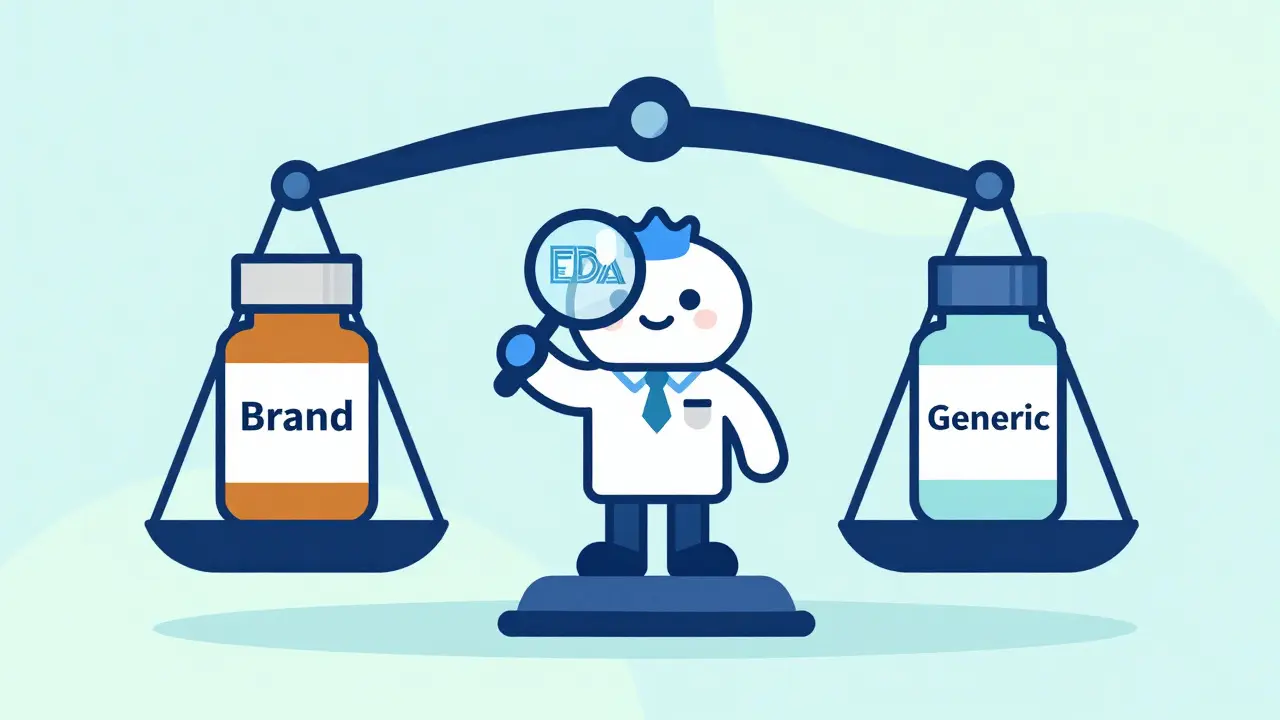
A common concern among patients is whether generic drugs are truly as effective as the brand names. The short answer is yes, thanks to rigorous regulatory standards set by the Food and Drug Administration (FDA), the U.S. federal agency responsible for protecting public health through regulation of food, drugs, and medical devices. For a generic to be approved, it must meet strict criteria for pharmaceutical equivalence and bioequivalence.
Pharmaceutical equivalence means the generic has the same active ingredient, strength, dosage form, and route of administration as the brand-name drug. Bioequivalence is where the science gets specific. Manufacturers must conduct studies on 24-36 healthy volunteers to show that the generic drug enters the bloodstream at the same rate and extent as the brand. The FDA requires that 90% confidence intervals for key metrics like Cmax (peak concentration) and AUC (total exposure) fall within 80-125% of the reference product. This range ensures there are no clinically meaningful differences in safety or potency.
You can verify this information yourself using the FDA’s Orange Book, which lists over 14,000 approved generic products. Each entry includes a therapeutic equivalence code. An “A” code indicates that the generic is considered therapeutically equivalent to the brand, meaning it can be substituted safely. While inactive ingredients like fillers or dyes may differ-which can occasionally cause issues for people with specific allergies-the active medicine does its job identically. Patient reviews on platforms like Drugs.com reflect this, showing generic versions maintain high efficacy ratings similar to their brand counterparts.
The Rise of Biosimilars in Biologic Therapy
While small-molecule generics dominate the volume of prescriptions, a new frontier is opening up in biologic drugs. These are complex medicines derived from living organisms, used to treat conditions like cancer, rheumatoid arthritis, and Crohn’s disease. Because they are too complex to be copied exactly, their cheaper alternatives are called biosimilars, which are highly similar biological medical products already on the market that have no clinically meaningful differences from the reference product.
Biosimilars are not identical copies; they are “similar enough” to work the same way. They typically offer discounts of 15-35% compared to the reference biologic. This might sound modest compared to the 80%+ savings from traditional generics, but remember that specialty biologics account for 51% of total drug spending despite being only 5% of prescriptions. A 20% discount on a $10,000-a-month treatment saves thousands per patient.
However, adoption has been slower than expected. In Europe, biosimilar usage rates hit 70-85%, but in the U.S., they lag behind at 25-30%. Why? Partly due to rebate-driven formulary restrictions by Pharmacy Benefit Managers (PBMs) that sometimes make brand-name drugs cheaper for patients if the insurer gets a bigger kickback. Additionally, there is a “biosimilar void”: 90% of brand-name biologics losing patent protection in the next decade currently have zero biosimilar competitors in development. Addressing this gap is critical for future cost containment.
Barriers to Generic Entry and Cost Control
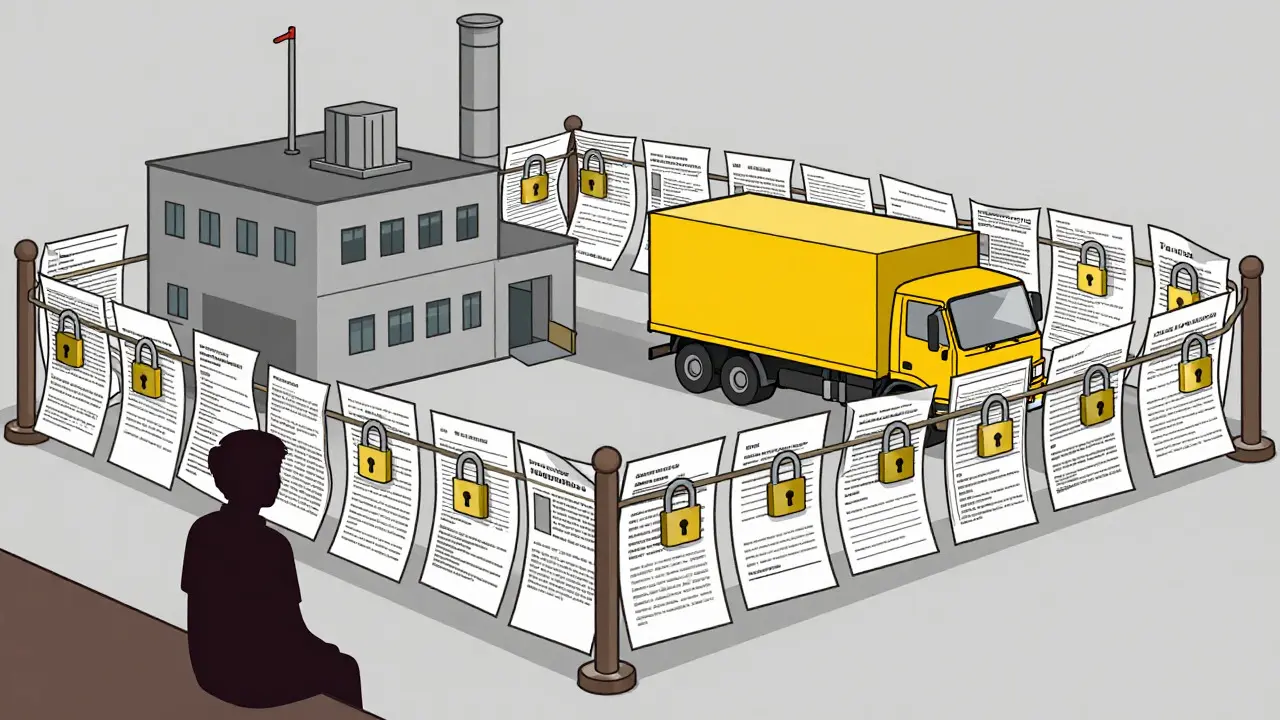
If generics are so beneficial, why aren’t they available immediately when patents expire? Unfortunately, brand-name manufacturers employ various strategies to delay competition. One major tactic is the “patent thicket,” where companies file dozens of secondary patents on different aspects of a drug-such as its packaging, delivery mechanism, or method of use-to extend exclusivity. On average, brand manufacturers file over 140 patents per drug.
Another issue is “pay-for-delay” settlements. Instead of fighting in court, brand companies pay generic makers to stay out of the market temporarily. The Federal Trade Commission found these agreements delayed generic entry by an average of 17 months, costing consumers billions annually. There’s also “product hopping,” where a brand company slightly changes a drug’s formulation right before patent expiration, forcing doctors and patients to switch to a new version with a fresh patent clock.
Supply chain vulnerabilities also play a role. During the pandemic, shortages of generic drugs exposed the fragility of relying on overseas manufacturing. About 80% of active pharmaceutical ingredients (APIs) come from India and China. When production halts anywhere in that chain, U.S. pharmacies face shortages. Currently, over 127 generic drugs are at risk of shortage due to manufacturing quality issues, highlighting the need for domestic resilience alongside cost control efforts.
Practical Steps for Patients and Prescribers
For patients, the most impactful step is asking your doctor and pharmacist about generic options. If you’re prescribed a brand-name drug, ask: “Is there a generic or biosimilar alternative?” Most insurance plans strongly incentivize this switch through lower copays. Check your plan’s formulary-often available online-to see which tier your medication falls into. Tier 1 usually includes preferred generics with the lowest out-of-pocket costs.
Prescribers also have a role to play. Many physicians write prescriptions for brand names out of habit or lack of awareness about recent generic approvals. Staying updated with the FDA Orange Book helps identify when a generic is available. Some states require explicit authorization for substituting narrow therapeutic index drugs (like warfarin or levothyroxine), where tiny variations matter more. In those cases, working closely with pharmacists ensures safe transitions without compromising care.
- Check Formulary Status: Use tools like Medi-Span’s Generic Drug Database to compare costs across plans.
- Verify Therapeutic Equivalence: Look for “AB” codes in the FDA Orange Book to confirm substitution safety.
- Monitor Side Effects: If switching causes issues, report them via FDA MedWatch-it could indicate a problem with inactive ingredients rather than the active drug.
- Advocate for Policy Change: Support legislation that strengthens generic competition, such as limiting patent thickets and accelerating biosimilar approvals.
Future Outlook: Can Generics Keep Up?
Looking ahead, the landscape of drug pricing is shifting. The Inflation Reduction Act introduced Medicare drug price negotiations, aiming to cap costs for certain high-spending medications. Early results show discounts ranging from 38-79% on negotiated drugs. However, these savings apply only to Medicare’s share of national spending. For broader impact, robust generic and biosimilar competition remains essential.
The FDA is responding with initiatives like the Biosimilars Action Plan, which aims to cut review times in half. Meanwhile, policymakers are exploring ways to reduce the biosimilar void by offering liability protections and expedited pathways for developers. If successful, these measures could unlock hundreds of billions in additional savings over the next decade.
Ultimately, generics are more than just cheaper pills-they are the backbone of accessible healthcare. By understanding how they work, recognizing the barriers they face, and advocating for their use, patients and providers can help keep drug costs manageable. As we move forward, supporting policies that foster fair competition will ensure that innovation doesn’t come at the expense of affordability.
Are generic drugs really as safe and effective as brand-name drugs?
Yes. The FDA requires generic drugs to demonstrate bioequivalence, meaning they deliver the same amount of active ingredient into your bloodstream over the same period as the brand-name version. They undergo rigorous testing to ensure no clinically meaningful differences in safety, purity, or potency. While inactive ingredients may vary, causing rare allergic reactions, the therapeutic effect is identical.
Why do some generic drugs still cost almost as much as brand names?
When only one or two generic manufacturers enter the market, competition is limited, allowing them to charge higher prices-a situation known as a duopoly. Prices tend to drop significantly once three or more competitors join. Additionally, Pharmacy Benefit Managers (PBMs) may structure rebates that make brand-name drugs appear cheaper to patients despite higher list prices.
What is a biosimilar, and how is it different from a generic?
Biosimilars are alternatives to complex biologic drugs, which are made from living cells and cannot be perfectly copied like small-molecule generics. Biosimilars are highly similar to the reference biologic with no clinically meaningful differences in safety or efficacy. They typically offer 15-35% discounts compared to brand-name biologics, whereas traditional generics offer 80-85% savings.
How can I tell if a generic version of my medication is available?
You can check the FDA’s Orange Book, which lists approved generic drugs and their therapeutic equivalence codes. Your pharmacist can also inform you if a generic substitute exists. Additionally, many insurance formularies automatically prefer generics, so reviewing your plan’s coverage details online can reveal available options.
Why aren’t there more biosimilars on the market?
Developing biosimilars is scientifically complex and expensive, requiring extensive clinical trials. Regulatory hurdles and reimbursement challenges also deter manufacturers. Currently, 90% of biologics losing patent protection in the next decade have no biosimilar competitors in development, creating a “biosimilar void” that limits cost savings in specialty care.