How to Decide When to Replace Expired OTC First-Aid Medications
 Aug, 10 2026
You open your drawer during a panic moment. A cut needs closing, or an allergy is flaring up. You grab the bottle, glance at the bottom, and see a date from two years ago. Do you use it? Do you toss it? That split-second decision can mean the difference between effective relief and a wasted effort-or worse, a health risk.
Managing Over-the-Counter (OTC) first-aid medications isn't just about throwing things away when they look old. It’s about understanding chemistry, storage conditions, and the specific type of medicine in your hands. The rules change drastically depending on whether you’re holding a solid painkiller tablet or a life-saving epinephrine pen.
The Golden Rule: Form Matters More Than Date
The biggest mistake people make is treating all expired medicines the same. They aren’t. The physical form of the medication dictates how fast it degrades. This is the most critical factor in your decision-making process.
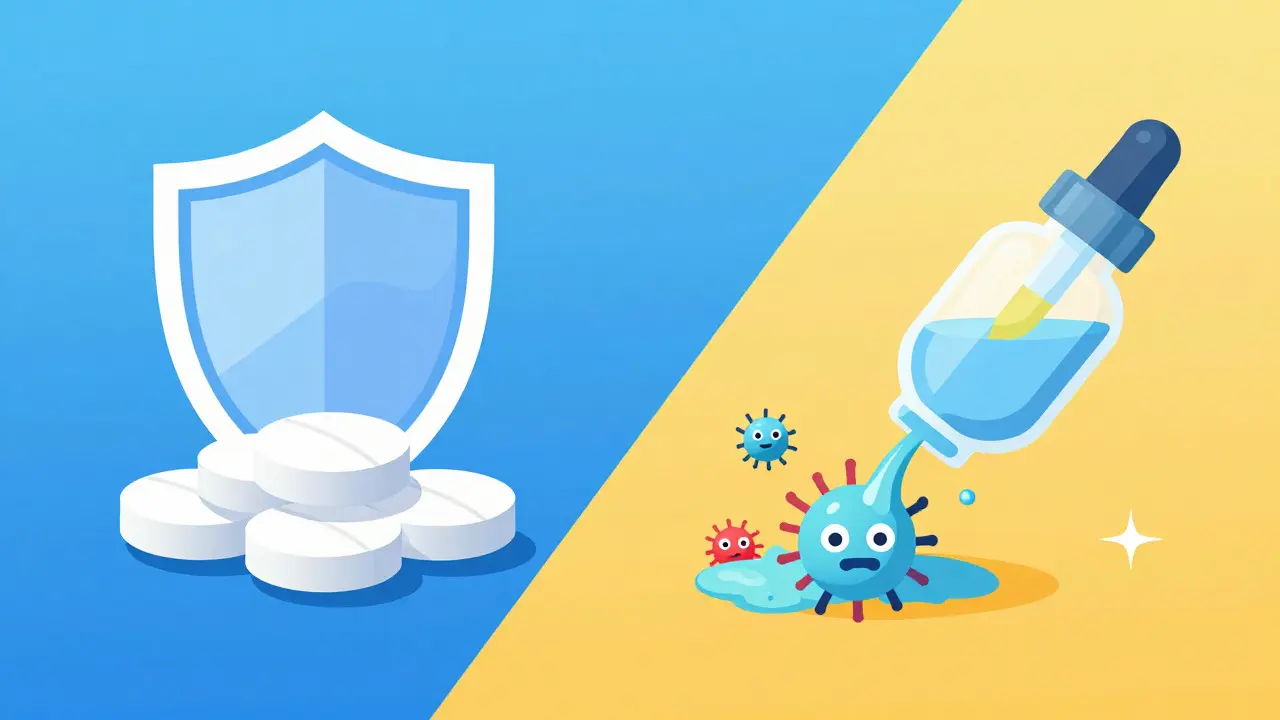
Solid-dose medications, like tablets and capsules, are generally stable. Research from the U.S. Department of Defense’s Shelf Life Extension Program found that many unopened solid drugs retain over 90% of their potency for years past their printed expiration date if stored correctly. If you have a bottle of ibuprofen or acetaminophen that expired six months ago, it will likely still work for a minor headache. It might not be 100% as strong, but it won’t turn into poison.
Liquids, however, are a different story. Liquid formulations, including antibiotic suspensions, eye drops, and syrups, degrade much faster. Water-based solutions are breeding grounds for bacteria once preservatives break down. A 2023 FDA analysis showed that hydrocortisone cream lost sterility and developed bacterial contamination in nearly half of samples tested just six months past expiration. If it’s liquid or semi-solid, treat the expiration date as a hard deadline.
| Medication Type | Typical Stability Post-Expiration | Risk Level | Action Required |
|---|---|---|---|
| Solid Tablets (e.g., Ibuprofen) | High (1-2+ years) | Low | Monitor; replace annually |
| Liquids/Suspensions (e.g., Antibiotics) | Low (Months) | High | Replace immediately upon expiration |
| Emergency Injectables (e.g., EpiPen) | Critical (Rapid loss) | Critical | Replace 30 days before expiration |
| Topical Creams/Ointments | Moderate (6-12 months) | Moderate | Check for separation/smell; replace yearly |
The "Never Risk It" List
Some medications are too important to gamble with. These are the items where a 10% drop in potency could cost you your life or lead to severe complications. For these, the expiration date is not a suggestion; it is a safety limit.
Epinephrine auto-injectors (like EpiPens) are the prime example. A 2021 study in the *Journal of Allergy and Clinical Immunology* documented that these devices lose 20-30% of their potency within just six months of expiration. In anaphylaxis, every microgram counts. If your pen is expired, buy a new one today. Don’t wait for an emergency to find out it’s weak.
Other critical items include:
- Nitroglycerin tablets: Used for chest pain, these oxidize rapidly. Once opened, they must be replaced every 3-6 months, regardless of the printed date.
- Insulin: Degraded insulin fails to regulate blood sugar effectively, leading to dangerous highs.
- Eye and Ear Drops: Sterility is key here. Bacterial growth in expired drops can cause serious infections in sensitive areas.
- Rescue Inhalers: Albuterol sulfate loses pressure and dosage accuracy over time. Discard them 12 months after removing them from foil packaging.
Dr. Jennifer Woodcock, Director of the FDA's Office of Generic Drugs, noted that while using sub-potent emergency meds is better than nothing in a dire crisis, immediate replacement is non-negotiable for preparedness.
Storage Conditions: The Silent Killer
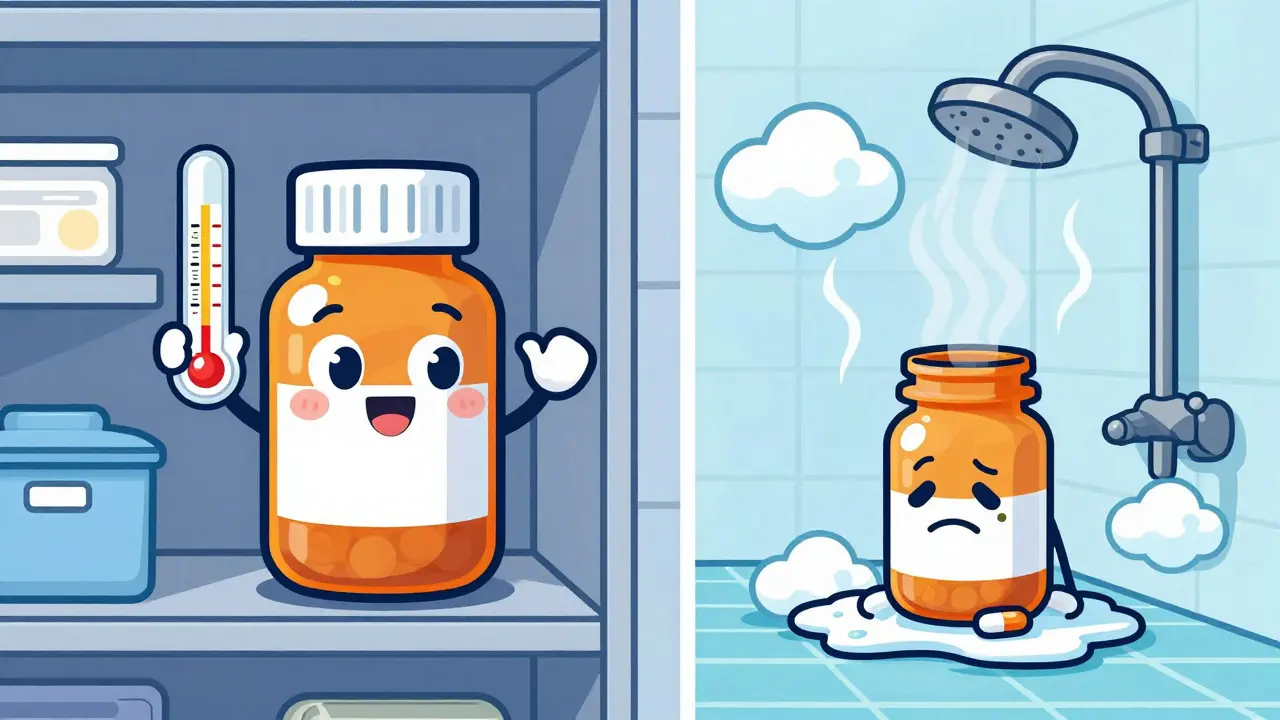
You might have a perfectly valid expiration date, but your bathroom cabinet could be voiding it. Most people store first-aid supplies in bathrooms because that’s where injuries happen. But bathrooms are terrible places for medicine.
A 2022 Johns Hopkins study revealed that medications stored in bathroom cabinets-where humidity averages 75% and temperatures fluctuate-lose potency 40% faster than those kept in bedroom drawers. Heat and moisture accelerate chemical breakdown. If your aspirin has been sitting next to the shower, assume its shelf life is significantly shorter than the label says.
To maximize longevity:
- Keep it cool and dry: Aim for 20-25°C (68-77°F) with less than 60% humidity.
- Use original containers: Transferring pills to weekly organizers exposes them to air and light, reducing effective shelf life by 35-50%.
- Check seals: Once a blister pack is opened or a bottle cap is twisted off, the clock starts ticking faster.
Visual and Sensory Checks
Before relying on a date, use your senses. Expired or degraded medications often give visual or olfactory warnings.
Look for discoloration. White pills turning yellow or brown are decomposing. Check for cracks, crumbling, or unusual hardness. Smell the contents. If antiseptic alcohol smells weak or sweet instead of sharp, it’s gone. If hydrogen peroxide doesn’t fizz when applied to a wound, it’s useless-it only lasts about 30 days after opening, regardless of the printed date.
For creams, check for separation. If the oil and water layers have split and don’t mix back together when stirred, the emulsion has broken. Throw it out.
A Practical Maintenance Schedule
Decision fatigue is real. Instead of guessing every time you reach for something, implement a routine. The American Red Cross recommends a structured approach to keep your kit safe.
- Quarterly Visual Inspection: Every three months, pull out your kit. Look for leaks, discoloration, or damaged packaging.
- Biannual Date Check: Twice a year, write down the expiration dates of critical items. Set calendar reminders for 30 days before they expire.
- Annual Overhaul: Once a year, do a full purge. Toss anything expired, anything that looks suspicious, and any unused items older than five years.
This system ensures you’re never caught off guard. It also helps you track usage patterns-if you always run out of bandages but never touch the antihistamines, adjust your stock accordingly.
Disposal and Environmental Responsibility
Once you’ve decided to replace an item, don’t just flush it. Flushing medications contaminates water supplies and harms aquatic life. The EPA advises against flushing unless specifically instructed (which is rare for OTC drugs).
Instead, use take-back programs. The DEA’s National Prescription Drug Take Back events collected over a million pounds of expired meds in 2023 alone. Many local pharmacies and police stations offer drop-off boxes year-round. If no take-back option is available, mix the medications with an unappealing substance like used coffee grounds or cat litter, seal them in a plastic bag, and throw them in the household trash. Remove or scratch out personal information from labels before disposing.
Can expired ibuprofen hurt you?
Generally, no. Solid pain relievers like ibuprofen rarely become toxic when expired. They simply lose effectiveness. However, if the pills show signs of degradation like discoloration or odor, discard them. Using slightly weaker ibuprofen is usually safe for minor pain, but avoid it for serious inflammation where precise dosing matters.
How long does hydrogen peroxide last after opening?
Hydrogen peroxide breaks down quickly once exposed to air. According to the American Chemical Society, it maintains effectiveness for only about 30 days after opening. If it doesn’t bubble vigorously when applied to a wound, it has degraded and should be replaced.
Is it safe to use an expired EpiPen?
In a life-threatening allergic reaction, yes-an expired EpiPen is better than nothing. However, it may deliver a lower dose of epinephrine, potentially requiring multiple injections. Studies show significant potency loss within six months of expiration. Always replace expired auto-injectors immediately to ensure full efficacy in an emergency.
Where should I store my first-aid kit?
Store your kit in a cool, dry place away from direct sunlight and humidity. Bathrooms and kitchens are poor choices due to temperature fluctuations and moisture. A bedroom closet or a dedicated cabinet in a hallway is ideal. Keep the temperature between 68-77°F (20-25°C) for optimal stability.
Do antibiotics expire faster than other meds?
Yes, especially liquid antibiotics. Oral suspensions degrade quickly and can harbor bacteria if preservatives fail. Even solid antibiotic pills should be treated with caution; sub-potent antibiotics may not fully clear an infection, leading to resistance or relapse. Always follow expiration dates strictly for antimicrobial treatments.