Medicaid and Generics: How Low-Income Patients Save on Prescriptions
 Aug, 21 2026
Imagine walking into a pharmacy with a prescription for a common medication like an antibiotic or blood pressure pill. If you have Medicaid is a U.S. federal-state health insurance program established in 1965 that provides coverage for low-income individuals and families, the price tag at the counter might shock you if it were a brand-name drug. But because most of your prescriptions are likely filled with generic versions, that sticker price stays low. This isn't just a nice-to-have; it’s the backbone of how millions of Americans afford their daily medications without going bankrupt.
The core issue here is simple: healthcare costs are rising, but for many low-income patients, staying healthy depends on consistent access to affordable drugs. The good news? Generic drugs are medications that are bioequivalent to brand-name drugs but sold under their chemical names at significantly lower prices have become the primary driver of cost savings in the system. In fact, nearly 90% of all Medicaid prescriptions are now for generics. This article breaks down exactly how this works, why the savings are so substantial, and what you need to know to make sure you’re getting the best deal possible.
Why Generics Are the Backbone of Medicaid Savings
To understand the financial impact, we have to look at the sheer volume. According to the Association for Accessible Medicines (AAM), generics account for 90-91% of all prescriptions filled through Medicaid. Yet, despite making up the vast majority of what people actually take, they only represent about 17.5% to 18.2% of total Medicaid prescription drug spending. That gap tells you everything you need to know about their value. They keep the overall bill manageable while ensuring that the most common treatments remain accessible.
Let’s put some real numbers on this. The average out-of-pocket cost, or copay, for a generic drug for a Medicaid beneficiary is roughly $6.16. Compare that to the average copay for a brand-name drug, which sits at around $56.12. That’s a difference of nearly nine times. For a family living paycheck to paycheck, paying $6 instead of $56 for a monthly supply of heart medication can mean the difference between filling the script and skipping doses. It’s not just about saving money; it’s about maintaining health stability without the stress of unexpected medical bills.
How the Rebate System Keeps Prices Low
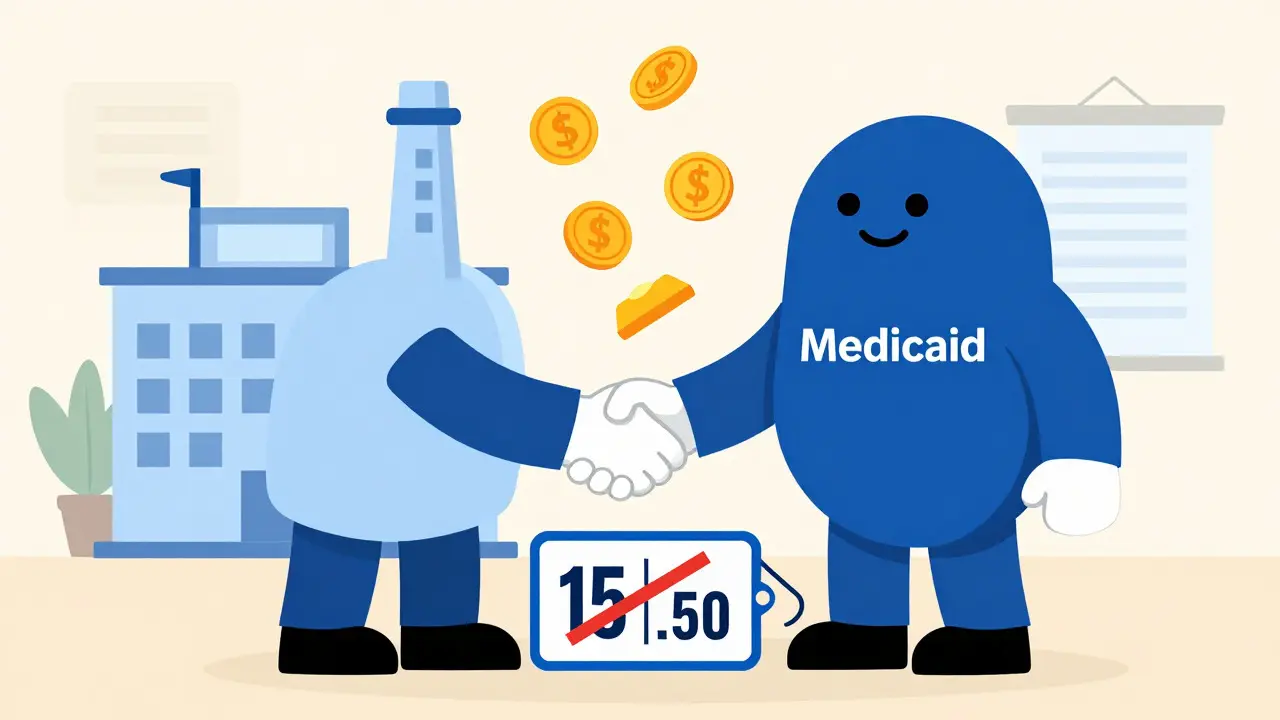
You might wonder how these prices stay so low when pharmaceutical companies spend billions on research. The answer lies in the Medicaid Drug Rebate Program (MDRP) is a requirement established in 1990 that mandates drug manufacturers provide rebates to state Medicaid programs in exchange for having their drugs covered. This program was created by the Omnibus Budget Reconciliation Act of 1990. Essentially, if a drug manufacturer wants their products available to Medicaid patients, they have to give back a portion of the revenue to the state.
These rebates are significant. In fiscal year 2023, Medicaid rebates reduced overall gross federal and state prescription drug spending by 51.2%, which amounted to $53.7 billion. A study by the Congressional Budget Office found that Medicaid obtains the lowest net prescription drug prices among all federal programs, including the Department of Veterans Affairs. For non-specialty generic drugs, the average rebate equals 86% of the average retail price. This means the government pays a fraction of what the public sees on the shelf, passing those savings directly to the patient in the form of low copays.
Comparing Medicaid to Other Insurance Plans
It’s easy to assume that private insurance offers better deals, but the data suggests otherwise for low-income populations. When comparing Medicaid to commercial insurance or even Medicare Part D, Medicaid often comes out ahead on pricing for standard medications. While Medicare Part D had an 86% generic fill rate in 2022, Medicaid’s rate has consistently stayed above 90% since 2015. This higher adoption rate drives down costs further due to economies of scale.
Consider the case of the Mark Cuban Cost Plus Drug Company (MCCPDC), a direct-to-consumer model that aims to undercut insurance prices. An analysis published in PMC in 2023 found that patients could have spent less on only 11.8% of prescriptions for 124 generic drugs if they bought from MCCPDC instead of using their health insurance. For most Medicaid enrollees, sticking with their insurance plan was cheaper than seeking out alternative retailers. This highlights that the existing Medicaid infrastructure, bolstered by rebates and high generic utilization, is already highly efficient for the average user.
| Feature | Generic Drugs (Medicaid) | Brand-Name Drugs (Medicaid) |
|---|---|---|
| Average Copay | $6.16 | $56.12 |
| % of Prescriptions Filled | 90-91% | ~9-10% |
| % of Total Drug Spending | 17.5-18.2% | Significantly Higher |
| Dispensed Under $20 | 93% | 59% |
The Challenge of High-Cost Specialty Drugs
While generics handle the bulk of everyday needs, there is a growing concern regarding specialty drugs. These are complex medications, often used for cancer, autoimmune diseases, or rare conditions, that come with a hefty price tag. In FY 2021, drugs costing over $1,000 per claim accounted for less than 2% of all prescriptions but more than half of Medicaid’s total spending. This trend is driving the overall increase in Medicaid drug budgets, with net spending reaching $60 billion in 2024.
This doesn’t mean generics aren’t working; it means the mix of drugs being prescribed is changing. As more chronic and complex conditions are treated with advanced biologics, the financial weight shifts away from cheap generics to expensive specialty treatments. To address this, CMS launched the GENEROUS Model in 2024, focusing on improving utilization management and formulary design to curb these rising costs. For patients, this means that while your basic meds will remain cheap, specialized treatments may still require careful navigation of prior authorizations and coverage rules.
Practical Tips for Maximizing Your Savings
If you’re a Medicaid beneficiary, you don’t need to be a finance expert to save money, but knowing a few things can help you avoid unnecessary hurdles. First, always ask your pharmacist if a generic version is available. In most cases, it is substituted automatically unless your doctor specifies that the brand name is medically necessary. Second, check your specific state’s formulary. Since 48 states use managed care organizations (MCOs) to deliver pharmacy benefits, the rules can vary slightly from one state to another.
Here are a few actionable steps to keep your costs down:
- Verify Prior Authorization Requirements: Some medications require approval before the pharmacy can dispense them. Call your provider early to start this process, as it can take weeks.
- Use Mail-Order Options: Many Medicaid plans offer discounted rates for 90-day supplies ordered through mail-order pharmacies compared to picking up monthly refills in-store.
- Monitor Formulary Updates: When new generics enter the market, they may not be on your plan’s list immediately. Check for updates quarterly to see if your current brand-name drug has been switched to a cheaper generic tier.
- Understand Your Tier: Most formularies place generics in the lowest cost tier. If you find yourself paying more than expected, verify that you are indeed receiving the generic version and not a higher-tier brand.
Looking Ahead: Biosimilars and Future Savings
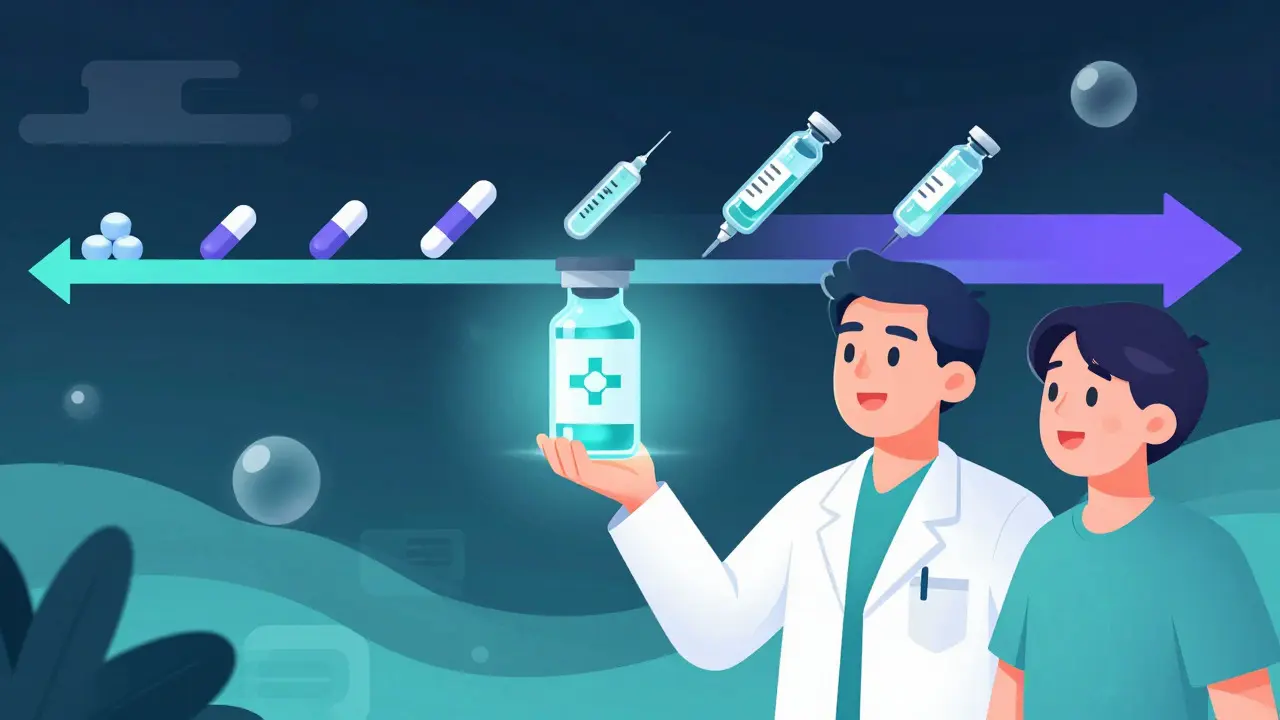
The story of cost savings doesn’t end with traditional small-molecule generics. The next frontier is biosimilars-drugs that are highly similar to approved biological reference products. Just as generics revolutionized the pricing of pills, biosimilars are poised to do the same for injectable therapies. The AAM projects that biosimilars could contribute an additional $100 billion in annual savings by 2027 as more biologic drugs lose patent protection.
For low-income patients dealing with conditions like rheumatoid arthritis or inflammatory bowel disease, this is huge news. Currently, these treatments are among the most expensive parts of the Medicaid budget. As biosimilars gain wider acceptance and coverage, we can expect to see copays drop significantly for these critical medications, mirroring the success seen with standard generics over the last two decades.
Frequently Asked Questions
Are generic drugs really as effective as brand-name drugs?
Yes. The FDA requires generic drugs to be bioequivalent to their brand-name counterparts. This means they must contain the same active ingredient, strength, dosage form, and route of administration. They work the same way in the body and are subject to the same quality controls.
Why do I sometimes pay more for a generic than expected?
This can happen due to Pharmacy Benefit Manager (PBM) fees or specific formulary structures in your state. Sometimes, PBM fees can add up to 31% of the drug's cost, as noted in recent audits. Additionally, if a generic is not yet on your specific plan's preferred formulary, it might fall into a higher cost tier temporarily.
What is the average copay for Medicaid beneficiaries?
The average copay for generic drugs is approximately $6.16. For brand-name drugs, it averages around $56.12. However, exact amounts vary by state and specific plan structure, so it’s best to check with your local pharmacy or Medicaid office for precise figures.
Do I need special permission to get a generic drug?
Usually, no. Pharmacists are authorized to substitute generics for brand-name drugs automatically unless the prescription says 'dispense as written' or 'no substitution.' However, if you are switching from a brand to a generic for a specialty drug, prior authorization from your doctor might be required.
How do Medicaid rebates affect my personal costs?
Rebates reduce the net price the government pays for drugs. Because Medicaid negotiates these deep discounts (often 77-86% off retail), the baseline cost for the program is lower. This allows states to set lower copay tiers for beneficiaries, keeping your out-of-pocket expenses minimal compared to other insurance types.