Postoperative Ileus with Opioids: Prevention and Treatment Guide
 Jun, 19 2026
Postoperative Ileus Risk & Recovery Estimator
Patient Scenario
Enter details to see results
Imagine waking up after surgery, ready to eat, only to find your stomach feels like a solid block of concrete. You’re nauseous, bloated, and nothing is moving. This isn’t just bad luck; it’s postoperative ileus, a condition where the gut temporarily stops working after surgery. While surgical trauma plays a role, opioids-the standard painkillers used in hospitals-are often the main culprit. They bind to receptors in your intestines, slamming the brakes on digestion while they numb your pain. The result? Longer hospital stays, higher costs, and significant discomfort for patients.
This isn't a rare glitch. It affects a large portion of surgical patients, adding days to recovery and costing the healthcare system billions annually. But here is the good news: we now know exactly how this happens, and we have effective strategies to prevent it and treat it when it occurs. Let’s break down what causes this paralysis of the gut, how to avoid it using modern protocols, and what treatments actually work when prevention fails.
The Mechanics of Gut Paralysis
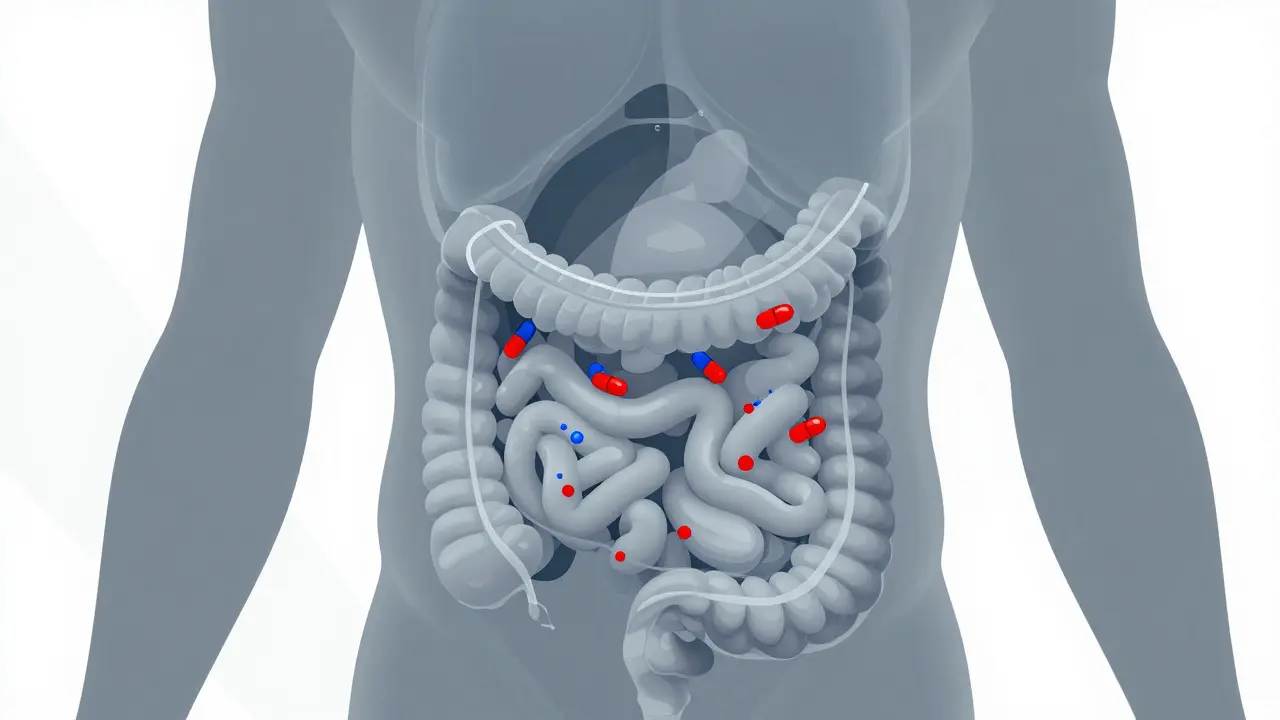
To understand why opioids cause such severe digestive issues, you have to look at the biology. Your gut has its own nervous system, often called the "second brain." When you take opioids, these drugs don't just travel to your brain to stop pain signals; they also activate mu-opioid receptors located directly in the gastrointestinal tract. Think of these receptors as switches that control movement. When opioids flip them, the peristalsis-the wave-like muscle contractions that push food through your system-slows down or stops completely.
It’s not just the medication, though. Surgery itself triggers an inflammatory response. Your body releases cytokines and stress hormones that further inhibit gut function. According to data from the National Center for Biotechnology Information (NCBI), endogenous opioids released during surgical stress can decrease colonic motility by up to 70%. When you add exogenous opioids (the drugs given by doctors) to this mix, the effect is compounded. The neurogenic factors increase sympathetic stimulation (fight or flight mode), which naturally diverts energy away from digestion, while suppressing parasympathetic activity (rest and digest mode).
Clinically, this manifests quickly. Symptoms typically emerge within 24 to 72 hours post-surgery. Patients report hard, dry stools, straining, incomplete evacuation, and significant bloating. Radiographic studies show that gastric emptying can be prolonged by 50-200%, and small bowel transit time increases by 30-100% in patients receiving standard opioid doses. If this state lasts more than three days, it becomes clinically significant and requires active intervention, rather than just waiting it out.
Prevention: The Multimodal Approach
The most effective way to handle postoperative ileus is to stop it before it starts. The old model of relying solely on high-dose opioids for pain control is being replaced by multimodal analgesia, which uses a combination of different pain-relief methods to minimize opioid use. The goal is to keep pain manageable without overloading the gut with narcotics.
Leading guidelines from the Enhanced Recovery After Surgery (ERAS) Society recommend limiting opioids to less than 30 morphine milligram equivalents (MME) in the first 24 hours. How do you achieve this? By stacking non-opioid interventions:
- Scheduled Acetaminophen: Administering 1g IV every 6 hours provides a baseline level of pain relief without affecting gut motility.
- NSAIDs: Drugs like ketorolac (30mg IV) reduce inflammation and pain, provided there are no kidney or bleeding contraindications.
- Regional Anesthesia: Using nerve blocks or epidurals targets pain at the source, significantly reducing the need for systemic opioids. Studies show epidural analgesia can reduce POI duration from 5.2 days to 3.8 days in orthopedic patients.
- Early Ambulation: Getting out of bed within 4 to 6 hours of surgery is crucial. Dr. Michael Camilleri from Mayo Clinic notes that early mobilization reduces POI duration by an average of 22 hours compared to standard rest protocols.
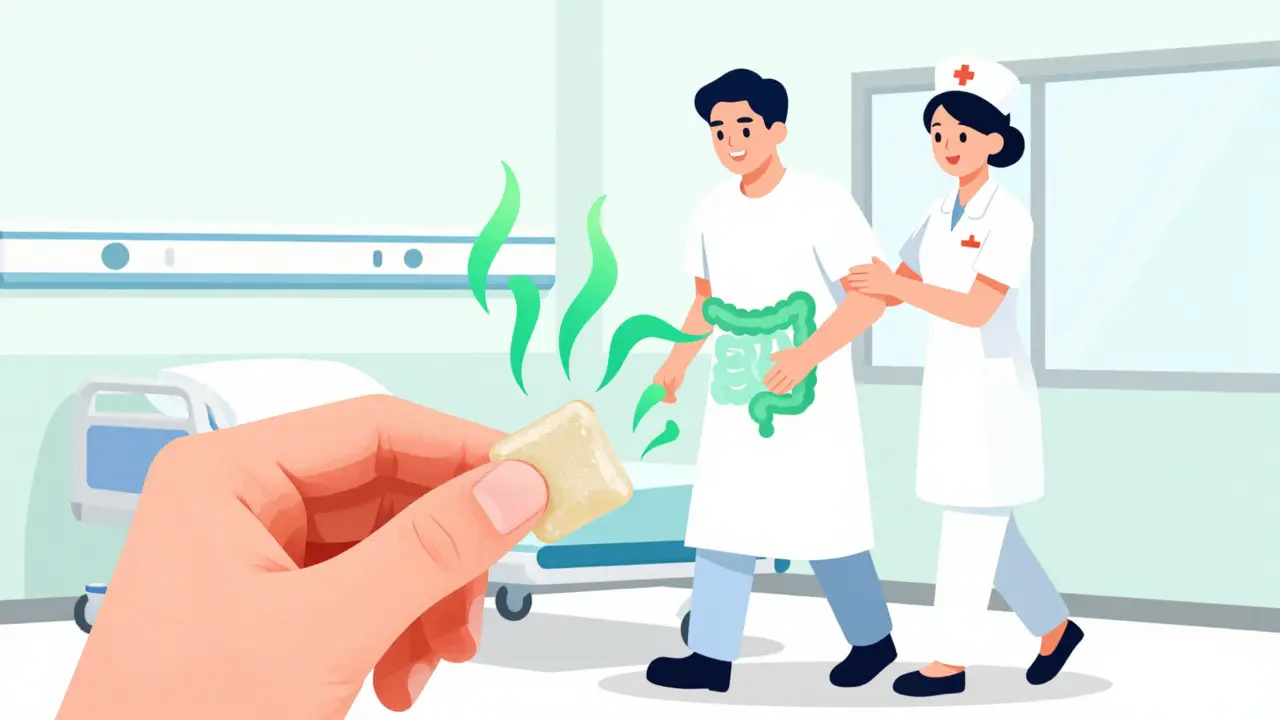
Another surprising but effective tactic is chewing gum. It sounds simple, but chewing mimics eating, stimulating the cephalic phase of digestion and encouraging the gut to wake up. Implementing a "POI bundle" that includes chewing gum four times daily, early walking, and scheduled non-opioid meds has been shown to reduce average POI duration from 4.1 days to 2.7 days in clinical trials.
Treatment Options When Prevention Fails
Even with the best prevention, some patients still develop postoperative ileus, especially those undergoing major abdominal surgeries. When this happens, traditional methods like nasogastric tubes have limited effectiveness, offering only a modest reduction in recovery time. Modern medicine offers more targeted solutions: peripheral opioid receptor antagonists (PORAs).
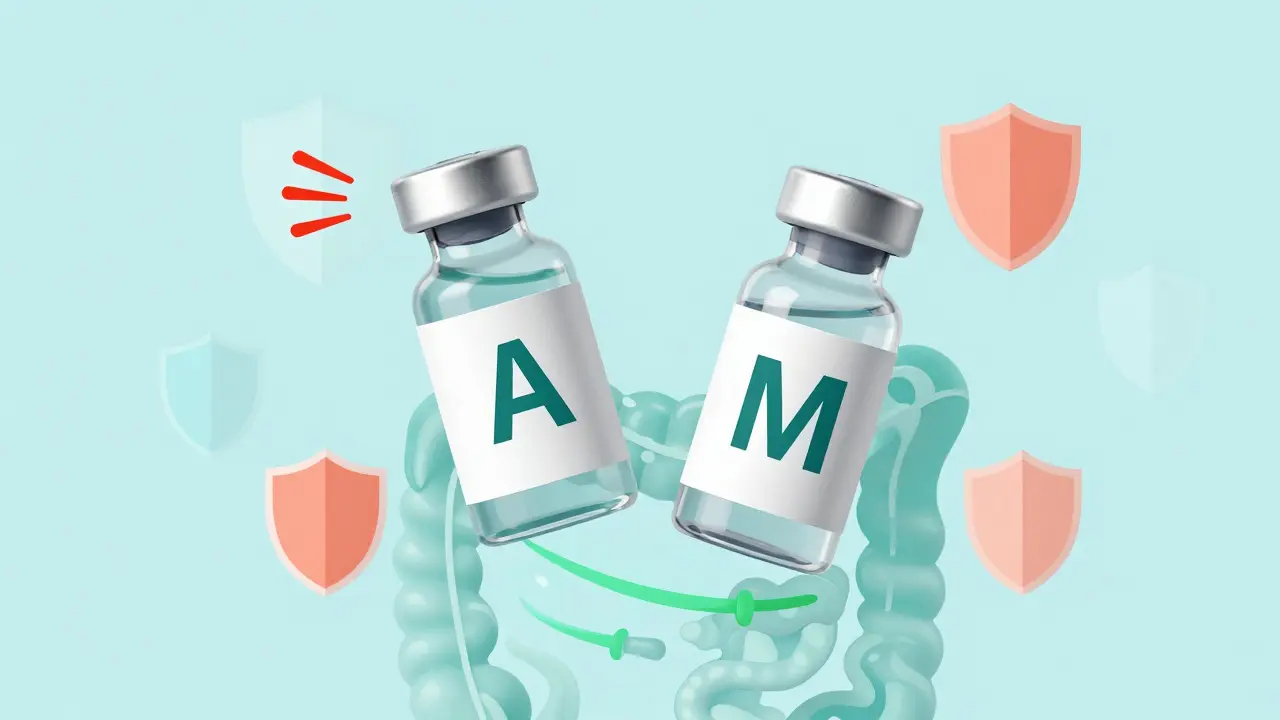
These drugs are designed to block opioid receptors in the gut without crossing the blood-brain barrier, meaning they restore bowel function without reversing the pain relief in the brain. Two primary medications dominate this space:
| Drug Name | Administration | Key Benefit | Limitations/Risks |
|---|---|---|---|
| Alvimopan | Oral tablet | Reduces GI recovery time by 18-24 hours in abdominal surgery | Restricted access due to previous cardiovascular concerns; short-term use only |
| Methylnaltrexone | Subcutaneous injection | 30-40% faster return of bowel function in opioid-tolerant patients | Contraindicated in known or suspected mechanical GI obstruction |
Alvimopan was approved by the FDA in 2008 specifically for accelerating gastrointestinal recovery. A study in JAMA showed it reduced recovery time significantly. However, its use is tightly regulated because of earlier safety signals regarding heart health, though recent reformulations are in advanced trials. Methylnaltrexone, sold under brand names like Relistor, is widely used for opioid-induced constipation and has expanded into postoperative care. It works rapidly, often producing results within 30 minutes to 4 hours.
However, caution is required. These drugs are contraindicated if there is any suspicion of a mechanical bowel obstruction-a physical blockage rather than a functional one. Since obstructions occur in about 0.3-0.5% of surgical cases, doctors must rule this out via imaging before administering PORAs. Additionally, cost is a factor; methylnaltrexone adds approximately $120-$150 per dose, which may not be justified for low-risk patients with mild symptoms.
Navigating Clinical Challenges
Implementing these strategies isn't always smooth sailing. One of the biggest hurdles is cultural resistance within medical teams. Many anesthesia providers are accustomed to opioid-centric pain management protocols. A quality improvement study found that 63% of initial implementations faced resistance from staff who feared that reducing opioids would lead to uncontrolled pain.
There is a valid concern here. Completely eliminating opioids can backfire. Research shows that if opioid use drops below 20 MME per 24 hours, pain scores can spike by 2-3 points on a 10-point scale, leading to patient distress and increased sympathetic stress, which ironically worsens ileus. The key is balance. Successful programs establish clear thresholds: for example, if a patient exceeds 40 MME at 24 hours, the protocol triggers an automatic review to add a PORA or switch to regional anesthesia techniques.
Nursing education is another critical piece. Early mobilization protocols fail if nurses aren't empowered to get patients up and walking safely. In early adoption phases, compliance with mobilization orders was as low as 42%. Successful hospitals invest in interdisciplinary training, creating daily "POI rounds" where surgeons, anesthesiologists, and nurses assess bowel function together using standardized metrics like time to first flatus and tolerance of oral intake.
Future Directions and Innovations
The landscape of postoperative ileus management is evolving rapidly. We are moving beyond simple drug administration toward predictive and personalized medicine. AI-driven prediction models are currently being tested, using 27 preoperative variables to identify high-risk patients with 86% accuracy. This allows teams to intervene aggressively before surgery even begins.
Innovations in drug delivery are also promising. Naltrexone implants for sustained peripheral blockade are in preclinical testing, offering a potential solution for long-term opioid users who suffer from chronic bowel dysfunction. Additionally, fecal microbiome transplantation is showing pilot data suggesting a 40% improvement in motility for refractory cases, hinting that gut bacteria play a larger role than previously thought.
From an economic standpoint, the shift is inevitable. The global market for POI management is projected to grow from $1.2 billion in 2022 to $2.1 billion by 2029. With Medicare penalizing hospitals for excessive readmissions related to complications like ileus, financial incentives align with patient outcomes. Comprehensive management programs are expected to become the standard of care by 2027, potentially saving the U.S. healthcare system $7.2 billion annually if adopted nationally.
How long does postoperative ileus last?
Typically, mild cases resolve within 3 to 5 days. However, if ileus persists beyond 3 days, it is considered clinically significant and requires intervention. With proper multimodal prevention, the average duration can be reduced from 5 days to under 3 days.
Can I prevent postoperative ileus before my surgery?
Yes. Discuss a multimodal pain plan with your surgeon and anesthesiologist. Request non-opioid options like nerve blocks, acetaminophen, and NSAIDs. Ask about starting chewing gum immediately after surgery and getting out of bed within 4-6 hours to stimulate gut function.
Are peripheral opioid antagonists safe for everyone?
No. Drugs like methylnaltrexone and alvimopan are contraindicated if there is a mechanical bowel obstruction. They should only be used under strict medical supervision after imaging rules out physical blockages. They are generally safe for patients with functional ileus caused by opioids.
What is the difference between ileus and bowel obstruction?
Ileus is a functional problem where the nerves and muscles of the gut stop working, often due to opioids or surgery. Bowel obstruction is a mechanical problem where something physically blocks the intestine, such as scar tissue or a tumor. Treating an obstruction with ileus medications can be dangerous, so accurate diagnosis is vital.
Does chewing gum really help with postoperative ileus?
Yes, evidence supports it. Chewing gum stimulates the cephalic phase of digestion, sending signals to the gut to start moving. Clinical bundles including gum chewing have reduced POI duration by over a day in multiple studies. It is a simple, low-cost adjunct to other therapies.