Privacy and Security at Online Pharmacies: How to Protect Your Data in 2026
 Jul, 3 2026
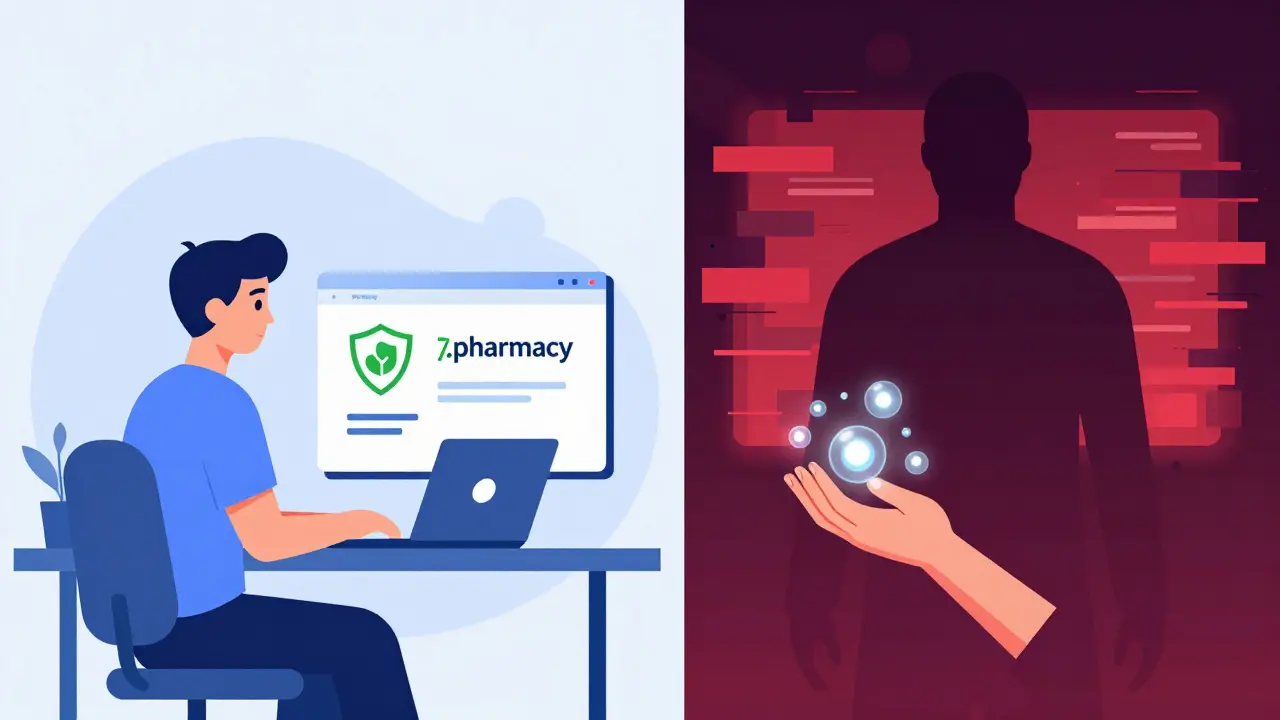
You type your credit card number. You upload a photo of your ID. You submit a sensitive medical history. All for the convenience of getting your medication delivered to your door. But have you ever stopped to ask where that information goes? In 2026, buying medicine online is easier than ever, but it is also riskier if you don’t know what you are looking for.
The numbers are startling. According to the National Association of Boards of Pharmacy (NABP), 96% of websites selling prescription medication online do not follow pharmacy laws. That means nearly every site you might stumble upon on a search engine could be exposing your personal health data to theft or misuse. This isn’t just about getting fake pills; it’s about identity theft, financial fraud, and having your private medical records sold to marketers.
This guide cuts through the noise. We will look at how legitimate pharmacies protect your data, what red flags mean your information is at risk, and the specific steps you need to take to stay safe in the current regulatory landscape.
Why Your Prescription Data Is a Target
Your medical record is worth more on the dark web than your credit card number. A credit card can be canceled. A stolen medical identity allows criminals to buy expensive drugs, file false insurance claims, and alter your medical history, which can lead to dangerous treatment errors later in life.
In 2024, the market for online pharmacies hit $112.7 billion. With that much money flowing through digital channels, cybercriminals are paying close attention. Gartner predicts a 37% increase in pharmacy-related data breaches in 2025 alone. Why? Because many non-compliant online pharmacies lack basic security protocols. The NABP found that 78% of non-compliant sites lacked proper encryption, and 63% failed to implement adequate access controls.
When you use an unverified site, you aren’t just buying medicine; you are handing over a goldmine of data to operators who may not care about your safety. Real pharmacies operate under strict federal laws like HIPAA. Fake ones operate in the shadows.
The Difference Between Verified and Unverified Pharmacies
Not all online pharmacies are created equal. There is a massive gap in security standards between those that are verified by authorities and those that are not. Understanding this difference is the first step in protecting yourself.
| Feature | Verified (VIPPS/.pharmacy) | Non-Verified / Rogue Sites |
|---|---|---|
| Compliance Rate | 98.7% | 36.2% |
| Encryption Standard | AES 256-bit & TLS 1.3 | Often missing or outdated |
| Prescription Requirement | Valid Rx from licensed doctor | Often none required |
| Data Breach Risk | Low (Rigorous Audits) | High (No Oversight) |
| Physical Address | Verifiable US/State Location | Often P.O. Box or None |
As of February 2025, only 68 pharmacies nationwide held the prestigious VIPPS (Verified Internet Pharmacy Practice Sites) accreditation. These sites undergo rigorous inspections against 21 quality standards. Compare that to the thousands of unregulated sites. The Pharmaceutical Journal reported in late 2024 that online pharmacies are 2.3 times more likely than brick-and-mortar stores to fail regulatory standards.
If a site does not have a clear verification seal or a .pharmacy domain, assume your data is unsafe.
Key Security Markers to Look For in 2026
You don’t need to be a cybersecurity expert to spot a safe pharmacy. You just need to know where to look. Here are the concrete signs that a site respects your privacy and follows the law.
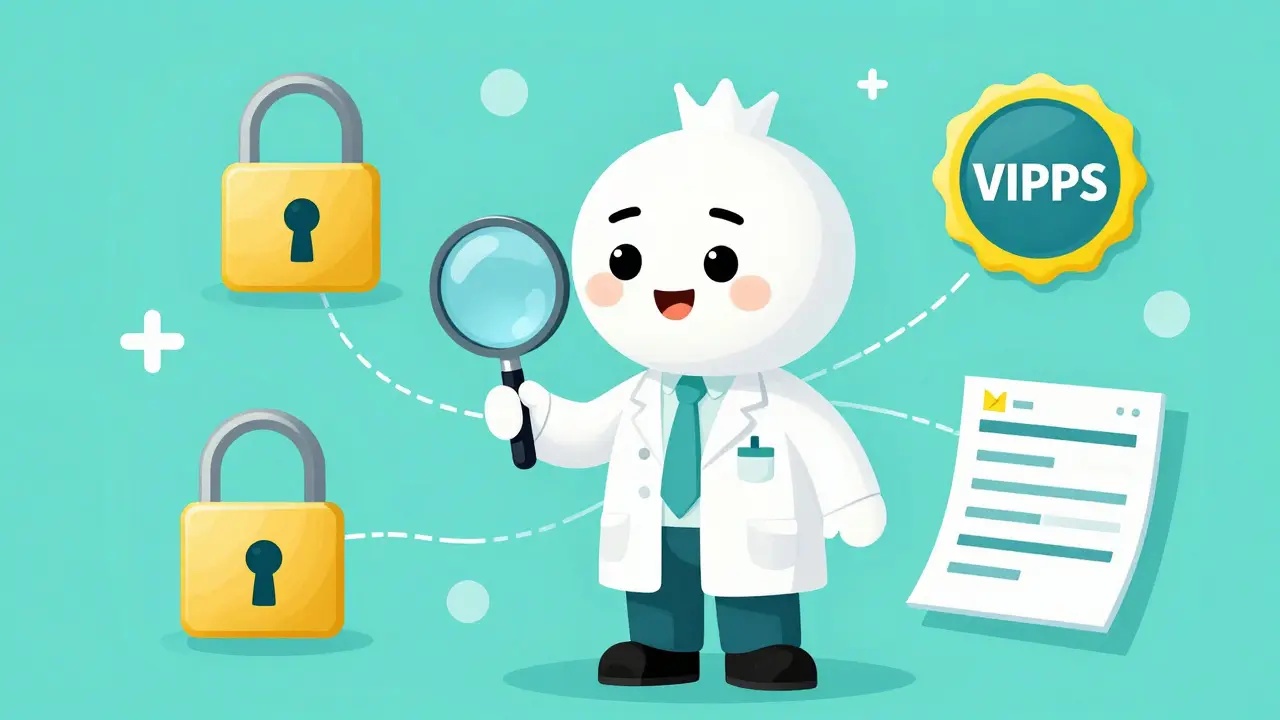
- The .pharmacy Domain: This is a trusted Top-Level Domain managed by the NABP. To get this address, a pharmacy must pass a 47-point verification process, including licensure checks and physical address verification. If you see .com or .net, you must do extra due diligence.
- VIPPS Seal: Look for the VIPPS seal on the homepage. Click it. It should link directly to the NABP website confirming the pharmacy’s status. Beware of static images; scammers can copy graphics.
- Real-Time E-Prescribing: Since January 1, 2025, states like New York have mandated e-prescriptions for all medications. Legitimate pharmacies now integrate directly with your doctor’s system. They do not ask you to fax or email a prescription image, which is insecure.
- Clear Privacy Policy: A compliant pharmacy will explicitly state how they handle electronic Protected Health Information (ePHI). They should mention HIPAA compliance, data retention periods (minimum six years for audit logs), and third-party sharing policies.
- Pharmacist Access: You should be able to speak to a licensed pharmacist via chat or phone. If there is no human contact option, run.
Jay Badenhorst, Director of Pharmacy at the Pharmacists' Defence Association, noted that failures in these areas suggest some online pharmacies prioritize "commercial interests or 'convenience'" over patient safety. Convenience should never cost you your privacy.
Red Flags: When to Walk Away Immediately
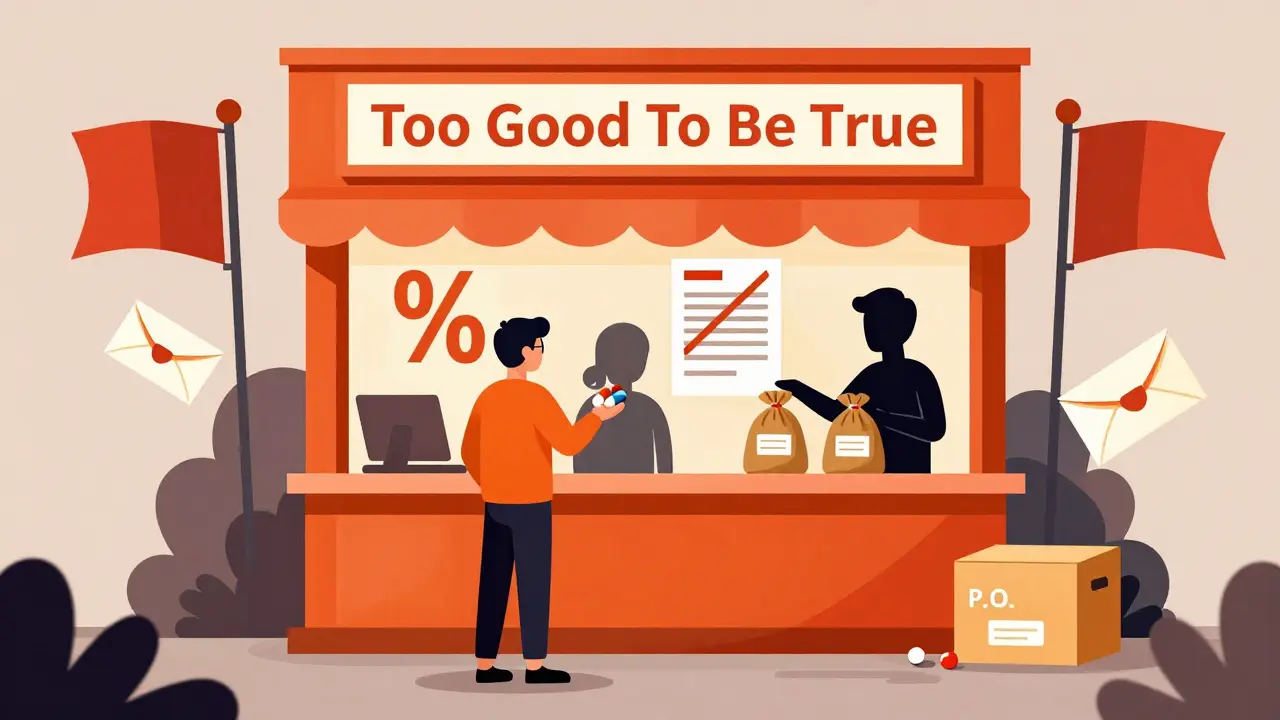
Saving money is tempting, but some deals are too good to be true because they are illegal. Here are the biggest warning signs that a site is harvesting your data rather than protecting it.
- No Prescription Required: If a site sells controlled substances or antibiotics without a valid prescription from a licensed practitioner, it is illegal. Under the Ryan Haight Online Pharmacy Consumer Protection Act of 2008, prescribing controlled substances online requires a valid medical relationship. Sites bypassing this are often fronts for drug diversion and data theft.
- Aggressive Marketing After Sign-Up: Did you receive spam emails or robocalls within 24 hours of signing up? This is a classic sign of data brokering. Reddit users frequently report this experience on r/pharmacy, noting immediate unsolicited marketing contacts after placing orders on unverified sites.
- Unsecured Payment Methods: Legitimate pharmacies use secure payment gateways. If a site asks you to wire money, send cryptocurrency, or use gift cards, it is a scam. They want anonymity because they are selling counterfeit goods and stealing identities.
- Pricing That Defies Logic: If a brand-name drug is 80% cheaper than everywhere else, question the source. Counterfeit medicines are linked to inadequate data security practices that facilitate prescription fraud. As of 2024, counterfeit medicine cases increased by 28%.
- Generic Contact Info: Look for a physical street address and a working phone number. If the address is a P.O. Box or a residential home in a different country, your data is likely leaving the jurisdiction of US privacy laws.
How New 2025 Regulations Change the Game
The regulatory landscape shifted significantly in early 2025, making it harder for rogue operators to hide. These changes are designed to protect you, but you need to understand them to benefit.
DEA Telemedicine Rules (Effective March 21, 2025): The DEA updated rules for virtual prescribing. Practitioners must now review state Prescription Drug Monitoring Program (PDMP) data before prescribing controlled substances. They must also verify patient identity using government-issued ID with biometric verification. This means a legitimate online service will ask for more robust ID checks upfront. Don’t view this as annoyance; view it as security. 89% of non-compliant pharmacies fail to implement these identity verifications.
HIPAA Security Rule Modifications: Proposed in early 2025, new federal guidelines require stricter technical safeguards. By September 2025, multi-factor authentication (MFA) for remote access to patient records becomes mandatory for pharmacies. This protects your data even if your password is stolen. Additionally, annual third-party security audits will be required by 2026.
State-Level Mandates: New York’s mandate for e-prescriptions reduced prescription fraud by an estimated 37% in its first few months. Other states are following suit. This digitization reduces the chance of human error and interception of paper prescriptions.
These regulations increase compliance costs for pharmacies-projected to rise by 22% in 2025. However, this drives consolidation. Smaller, less secure operators are being forced out, leaving a market dominated by larger, more secure entities. For you, this means fewer options, but safer ones.
Practical Steps to Protect Your Data Today
Knowledge is power, but action is protection. Here is a checklist you can use right now to secure your online pharmacy interactions.
- Use a Burner Email: Create a separate email address solely for medical accounts. This keeps your primary inbox clean and limits exposure if a breach occurs. 63% of privacy-savvy users recommend this strategy.
- Verify the Seal Manually: Don’t trust the image on the page. Copy the pharmacy name and paste it into the NABP’s VIPPS directory or the .pharmacy registry. Confirm it matches exactly.
- Check for HTTPS and Padlock: Ensure the URL starts with https:// and shows a padlock icon. While basic, this indicates data in transit is encrypted. Look for TLS 1.3 support if possible.
- Limit Shared Information: Only provide what is legally required. You should never need to share your Social Security Number to fill a prescription. If asked, decline and find another pharmacy.
- Monitor Financial Statements: Check your bank and credit card statements regularly for small, unauthorized charges. Scammers often test cards with small transactions before draining them.
- Enable Two-Factor Authentication (2FA): If the pharmacy portal offers 2FA, turn it on. This adds a layer of security beyond your password.
Larissa Doucette, a spokesperson for NABP, warned that "security measures and verification methods can be defeated by sophisticated counterfeiters." This is why manual verification is crucial. Automated seals can be faked; direct database checks cannot.
What to Do If You Suspect a Breach
If you notice suspicious activity, such as unknown logins to your pharmacy account or unexpected calls referencing your medical history, act fast.
- Contact the Pharmacy: Report the issue immediately. Ask for their incident response protocol. A compliant pharmacy will have one.
- Freeze Your Credit: Contact the three major credit bureaus (Equifax, Experian, TransUnion) to place a freeze on your credit report. This prevents new accounts from being opened in your name.
- Report to Authorities: File a complaint with the Federal Trade Commission (FTC) and the FDA’s MedWatch program. If controlled substances were involved, report to the DEA.
- Change Passwords: Update passwords for your pharmacy account, email, and any other accounts that shared the same credentials.
Remember, silence helps the thief. Reporting breaches helps regulators shut down bad actors and protects others.
Is it safe to buy prescription drugs online?
Yes, but only from verified sources. Using VIPPS-accredited pharmacies or those with a .pharmacy domain ensures that your data is protected under HIPAA and that the medications are authentic. Avoid sites that do not require a valid prescription.
How can I tell if an online pharmacy is legit?
Look for the VIPPS seal, a .pharmacy domain, a physical US address, and a licensed pharmacist available for consultation. Always verify the seal by clicking it to ensure it links to the official NABP database.
Do online pharmacies follow HIPAA regulations?
Legitimate online pharmacies must comply with HIPAA, including encryption standards and access controls. However, 96% of online sites fail to meet legal standards, so verification is essential to ensure they are actually compliant.
What are the risks of using an unverified online pharmacy?
Risks include receiving counterfeit or contaminated medications, identity theft, financial fraud, and having your personal health information sold to third-party marketers or data brokers.
Can my doctor prescribe controlled substances online?
Under the 2025 DEA rules, doctors can prescribe certain controlled substances via telemedicine if they verify your identity with government ID and check the Prescription Drug Monitoring Program (PDMP). This adds layers of security to the process.