Quality Control in Manufacturing: Safety Standards That Protect Patients
 Sep, 3 2026
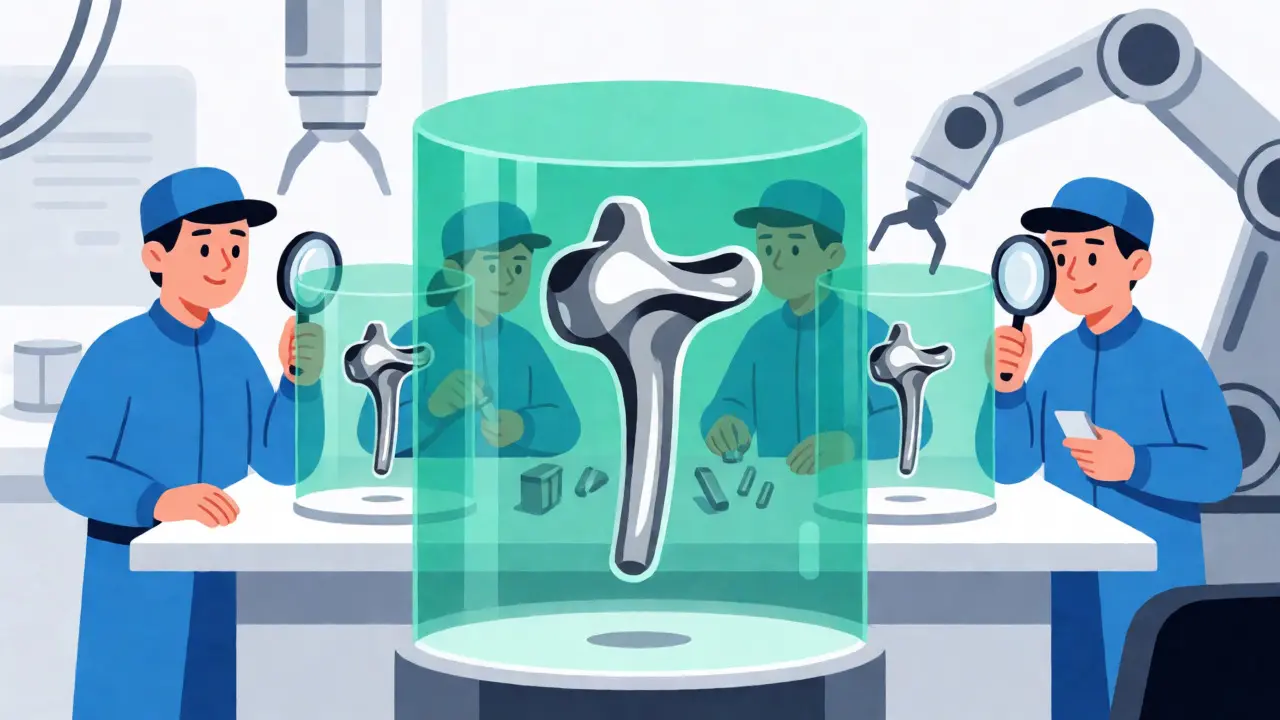
Imagine you are about to undergo a hip replacement. The titanium implant sliding into your joint wasn't just manufactured; it was scrutinized under a microscope of regulatory scrutiny that would make a diamond appraiser blush. This isn't paranoia-it's the reality of quality control in manufacturing. For patients, these invisible systems are the difference between a device that saves a life and one that causes harm. With the FDA enforcing new harmonized rules as of early 2026, understanding how these safety standards work is no longer just for engineers; it’s crucial for anyone relying on modern medicine.
The backbone of this protection is the Quality Management System (QMS), defined by a structured set of processes ensuring medical devices consistently meet safety and performance requirements before reaching consumers. Historically, the U.S. relied on 21 CFR Part 820, but a massive shift occurred when the FDA adopted ISO 13485:2016 into its regulations via the Quality Management System Regulation (QMSR). Effective February 2, 2026, this change aligns U.S. manufacturers with global standards, aiming to reduce redundant paperwork while tightening risk management protocols. It’s a move designed to prevent an estimated 200,000 adverse events annually by catching defects before they leave the factory floor.
Why Global Harmonization Matters for Patient Safety
For decades, manufacturers selling devices in both the United States and Europe faced a bureaucratic nightmare: complying with two different sets of rules. The FDA’s 21 CFR Part 820 focused heavily on procedural documentation, while the international standard, ISO 13485, emphasized risk-based thinking. This fragmentation often meant that a device could be "compliant" on paper in one country but face scrutiny in another. By incorporating ISO 13485:2016 directly into federal law, the FDA eliminated about 30% of redundant documentation requirements. This isn't just about saving time; it’s about creating a unified language of safety. When a manufacturer in Germany and a supplier in Ohio speak the same quality language, the chain of custody for a heart valve or an insulin pump becomes transparent and traceable, reducing the chance of errors slipping through the cracks.
The Core Pillars of Medical Device Quality
So, what actually happens inside a compliant facility? It’s not just about checking if the product looks right at the end of the line. A robust system relies on several interconnected pillars, each with specific attributes and values that ensure efficacy.
- Risk Management (ISO 14971): This is the proactive heartbeat of the system. Manufacturers must identify hazards, estimate risks, and document mitigation strategies for every variant of a device. If a software update changes how a pacemaker responds to electromagnetic interference, the risk file must reflect that immediately.
- Design Controls: These ensure that what was designed is what gets built. Traceability matrices link design inputs (what the doctor needs) to design outputs (the actual product specs), preventing scope creep that could compromise safety.
- Production and Process Controls: Standard Operating Procedures (SOPs) define exact steps for every stage. Studies show that strict SOP adherence can reduce error risks by up to 45%. This includes incoming inspection of raw materials and statistical process control (SPC) to monitor variables like temperature or pressure during sterilization.
- Corrective and Preventive Action (CAPA): When something goes wrong, CAPA ensures it doesn’t happen again. It’s not just about fixing the broken unit; it’s about investigating the root cause-whether it’s a faulty machine calibration or human error-and implementing systemic fixes.
Technical Specifications: What Gets Tested?
You might wonder, "How do they know my device is safe?" The answer lies in rigorous testing protocols that vary by device type. For electrical medical devices, compliance with IEC 60601-1 is non-negotiable. This standard mandates minimum dielectric strength tests of 1,500 volts to prevent electrical shock and limits leakage current to 100 microamperes under normal conditions. These aren't arbitrary numbers; they are thresholds calculated to protect vulnerable patients, such as those with implanted leads or compromised skin barriers.
Beyond electrical safety, biocompatibility testing ensures that materials touching tissue won’t cause toxic reactions. Sterility assurance levels require that the probability of a single viable microorganism surviving the sterilization process is less than one in a million. Every batch is subject to acceptance activities, where samples are pulled and tested against predefined criteria. If a batch fails, it’s quarantined immediately. There is no "close enough" in medical manufacturing.

The Human Element: Training and Culture
Technology alone doesn’t guarantee safety; people do. Implementing a new QMS isn't just about buying software; it’s about changing culture. Industry data suggests that quality professionals need 6-12 months to become proficient in complex risk management frameworks. Production staff require 40-80 hours of specialized training on their specific controls. Yet, a common pitfall remains: the "paper quality system." Former FDA reviewer Dr. Marc Jacobi warned that over-reliance on documentation without true process understanding leads to failures. In fact, 23% of FDA Form 483 observations cite inadequate process validation despite complete paperwork. Real safety comes from employees who understand why they follow a step, not just that they must sign off on it.
Comparing Old vs. New Regulatory Frameworks
The transition to the harmonized QMSR represents the most significant shift since 1996. Here’s how the old and new approaches stack up regarding patient impact and operational efficiency.
| Feature | Legacy 21 CFR Part 820 | New QMSR (ISO 13485:2016) |
|---|---|---|
| Risk Focus | Implicitly integrated; less explicit structure | Explicit risk-based thinking throughout all processes |
| Audit Frequency | FDA inspections every 2-5 years based on risk | Annual third-party audits by accredited bodies required |
| Global Acceptance | Primarily U.S.-focused; dual compliance needed for EU | Recognized in 38+ countries; streamlines global market access |
| Supplier Oversight | Basic purchasing controls | Enhanced supply chain risk management and supplier evaluation |
| Patient Impact | Strong baseline safety | Proactive hazard identification reduces field actions by ~35% |

The Role of Technology and AI in Future Safety
We are standing on the brink of a technological leap in quality control. Artificial Intelligence is moving from buzzword to baseline. Early adopters using machine learning to analyze production data report 25-40% reductions in defect rates. Instead of waiting for a batch to fail final inspection, AI can predict deviations by analyzing sensor data from manufacturing equipment in real-time. Gartner predicts that by 2027, 60% of medical device quality systems will incorporate AI-driven analytics. This shift promises to reduce human error by up to 50%, making the path from concept to cure faster and safer.
Key Takeaways for Patients and Professionals
Understanding these systems empowers you. For patients, knowing that your device underwent rigorous ISO-compliant testing provides peace of mind. For industry professionals, mastering the new QMSR landscape is essential for career growth and organizational success. The goal remains constant: to ensure that every stethoscope, MRI machine, and surgical robot performs exactly as intended, protecting the health of millions.
What is ISO 13485?
ISO 13485 is an international standard specifying requirements for a quality management system for organizations involved in the design, development, production, installation, and servicing of medical devices. It emphasizes risk management and regulatory compliance to ensure patient safety.
When did the FDA enforce the new QMSR rules?
The FDA issued the final rule on January 31, 2024, but the effective date for mandatory compliance with the harmonized ISO 13485:2016 standards was February 2, 2026. Manufacturers had a transition period to adapt their systems.
Does quality control apply to software-only medical devices?
Yes. Software as a Medical Device (SaMD) falls under quality management regulations. Manufacturers must validate software functionality, manage cybersecurity risks, and maintain traceability for code changes, just as they do for hardware components.
How does quality control prevent recalls?
Robust quality control identifies defects during production and pre-market validation rather than after distribution. Systems like CAPA allow manufacturers to fix issues internally before they affect patients, significantly reducing the likelihood of costly and dangerous recalls.
Are all medical devices inspected by the FDA?
Not every individual device is inspected. Instead, the FDA inspects manufacturing facilities to verify that the quality management system is functioning correctly. High-risk devices (Class III) face more frequent and rigorous oversight than lower-risk classes.
Rebecca Makayla Crane
September 4, 2026 AT 18:53Finally someone explains this without making my eyes glaze over 🙄✨. The bit about the 'paper quality system' is so real it hurts. I’ve seen companies treat ISO 13485 like a checkbox exercise rather than actual safety culture and it drives me up the wall 😤. If you aren't understanding the *why* behind the SOPs, you're just signing your name on a death warrant for patient safety honestly 💀. Love that you highlighted the AI part too because let's be real, humans are messy but machines don't get tired at 4 PM 👏👏.
Amy B
September 5, 2026 AT 17:18This is such a fascinating deep dive! I never realized how much went into just ensuring a hip replacement didn't fail. The transition from 21 CFR Part 820 to ISO 13485 seems like such a huge bureaucratic shift but also incredibly necessary for global harmonization. It’s wild to think that before this, manufacturers were basically doing double the paperwork for no extra safety benefit in some cases. Do you think smaller startups will struggle with the new audit frequency requirements?
Rob Alderman
September 7, 2026 AT 11:54The reduction of redundant documentation by 30% is the only tangible metric here that actually matters. Everything else is standard regulatory fluff designed to justify the existence of compliance departments. Most of these QMS frameworks are performative theater for auditors rather than genuine engineering controls. Until we see data proving that risk-based thinking actually reduces adverse events more than prescriptive checklists did, this is just another layer of administrative bloat.
Evelyn Reed
September 7, 2026 AT 19:25interesting take on the harmonization aspect. usually i find qms stuff dry as hell but the supplier oversight point is crucial. supply chain fragmentation is where most defects hide imo. if you cant trace the raw material batch back to source instantly during a recall its basically useless. good breakdown of the technical specs though. dielectric strength tests are non negotiable for obvious reasons
Somnath Thombre
September 8, 2026 AT 02:20great read!! really helpful for those of us trying to understand why our medical devices cost so much lol. the ai prediction part sounds super cool. hope they implement it soon so we dont have to wait months for inspection results. keep up the good work!!! 🚀🔧
Kimberley Odish
September 8, 2026 AT 23:40While the article presents a sanitized view of regulatory evolution, it fails to address the catastrophic failure rates inherent in the current implementation timeline. You mention a transition period ending in February 2026, yet industry reports indicate that nearly 40% of mid-sized manufacturers are unprepared for the stringent risk management protocols required by ISO 14971 integration. This isn't merely an administrative hurdle; it is a systemic vulnerability that exposes patients to unknown risks during the transition phase. The reliance on third-party audits introduces a conflict of interest that the FDA has conveniently ignored in favor of global market access metrics. We are trading rigorous federal oversight for commercial convenience, and the patient bears the brunt of this compromise.
Adam Viruet
September 10, 2026 AT 21:57Wait... hold on a second?? Are we seriously pretending that changing the name from Part 820 to QMSR fixes everything??? Because last time I checked... the same companies that failed inspections under the old rules are still failing them now... just with different paperwork... and frankly... I think this whole 'harmonization' thing is just a way for big pharma to lobby for fewer US-specific checks... because Europe doesn't care about our specific issues... or do they??? 🤨🤷♂️📝❓
Eric Schultze
September 12, 2026 AT 02:24The introduction of annual third-party audits is not a safeguard; it is a privatization of public health security. By delegating enforcement to private entities, we create a feedback loop where the auditor's revenue depends on the manufacturer's continued business. This structural conflict ensures that minor deviations are overlooked to maintain client relationships. Furthermore, the emphasis on 'risk-based thinking' allows manufacturers to define their own acceptable levels of danger, effectively letting the fox guard the henhouse. We must demand independent, unannounced federal inspections, not scheduled visits by paid consultants.
Jeremy Westcott
September 14, 2026 AT 02:10Dude, look at who benefits from this. Big consulting firms are going to make bank helping everyone switch over. And don't get me started on the AI stuff. Who owns the data? Is it the manufacturer or the cloud provider? There's a hidden surveillance angle here nobody talks about. They say it's for safety, but it feels like they're building a database to track every single defect to sue later. Keep your friends close and your sensors closer.
Amanda SF
September 15, 2026 AT 18:29I find the optimism regarding AI-driven analytics to be somewhat naive. While Gartner predictions are useful for marketing brochures, the reality of implementing machine learning in legacy manufacturing environments is fraught with data silos and interoperability issues. Many facilities lack the clean, structured historical data required for effective model training. Consequently, the projected 25-40% reduction in defect rates may remain aspirational rather than achievable for the majority of the industry. We should temper expectations until we see peer-reviewed case studies demonstrating sustained efficacy beyond pilot programs.