Alcohol and Weight Loss: How Calories, Appetite, and Smart Choices Impact Your Progress
 Feb, 4 2026
You've probably heard that alcohol is full of empty calories, but what does that really mean for your weight loss goals? The truth is, alcohol isn't just about calories-it messes with your body's ability to burn fat and makes you hungrier. Let's break down how it all works and what you can do about it.
The Calorie Trap
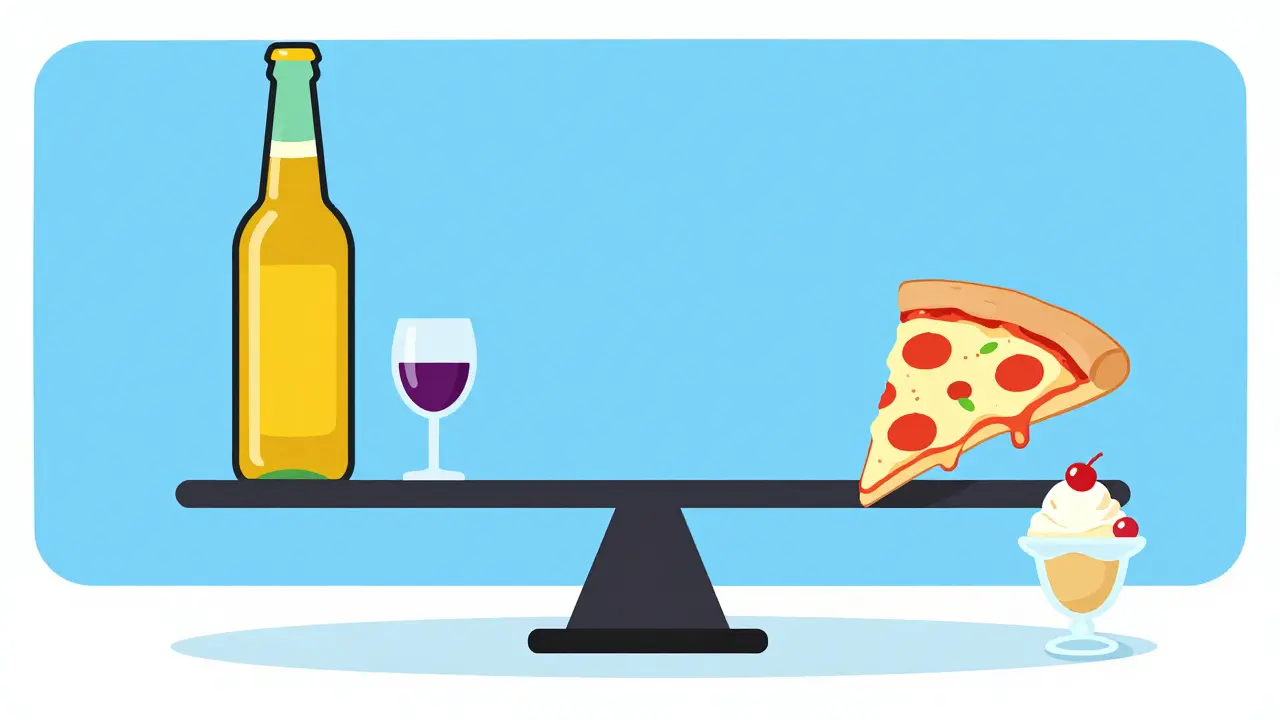
Alcohol contains 7 calories per gram-nearly twice as much as protein or carbs (4 calories per gram) and close to fat (9 calories per gram). A standard 12-ounce beer has about 150 calories, roughly equal to one slice of pizza. A 5-ounce glass of wine delivers 120-125 calories, similar to a small ice cream sundae. Even a 1.5-ounce shot of vodka packs 100 calories. But here's the kicker: unlike pizza or ice cream, alcohol doesn't fill you up. You're adding calories without any satiety signals.
Mixed drinks are the real troublemakers. A piña colada can hit 400-500 calories, while some cocktails top 700 calories per serving. That's like eating two burgers without realizing it. These 'empty calories' provide energy but zero nutrients like protein, fiber, or vitamins. The National Institutes of Health confirms alcohol lacks essential nutrients, making it pure energy with no health benefits.
How Alcohol Slows Fat Burning
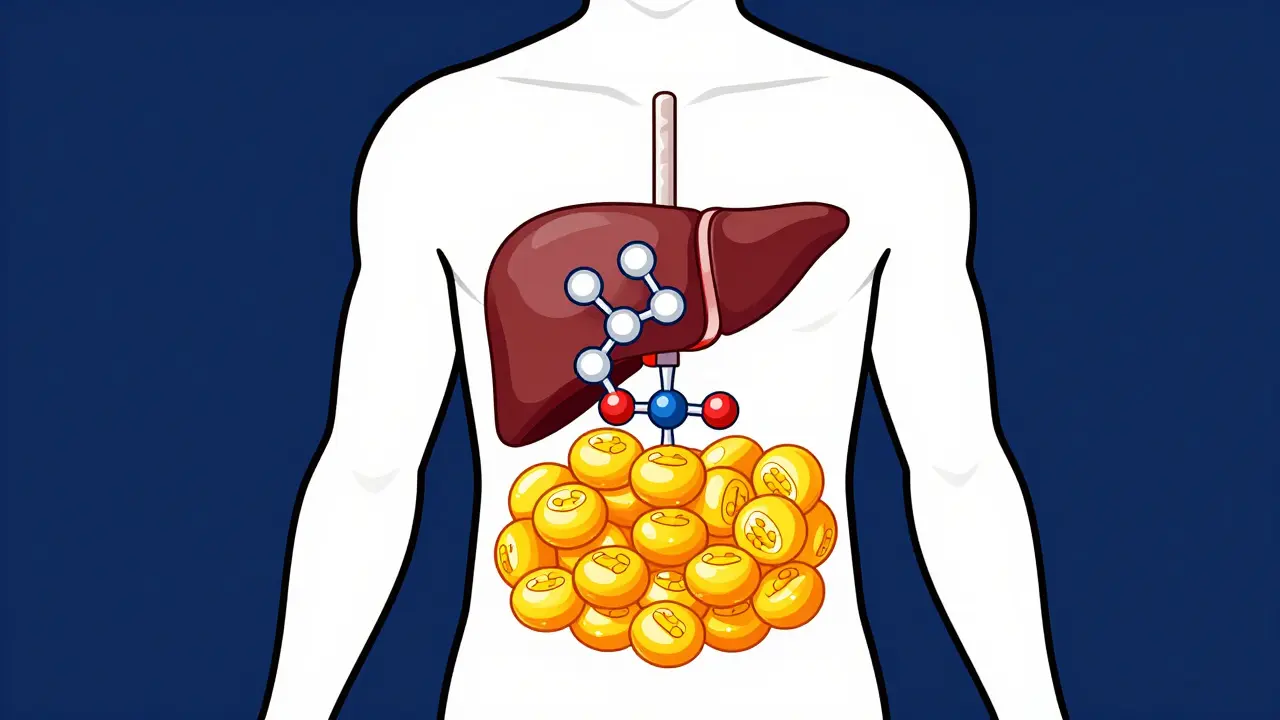
Your body treats alcohol as a toxin and processes it first. When you drink, your liver prioritizes breaking down ethanol over other nutrients. Research from UC San Diego Health shows this metabolic shift lasts 1-2 hours per standard drink. During that time, any dietary fat you eat is 30-40% more likely to be stored as body fat.
Compare this to other high-calorie items. A pint of lager (180-200 calories) equals a slice of pizza, but unlike pizza, alcohol uniquely disrupts fat oxidation. A 2022 study in Obesity Science & Practice found people who eliminated alcohol while keeping other habits the same lost 3.2% more body fat over 12 weeks than those who cut equal calories from food. Why? Alcohol doesn't just add calories-it blocks your body's fat-burning process.
Alcohol Makes You Hungrier
Alcohol lowers inhibitions and increases hunger. A Cleveland Clinic study tracked participants eating after alcoholic and non-alcoholic drinks. Those who drank consumed 20% more food. Late-night snacking jumps by 45% after drinking, according to UC San Diego research. Think about those midnight pizza runs after a few drinks-alcohol makes poor food choices feel normal.
Unlike solid food, alcohol doesn't trigger fullness signals. You might feel full from the drink itself, but your body doesn't register those calories as nourishment. This is why people often eat more after drinking. The European Journal of Clinical Nutrition reviewed 78% of studies showing alcohol stimulates appetite, especially for high-fat, high-carb foods.
Practical Strategies for Weight Loss
Here's what works based on real data:
- Choose lower-calorie options: Vodka with club soda saves 150-200 calories per drink compared to sugary mixers. A 1.5-ounce shot of vodka has 100 calories-no extra sugar, no extra fat.
- Implement alcohol-free days: Iowa Weight Loss Center data shows 3-4 alcohol-free days weekly cuts 750-1,200 calories for moderate drinkers. That's a full week of weight loss progress just from skipping drinks.
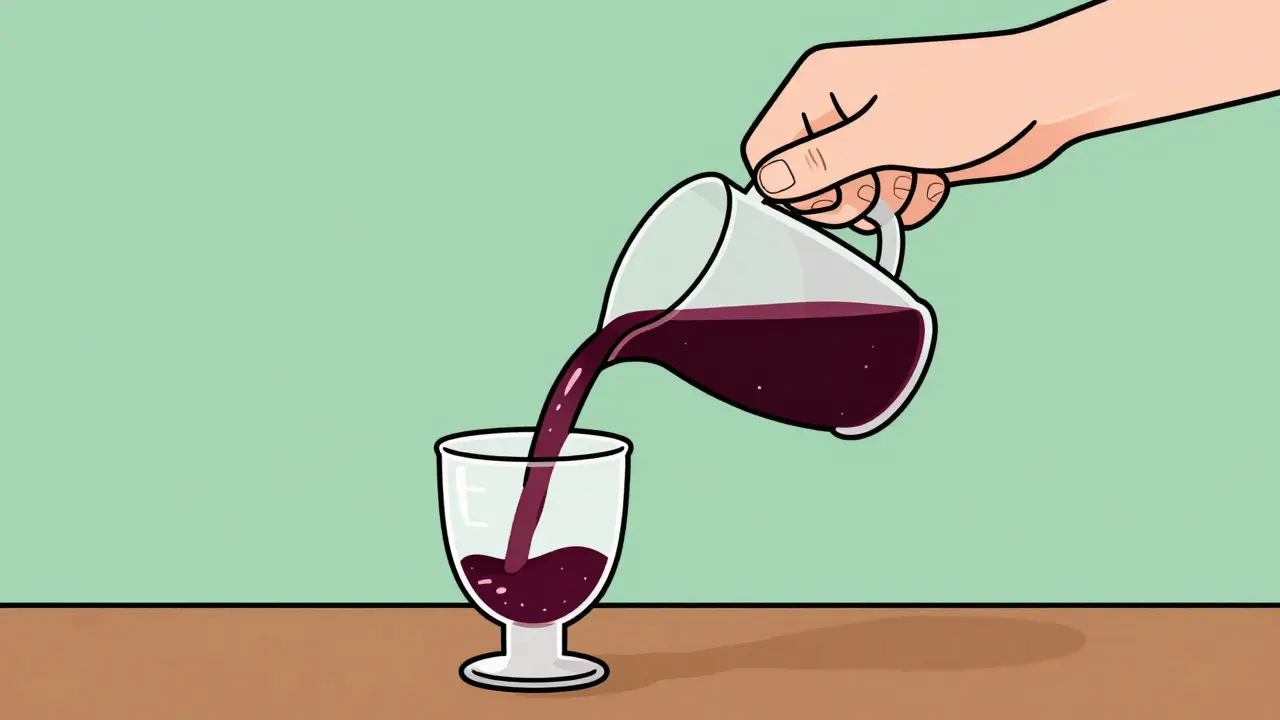
- Measure your pours: Drinkaware found people pour 30% more wine at home than standard 5-ounce servings. Measuring with a cup adds up: one extra ounce of wine = 25 extra calories per glass.
- Pre-load with protein: Eating 20-30g of protein (like grilled chicken or Greek yogurt) before drinking reduces post-drinking food intake by 18%, per Cleveland Clinic research.
| Drink Type | Standard Serving | Calories | Food Equivalent |
|---|---|---|---|
| Beer (12 oz) | 12 ounces | 150 | 1 slice of pizza |
| Wine (5 oz) | 5 ounces | 120-125 | Small ice cream sundae |
| Distilled Spirits (1.5 oz) | 1.5 ounces | 100 | 1 small apple |
| Piña Colada | Standard serving | 400-500 | 1.5 burgers |
Common Mistakes People Make
Many underestimate alcohol calories. A 2022 UC San Diego study found drinkers misjudge cocktail calories by 47% on average. A margarita might seem like 200 calories, but it's often 500+ due to sugary mixes. Social pressure is another hurdle-saying 'no' feels awkward, but your health goals come first.
Tracking is key. Apps like Drinkaware help log calories accurately. Without tracking, you're guessing. The National Health and Nutrition Examination Survey shows regular drinkers (8+ drinks/week) have 23% higher obesity rates than non-drinkers, even after controlling for diet. Cutting back isn't about perfection-it's about awareness.
Does alcohol directly turn into fat?
No. Alcohol is broken down into acetate first, which your body uses for energy. But while processing alcohol, your body pauses fat burning. This means dietary fat you eat during that time is more likely stored as body fat. It's not that alcohol turns into fat-it blocks your body's ability to burn fat.
Can I still drink wine while trying to lose weight?
Yes, but moderation matters. A 5-ounce glass of wine has 120-125 calories-similar to a small dessert. If you drink wine, measure your pour to avoid extra calories. Pair it with protein to reduce hunger afterward. The Dietary Guidelines for Americans 2020-2025 say moderate drinking (up to 1 drink/day for women) can fit into healthy eating patterns if calories are accounted for.
Why does alcohol make me hungrier?
Alcohol lowers inhibitions and disrupts hunger hormones. Research from the Cleveland Clinic shows it increases ghrelin (the 'hunger hormone') while reducing leptin (the 'fullness hormone'). This makes high-calorie foods seem more appealing. In controlled studies, people ate 20% more after drinking compared to non-alcoholic drinks. Late-night snacking spikes by 45% because alcohol impairs judgment about food choices.
What's the best low-calorie alcoholic drink?
Vodka or gin with club soda and lime has about 100 calories-no sugar, no extra carbs. Avoid sugary mixers like juice or soda. A 1.5-ounce shot of spirits mixed with zero-calorie soda saves 150-200 calories compared to cocktails like margaritas or piña coladas. If you prefer wine, choose dry varieties (like Sauvignon Blanc) and measure your pour to stay under 125 calories per glass.
How many alcohol-free days should I have each week?
Iowa Weight Loss Center data shows 3-4 alcohol-free days weekly cuts 750-1,200 calories for moderate drinkers. That's enough to lose about 0.2-0.3 pounds weekly just from skipping drinks. Start with two alcohol-free days if you're new to this, then build up. Consistency matters more than perfection-missing one drink a day adds up over time.
Brendan Ferguson
February 6, 2026 AT 06:43When it comes to weight loss, alcohol is often overlooked as a major factor. It's not just about the calories-though they add up quickly. Each gram of alcohol contains seven calories, which is almost double that of protein or carbs. More importantly, your body treats alcohol as a toxin and processes it first, pausing fat burning for hours after consumption. Research from UC San Diego Health shows this metabolic shift can last one to two hours per drink, during which dietary fat is more likely to be stored. Additionally, alcohol lowers inhibitions and increases hunger, leading to poor food choices. A Cleveland Clinic study found people consume 20% more food after drinking. Late-night snacking spikes by 45% after alcohol intake, often resulting in high-calorie meals. The key is understanding that alcohol doesn't just add calories-it actively hinders fat loss. Practical steps like choosing vodka with club soda instead of sugary mixers can save 150-200 calories per drink. Measuring pours is crucial because people often pour 30% more wine than standard servings. Having three to four alcohol-free days a week can cut 750-1200 calories monthly. Pre-loading with protein before drinking reduces post-alcohol food intake by 18%. Small changes like these add up over time without requiring drastic lifestyle shifts. Consistency matters more than perfection; even minor adjustments can lead to noticeable progress.
Lana Younis
February 7, 2026 AT 18:11Man, I was totally shocked to learn that alcohol is like 7 cal/g-way more than protein or carbs! And it's like, the body processes it first, so fat burning pauses. Also, it's a major appetite stimulant-like, you eat 20% more after drinking. But hey, I've started doing 3-4 alcohol-free days a week, and it's been a game-changer. Definately something to consider!
one hamzah
February 9, 2026 AT 12:52Hey everyone! 😊 Alcohol calories are sneaky, but small changes can make a huge difference. I started measuring my pours and using club soda-so much easier than I thought! Keep it up, you got this! 💪
Elliot Alejo
February 9, 2026 AT 17:20The data shows alcohol significantly hinders fat burning. It's not just about calories; the metabolic disruption is key. Practical steps like choosing lower-calorie drinks and having alcohol-free days are effective. It's about awareness and consistency.
Danielle Vila
February 9, 2026 AT 18:01Big Pharma and alcohol industry are in cahoots. They want you to believe alcohol is bad for weight loss, but it's actually a trick to sell weight loss drugs. The truth is hidden in plain sight.
Thorben Westerhuys
February 10, 2026 AT 00:29Oh my goodness!!! I can't believe how much alcohol affects fat burning! It's like, your body stops burning fat for hours after drinking! And the hunger thing-my god, I've been eating so much after drinking! This is so important! I need to change my habits immediately!!!
Laissa Peixoto
February 11, 2026 AT 12:24It's fascinating how the body prioritizes ethanol metabolism. This metabolic shift not only delays fat oxidation but also increases the likelihood of fat storage. Understanding this process helps in making informed choices. Small adjustments can lead to significant long-term benefits.
Andre Shaw
February 11, 2026 AT 22:44Recent meta-analyses show moderate alcohol consumption doesn't impair fat burning. Some studies suggest it may even help with weight management. The data here is misinterpreted.
Dr. Sara Harowitz
February 12, 2026 AT 00:17Alcohol is fine in moderation. The real issue is lack of discipline. People who can't control their drinking shouldn't drink at all. This is basic common sense.
Carol Woulfe
February 12, 2026 AT 10:39The pharmaceutical companies have a vested interest in promoting the idea that alcohol is harmful while selling weight loss drugs. The truth is hidden in plain sight.
Cullen Bausman
February 14, 2026 AT 08:06Alcohol is a moral failing. If you can't control your drinking, you're weak. No excuses.
Arjun Paul
February 15, 2026 AT 21:57This is basic common sense. Alcohol is bad for weight loss. Simple. Stop drinking if you want to lose weight.
Pamela Power
February 16, 2026 AT 12:41This is amateurish advice. Real experts know that alcohol calories are negligible. The real issue is lack of discipline. Pathetic.
Joyce cuypers
February 17, 2026 AT 06:31Cutting alcohol was the best thing I did for my weight loss.