AMD Vitamins: What the AREDS2 Evidence Says and Who Should Take Them
 Jan, 15 2026
If you’ve been told you have intermediate age-related macular degeneration (AMD), you might have been handed a bottle of colorful pills labeled AREDS2 vitamins. But are they really worth taking? And if you only have early signs or no AMD at all, should you pop them just to be safe? The answer isn’t simple - but the science is clear.
What Exactly Are AREDS2 Vitamins?
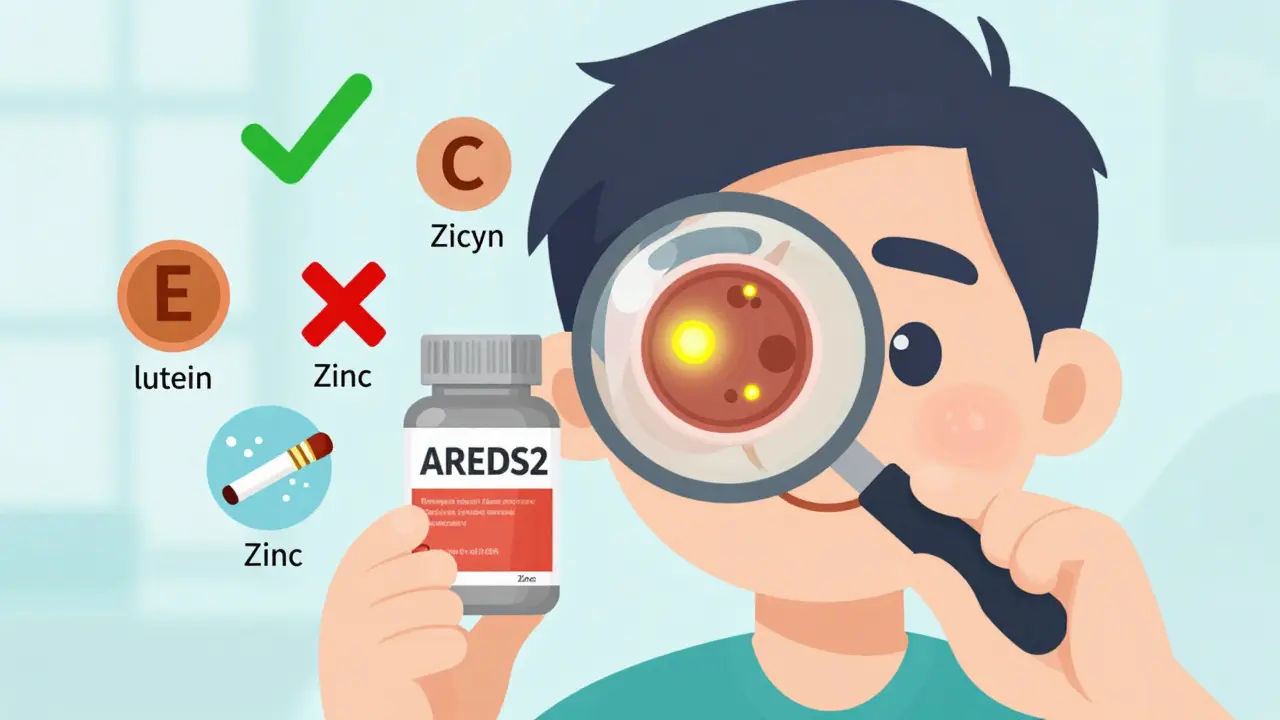
AREDS2 isn’t a brand. It’s a formula - the result of a decade-long clinical trial run by the National Eye Institute. The original AREDS study in 2001 showed that a mix of antioxidants and zinc could slow AMD progression. But the updated version, AREDS2, made a critical change: it removed beta carotene and added lutein and zeaxanthin.
The current AREDS2 formula contains:
- 500 mg of vitamin C
- 400 IU of vitamin E
- 10 mg of lutein
- 2 mg of zeaxanthin
- 80 mg of zinc (as zinc oxide)
- 2 mg of copper (as cupric oxide)
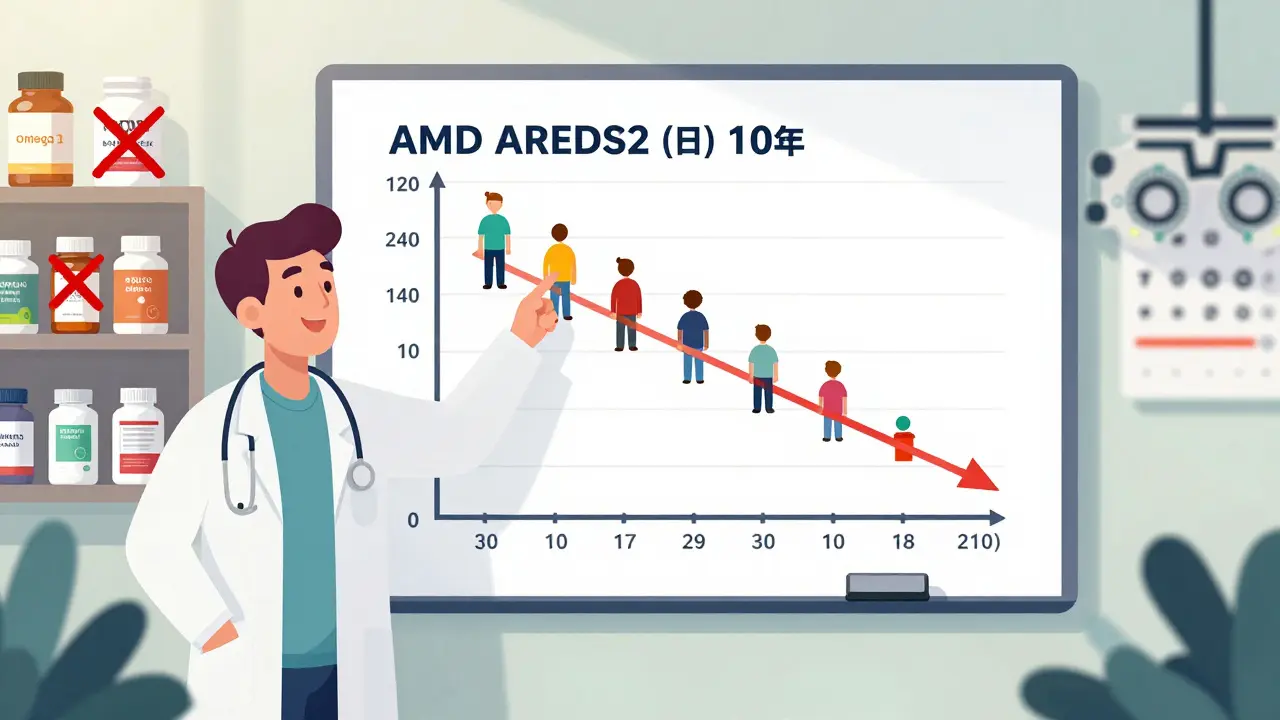
This specific combination was tested on over 3,800 people with AMD over 10 years. The goal? To find out what actually works - and what doesn’t.
Who Should Take AREDS2 Vitamins?
Not everyone with eye problems needs these supplements. In fact, most people shouldn’t take them at all.
The only people who benefit from AREDS2 are those with:
- Intermediate AMD in one or both eyes (many medium-sized drusen or at least one large drusen), OR
- Advanced AMD (geographic atrophy) in one eye, with intermediate AMD in the other eye.
If you have only small drusen - the early stage of AMD - taking AREDS2 won’t help. It won’t prevent AMD from starting. It won’t improve your vision. And it won’t stop you from developing it later.
That’s a big deal. Many people buy these supplements thinking they’re a general eye health boost. They’re not. They’re a targeted medical intervention for a specific stage of a specific disease.
Why Did They Remove Beta Carotene?
The original AREDS formula included 15 mg of beta carotene. It helped slow AMD - but it also raised the risk of lung cancer in people who smoked or used to smoke.
The AREDS2 trial found that replacing beta carotene with lutein and zeaxanthin eliminated that risk entirely. In fact, the new formula worked better. People taking lutein and zeaxanthin had a 26% lower risk of progressing to late-stage AMD over 10 years - compared to 25% with the old formula. That might not sound like much, but in eye disease, even a 1% difference matters.
And here’s the kicker: people with low dietary intake of lutein and zeaxanthin - think those who rarely eat spinach, kale, or eggs - saw the biggest benefit. The supplements made the most difference for those who needed them most.
What About Omega-3s? B Vitamins? Other Supplements?
AREDS2 tested other ingredients too. Omega-3 fatty acids? No benefit. Added to the mix, they didn’t help slow AMD at all. B vitamins? They showed promise in earlier studies for preventing early AMD, but AREDS2 didn’t find any protective effect.
So if you’re taking a supplement with fish oil, DHA, or a B-complex labeled for eye health - you’re wasting your money. The only proven combo is the AREDS2 formula.
Can AREDS2 Reverse Vision Loss?
No. And this is critical to understand.
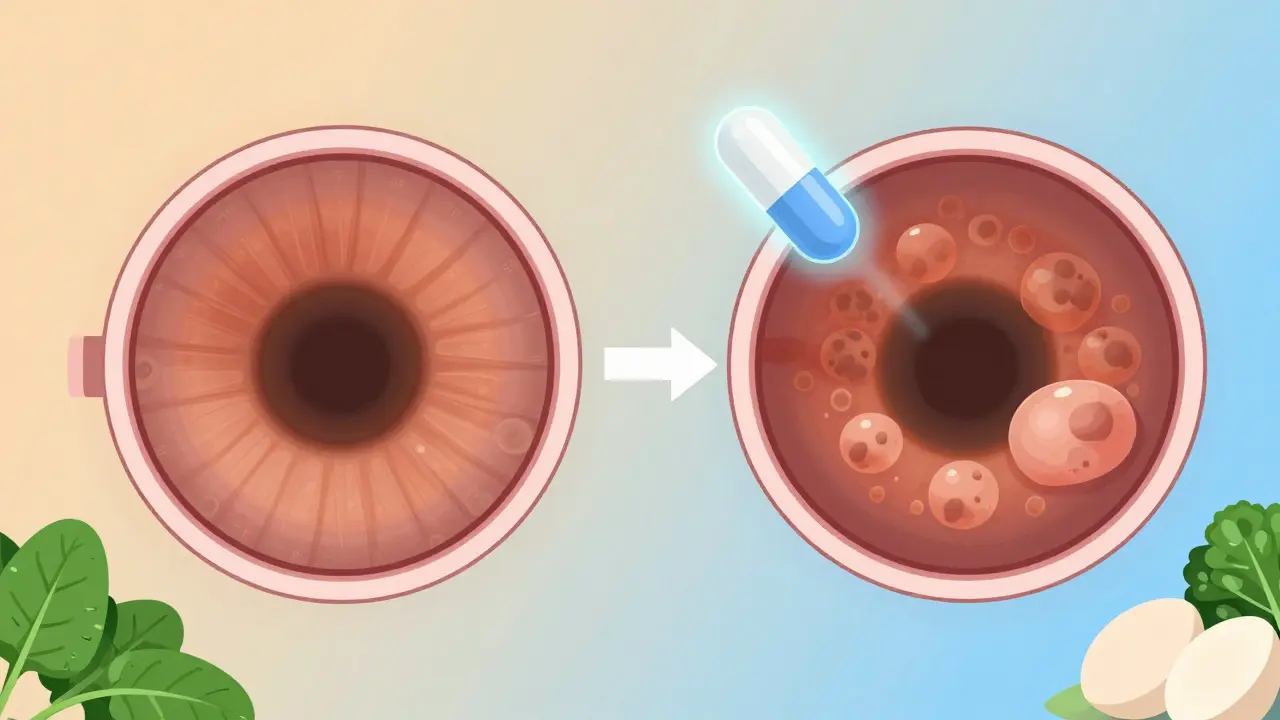
AREDS2 vitamins don’t restore vision. They don’t fix damage already done. They don’t make blurry vision clearer. They only slow the progression of the disease.
If you’ve already lost central vision due to geographic atrophy, these pills won’t bring it back. But if you’re still in the intermediate stage - before major vision loss - they can help you keep your sight longer.
Dr. Emily Chew, who led the 10-year follow-up study, put it plainly: “AREDS supplements cannot reverse vision damage that has already occurred.”
New Findings: What About Late-Stage AMD?
In July 2024, researchers made a surprising discovery. They looked back at retinal scans from 1,209 people who had already developed geographic atrophy - the most advanced form of dry AMD. They found that those who had been taking AREDS2 supplements for years had a 55% slower rate of disease progression over three years - especially when the damaged area was outside the very center of the macula.
This is huge. Until now, experts thought AREDS2 only worked for intermediate AMD. Now, it appears it might help even those with late-stage disease - at least in some cases.
It’s not a cure. But if it helps someone stay independent longer - keep driving, reading, recognizing faces - that’s meaningful.
How Long Should You Take Them?
The AREDS2 trial lasted 10 years. Participants took the supplements daily. No major safety issues popped up. No increased risk of infections, liver problems, or other side effects.
Long-term use is considered safe - as long as you’re taking the right formula. Too much zinc can cause stomach upset or interfere with copper absorption. That’s why copper is included in the formula. Too much vitamin E? Possible bleeding risk in people on blood thinners. That’s why medical supervision is recommended.
If you’re on blood pressure meds, diabetes drugs, or anticoagulants, talk to your doctor before starting. Your pharmacist can check for interactions too.
What If You Don’t Have AMD Yet?
Don’t take them.
There’s zero evidence that AREDS2 prevents AMD in people with healthy eyes or only early signs. Taking them won’t protect you. It won’t delay onset. And it won’t make your vision sharper.
Instead, focus on what actually works: eating leafy greens, wearing UV-blocking sunglasses, not smoking, and getting regular eye exams. If you’re over 50, a yearly dilated eye exam is the best prevention tool you have.
How to Choose the Right Supplement
Not all “AREDS2” supplements are created equal. Some brands cut corners. They use cheaper forms of zinc, skip copper, or add unnecessary ingredients.
Look for the exact dosages listed above. Check the label. If it says “beta carotene,” put it back. If it says “lutein and zeaxanthin,” good. If it says “for eye health” without listing the full formula, it’s not the real thing.
Some pharmacies carry branded versions like PreserVision AREDS2 or ICaps AREDS2. Generic brands are fine too - as long as they match the NIH formula exactly.
What Happens If You Stop Taking Them?
The protective effect fades over time. Studies show the benefit is tied to consistent daily use. If you stop, your risk of progression returns to baseline.
That doesn’t mean you need to take them forever - but if your doctor says you should, it’s worth sticking with them. Think of them like blood pressure pills: they don’t cure the problem, but they keep it from getting worse.
Bottom Line: Are AREDS2 Vitamins Worth It?
For people with intermediate AMD - yes. Absolutely.
For people with advanced AMD in one eye and intermediate in the other - yes. New data says they might still help.
For everyone else - no. Not as a preventive. Not for early AMD. Not for general eye health.
These aren’t vitamins you take because they’re “good for you.” They’re a medical tool. Use them only if your eye doctor says you need them. And never skip the annual eye exam to check your stage of AMD. That’s the only way to know if you’re still in the group that benefits.
Can AREDS2 vitamins improve my vision if I already have blurry sight?
No. AREDS2 vitamins cannot restore vision or reverse damage that has already occurred. They only slow the progression of the disease in certain stages. If you’ve lost central vision due to geographic atrophy, these supplements won’t bring it back.
Should I take AREDS2 if I have early AMD or small drusen?
No. Multiple studies, including the 10-year AREDS2 follow-up, show no benefit for people with early AMD. Taking these supplements won’t prevent the disease from progressing or stop it from developing later. They’re not a preventive measure.
Is it safe to take AREDS2 vitamins long-term?
Yes. A 10-year follow-up study found no significant safety concerns for people taking the full AREDS2 formula daily. The copper in the formula prevents zinc-induced copper deficiency. However, always consult your doctor if you’re on other medications, especially blood thinners or high-dose zinc supplements.
Can I get the same benefits from food instead of pills?
It’s very hard. The doses in AREDS2 are much higher than what you’d get from diet alone. For example, you’d need to eat over 2 cups of cooked kale daily to match the 10 mg of lutein in one pill. Supplements are used because dietary intake alone can’t reach the levels shown to help in clinical trials.
Do omega-3 supplements help with AMD?
No. The AREDS2 trial specifically tested omega-3 fatty acids and found they provided no additional benefit in slowing AMD progression. Many eye health supplements include them, but they’re not part of the proven formula.
What should I do if I’m not sure what stage of AMD I have?
Schedule a dilated eye exam with an ophthalmologist. Only a professional can determine if you have early, intermediate, or advanced AMD using retinal imaging. Don’t guess based on symptoms - many people with intermediate AMD still have good vision. The stage determines whether AREDS2 is right for you.
Bobbi-Marie Nova
January 16, 2026 AT 14:52So let me get this straight - I’ve been spending $30 a month on ‘eye health’ gummies full of fish oil and mystery powders, and the only thing that actually works is a pill that looks like it came from a 1990s science fair project? 😅
Guess I’ll be switching to PreserVision. Also, why do supplement companies think ‘eye health’ is a magic phrase that lets them dump in 17 ingredients and charge $40?
Allen Davidson
January 17, 2026 AT 04:24People keep treating these like multivitamins. They’re not. This is like taking statins because you ‘might’ get heart disease someday. If your doc hasn’t confirmed intermediate AMD, you’re just flushing cash down the drain.
And if you’re taking omega-3s for your eyes? You’re not helping - you’re just making your urine smell like fish. Stop it.
Samyak Shertok
January 17, 2026 AT 08:56Ah yes - the modern placebo ritual: swallow colorful capsules like some sacred offering to the Eye Gods while ignoring the real truth - your retina is a biological system, not a spreadsheet.
Do you really think a pill can outmaneuver decades of screen glare, processed food, and existential dread? We’re not fixing biology with chemistry - we’re just buying time while the world burns.
Meanwhile, real healers eat kale, sleep in darkness, and stare at the moon. But no, we need a patent-pending formula with copper oxide. Of course we do.
Capitalism doesn’t cure disease - it repackages it with a label that says ‘clinically proven’ and charges you $50 a bottle.
Still… I’ll take mine. Because what else is there?
Corey Sawchuk
January 19, 2026 AT 03:06Been on AREDS2 for 5 years since my intermediate AMD diagnosis
My vision hasn’t gotten worse
Didn’t fix what was broken
But didn’t make it worse either
Worth it for peace of mind
Also stopped the fish oil junk
My stomach thanks me
Nick Cole
January 21, 2026 AT 00:13Biggest thing people miss - this isn’t about prevention. It’s about delay. If you’re in the sweet spot, these pills give you maybe 5–7 extra years of independent living. That’s not nothing.
Imagine being able to read your grandkid’s birthday card without squinting for another five years. That’s the win.
Don’t overhype it. Don’t undersell it. Just know who it’s for.
Riya Katyal
January 22, 2026 AT 12:56so you’re telling me i’ve been wasting money on those ‘vision support’ gummies my aunt swears by? lol
she’s 78 and still takes them like they’re candy
she also thinks wifi causes cancer
but hey at least she’s not on the beta carotene thing anymore
thank god for science i guess
Henry Ip
January 24, 2026 AT 02:40Just got my retinal scan last week
Intermediate AMD in left eye
Right eye clean
Doc said AREDS2
Went to the pharmacy
Looked at 7 different bottles
Three had beta carotene
One had omega-3
One had ginseng for some reason
Finally found the right one
Worth the 20 minute search
Don’t trust the labels
Check the ingredients
Match the NIH numbers
It’s not hard
Just don’t wing it
waneta rozwan
January 25, 2026 AT 17:53Oh my god I just realized I’ve been taking the original AREDS formula for three years.
My husband’s a smoker and I’ve been giving him these like they’re candy.
Why didn’t anyone tell me about the lung cancer risk?
Thank you for this post.
I’m throwing them out tonight.
And buying the right ones.
And telling my entire book club.
Also I’m starting to eat kale.
Maybe.
Nicholas Gabriel
January 26, 2026 AT 12:44PLEASE - if you’re reading this and you’re over 50 - get a dilated eye exam. Every year. No excuses.
AMD doesn’t hurt. It doesn’t blink. It doesn’t warn you.
You could have intermediate AMD and still read a phone screen perfectly.
And if you don’t know your stage, you’re taking supplements blindly - and that’s dangerous.
Don’t rely on symptoms. Don’t rely on YouTube videos.
Go see an ophthalmologist.
It’s free with Medicare.
It takes 20 minutes.
It could save your vision.
Do it.
Cheryl Griffith
January 27, 2026 AT 09:07I’ve been on AREDS2 since 2021. My dr said I’m stable. No progression.
My mom had AMD and lost her central vision by 72.
I’m 64 now.
Still drive. Still read. Still sew.
These pills aren’t magic.
But they’re the only thing we’ve got that’s actually backed by science.
And honestly? I’d rather take a pill than go blind.
Also - lutein from food? Yeah, right.
I’d need to eat 3 heads of kale a day.
I like my kale in smoothies.
Not as a main course.
swarnima singh
January 27, 2026 AT 21:54so... are we just buying time while capitalism sells us hope in pill form?
they removed beta carotene because it gave people cancer
but they still sell 80mg of zinc?
who decided that was safe?
and why is copper in there?
because zinc steals it?
so we're just fixing one problem with another?
and we call this medicine?
it's just chemistry roulette
and we're all the gamblers
and the doctors? they're just the dealers
with white coats