Candida Vaginitis: Yeast Infection Symptoms and Over-the-Counter Treatment Options
 Jan, 6 2026
More than three out of four women will get a yeast infection at least once in their life. If you’ve ever felt that intense itching, burning, or noticed thick white discharge, you know how disruptive it can be. It’s not just uncomfortable-it can make sitting, walking, or even sleeping feel impossible. The good news? Most cases are caused by a common fungus called Candida albicans, and you don’t always need a doctor’s visit to treat it. Over-the-counter options work well-if you’re dealing with the right thing.
What Does a Yeast Infection Actually Feel Like?
- Intense itching in and around the vagina
- Redness, swelling, or soreness of the vulva
- Pain during sex or urination
- Thick, white discharge that looks like cottage cheese
What Causes a Yeast Infection?
Your vagina naturally has yeast in small amounts. It’s kept in check by good bacteria, especially Lactobacillus. When that balance breaks, yeast takes over. Common triggers include:- Antibiotics (they kill good bacteria along with bad ones)
- Pregnancy (hormones boost yeast growth)
- Uncontrolled diabetes (high sugar feeds yeast)
- Wearing damp clothes or tight synthetic underwear
- Birth control pills or hormone therapy
Over-the-Counter Treatments That Actually Work
For first-time, mild-to-moderate cases, OTC antifungals are the first-line solution. They’re effective in 80-90% of cases when used correctly. The three main types are:Clotrimazole
Available as creams, tablets, or suppositories. You can find:- 1% cream: apply twice daily for 7-14 days
- 2% cream: apply once daily for 3 days
- 100mg or 200mg vaginal tablets: insert once daily for 3-7 days
Miconazole
Also sold as cream or suppositories:- 2% cream: apply once daily for 7 days
- 100mg suppositories: insert once daily for 7 days
Tioconazole
A single-dose option:- 6.5% ointment: apply once, no repeat needed
Which Form Should You Choose: Cream, Tablet, or Suppository?
Creams are messy. Suppositories and tablets are cleaner and stay in place longer. A 2023 study found 65% of users prefer suppositories despite creams having slightly higher satisfaction ratings (4.2/5 vs 3.8/5). Why? Because creams can leak and stain underwear. Suppositories dissolve inside, so there’s less cleanup. But effectiveness? It’s about the same. A 2018 review showed cure rates of 85% across all formats for uncomplicated cases. The key isn’t the product-it’s how you use it.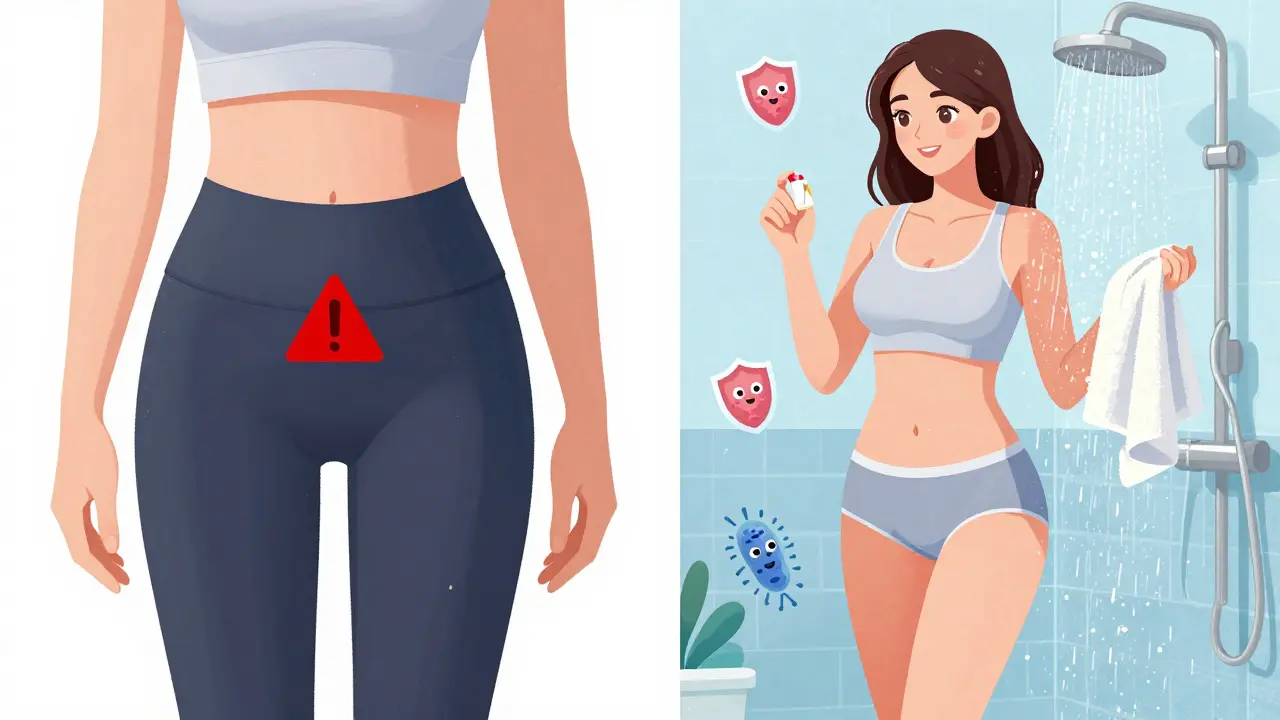
How to Use OTC Treatments Right
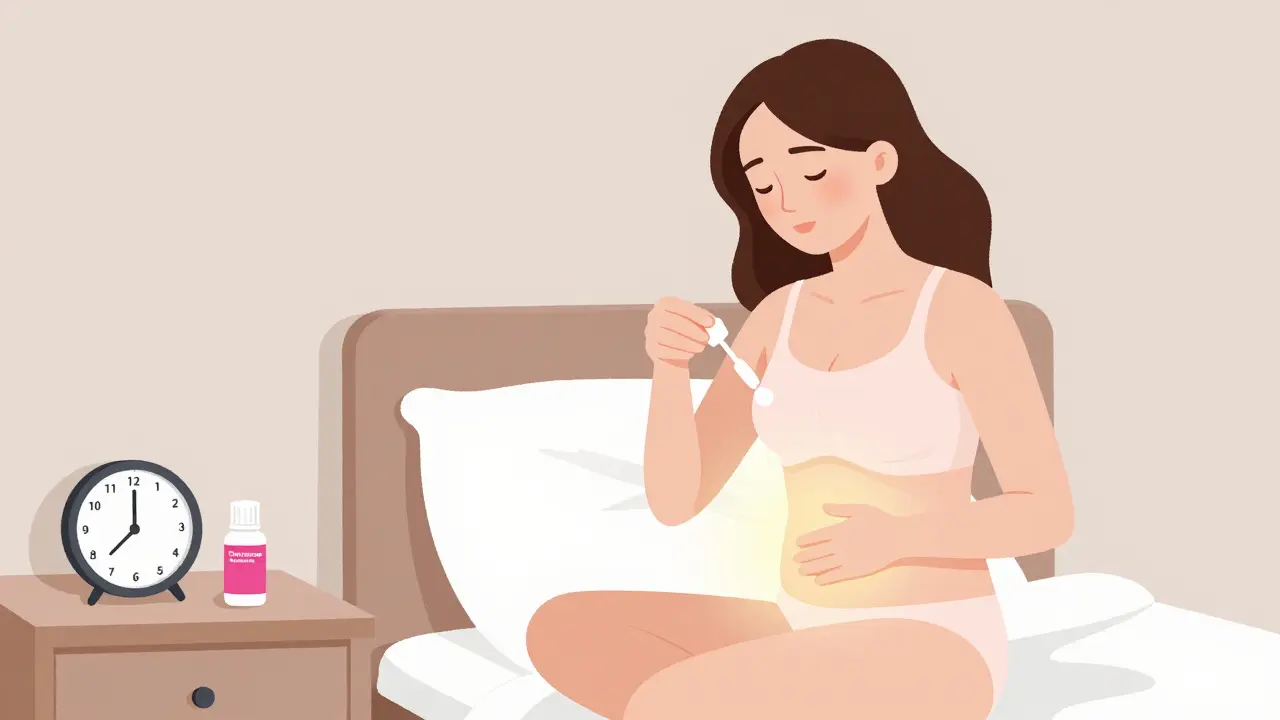
Getting the treatment right matters more than which brand you pick. Follow these steps:- Apply at bedtime. This gives the medication time to work without leaking out.
- Use the applicator if included. Don’t just squeeze cream on your fingers-insert it properly.
- Insert suppositories as deep as possible. If you don’t, they melt and drip out.
- Avoid sex during treatment. It reduces effectiveness by up to 30%.
- Don’t stop early. Even if you feel better, finish the full course.
When Not to Use OTC Treatments
OTC options are great-but only for the right situation. Don’t try them if:- This is your first yeast infection (50-70% of self-diagnosed cases are wrong)
- You’re pregnant (only topical treatments are safe-no pills)
- Your symptoms are severe: deep cracks, bleeding, or swelling that makes walking painful
- You’ve had four or more infections in a year
- You have a fever, chills, or pelvic pain (could be something serious like PID)
Why Your Yeast Infection Won’t Go Away
If you’ve tried OTC treatments and nothing changed after 7 days, it’s not you-it’s likely the bug. About 5-10% of vaginal yeast infections are caused by non-albicans species like Candida glabrata. These don’t respond well to standard azoles. Cure rates drop from 85% to 50-60%. And resistance is growing. A 2023 study found 8% of C. glabrata strains are now resistant to clotrimazole, up from 3% in 2018. If you’ve had multiple infections, your yeast may have adapted. That’s why recurrent cases need a doctor’s evaluation and possibly a prescription.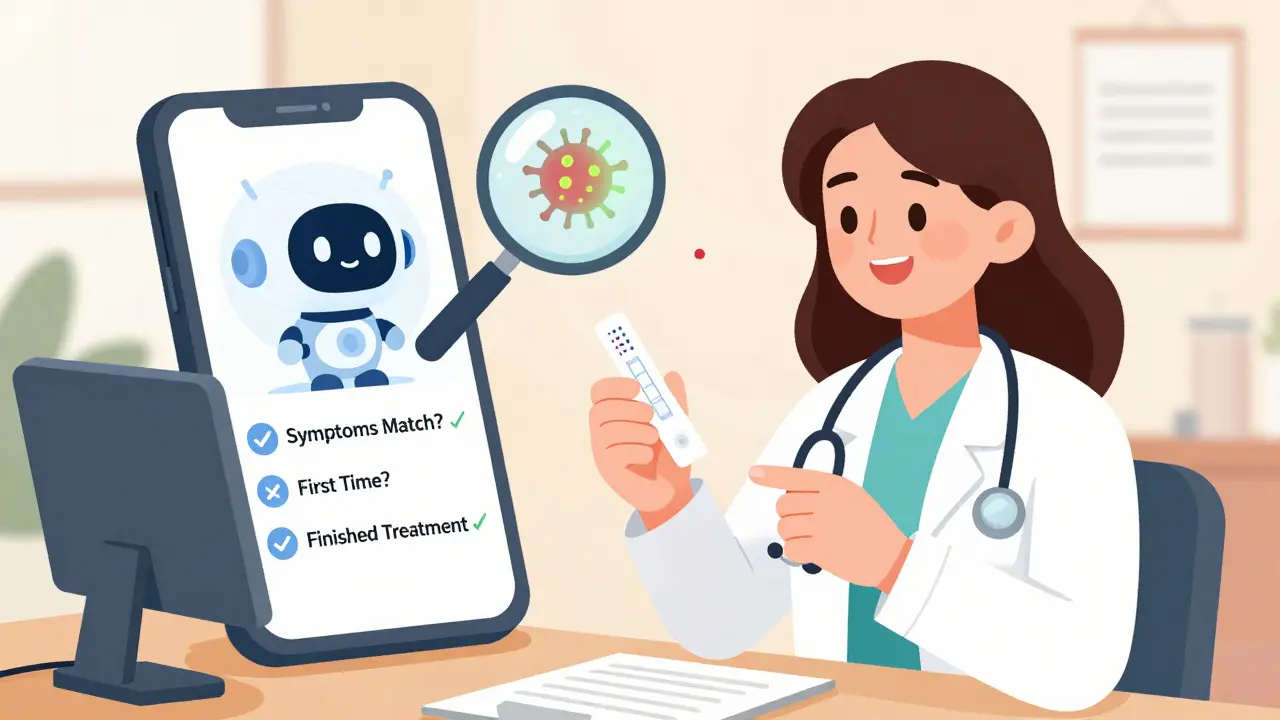
What to Do If OTC Doesn’t Work
If symptoms persist after 7 days of correct OTC use:- Stop the treatment
- See a doctor or nurse practitioner
- Ask for a vaginal swab test
- Get a proper diagnosis before trying again
- Fluconazole (a single oral pill-very effective, but not safe during pregnancy)
- Longer-course antifungals for resistant strains
- Tests to rule out diabetes or immune issues
Preventing Future Infections
Once it’s gone, you don’t want it back. Here’s what helps:- Wear cotton underwear-no synthetics
- Change out of wet swimsuits or workout clothes right away
- Avoid douching (it wipes out good bacteria)
- Use unscented soap and skip scented tampons
- If you’re prone to infections, consider probiotics with Lactobacillus strains
Bottom Line: OTC Works-If You Use It Right
Yeast infections are common, treatable, and rarely dangerous. OTC antifungals like clotrimazole and miconazole are safe and effective for most women. But they’re not magic. You need to recognize the symptoms, use the product correctly, and know when to stop and see a professional. If you’ve had this before and the symptoms match exactly, go ahead and grab a 3-day clotrimazole suppository. Apply it at night. Finish the course. Wait 72 hours. If you feel better? You got lucky-and you did it right. If it’s your first time? Or if anything feels off? Don’t guess. See a provider. A simple test can save you weeks of discomfort-and prevent worse problems down the line.Can I use an OTC yeast infection treatment while pregnant?
Yes-but only topical treatments like creams, suppositories, or tablets containing clotrimazole or miconazole. Oral fluconazole pills are not safe during pregnancy and can harm the baby. Always check the label or ask your pharmacist to confirm the product is approved for use in pregnancy.
How do I know if it’s a yeast infection or bacterial vaginosis?
Yeast infections cause thick, white, cottage cheese-like discharge with intense itching. Bacterial vaginosis (BV) causes thin, grayish discharge with a strong fishy smell, especially after sex. Itching is less common with BV. If you’re unsure, don’t guess-see a provider. Self-treating BV with yeast meds won’t help and can make it worse.
Why does my yeast infection keep coming back?
Recurrent yeast infections (four or more per year) may mean you have a resistant strain, undiagnosed diabetes, or an immune issue. Sometimes, it’s just repeated exposure-like wearing damp clothes or using scented products. A doctor can test for non-albicans Candida species and check your blood sugar. Long-term treatment plans may be needed.
Can men get yeast infections from their partners?
Yes, though it’s less common. Men can develop redness, itching, or a rash on the penis after unprotected sex with an infected partner. It’s usually mild and clears with OTC antifungal cream. However, treating the partner isn’t always necessary unless symptoms appear. Condoms reduce transmission risk.
Is it safe to have sex while using OTC yeast treatment?
It’s best to avoid sex until the infection clears. Semen can change vaginal pH and interfere with the medication. Also, sex can cause irritation, making symptoms worse. Condoms help, but they don’t fully protect the treatment’s effectiveness. Wait until symptoms are gone and you’ve finished the full course.
Do probiotics help prevent yeast infections?
Some studies suggest yes-especially strains like Lactobacillus rhamnosus and L. reuteri. Taking them orally or using vaginal probiotic suppositories may help restore healthy bacteria after antibiotics or infections. But they’re not a replacement for antifungal treatment. Think of them as a backup plan, not a cure.
Can stress cause a yeast infection?
Stress doesn’t directly cause yeast infections, but it weakens your immune system and can raise cortisol levels, which may increase sugar in your body. That creates a better environment for yeast to grow. If you’re under chronic stress and keep getting infections, managing stress through sleep, exercise, or therapy might help reduce frequency.
Christine Joy Chicano
January 8, 2026 AT 07:12Finally, someone broke down the real differences between yeast and BV without sugarcoating it. That cottage cheese discharge description? Spot on. I used to think all weird discharge was yeast until I got misdiagnosed twice. Now I keep a journal of symptoms-texture, smell, timing relative to my cycle. It’s saved me from wasting $40 on clotrimazole when I actually had BV. Knowledge is power, and this post is the textbook.
steve rumsford
January 9, 2026 AT 03:24lol i just put yogurt on my junk one time and it worked so now i just do that every time. no need for fancy pills. also i dont trust pharma. 🤷♂️
Adam Gainski
January 11, 2026 AT 02:55Steve, I get the yogurt thing-it’s a folk remedy with some science behind it, especially if it’s plain and has live cultures. But it’s not reliable enough to replace treatment. If you’re having recurring issues, you’re risking a resistant strain. The CDC data in this post isn’t scare tactics-it’s epidemiology. Probiotics are a great adjunct, not a replacement. And if you’re using yogurt, make sure it’s unsweetened. Sugar feeds the yeast you’re trying to kill.
Mina Murray
January 11, 2026 AT 23:02Let me guess-next they’ll say fluoride in water causes yeast infections. Or that 5G towers are breeding Candida. This is just Big Pharma’s way to sell you $25 creams so you never go to a real doctor. I’ve had 12 infections in 3 years. Every single time, I went to a naturopath. They found my cortisol was through the roof. No antifungals. Just adrenal support and a ketogenic diet. You’re being manipulated.
Kyle King
January 12, 2026 AT 13:53Yeah right and I'm the Queen of England. Candida is a myth created by the medical industrial complex to sell drugs. Your body is fine. You just need to stop being so afraid of your own vagina. I’ve never treated mine and I’ve had sex with 17 people. Still fine. You’re all just scared of your own biology.
Jessie Ann Lambrecht
January 13, 2026 AT 10:09Okay but seriously-this post is a godsend. I had my third infection in 8 months and was about to cry in the pharmacy aisle wondering if I was broken. The part about finishing the full course? I didn’t know that. I always stopped when the itch went away. Now I’m on day 3 of the 7-day suppository and already feel like a new person. Also, cotton underwear changed my life. I’m not joking. I bought 12 pairs. I’m never going back to synthetic. Thank you for writing this.
Poppy Newman
January 14, 2026 AT 22:12Just had my first yeast infection after antibiotics 😭 I used the 1-day tioconazole and it felt like magic. Also, I started taking a probiotic with L. rhamnosus and now I’m obsessed. Like, I’m reading labels like a foodie at a farmers market. 🧬💕
Ayodeji Williams
January 16, 2026 AT 12:55why is everyone so obsessed with their vaginas these days like i just want to live my life and not think about discharge or probiotics or cotton underwear i just want to eat pizza and watch netflix why does everything have to be a medical condition
Andrew N
January 17, 2026 AT 11:19Interesting that they mention HbA1c over 7% triples risk but don’t mention that 30% of undiagnosed diabetics have recurrent yeast infections. That’s not a coincidence. This post is 80% useful, 20% marketing for OTC brands. Why not just say: if you keep getting this, get your blood sugar checked before buying another box of cream?
Kamlesh Chauhan
January 19, 2026 AT 00:30my ex left me and then i got a yeast infection like 3 days later so obviously its emotional trauma not fungus. i cried for 3 days straight and then my vagina rebelled. this is a sign from the universe. i dont need medicine i need a new boyfriend
Elen Pihlap
January 19, 2026 AT 13:21but what if i dont want to use cream? what if i just want to use tea tree oil? i saw a video on tiktok and it looked so natural and clean and i dont trust chemicals
Vince Nairn
January 21, 2026 AT 01:26So you’re telling me the reason my yeast infection keeps coming back is because I wear leggings to the gym? And not because I’m 42 and my immune system is slowly turning into a soggy napkin? I guess I’ll just stop breathing and call it a day.