Combining Multiple Sedatives: The Hidden Danger of CNS Depression
 Feb, 20 2026
Sedative Combination Risk Calculator
Select Sedatives
Results
Physiological Effects
When you take one sedative, your body slows down a little. Take two? It’s not twice as slow-it’s dangerously slower. Combining multiple sedatives-whether they’re prescription, over-the-counter, or alcohol-can crash your central nervous system (CNS) into a state no one sees coming until it’s too late. This isn’t a rare accident. It’s a predictable, preventable, and deadly pattern that happens every day in homes, clinics, and hospitals around the world.
What Exactly Is CNS Depression?
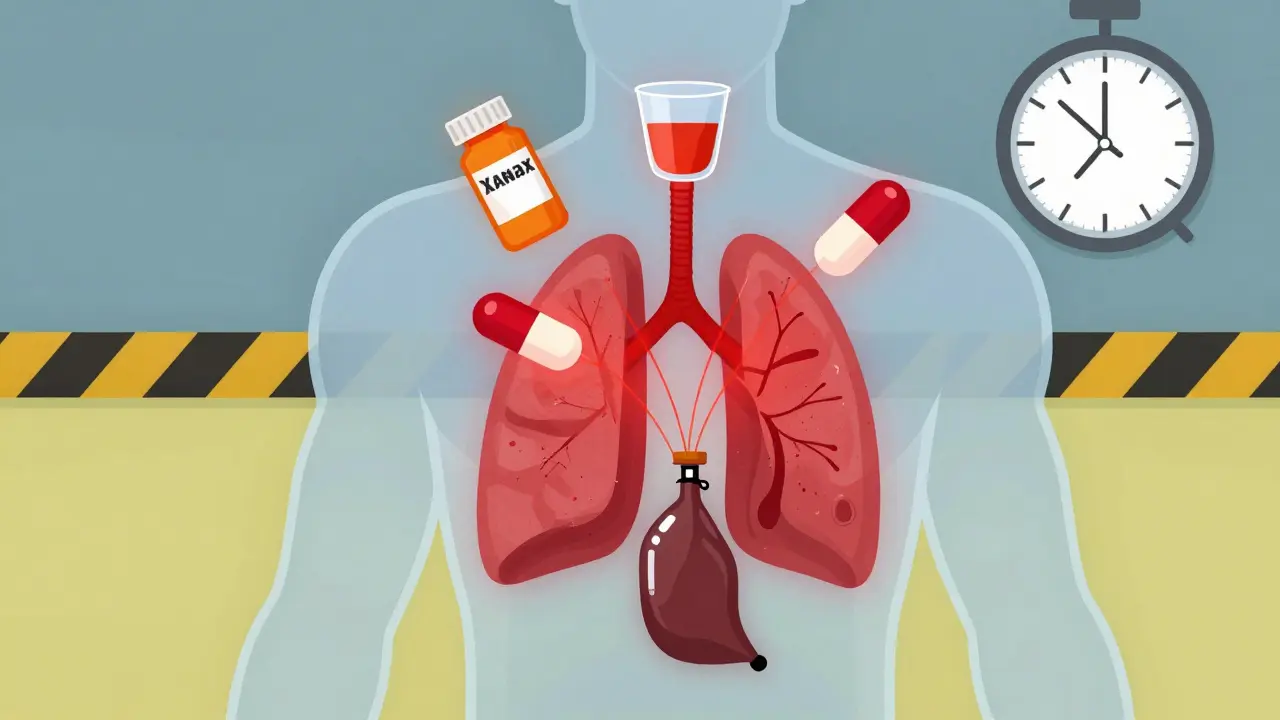
Your central nervous system controls everything from breathing and heart rate to alertness and reflexes. CNS depressants don’t just make you sleepy. They silence the brain’s ability to keep your body alive. These drugs work by boosting GABA, a chemical that tells your brain to chill out. Too much GABA? Your brain stops signaling your lungs to breathe. Common CNS depressants include:- Benzodiazepines like alprazolam (Xanax), diazepam (Valium), and lorazepam (Ativan)
- Opioids like oxycodone, hydrocodone, and fentanyl
- Barbiturates (older sleep aids like phenobarbital)
- Sleep medications like zolpidem (Ambien)
- Alcohol
Each one alone can be risky. Together? They don’t just add up-they multiply.
The Deadly Math of Drug Combinations
The FDA issued a warning in 2016 after reviewing thousands of overdose cases. The message was clear: combining opioids with benzodiazepines increases the risk of death by 2.5 to 4.5 times compared to using opioids alone. That’s not a small risk. That’s a death sentence waiting to happen. Here’s what happens inside your body when you mix these drugs:- Respiratory rate drops from 12-20 breaths per minute to 4-8 breaths
- Oxygen saturation falls below 90%-sometimes under 85%
- Heart rate slows by 10-20 beats per minute
- Blood pressure drops by 15-25 mmHg
- Pupils dilate, confusion sets in, and coordination vanishes
At this point, your body can’t wake itself up. You don’t gasp. You don’t cough. You just stop breathing. Permanent brain damage can occur in 4 to 6 minutes. Death follows soon after.
Who’s Most at Risk?
This isn’t just about street drug users. It’s happening to people trying to manage pain, anxiety, or insomnia-often under a doctor’s care.- Elderly patients are 2.8 times more likely to fall and 3.4 times more likely to suffer hip fractures when taking three or more CNS depressants. The American Geriatrics Society lists 34 medications that should be avoided in seniors because of this exact risk.
- People with depression are twice as likely to mix sedatives, often using alcohol to cope with anxiety or sleep issues.
- Women are 1.7 times more likely than men to be prescribed multiple CNS depressants.
- Those with substance use disorders are 39% more likely to combine opioids with benzodiazepines or alcohol.
One study of 1,848 people on long-term opioid therapy found that nearly one-third were also taking a sedative. Among those with a history of addiction, nearly four in ten were doing it. And 12-13% of them drank alcohol within two hours of taking their opioid.
Long-Term Damage You Can’t See
The danger isn’t just overdose. Chronic use of multiple sedatives quietly destroys your body over time:- 45% of long-term users report constant fatigue
- 32% experience sexual dysfunction
- 38% develop clinical depression
- 19% have suicidal thoughts after six months of use
- 27% develop or worsen sleep apnea
- Weight gain of 12-18 pounds over a year is common
These aren’t side effects. They’re symptoms of your brain and body being chemically suppressed. Your nervous system gets lazy. It forgets how to work without drugs.
Why Do Doctors Still Prescribe These Combinations?
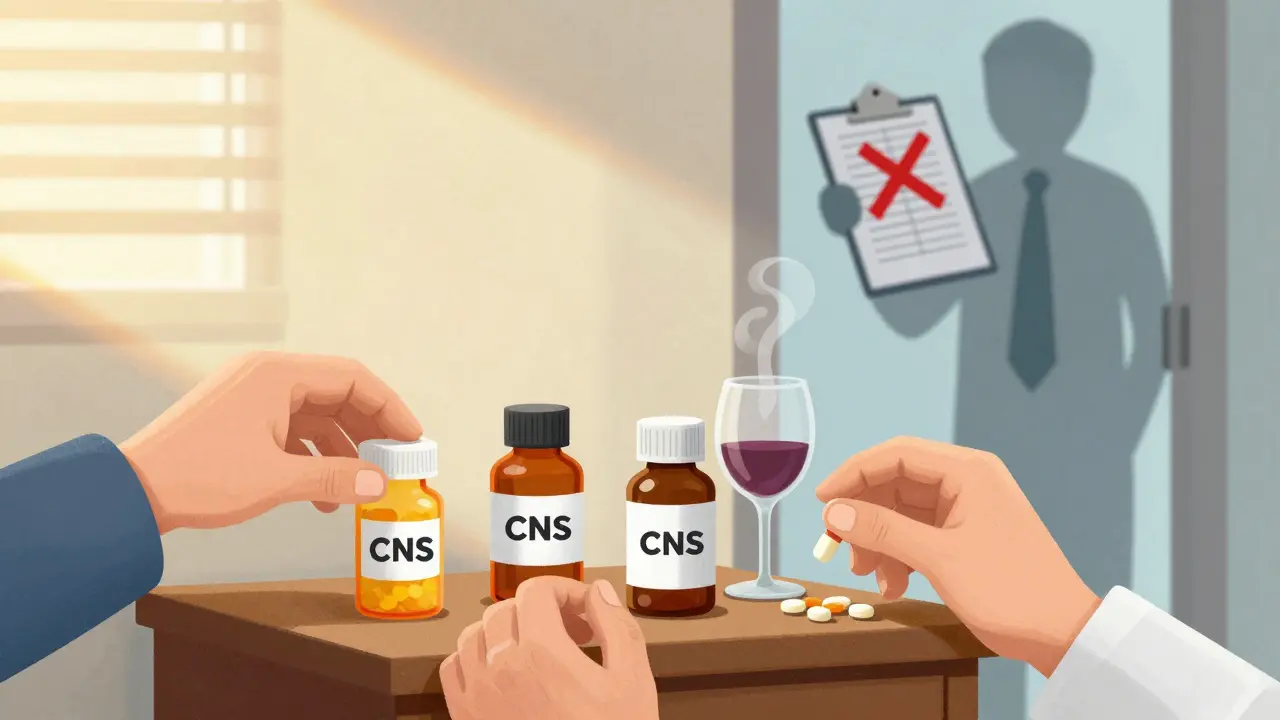
It’s not ignorance. It’s complexity. A 2022 study in Frontiers in Psychiatry found that 69% of hospitalizations for major depression involved more than one drug. But doctors have almost no clear guidance on which combinations are safe. Many patients get prescriptions from different specialists-a pain doctor, a psychiatrist, a sleep specialist-each unaware of the others’ prescriptions. Even worse, many patients don’t tell their doctors about alcohol use or over-the-counter sleep aids. One person might take Ambien at night, drink wine to relax, and take Xanax during the day for anxiety. They think it’s fine because each is prescribed or legal. It’s not.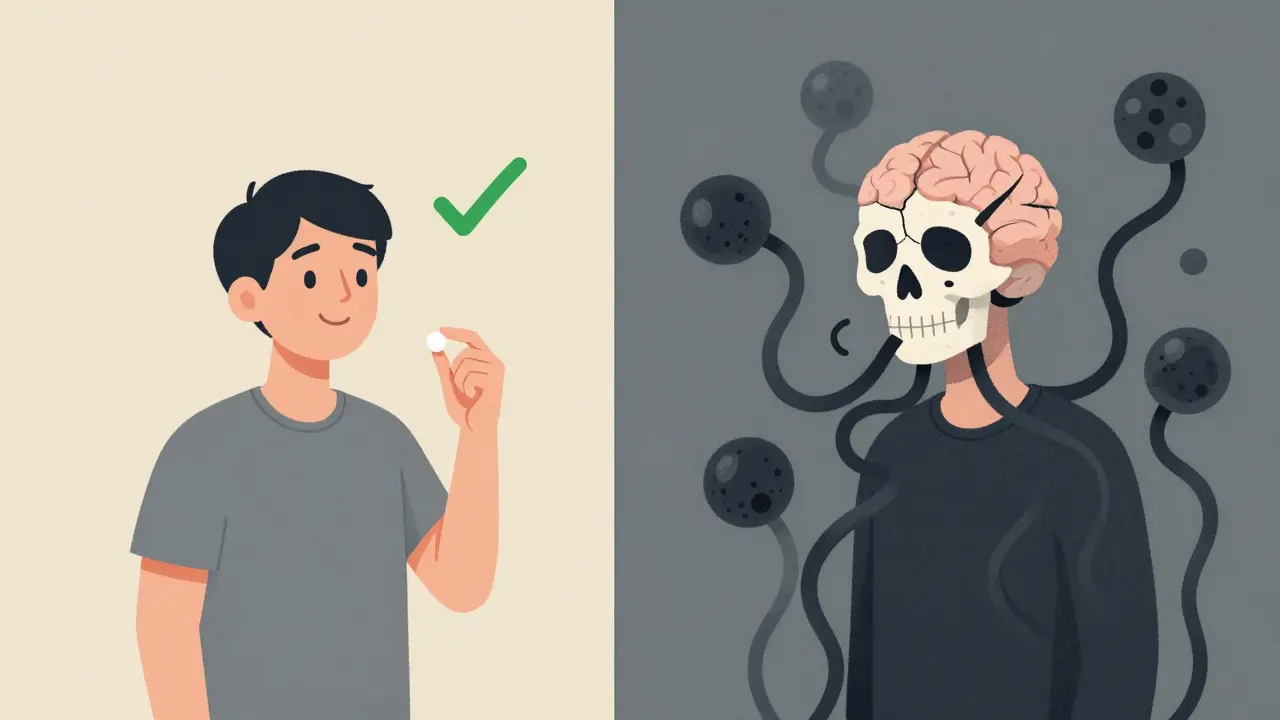
What Can Be Done?
The good news? This is preventable.- Medication reviews every 3-6 months cut fall risk by 32% and reduce cognitive decline by 27% in seniors.
- Deprescribing-carefully stopping one or more drugs-has helped thousands avoid overdose. For example, switching from long-acting benzodiazepines to non-benzodiazepine sleep aids reduced ER visits by 19%.
- Electronic health records with built-in alerts can stop dangerous combinations before they happen. By 2025, most major systems will have mandatory alerts for opioid-benzodiazepine pairs.
- Pharmacogenomic testing (checking your genes for how you metabolize drugs) could reduce risky combinations by 22% in vulnerable patients.
But the most powerful tool is awareness. If you’re taking any of these drugs, ask your doctor: “Am I on more than one CNS depressant? Is this combination safe?”
What to Do If You’re Already Combining Sedatives
Don’t stop cold turkey. Withdrawal from benzodiazepines or alcohol can trigger seizures. But you don’t have to stay trapped.- Write down every medication and supplement you take-including alcohol, melatonin, and OTC sleep aids.
- Bring this list to one doctor-preferably your primary care provider-and ask them to review it.
- Ask about alternatives: Can your anxiety be treated with therapy instead of Xanax? Can your insomnia be managed with sleep hygiene instead of Ambien?
- Never drink alcohol while taking any CNS depressant. Not even one drink.
Many people feel ashamed to admit they’re mixing drugs. But this isn’t about addiction. It’s about safety. Your body doesn’t care if you’re “just” using them as prescribed. It only reacts to the chemicals.
Final Reality Check
You might think, “I’ve been doing this for years and nothing’s happened.” That’s luck, not safety. One night, one extra pill, one glass of wine, one missed appointment-and your breathing stops. No warning. No second chance. The FDA, CDC, and top medical journals all agree: combining sedatives is one of the most preventable causes of drug-related death in modern medicine. And yet, in 2020, over 10% of people on long-term opioids were still getting benzodiazepines prescribed to them-despite clear guidelines against it. This isn’t about fear. It’s about facts. And the facts are simple: more sedatives = more risk. No exceptions.Can you die from mixing alcohol and prescription sedatives?
Yes. Alcohol is a CNS depressant, and combining it with prescription sedatives like benzodiazepines, opioids, or sleep aids can cause your breathing to slow to a dangerous level-even stop. This is a leading cause of accidental overdose deaths. The risk is real even with small amounts of alcohol.
Is it safe to take two different benzodiazepines together?
No. Taking two benzodiazepines at the same time (like Xanax and Valium) multiplies the risk of overdose. They work the same way on the brain, so combining them doesn’t improve effectiveness-it just increases danger. Doctors rarely prescribe this, and when they do, it’s usually a mistake.
What should I do if I think someone is overdosing from sedatives?
Call emergency services immediately. Signs include slow or shallow breathing, unresponsiveness, blue lips or fingertips, and inability to wake up. Do not try to make them vomit or give them coffee. Keep them on their side to prevent choking. If naloxone is available and opioids are involved, administer it-but it won’t work on benzodiazepines alone. Emergency care is still critical.
Can antidepressants like SSRIs be dangerous when mixed with sedatives?
Yes. SSRIs can interfere with how your body breaks down other CNS drugs, causing them to build up to toxic levels. This is especially risky with antipsychotics, certain painkillers, and sleep aids. Studies show a high percentage of psychiatric hospitalizations involve these types of interactions, often because doctors aren’t trained to spot them.
Are there any safe combinations of sedatives?
There are no safe combinations of CNS depressants. Even if a doctor prescribes two, the risk remains. The goal is to use the fewest number of drugs possible. If you’re on more than one, ask if one can be removed or replaced with a non-drug therapy like CBT for anxiety or sleep restriction for insomnia.
Tommy Chapman
February 22, 2026 AT 03:28Man, I can't believe people still do this. You take Xanax, drink a six-pack, and think you're fine? Bro, your liver's gonna throw a funeral and you won't even be conscious to cry. I've seen friends OD on this stuff-no warning, no second chance. It's not rocket science. Stop being dumb. Your body ain't a lab experiment.
Hariom Sharma
February 23, 2026 AT 03:11So true! In India, we have this habit of mixing home remedies with meds-like ashwagandha with sleep pills. But honestly, this post opened my eyes. I used to think 'natural' meant 'safe'. Nope. Your brain doesn't care if it's from a pharmacy or a village herbalist. One less pill, one more breath. Let's choose life, not convenience. 💪❤️
Nina Catherine
February 23, 2026 AT 07:49omg i had no idea mixing alcohol and ambien was this bad?? i thought like… one glass of wine at night? harmless right?? 😳 i just asked my dr to review all my meds and she was shocked i was on 3 depressants. i’m cutting back slowly but i’m so scared. anyone else feel like they’re addicted just to sleep??
Taylor Mead
February 23, 2026 AT 21:30Respect to the author for laying this out so clearly. I work in ER and we see this every weekend. People don’t realize that 'just one more' is how it ends. No drama, no villain-just a brain that stopped signaling lungs to breathe. It’s quiet. It’s common. And it’s avoidable. Let’s stop pretending it’s not happening.
Amrit N
February 25, 2026 AT 01:23yea i been takin melatonin + xanax for years… thought it was chill. turns out my brain forgot how to make its own sleep chemicals. now i’m trying sleep hygiene stuff. hard. but worth it. also, stop drinking after 7pm. your liver deserves a break. 🙏
Courtney Hain
February 25, 2026 AT 21:41This isn't just about drugs. This is a government and pharmaceutical conspiracy to keep people docile. You think they don't know about these interactions? Of course they do. They profit from dependency. Look at the stats-90% of people on multiple sedatives are on Medicaid or Medicare. Coincidence? No. They want you tired, quiet, and compliant. The FDA warning? A PR stunt. Real change? Only happens when people wake up. And no, I'm not on any of these drugs. I'm the one who figured it out. 🕵️♂️
Greg Scott
February 27, 2026 AT 10:50My grandma took 4 different sedatives. She didn’t even know why. Her doctor just kept adding more. She fell, broke her hip, never walked again. This isn’t theoretical. It’s real. If you’re on more than one, ask for a deprescribing plan. Don’t wait for a crisis.
Caleb Sciannella
February 27, 2026 AT 10:58While the medical data presented is compelling and aligns with current clinical guidelines, it is essential to contextualize the sociopolitical and systemic factors enabling this epidemic. The fragmentation of care across specialty providers, coupled with inadequate interdisciplinary communication infrastructure, creates structural vulnerabilities. Furthermore, the absence of mandatory pharmacovigilance protocols in outpatient settings represents a critical gap in public health policy. A multidisciplinary approach-integrating pharmacists, primary care, and behavioral health-is not merely advisable but ethically imperative. The solution lies not in individual blame, but in institutional reform.
Maddi Barnes
February 28, 2026 AT 09:11Wait… so you're telling me the whole 'just one glass of wine to unwind' thing is a trap? 😂 I mean, I thought that was like… self-care? Now I'm paranoid I'm slowly killing myself with chamomile tea and melatonin. 🤔 I'm gonna bring my whole medicine cabinet to my PCP tomorrow. And maybe cry. A lot. 🥺
Oana Iordachescu
March 1, 2026 AT 15:21There is no safe combination of CNS depressants. Period. The notion that 'prescribed' equals 'safe' is a dangerous fallacy propagated by institutional complacency. Even under medical supervision, polypharmacy with GABAergic agents induces neuroadaptive tolerance, accelerates respiratory depression risk, and obscures early signs of overdose. The WHO has repeatedly flagged this as a global public health crisis. If your prescriber cannot articulate a clear deprescribing pathway, they are not practicing evidence-based medicine-they are enabling a slow-motion suicide.