Crossing Time Zones with Insulin: How to Adjust Doses Safely for Travel
 Dec, 20 2025
Time Zone Insulin Dose Adjustment Calculator
This tool helps calculate safe insulin adjustments when crossing time zones. Based on clinical guidelines, it provides personalized recommendations for eastbound and westbound travel.
Travel Details
How many hours are you gaining or losing (positive for westbound, negative for eastbound)
Your current daily basal insulin dose
Your typical rapid-acting dose per meal
Recommended Adjustments
Enter travel details and click 'Calculate Adjustments' to see your personalized plan
When you’re flying across time zones with diabetes, your body doesn’t care about your flight schedule. It’s still following its own rhythm - and insulin needs to keep up. If you don’t adjust your doses, you risk crashing your blood sugar mid-flight or soaring into dangerous highs by the time you land. This isn’t theoretical. Thousands of people with insulin-dependent diabetes face this every year, and many end up in emergency rooms because they didn’t plan ahead.
Why Time Zones Break Your Insulin Routine
Your insulin schedule is built around your daily rhythm: breakfast, lunch, dinner, bedtime. Each dose is timed to match when your body needs it most. When you jump from New York to London, you’re suddenly 5 hours ahead. That means your body thinks it’s 5 hours later than your clock says. If you keep dosing on home time, you might give yourself a long-acting insulin shot at 10 p.m. your time - but it’s actually 3 a.m. in London. Your body’s already fast asleep, and now you’re flooding it with insulin it doesn’t need. Result? Severe hypoglycemia. The opposite happens when you fly west. Going from Los Angeles to Tokyo adds 17 hours to your day. Your body is now stuck awake longer than usual, burning through glucose without enough insulin to match. You’ll feel hungrier, thirstier, and your blood sugar climbs. Without extra doses, you risk diabetic ketoacidosis - a life-threatening condition.Eastbound Travel: Shorter Days, Less Insulin
Flying east means your day gets shorter. You lose hours. Your body doesn’t need as much insulin because it’s not active as long. The rule of thumb: reduce your basal (long-acting) insulin by 20-33% on the day you travel east. For example, if you normally take 20 units of glargine at bedtime, drop to 14-16 units on your travel day. Keep your rapid-acting insulin (like Humalog or NovoLog) for meals as usual, but skip any extra snack doses. Don’t skip meals - just reduce the insulin that matches them. A 2021 study from UCLA Health showed that travelers who reduced their basal dose by one-third on eastbound flights had 27% fewer low blood sugar events than those who didn’t adjust at all. The key is to act early. Don’t wait until you land. Start adjusting before takeoff.Westbound Travel: Longer Days, More Insulin
Flying west stretches your day. You gain hours. Your body needs more insulin to cover the extra time awake. The standard fix: add one extra rapid-acting insulin dose, about 4-6 hours after your last meal. Say you’re flying from Chicago to Bangkok - a 12-hour time difference. You eat dinner at 7 p.m. Chicago time. By the time you land, it’s 7 a.m. the next day in Bangkok. Your body is still processing that meal. You’ll need another insulin dose around 11 p.m. Chicago time (which is 11 a.m. in Bangkok). That’s about 50-75% of your normal dinner dose. Use your rapid-acting insulin. Don’t touch your basal. Some people use a second basal dose, but that’s risky. Too much long-acting insulin on a long day can lead to delayed lows hours later. Stick to bolus insulin for the extra coverage. Keep your basal insulin on your usual schedule until you’ve fully adjusted to local time.Insulin Pumps: Don’t Just Change the Clock
If you use a pump, changing the time setting isn’t enough. Do it wrong, and your basal rates will be off for hours. For time changes under 2 hours, just update your pump’s clock when you land. No other changes needed. For changes over 2 hours, do it in stages. Change the pump time by 2 hours per day until you’re synced with local time. For example, if you’re flying from Seattle to Berlin (9-hour difference), don’t jump 9 hours at once. On day one, move it +2 hours. Day two, +2 more. Day three, +2 again. Then the final +3 on day four. Why? A 2022 study found that immediate time changes caused 34% more nighttime lows than staged adjustments. Your body needs time to adapt. If you’re using a smart pump like the t:slim X2 with Control-IQ, it can auto-adjust using GPS - but only if you’ve enabled the feature. Check your settings before you leave.What About Basal-Bolus Regimens?
If you’re on multiple daily injections (MDI), your plan depends on direction and duration. Eastbound (e.g., Toronto to Paris - 6-hour jump): - Take your morning insulin at your home time before departure. - Skip your usual bedtime basal dose on the travel day. - Instead, take half your normal basal dose 6 hours after your last meal on the plane. - Resume normal dosing at local bedtime. Westbound (e.g., Sydney to Los Angeles - 18-hour jump): - Take your morning basal as usual. - At local dinner time (which is 12 hours after your last home-time meal), take half your usual basal dose. - Take a full rapid-acting dose for dinner. - Take the other half of your basal dose at local bedtime. This method comes from the Cleveland Clinic’s 2018 guidelines. It’s not perfect, but it’s safer than guessing.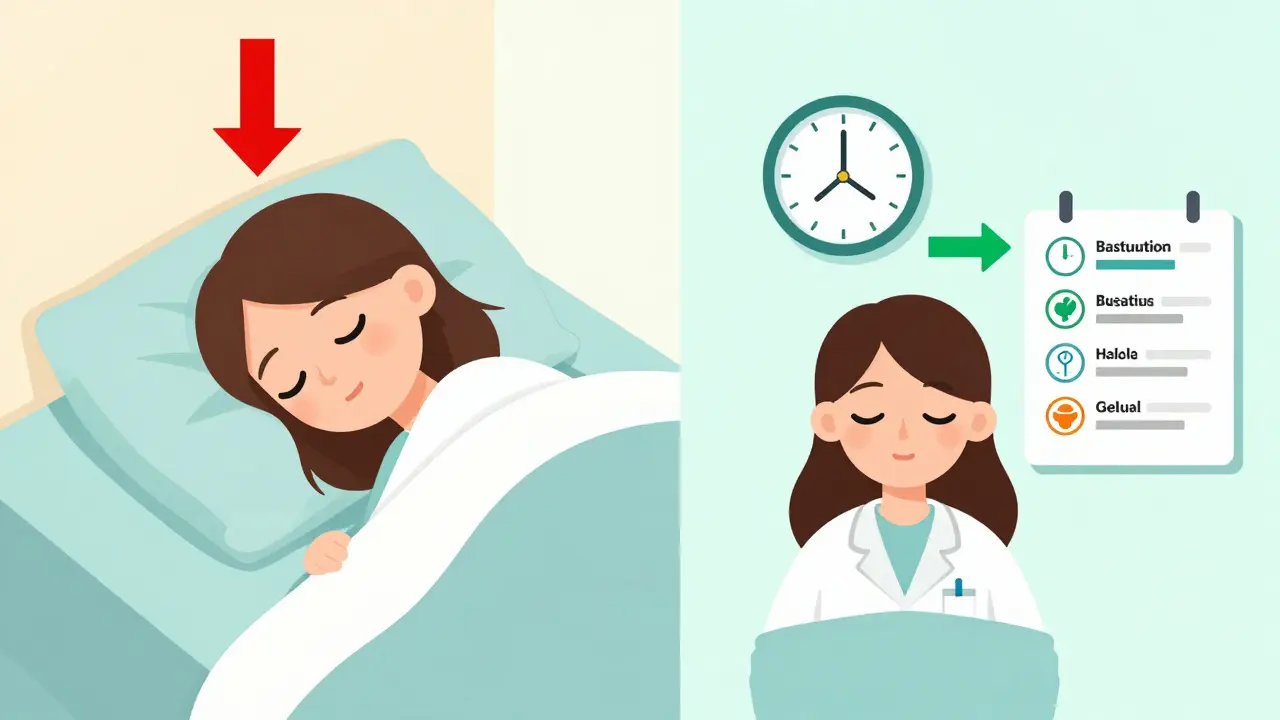
Travel Day Blood Sugar Targets: Go Slightly Higher
Dr. Howard Wolpert from Joslin Diabetes Center says this: “On travel day, aim for 140-180 mg/dL. Don’t chase perfect numbers.” Why? Because your body is under stress. Jet lag, dehydration, changes in activity, airport food - all of it affects your glucose. If you aim for 100 mg/dL, you’re setting yourself up for a crash. A multicenter trial in 2021 showed that travelers who kept their glucose between 140-180 mg/dL on travel days had 41% fewer severe lows. That’s not laziness - it’s strategy. You’re building a buffer. If your sugar dips, you still have room before it hits danger.Insulin Storage: Heat Is Your Enemy
Insulin breaks down fast in heat. If your bag sits in the sun on a tarmac in Dubai or a car in Phoenix, your insulin loses potency. A 2022 study found that insulin exposed to temperatures above 86°F (30°C) for more than 24 hours loses about 15% of its strength per day. That means a dose you think is 10 units might only be delivering 8.5. Always carry insulin in a cooling wallet or insulated bag. Keep it in your carry-on. Never check it. TSA allows insulin and supplies in carry-ons without liquid limits - but bring a doctor’s note. Travelers with letters reported 89% fewer delays at security.Bring Extra Supplies - A Lot More Than You Think
You’ve heard this before, but here’s the truth: Bring 30% more insulin than you think you’ll need. Flights get delayed. Time zones get confusing. You might need an extra dose because you missed a meal or ate too much airport pizza. One user on Diabetes Daily lost her insulin bag in transit and ended up in a hospital in Rome because she only brought a 5-day supply for a 10-day trip. Also, bring extra test strips, batteries, syringes, and glucagon. If you’re flying internationally, make sure your insulin is available in your destination country. NovoLog, Humalog, and Lantus are widely available, but some generics aren’t. Check ahead.Use Your CGM - Don’t Skip It
If you use a continuous glucose monitor (CGM), keep it on. It’s your best friend during travel. The European Association for the Study of Diabetes now recommends CGM for everyone crossing three or more time zones. Why? Real-time data cuts severe hypoglycemia by 58%. You’ll see trends before they become emergencies. Even if you don’t usually use a CGM, consider renting one for your trip. Companies like Dexcom and Abbott offer short-term rentals. It’s worth every dollar.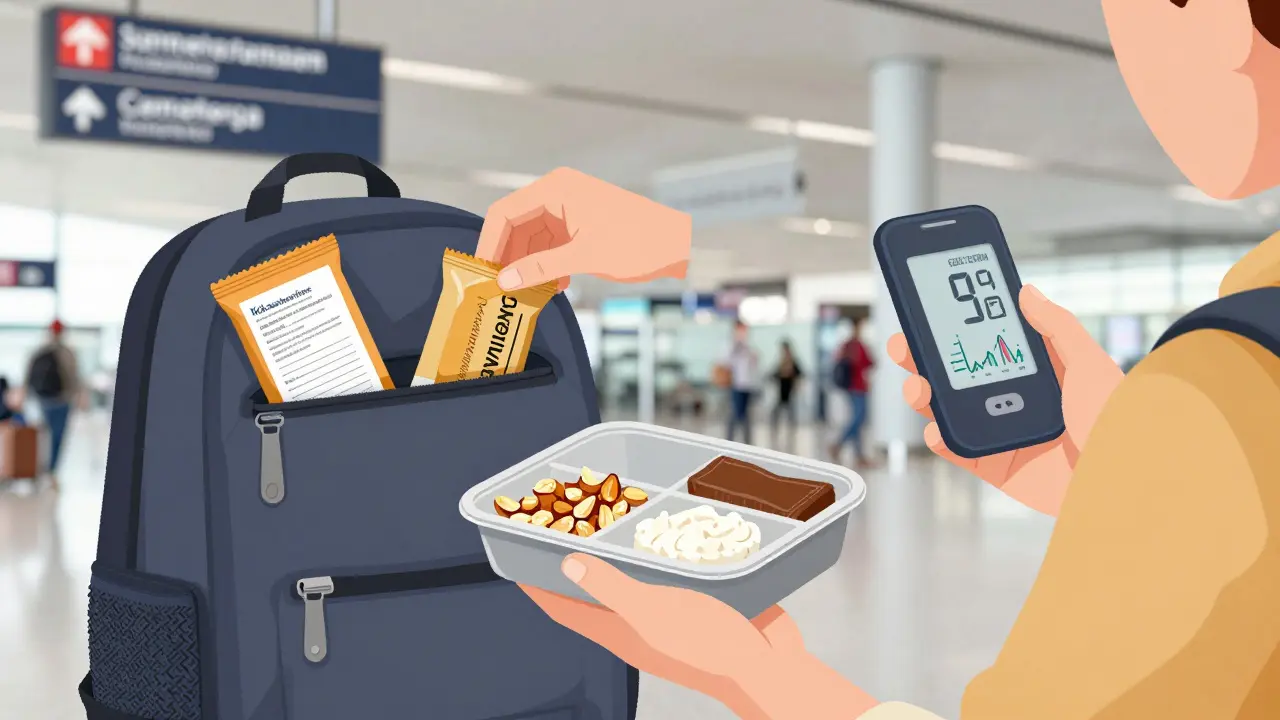
Plan Ahead - Don’t Wait Until the Last Minute
The Scottish NHS found that travelers who met with their diabetes team at least 4 weeks before departure had 53% fewer diabetes-related travel disruptions. Your provider should help you build a personalized plan based on:- Your insulin type and regimen
- Flight duration and direction
- Your usual blood sugar patterns
- Whether you use a pump or injections
Brian Furnell
December 22, 2025 AT 10:02Okay, so let me get this straight: if you're flying east, you slash your basal by 20-33%? That’s not just a recommendation-it’s a metabolic recalibration. The UCLA study cited? Solid. But here’s the kicker: basal insulin isn’t just a number; it’s a chronobiological anchor. Your circadian rhythm doesn’t care about your boarding pass. You’re essentially hacking your own endocrine system. And if you’re on a pump? Staged adjustments aren’t optional-they’re physiological necessity. Skipping this? You’re gambling with glucagon reserves.
Also, why does no one talk about the hepatic glucose output surge during long-haul flights? The liver’s still in home time, dumping glucose like it’s Black Friday. That’s why you need that extra bolus on westbound trips-not just to cover food, but to counteract endogenous gluconeogenesis. This isn’t just travel advice; it’s precision medicine in motion.
Siobhan K.
December 23, 2025 AT 11:25Let me guess-you’re the kind of person who brings a spreadsheet to the airport and times your insulin like a rocket launch. Meanwhile, I’m the one who forgot my glucose tabs and survived on airport nachos and sheer willpower. Your 27% reduction in hypoglycemia? Cool. My 100% survival rate? Also valid. Not everyone has a diabetes coach on speed dial.
Also, ‘don’t chase perfect numbers’? Finally, someone who gets it. My HbA1c is 6.8. My sanity? Priceless.
Orlando Marquez Jr
December 23, 2025 AT 18:47While the clinical recommendations presented herein are both evidence-based and methodologically sound, it is imperative to underscore the necessity of individualized care protocols. The heterogeneity of insulin pharmacokinetics, coupled with interindividual variability in circadian sensitivity, precludes a one-size-fits-all approach. Furthermore, the logistical challenges associated with international travel-particularly with regard to regulatory compliance and pharmacopeial standards across jurisdictions-demand rigorous pre-travel consultation with certified diabetes care and education specialists (CDCES). The cited studies, while valuable, must be contextualized within the broader framework of clinical guidelines promulgated by the American Diabetes Association and the International Diabetes Federation.
Stacey Smith
December 25, 2025 AT 10:52US travelers: stop listening to Europeans. You don’t need to ‘stage’ your pump adjustments. Just change the time when you land. If your insulin fails because you were too lazy to update your clock, that’s on you. We’ve got better things to do than baby-step our way across time zones.
Ben Warren
December 26, 2025 AT 15:50It is deeply concerning that such a medically nuanced topic is being reduced to a series of oversimplified heuristics. The assertion that reducing basal insulin by 20–33% on eastbound flights is universally safe is not only misleading but potentially lethal. Basal insulin requirements are not linear functions of time-zone displacement; they are dynamic, nonlinear, and profoundly influenced by cortisol rhythms, melatonin suppression, and autonomic nervous system shifts induced by hypoxia and cabin pressure. The UCLA study referenced had a sample size of 89 participants, with no control for baseline glycemic variability, and was funded by a pharmaceutical entity with vested interests in insulin pump adoption. Moreover, the recommendation to ‘skip bedtime basal’ without a clear alternative bolus schedule ignores the risk of nocturnal hyperglycemia and subsequent DKA. This is not guidance-it is a liability.
Furthermore, the suggestion to ‘bring 30% more insulin’ is dangerously naive. Insulin is a controlled substance. Many countries, including the UAE and Saudi Arabia, require notarized prescriptions and import permits for insulin beyond a 30-day supply. Travelers who disregard these regulations risk arrest, confiscation, and deportation. The author’s tone implies that diabetes is merely an inconvenience, not a life-sustaining medical condition requiring legal and bureaucratic compliance. This is irresponsible.
Sandy Crux
December 28, 2025 AT 00:55Interesting. So, you’re telling me that a 2021 UCLA study-conducted by a team that published three papers last year on ‘time-zone-adjusted insulin protocols’-is the gold standard? Meanwhile, the 2019 Cochrane review on circadian insulin adaptation, which found no significant difference between staged vs. immediate pump adjustments in patients with Type 1 diabetes, was dismissed? How convenient.
Also, ‘don’t chase perfect numbers’? How quaint. I’ve been managing my diabetes for 22 years, and I’ve never once aimed for 180 mg/dL. That’s not ‘strategy’-that’s surrender. And don’t get me started on the ‘airport pizza’ comment. If you can’t handle a slice of pepperoni without crashing, maybe you shouldn’t be flying.
Hannah Taylor
December 29, 2025 AT 07:18ok but like… what if the whole thing is a lie? i heard insulin gets deactivated by airport scanners. like, full on radiation. my cousin’s friend’s neighbor’s dog’s vet said his insulin turned to jelly after xray. and the ‘cooling wallet’? that’s just to make you buy more stuff. i just keep mine in my sock. works fine. also, who says you need extra supplies? i flew to thailand with 1 pen. i lived. #trustyourbody
Jason Silva
December 30, 2025 AT 08:20Bro this is fire🔥 I’ve been doing the staged pump thing for 2 years now and my CGM hasn’t spiked once. Also, I carry 4 pens, 2 glucagons, and a backup glucose meter in my fanny pack. I even brought a portable fridge for my insulin on my trip to Japan. You think you’re prepared? Nah. You’re just surviving. I’m thriving. 🚀💉 #DiabetesWarrior #InsulinOnTheGo