Drug-Induced Hemolytic Anemia: Symptoms, Causes, and Treatment
 Apr, 16 2026
DIIHA Symptom & Risk Checker
1. New Medications
Have you started any of these in the last 10 days?
2. Physical Symptoms
Are you experiencing any of these?
3. Genetic Predisposition
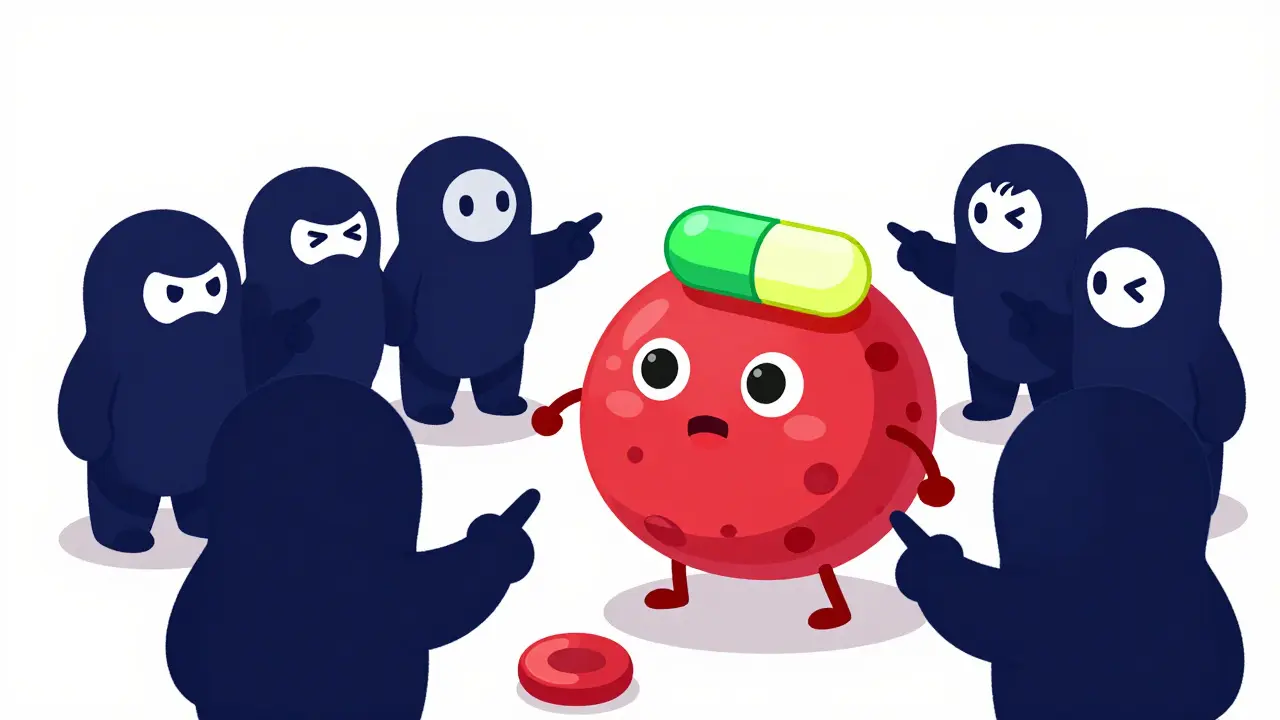
Imagine taking a routine medication, only for your body to suddenly turn on itself. This is exactly what happens during drug-induced immune hemolytic anemia is a blood disorder where medications trigger the immune system to mistakenly identify and destroy its own red blood cells. Also known as DIIHA, this condition forces your red blood cells to break down long before their usual 120-day lifespan, leaving your organs starved for oxygen.
While most people think of anemia as a slow drop in iron or a result of bleeding, this is an aggressive, active destruction. It's a medical emergency because if your hemoglobin drops too quickly, your heart can't keep up, potentially leading to heart failure. The good news? Once the culprit drug is identified and stopped, most people recover fully. But the challenge lies in the fact that the symptoms are often vague, and the cause isn't always obvious.
Key Takeaways for Quick Reference
- The Primary Cause: Most cases are triggered by a specific set of antibiotics (like cephalosporins) or drugs that cause oxidative stress.
- Red Flags: Watch for extreme fatigue, pale skin, and jaundice (yellowing of the eyes and skin).
- The Genetic Link: People with G6PD deficiency are at a much higher risk for a specific type of red blood cell breakdown.
- Immediate Action: The first and most critical step in treatment is stopping the medication immediately.
- Recovery: Hemoglobin usually stabilizes within 10 days of stopping the drug, with full recovery taking 4-6 weeks.
How Medications Destroy Your Red Blood Cells
Not all drug-induced anemia happens the same way. Your body essentially uses two different "attack modes" to destroy these cells.
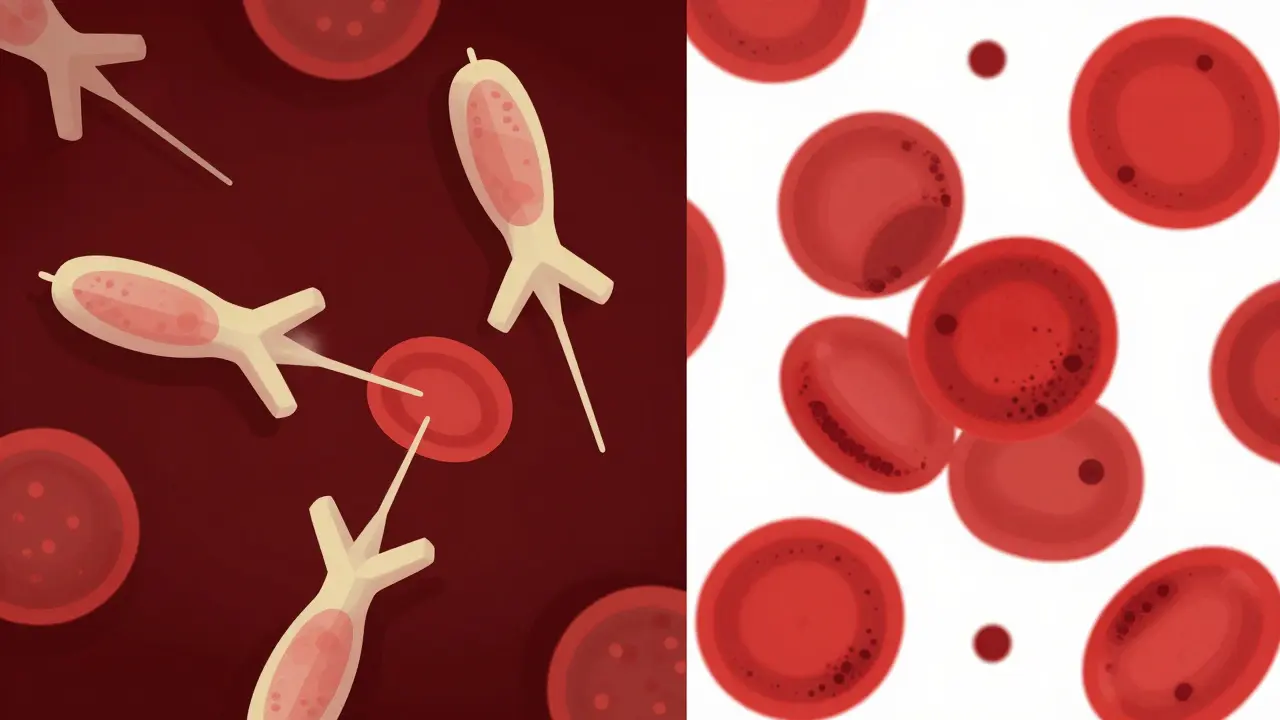
First, there is immune-mediated destruction. In this scenario, the medication acts as a "hapten." It binds to the membrane of your red blood cells, creating a new target (a neoantigen) that your immune system doesn't recognize. Your body produces antibodies to attack this foreign-looking target, effectively tagging your own blood cells for destruction. Cephalosporins are a class of beta-lactam antibiotics used to treat bacterial infections, and they are the most common cause here, accounting for about 70% of these immune cases.
Then there is oxidative hemolysis. This is less about antibodies and more about chemistry. When certain drugs enter the system, they create oxidative stress that damages the hemoglobin inside the cell. If the body can't keep up with the cleanup, the hemoglobin clumps together into what doctors call "Heinz bodies." These deformed cells are then cleared out by the spleen. This is especially dangerous for people with G6PD deficiency is an X-linked genetic disorder that impairs the body's ability to protect red blood cells from oxidative damage. This condition is relatively common in people of African and Mediterranean descent.
| Feature | Immune-Mediated (DIIHA) | Oxidative Hemolysis |
|---|---|---|
| Trigger | Antibodies attacking cells | Chemical stress/oxidants |
| Common Culprits | Ceftriaxone, Piperacillin | Dapsone, Primaquine, Sulfa drugs |
| Onset Time | Typically 7-10 days of exposure | Rapidly (24-72 hours) |
| Genetic Link | Not typically genetic | Strong link to G6PD deficiency |
Common Medication Culprits
While many drugs can cause this reaction, a few specific types appear most often in clinical reports. If you are experiencing symptoms, these are the first things a doctor will look for in your medical history.
Antibiotics: As mentioned, cephalosporins are the top offenders. Specifically, Cefotetan, Ceftriaxone, and Piperacillin are the three most frequent triggers in modern medicine. Penicillin derivatives can also cause this reaction, though it's less common than with cephalosporins.
Specialized Medications: Some older drugs, like Methyldopa is a medication previously used to treat high blood pressure in pregnant women, were historically common causes. While its use has dropped, it's still a classic example of this reaction. Other triggers include Dapsone (used for leprosy and skin conditions), Nitrofurantoin (for UTIs), and certain NSAIDs.
Over-the-Counter and Topical: It's not just pills. Even Benzocaine-the numbing agent often found in throat lozenges or topical gels-can trigger oxidative hemolysis in sensitive individuals.
Recognizing the Warning Signs
The tricky part about this condition is that the early symptoms look like a dozen other things. You might just feel like you're getting a flu or are simply overworked. However, as the red blood cell count drops, the signs become more distinct.
The most common experience is overwhelming fatigue (seen in 92% of patients) and general weakness. Because your blood isn't carrying enough oxygen, your heart starts racing to compensate, which is why tachycardia (a heart rate over 100 bpm) is common. You might also notice your skin looks unusually pale.
One of the most tell-tale signs is jaundice. When red blood cells break down rapidly, they release bilirubin into the bloodstream. This causes a yellow tint to the skin and the white parts of the eyes (sclera). If you notice yellowing accompanying a new medication, this is a major red flag.
Diagnostic Tests: What the Lab Looks For
Since the symptoms are vague, doctors rely on specific biomarkers to confirm that cells are actually being destroyed. They aren't just looking for low blood counts, but for the debris left behind by the destruction.
- Indirect Bilirubin: This is usually elevated (typically >3 mg/dL) because the body can't process the sudden flood of bilirubin from burst cells.
- Lactate Dehydrogenase (LDH): This enzyme lives inside cells; when cells pop, LDH leaks into the blood. Levels above 250 U/L often signal hemolysis.
- Haptoglobin: This protein binds to free hemoglobin. In hemolytic anemia, haptoglobin is "used up" trying to clean up the mess, so levels drop below 25 mg/dL.
- The Direct Antiglobulin Test (DAT): Also known as the Coombs test, this checks for antibodies attached to the red blood cells. It's positive in about 95% of immune-mediated cases.
- Peripheral Blood Smear: A technician looks at the blood under a microscope. They look for spherocytes (small, round cells) in immune cases or Heinz bodies in oxidative cases.

Treatment and Recovery Path
The moment a doctor suspects drug-induced anemia, the priority is simple: stop the drug. This is the most effective treatment. In the vast majority of cases, the body begins to stabilize as soon as the offending agent is removed.
For those with severe drops in hemoglobin (usually below 7-8 g/dL), blood transfusions are used to keep the patient stable and protect the heart from failure. Interestingly, doctors also often start thromboprophylaxis (blood thinners). This seems counterintuitive when dealing with blood issues, but DIIHA can put patients in a "hypercoagulable state," meaning they are at a higher risk for dangerous blood clots in the veins.
In rare, stubborn cases where the immune system keeps attacking even after the drug is gone, more aggressive therapies are used. This might include Rituximab is a monoclonal antibody that targets B-cells to reduce the production of harmful antibodies, or intravenous immunoglobulins. For those suffering from severe methemoglobinemia, methylene blue is used-but there is a critical warning here: methylene blue can be fatal for people with G6PD deficiency, as it can trigger a massive hemolytic crisis.
How quickly do symptoms appear after taking a drug?
It depends on the mechanism. Oxidative hemolysis (common in G6PD deficiency) usually hits quickly, within 24 to 72 hours of exposure. Immune-mediated reactions are slower, typically taking 7 to 10 days of continuous drug use before the immune system builds up enough antibodies to cause a noticeable drop in red blood cells.
Can G6PD deficiency be tested during an active attack?
You can, but the results might be a "false negative." This happens because the test measures the enzyme in older red blood cells, which are the first to be destroyed during an attack. The new cells (reticulocytes) produced by the bone marrow often have normal G6PD levels. For an accurate diagnosis, doctors recommend waiting 2 to 3 months after the episode to test.
Is this condition common in children?
It is considered rare in pediatric populations. However, when it does occur in children, it tends to be more severe than in adults, often presenting with much lower average hemoglobin levels.
What happens if the medication isn't stopped in time?
Severe, untreated hemolytic anemia can lead to critical cardiac complications. When hemoglobin drops below 6 g/dL rapidly, the heart may develop arrhythmias, cardiomyopathy, or full heart failure because it cannot pump enough oxygen to the body's tissues.
Are there any long-term side effects after recovery?
For most people, there are no long-term effects once the causative drug is removed and hemoglobin levels return to normal. The primary long-term "side effect" is a lifelong requirement to avoid that specific medication and similar drugs in the same class to prevent a recurrence, which could be even more severe the second time.
Next Steps and Monitoring
If you suspect you are reacting to a medication, do not simply stop your prescription without calling your doctor-some medications require a tapering process. Instead, seek immediate medical attention and provide a full list of every supplement, over-the-counter drug, and prescription you've taken in the last month.
For those who have recovered, the most important step is updating your medical records. Ensure that the offending drug is listed as a "severe allergy" or "contraindication" in every pharmacy and clinic system you use. Since many of these drugs belong to large classes (like cephalosporins), your doctor can help you identify which similar drugs are safe and which ones you must avoid forever.
william wang
April 18, 2026 AT 01:19It's really important to emphasize how the direct antiglobulin test is the gold standard here. I've seen cases where the haptoglobin was low but the DAT was negative, which usually points away from an immune-mediated process and more toward something like mechanical hemolysis or oxidative stress. Understanding that distinction saves a lot of time in the ER.
Maggie Graziano
April 19, 2026 AT 21:27big pharma just hides the real triggers so they can keep selling the same pills
Nikki Grote
April 20, 2026 AT 03:34The pathophysiology of the hapten mechanism is fascinating. Essentially, the drug covalently binds to the erythrocyte membrane, creating a neoantigen that triggers a type II hypersensitivity reaction. This leads to the formation of spherocytes via partial phagocytosis by splenic macrophages. It's a classic example of how a small molecule can fundamentally alter cellular identity and trigger a systemic immune response.
Joshua Nicholson
April 20, 2026 AT 18:59k sounds scary
Colleen Tankard
April 20, 2026 AT 23:45Wow, I had no idea benzocaine could do that! 😱 Definitely staying away from those throat lozenges if I ever feel weird. Thanks for the heads up! ✨💊
Sophia Rice
April 21, 2026 AT 20:53I once had a reacction to a similar medicin and it was so scarry. My skin got all yellow and I felt like I couldnt even walk to the kitchen. Just make sure u tell ur doctor everyting you take even the vitamins!!
Ben Ferguson
April 21, 2026 AT 22:31Oh my goodness, the sheer terror of realizing that your own immune system has essentially decided to declare war on your very own red blood cells is just absolutely mind-boggling to contemplate, and while I've never experienced it myself, the idea of your hemoglobin dropping so precipitously that your heart starts racing just to keep you alive is honestly the stuff of absolute nightmares, making me feel so incredibly grateful for the medical advancements that allow us to identify these culprit drugs before something truly catastrophic happens to the patient!
Anmol Garg
April 23, 2026 AT 07:58It's a humbling reminder of how our bodies are complex systems. Sometimes the very tools we use to heal ourselves can cause harm, but that's why awareness and a little bit of patience with our healing process are so vital. We just need to listen to what our bodies are telling us.
Anna BB
April 25, 2026 AT 03:38It is so interesting how the timing differs between the two types!!! I wonder if some people have both... or maybe the genetic link is more common than we think??? Definitely a scary thought, but it's good to be informed!!!
Michael Lewis
April 25, 2026 AT 08:27Get those medical records updated NOW! Don't wait until the next emergency to realize you didn't list your allergies. Be proactive about your health and demand that your doctors take these triggers seriously!
Adele Shaw
April 25, 2026 AT 18:13This is exactly why we need to stop trusting these foreign-made drugs and go back to traditional American medicine that actually works without killing your blood cells. I'm sick of seeing people get poisoned by these corporate chemicals that probably come from some lab overseas!
Theresa Griffin MEP
April 27, 2026 AT 04:52One must prioritize immediate cessation of the drug. Precision is paramount. Failure to act swiftly is unacceptable.
Rock Stone
April 27, 2026 AT 23:16Stay positive everyone! Just keep an eye on those symptoms and you'll be just fine. It's all about staying aware and keeping the vibes high while the body heals up.