FDA Databases: How to Verify Medications and Spot Counterfeit Drugs
 Dec, 29 2025
Every year, millions of people around the world take medications they believe are safe. But what if that pill, capsule, or injection wasn’t made by the company it says it is? Counterfeit drugs are a growing threat - and they’re not just a problem in faraway countries. In the U.S., the FDA tracks thousands of fake or unsafe medications each year, many of them entering through the supply chain before reaching pharmacies or patients. The good news? You don’t need to be a pharmacist to check if your medicine is real. The FDA has built powerful public databases that let anyone verify the authenticity of prescription and over-the-counter drugs - if you know where to look and what to look for.
What the FDA Databases Actually Do
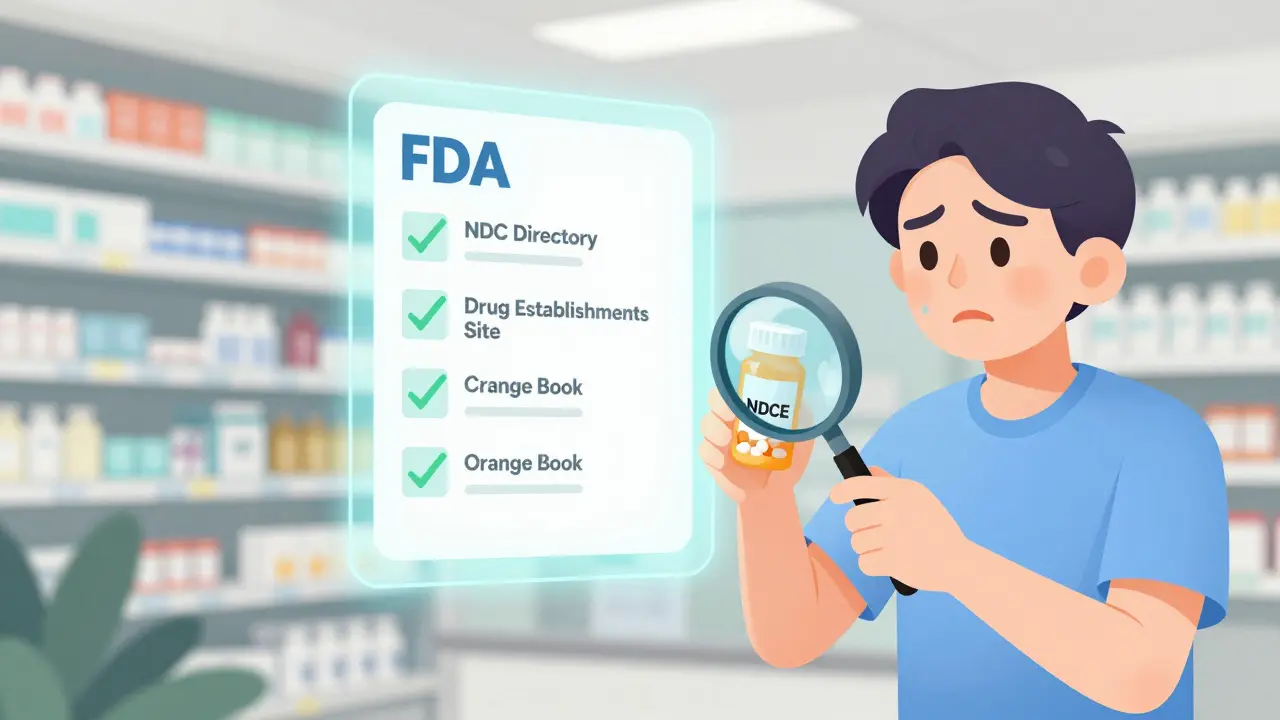
The U.S. Food and Drug Administration runs three main public databases that help track drug safety: the NDC Directory, the Drug Establishments Current Registration Site, and the Orange Book. These aren’t marketing tools or fancy websites. They’re technical systems built to stop fake drugs before they reach you. The NDC Directory is the most important one. Every legal drug sold in the U.S. has a National Drug Code - a unique 10- or 11-digit number printed on the packaging. This code breaks down into three parts: the labeler (who makes it), the product (what the drug is), and the package (how it’s sold - bottle, blister pack, etc.). The FDA updates this directory every single day. If a drug isn’t listed here, it’s not approved for sale in the U.S. - and that’s a red flag. The Drug Establishments Current Registration Site tells you which companies are legally allowed to make or distribute drugs. Every manufacturer, repackager, and wholesaler must register with the FDA and renew their listing every year between October and December. If a company’s registration has expired or been removed, they’re not supposed to be selling drugs anymore. Seeing a drug labeled with a company that doesn’t appear here? That’s another warning sign. The Orange Book lists approved drugs and their generic equivalents. It’s not just for doctors - if you’re buying a generic version of a brand-name drug and want to make sure it’s truly interchangeable, this is where you check.How to Check Your Medication in the NDC Directory
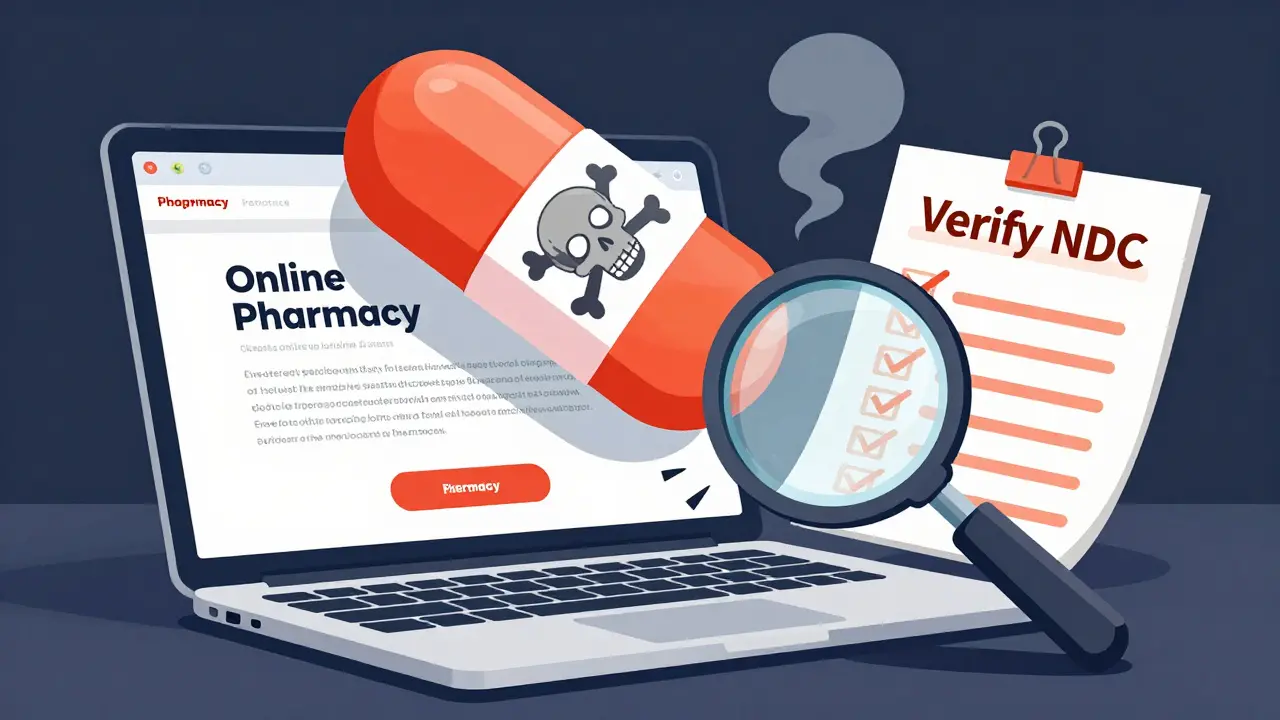
You don’t need special software or a login. Just go to the FDA’s NDC Directory website. Type in the name of the drug - say, “Lipitor 20 mg.” The results will show you every version of that drug approved in the U.S., with the exact NDC number, manufacturer, and packaging details. Now, look at your bottle or box. Is the NDC number listed there? If yes, copy it exactly - including leading zeros. Go back to the FDA site and paste it in. If the number matches exactly, the drug is legitimate. If it doesn’t show up at all, or if the manufacturer name doesn’t match what’s on your package, stop using it. Call your pharmacist or the FDA’s MedWatch hotline immediately. Here’s a real example: A patient in Ohio bought “Metformin 500 mg” from an online pharmacy for $15 a month. The bottle had a label that looked real. But when they checked the NDC number, it didn’t exist in the FDA database. Turns out, the pills were made in an unlicensed lab in India and contained only sugar and chalk. The patient had been taking them for six months. No one got sick - but they could have.Spotting Counterfeit Drugs: The Red Flags
You don’t always need a database to spot a fake. Look closely at the packaging. Counterfeiters copy labels, but they often get details wrong.- Spelling or grammar errors - “Lipitor” misspelled as “Liptor” or “Tablets” written as “Tabets.”
- Unusual packaging - blister packs that look flimsy, bottles with mismatched caps, or labels that peel off easily.
- Price too good to be true - brand-name drugs sold for 80% off? That’s not a deal. It’s a trap.
- No NDC number - if the box or bottle doesn’t have a 10- or 11-digit NDC, it’s not legal in the U.S.
- Unfamiliar manufacturer - if the company name doesn’t show up in the FDA’s registration site, walk away.
Why This Matters for Everyday Patients
Counterfeit drugs aren’t just about getting ripped off. They can be deadly. In 2021, the FDA found fake versions of cancer drugs, heart medications, and antibiotics that contained no active ingredient - or worse, toxic chemicals like rat poison or industrial dyes. One batch of fake insulin contained no insulin at all. Patients who took it went into diabetic ketoacidosis. Some died. The FDA’s systems aren’t perfect. Only about 67% of companies had fully compatible verification systems as of 2020. And foreign manufacturers - who supply over 80% of active ingredients in U.S. drugs - often don’t follow the same rules. That’s why checking your medicine yourself is still critical.What Happens After You Find a Fake
If you find a drug that doesn’t match the FDA database, don’t throw it away. Don’t return it to the store. Don’t flush it. Call the FDA’s MedWatch program at 1-800-FDA-1088. Report the product, the NDC number, where you bought it, and the lot number if you have it. The FDA uses these reports to track patterns and shut down operations. You can also report online pharmacies to the FDA’s Office of Criminal Investigations. They’ve shut down hundreds of illegal sites since 2020 - many of them started with a single consumer report.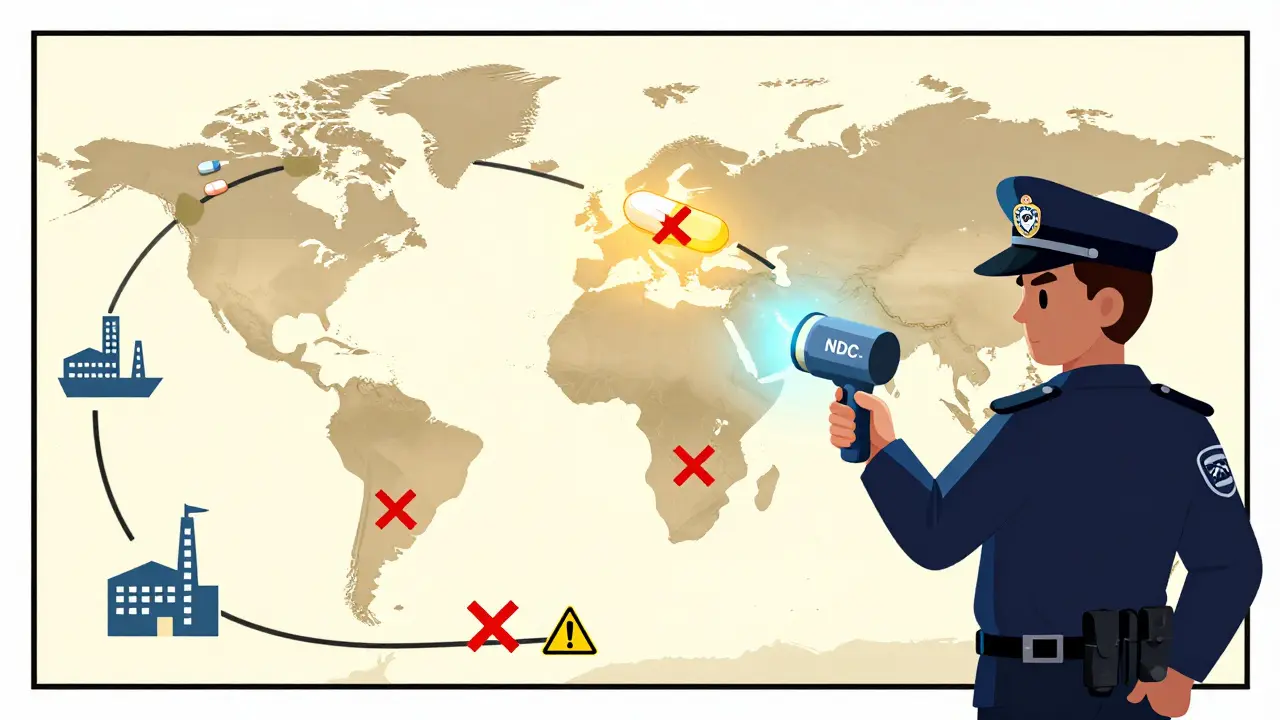
How Pharmacies and Pharmacies Use These Tools
Most pharmacies now use automated systems that scan NDC barcodes at the point of sale and cross-check them against manufacturer verification servers. If a drug doesn’t verify in real time, the system flags it. But this only works if the pharmacy is compliant. Smaller, independent pharmacies still struggle with the cost - the average implementation of DSCSA systems runs over $287,500. That’s why some still rely on manual checks. If you’re a patient, ask your pharmacist: “Do you check every drug against the FDA’s system?” If they look confused or say “We just order from our supplier,” that’s a problem. You have the right to ask for verification.What’s Changing in 2025 and Beyond
The FDA is rolling out a major upgrade. By 2026, all NDC numbers will be standardized to 12 digits. That means fewer errors in data entry and better tracking. By 2024, the NDC Directory will start including product images - so you can compare the real packaging with what you have. New AI tools are being tested to spot fake drugs before they even reach the U.S. border. IBM and Google are working with the FDA on machine learning models that analyze shipping patterns, supplier histories, and packaging anomalies. Early results show these tools catch 99% of counterfeits - far better than human inspectors alone. But the biggest challenge remains: global supply chains. The FDA can only enforce rules in the U.S. Most counterfeit drugs come from overseas. Until other countries adopt similar systems, the risk won’t disappear.What You Can Do Today
You don’t need to be an expert to protect yourself. Here’s your simple checklist:- Always buy from licensed U.S. pharmacies - not random websites.
- Check the NDC number on your drug’s packaging against the FDA’s NDC Directory.
- Look up the manufacturer on the Drug Establishments Current Registration Site.
- Don’t trust prices that seem too low - especially for brand-name drugs.
- Report anything suspicious to the FDA immediately.
Can I trust online pharmacies that say they’re FDA-approved?
No. The FDA doesn’t approve online pharmacies. Only U.S.-based pharmacies licensed by state boards are legal. Look for the VIPPS seal (Verified Internet Pharmacy Practice Sites) from the National Association of Boards of Pharmacy. If a site doesn’t have it, avoid it. Any pharmacy claiming to be "FDA-approved" is lying.
What if my drug isn’t listed in the NDC Directory?
If the drug doesn’t appear in the FDA’s NDC Directory, it’s not legally approved for sale in the U.S. This includes many imported supplements, unapproved generics, and foreign versions of brand-name drugs. Stop taking it. Contact your doctor and report it to the FDA’s MedWatch program. The absence of an NDC is a definitive sign the product is not regulated or safe.
Do generic drugs have the same NDC as brand-name drugs?
No. Generic drugs have their own unique NDC numbers, even if they contain the same active ingredient. The NDC identifies the specific manufacturer, product, and package. So while a generic version of Lipitor may be chemically identical, its NDC will be completely different from the brand-name version. Always check the NDC on your bottle - not just the drug name.
Are counterfeit drugs common in the U.S.?
They’re not common in licensed pharmacies, but they’re rising fast in online and international channels. The FDA seized over 1.5 million counterfeit drug packages in 2023 alone. Most of these came from websites pretending to be U.S. pharmacies. The risk is highest for high-demand drugs like diabetes medications, blood pressure pills, and erectile dysfunction treatments. Always verify before taking anything bought online.
Can I use the FDA databases to check supplements or vitamins?
No. The FDA’s NDC Directory only covers prescription and over-the-counter drugs regulated under the Federal Food, Drug, and Cosmetic Act. Supplements, vitamins, and herbal products are not required to have NDC numbers. That’s why many fake supplements slip through. For supplements, rely on third-party testing seals like USP, NSF, or ConsumerLab - not the FDA.
How often is the NDC Directory updated?
The NDC Directory is updated every business day. If a drug is discontinued, recalled, or newly approved, the change appears within 24 hours. This daily update is one of the system’s biggest strengths - it means you’re always checking against the most current data. Never assume a drug is safe just because it was listed last month.
What’s the difference between the NDC Directory and the Orange Book?
The NDC Directory tells you if a drug is approved and who makes it. The Orange Book tells you which generic drugs are considered therapeutically equivalent to brand-name drugs. If you’re switching from a brand to a generic and want to be sure it works the same way, check the Orange Book. But for verifying authenticity, always use the NDC Directory first.
srishti Jain
December 30, 2025 AT 17:50Just checked my metformin. NDC matched. Still scared to take it though. 😅
Cheyenne Sims
January 1, 2026 AT 10:49The FDA’s NDC Directory is not a suggestion-it is a federal mandate. Any pharmacy failing to verify against it is in violation of 21 CFR § 207.20 and should be reported to the Office of Criminal Investigations immediately. This is not optional.
Shae Chapman
January 3, 2026 AT 02:15OMG I just realized I bought my blood pressure meds from a site that didn’t have VIPPS 😱 I’m so glad I read this. I’m calling my pharmacist right now. Thank you for saving lives with this post!! 🙏❤️
Kunal Karakoti
January 3, 2026 AT 04:24It’s interesting how we place so much trust in systems-NDC codes, FDA registrations-when the entire pharmaceutical supply chain is built on opacity. We verify labels, but not motives. Who benefits from the fear of counterfeit drugs? And who gets left behind when verification becomes a burden only the informed can bear?
Hayley Ash
January 3, 2026 AT 05:13Wow a whole article about checking a number and you didn’t even mention that 80% of drugs are made in China and India and the FDA inspects less than 2% of factories. Congrats you solved the problem by telling people to read a website. 🙄
kelly tracy
January 3, 2026 AT 17:44This post is dangerously naive. The FDA databases are outdated, underfunded, and manipulated by industry lobbyists. You think typing a number into a website makes you safe? You’re a walking target. The real danger is believing this system works. It doesn’t. It never did.
Nadia Spira
January 3, 2026 AT 23:01Let’s be clear: the NDC Directory is a regulatory artifact of a broken pharmacovigilance paradigm. It’s a syntactic proxy for therapeutic equivalence, not a semantic guarantee of bioavailability or manufacturing integrity. You’re engaging in performative verification while ignoring systemic regulatory capture. The Orange Book is the only epistemic authority here-and even that’s compromised by ANDA gaming.
Colin L
January 5, 2026 AT 11:03I’ve been checking my meds for years, honestly, I don’t know why I never thought to look up the manufacturer before. I mean, I used to just trust the pharmacy because they’re supposed to know, right? But then last year my sister got sick from a fake antibiotic she bought from a ‘discount pharmacy’ in Canada-she ended up in the hospital for two weeks with sepsis. I didn’t even know what an NDC was until I read this. I printed out the FDA site and taped it to my fridge. Now my whole family checks every pill. I’m not just safer-I’m more awake. And honestly? That’s scarier than the fake drugs.
henry mateo
January 6, 2026 AT 09:26just checked my zoloft and the ndc matched but i think i typed it wrong the first time cause it said not found… im so bad with numbers lol. but now i know to double check. thanks for this!
Kelly Gerrard
January 6, 2026 AT 14:46Verification is not a privilege-it is a responsibility. The FDA’s tools are free, accessible, and precise. To ignore them is not ignorance-it is negligence. Your life is not a gamble. Check the code. Report the anomaly. Protect yourself. And if you are unable to do so, seek assistance. There is no excuse for complacency in matters of health.