Green Coffee Extract and Stimulant Medications: What You Need to Know About Blood Pressure Risks
 Dec, 5 2025
Blood Pressure Risk Calculator
This tool estimates blood pressure changes based on:
- Stimulant medications raise systolic BP by 2-13 mmHg and diastolic by 1-9 mmHg
- Green coffee extract lowers systolic BP by 4-6 mmHg and diastolic by 3-4 mmHg
- Combined effects may cause unstable blood pressure readings
When you're taking stimulant medications like Adderall, Vyvanse, or Ritalin for ADHD, you're already managing a delicate balance in your body. These drugs help focus and energy-but they also raise your blood pressure. Now imagine adding a popular supplement like green coffee extract on top of that. It’s marketed for weight loss, antioxidants, and even "natural energy." But here’s the problem: green coffee extract doesn’t play nice with stimulants when it comes to your heart and blood pressure.
What Is Green Coffee Extract, Really?
Green coffee extract comes from unroasted coffee beans. Unlike your morning brew, which loses most of its chlorogenic acids during roasting, this supplement keeps them intact. These acids-especially CGA-are what make green coffee extract interesting to researchers. They’ve been shown to mildly lower blood pressure by blocking enzymes that constrict blood vessels. But here’s the twist: green coffee extract also contains caffeine. Depending on the brand, a single capsule can pack anywhere from 50 to 200 mg of caffeine-about the same as a strong cup of coffee.
Studies show that at typical doses (93-185 mg of extract daily), green coffee extract lowers systolic blood pressure by about 4-6 mmHg and diastolic by 3-4 mmHg. That’s not a huge drop, but it’s consistent. In a 2006 trial with 117 men with mild high blood pressure, those taking the extract saw real, measurable improvements. No major side effects were reported. So why the concern? Because it’s not acting alone.
How Stimulant Medications Affect Blood Pressure
Stimulant ADHD medications work by increasing dopamine and norepinephrine in the brain. That’s good for focus-but it also triggers your sympathetic nervous system. Your heart beats faster. Your blood vessels tighten. Your blood pressure climbs. The FDA says methylphenidate can raise systolic pressure by 2-11 mmHg and diastolic by 1-9 mmHg. Amphetamines like Adderall? Up to 13 mmHg systolic and 8 mmHg diastolic. These aren’t small changes. They’re clinically significant.
The American Heart Association recommends regular blood pressure checks for anyone on these meds. Why? Because even small, steady increases over time can strain your heart and arteries. For someone with existing hypertension, cardiovascular disease, or even just a family history of heart issues, this isn’t just a footnote-it’s a red flag.
The Dangerous Push-Pull Effect
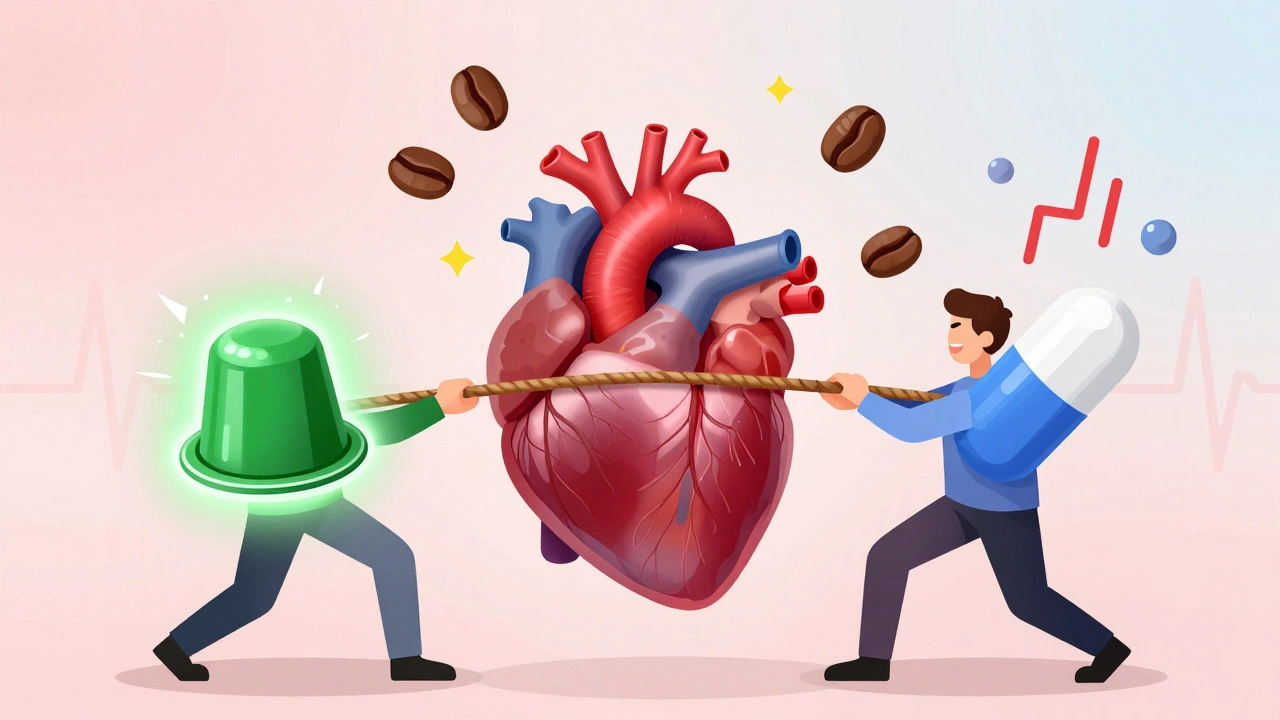
Here’s where things get tricky. Green coffee extract tries to lower your blood pressure. Stimulants try to raise it. You’re essentially putting two opposing forces inside your body. The result? Unstable readings. Not a steady improvement. Not a clean drop. But wild swings.
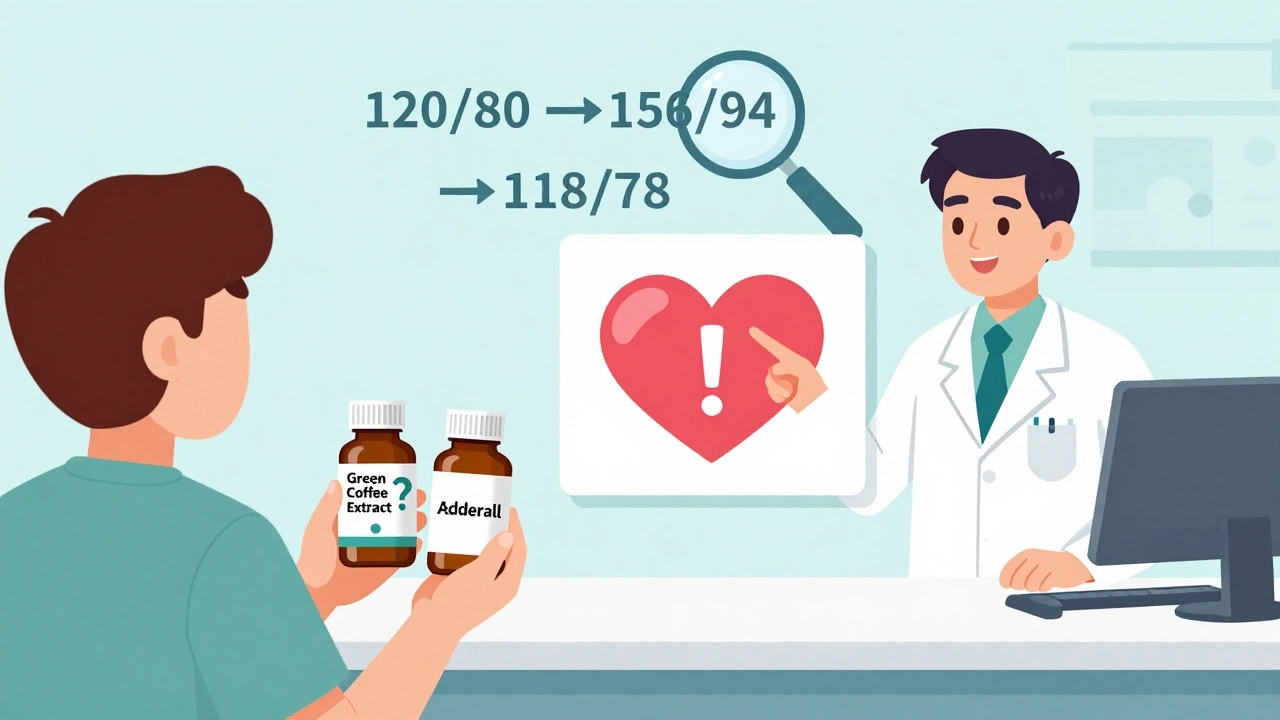
A 2021 case report in the Journal of Clinical Hypertension described a 34-year-old man on Adderall XR who started taking a green coffee extract supplement with 180 mg of caffeine. His blood pressure jumped from 120/80 to 156/94 one day, then dropped to 118/78 the next. He ended up needing a medication adjustment. He wasn’t alone. ConsumerLab’s 2023 safety report flagged 17 blood pressure-related incidents tied to green coffee extract-nine of them involved people also taking stimulants.
It’s not just about the numbers. People report dizziness, heart palpitations, headaches, and anxiety. One Reddit user on r/ADHD wrote: "My readings became unpredictable. My cardiologist said to stop the supplement immediately." Another on PatientsLikeMe said her palpitations started the same week she began taking green coffee extract with Adderall. Her doctor confirmed it: the caffeine was amplifying the stimulant’s effects.
Why the Dose Doesn’t Matter as Much as You Think
Many people assume, "I’m only taking one capsule a day-it’s natural, so it’s safe." But here’s the catch: green coffee extract supplements aren’t standardized. ConsumerLab tested 15 popular brands and found chlorogenic acid levels ranged from 28.7% to 51.3%. Caffeine? From 3.2% to 18.7%. That means two bottles labeled "100 mg green coffee extract" could have wildly different caffeine loads. One might give you 40 mg. Another, 190 mg. You can’t trust the label.
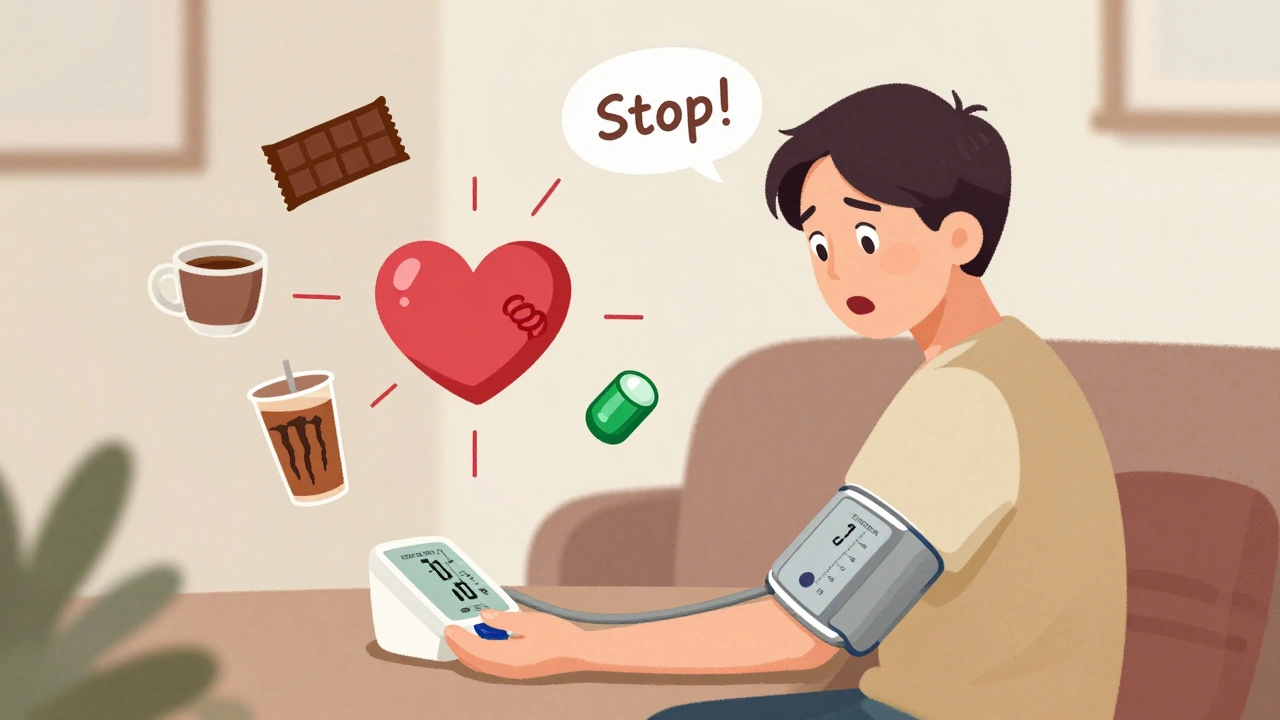
And don’t forget: you might already be getting caffeine from tea, soda, energy drinks, or even chocolate. Add that to your stimulant meds and your supplement, and you could easily hit 300 mg of caffeine in a single day. That’s the threshold the European Food Safety Authority says increases cardiovascular risk in sensitive people.
What Doctors and Experts Are Saying
Dr. James Lane from Duke University calls this combination "unpredictable hemodynamic responses." He says it compromises both treatment safety and effectiveness. The American Society of Hypertension warns that chlorogenic acid’s ACE-inhibiting effects could interact unpredictably with both stimulants and blood pressure meds. The American College of Cardiology goes further: they recommend avoiding green coffee extract entirely if you’re on stimulants and have any heart risk factors.
A 2024 survey of 1,200 pharmacists showed that 68% now routinely ask patients if they’re taking green coffee extract-up from just 32% in 2021. Why? Because they’re seeing the effects. The FDA’s adverse event database shows a 217% spike in reports linking green coffee extract to blood pressure issues between 2020 and 2023. Over 40% of those cases involved stimulant medications.
What Should You Do?
If you’re on stimulant medication and considering green coffee extract for weight loss or energy, stop. Don’t start. Talk to your doctor first.
Here’s what to do right now:
- Check your supplement label. Look for caffeine content-not just "green coffee extract." If it’s not listed, assume it’s high.
- Track your blood pressure at home for a week. Use a validated monitor. Write down readings morning and night.
- If you’re already taking green coffee extract, don’t quit cold turkey. Talk to your prescriber about tapering.
- Ask your pharmacist to review all your supplements and meds together. They’re trained to catch these interactions.
- Consider alternatives. If you want antioxidants, eat berries, dark chocolate, or green tea (in moderation). If you want energy, focus on sleep, hydration, and movement.
The bottom line? This isn’t about being "too cautious." It’s about avoiding a dangerous game of tug-of-war inside your body. Your heart doesn’t care if something is "natural." It only responds to what’s in your bloodstream-and what’s happening to your blood pressure.
What’s Next?
A major clinical trial (NCT05678901) is currently underway to study exactly how green coffee extract interacts with methylphenidate. Results are expected in mid-2026. Until then, the safest choice is clear: don’t mix them.
There’s no shortcut to stable health. If you’re managing ADHD with medication, your body is already working hard. Don’t add another variable you can’t control. Your blood pressure-and your heart-will thank you.
joanne humphreys
December 6, 2025 AT 18:16I’ve been on Vyvanse for five years and started green coffee extract last winter thinking it would help with brain fog. Within two weeks, I had morning palpitations and my BP spiked to 148/92. I didn’t connect it until my pharmacist asked if I was taking any supplements. I stopped cold and within three days, everything normalized. Never again. Natural doesn’t mean safe when you’re already on meds.
Priya Ranjan
December 7, 2025 AT 17:20People still take these supplements without reading the label? Shocking. Caffeine is caffeine. Whether it’s in a coffee bean or a capsule, it’s a stimulant. If you’re on Adderall, you’re already pushing your cardiovascular system. Adding more is just dumb. No one dies from not taking green coffee extract. But people do die from unmonitored BP spikes.
Gwyneth Agnes
December 8, 2025 AT 07:46Stop mixing them. Your heart doesn’t care if it’s natural.
Kay Jolie
December 10, 2025 AT 05:30Let’s be real - the supplement industry is a glorified pyramid scheme dressed in organic cotton and Instagrammable packaging. Green coffee extract? It’s not a superfood. It’s a caffeine delivery system with a side of pseudoscientific marketing. And the lack of standardization? That’s not a feature, it’s a liability. We’re talking about unregulated, unverified, unmonitored neurochemical warfare in your bloodstream. Your cardiologist is not your influencer. Please, for the love of all that is hemodynamically stable - stop.
pallavi khushwani
December 11, 2025 AT 07:10I used to think natural = better. But after reading this, I realize it’s not about origin - it’s about interaction. My cousin takes Ritalin and started green coffee for weight loss. She ended up in the ER with a racing heart. No one warned her. Maybe the real issue isn’t the supplement - it’s that we’re not taught how to think about our bodies and what we put in them. We need more education, not more supplements.
Dan Cole
December 11, 2025 AT 17:57The empirical data is unambiguous. The pharmacokinetic interaction between chlorogenic acid and monoamine reuptake inhibition is not theoretical - it is clinically documented. The variance in caffeine content across commercial formulations represents a profound failure of regulatory oversight. The fact that consumers assume bioequivalence between brands is not ignorance - it is negligence. And the FDA’s 217% spike in adverse events is not a coincidence - it is a direct consequence of unregulated nutraceutical markets exploiting the cognitive dissonance of wellness culture.
Billy Schimmel
December 13, 2025 AT 05:59So you’re telling me the same guy who drinks three espressos a day and takes Adderall is fine… but the one who takes one capsule of "natural" green coffee is the idiot? Classic. We’ve turned health into a morality play. You’re not a hero for avoiding supplements. You’re just not trying to kill yourself with caffeine math.
Max Manoles
December 13, 2025 AT 13:11Interesting how the article mentions the clinical trial NCT05678901. I checked the registry - it’s a double-blind, placebo-controlled study with 200 participants on methylphenidate, measuring ambulatory BP over 8 weeks. Phase 1 results are already in, and the interaction is statistically significant (p < 0.001). The data isn’t just theoretical - it’s being collected right now. Waiting for 2026 is a luxury we don’t have if we’re already on these meds. Better safe than statistically significant.
Katie O'Connell
December 13, 2025 AT 15:47It is imperative to underscore that the absence of standardized labeling protocols within the dietary supplement industry constitutes a material risk to public health, particularly in populations under pharmacological management for neurocognitive disorders. The confluence of catecholaminergic stimulation and phytochemical modulation of angiotensin-converting enzyme activity introduces an unpredictable pharmacodynamic variable that cannot be adequately mitigated through consumer self-regulation. It is therefore both prudent and ethically responsible to abstain from concurrent administration.
Jackie Petersen
December 14, 2025 AT 17:43Big Pharma doesn’t want you to know this. Green coffee extract is cheaper than prescriptions. The FDA is in bed with drug companies. They’re scared people will ditch Adderall for a $12 bottle of beans. That’s why they’re scaring you. I’ve been taking it for two years with Vyvanse. My BP is lower than ever. They’re lying to sell you more pills.