How Lower Generic Drug Prices Improve Patient Adherence and Cut Healthcare Costs
 Jan, 11 2026
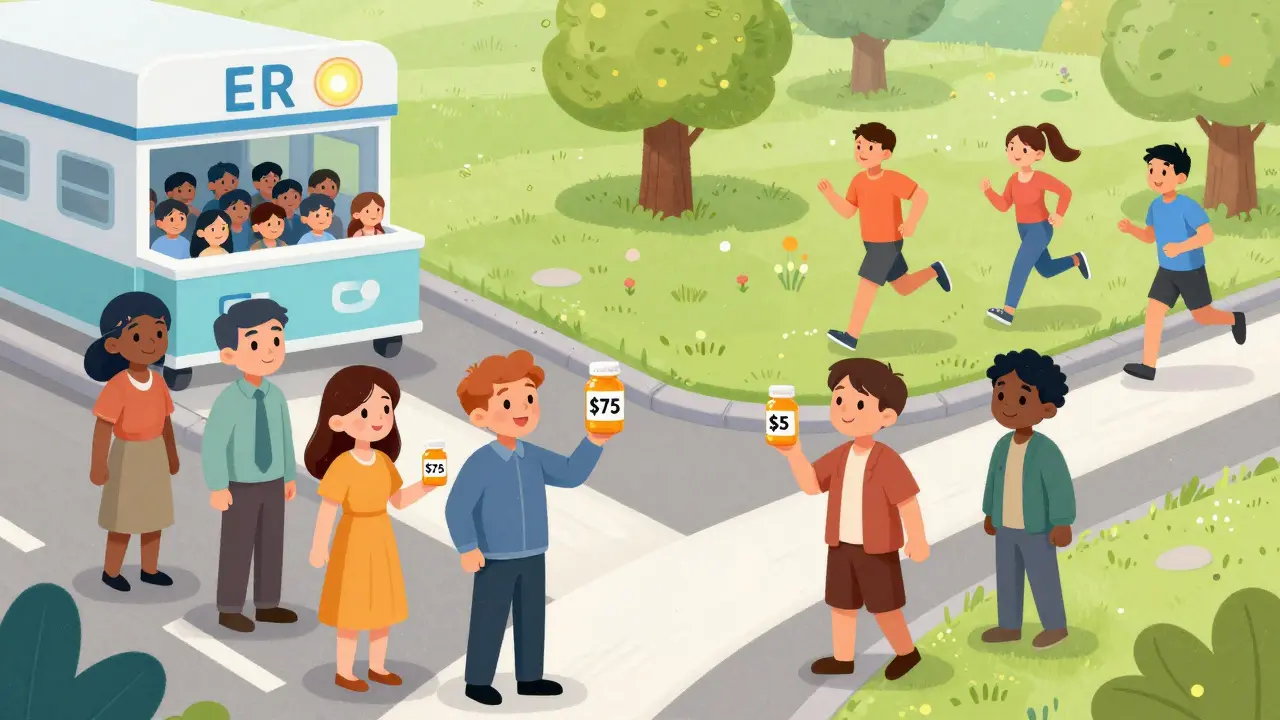
When your prescription costs $75 a month, you start skipping doses. When it drops to $5, you take it every day without thinking. This isn’t theory-it’s what real people experience every day. And it’s why lower generic drug prices don’t just save money-they save lives.
Why People Skip Their Medication
Out-of-pocket costs are the biggest reason people stop taking their pills. A 2023 JAMA Network Open survey of over 2,100 adults found that nearly one in three (32.7%) admitted to skipping doses, delaying refills, or not filling prescriptions at all because of cost. That’s not laziness. That’s survival. People choose between medicine and groceries, medicine and rent, medicine and bus fare to work. The numbers are brutal. For every $10 increase in a copayment, adherence drops by 2% to 4%. For expensive drugs like GLP-1 agonists used in diabetes, each extra $10 in out-of-pocket cost reduces the chance someone will stick to their regimen by 3.7%. That’s not a small bump-it’s a cliff. And when people stop taking their meds, emergency room visits go up by 5.2%.Generics Work Just as Well-And Cost Way Less
Generic drugs aren’t cheap knockoffs. They’re exact copies. The FDA requires them to have the same active ingredient, strength, dosage form, and route of administration as the brand-name version. They must also prove they’re absorbed into the body at the same rate and to the same extent-within 80% to 125% of the brand drug’s levels. In other words, if your brand-name statin works, the generic version works just as well. And the price difference? It’s staggering. Generics cost 80% to 85% less than their brand-name equivalents. That’s not a marketing claim-it’s FDA data. In the U.S., generics make up 90% of all prescriptions filled but only 23% of total drug spending. From 2009 to 2019, they saved the healthcare system $643 billion.Real Evidence: When Prices Drop, Adherence Rises
Studies don’t just suggest this-they prove it. In a landmark 2012 study, researchers looked at Medicare Part D patients switching from brand-name statins (atorvastatin and rosuvastatin) to their generic versions. The copay dropped from $30 to $10. Result? Adherence, measured by proportion of days covered, jumped by 5.9%. That’s not a marginal gain. That’s a game-changer for people with high cholesterol, where missing even a few doses increases heart attack risk. Another study focused on women taking aromatase inhibitors for early-stage breast cancer. Those on brand-name drugs had a 22.3% discontinuation rate. Those on generics? Only 17.8%. Adherence rates were 68.4% vs. 73.1%. The difference? Cost. Higher copays meant more people quit. One Reddit user, u/HeartHealthJourney, shared their story: after switching from brand-name Crestor ($75 copay) to generic rosuvastatin ($5 copay), they went from missing 3-4 doses a week to perfect adherence for 11 months straight. That’s not luck. That’s price.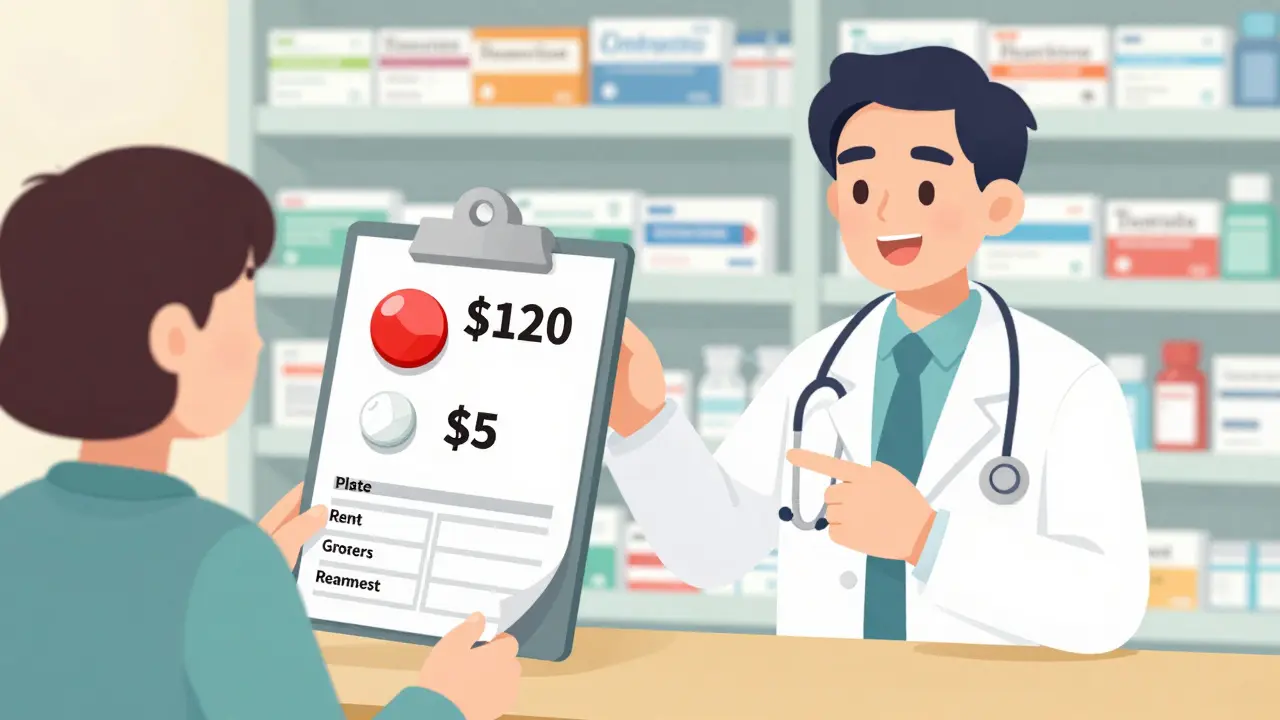
How Insurance Tiers Control Your Behavior
Pharmacy benefit managers don’t just set prices-they design systems that nudge behavior. Tiered formularies are the hidden hand behind your copay. Tier 1? Generics. $5-$10. Tier 2? Preferred brands. $30-$50. Tier 3? Non-preferred brands. $75-$100+. Tier 4? Specialty drugs. $200+. It’s not complicated. People choose the cheapest option. When a drug moves from Tier 2 to Tier 1, adherence goes up. When a drug gets bumped up to Tier 3, adherence drops. That’s not patient failure. That’s system design.Cost-Related Nonadherence Isn’t Just a Problem-It’s a Waste
Medication nonadherence isn’t just bad for patients. It’s a financial disaster for the system. Up to 50% of treatment failures are due to people not taking their meds. That leads to avoidable hospitalizations, emergency visits, and complications. In the U.S., nonadherence causes over 100,000 preventable deaths each year and adds $100 billion to $300 billion in unnecessary healthcare spending. That’s more than the entire annual budget of many U.S. states. Yet, the irony is this: when people adhere to their meds, total healthcare costs drop-even if drug spending goes up. One study found that adherent patients had 15-20% fewer hospitalizations. That’s the real math. Pay a little now, or pay a lot later.What’s Changing-and What’s Working
The Inflation Reduction Act of 2022 capped insulin at $35 a month. That’s a start. Starting in 2025, Medicare Part D will cap total out-of-pocket drug costs at $2,000 a year. That’s huge. It could improve adherence for over 1.4 million seniors. Real-time benefit tools (RTBTs) are another breakthrough. These are apps or EHR integrations that show a doctor the exact cost of a prescription before they write it. In pilot programs, RTBTs improved adherence by 12-15%. One pharmacy program, Magellan’s inforMED, reported a 40% reduction in care gaps and a 2:1 return on investment. But tools alone aren’t enough. Patients need to understand that generics aren’t second-rate. The FDA’s “It’s Okay to Use Generics” campaign helps, but doctors need to talk about cost too. A 2023 survey found that 54% of people who skipped meds because of cost said they’d be “moderately or extremely upset” if their doctor didn’t discuss price-even if they used a cost-checking tool.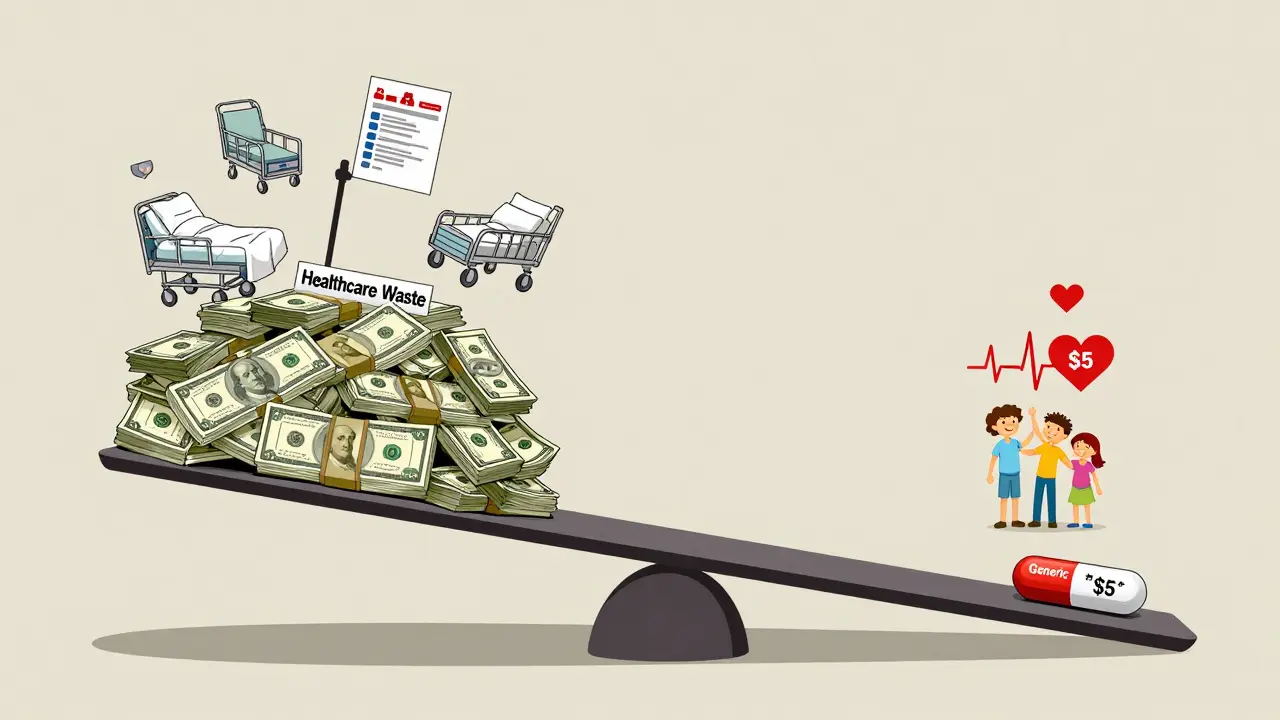
Why This Matters in New Zealand-and Everywhere Else
While the U.S. pays 256% more for brand-name drugs than countries like Canada, Australia, or Germany, the lesson here isn’t just American. It’s global. Wherever patients pay out-of-pocket, cost drives behavior. In Auckland, where some prescriptions still require co-payments, the same pattern holds: if a drug is too expensive, people skip it. The solution isn’t about blaming patients. It’s about designing systems that make adherence easy. Lower copays. Clear communication. Real-time cost data. And trust that generics aren’t a compromise-they’re the standard.What You Can Do
If you’re on a chronic medication and skipping doses because of cost:- Ask your doctor if a generic version is available.
- Use tools like GoodRx to compare prices across local pharmacies.
- Ask about patient assistance programs-many drugmakers offer them.
- Request a formulary check: is your drug on Tier 1?
- Don’t be afraid to say, “This is too expensive. What else works?”
- Check real-time cost tools before prescribing.
- Always mention cost-even if you think the patient can afford it.
- Explain why generics are safe and effective.
- Don’t assume someone’s nonadherence is about forgetfulness. Ask about price first.
The Bottom Line
Lower generic prices aren’t just about saving money. They’re about making treatment possible. When a pill costs $5 instead of $75, people take it. When they take it, they stay healthy. When they stay healthy, hospitals empty out. And when hospitals empty out, the system saves billions. This isn’t a policy debate. It’s a simple equation: lower cost = better adherence = fewer deaths = less spending. The data is clear. The tools exist. What’s missing is the will to use them.Do generic drugs work as well as brand-name drugs?
Yes. The FDA requires generics to contain the same active ingredient, strength, dosage form, and route of administration as the brand-name drug. They must also prove they’re absorbed into the body at the same rate and to the same extent-within 80% to 125% of the brand drug’s levels. Thousands of studies confirm they are equally effective and safe.
Why do some people still prefer brand-name drugs?
Some people believe brand-name drugs are stronger or more reliable, even though there’s no scientific basis for that. Others have had bad experiences with a specific generic manufacturer, which can happen due to inactive ingredients (like fillers) causing minor side effects. But for 95% of patients, switching to a generic causes no difference in effectiveness or side effects.
How much can I save by switching to a generic?
On average, you’ll save 80% to 85%. For example, if a brand-name statin costs $120 a month, the generic may cost $15-$25. Some medications drop from $200 to under $10. Always check with your pharmacy-prices vary by location and insurer.
Can cost-related nonadherence lead to hospitalization?
Yes. Missing doses of blood pressure, diabetes, or heart medications can lead to strokes, heart attacks, or diabetic emergencies. Studies show nonadherent patients have up to 50% higher rates of hospitalization. For chronic conditions, skipping meds isn’t just risky-it’s dangerous.
Are there programs to help pay for medications?
Yes. Many drug manufacturers offer patient assistance programs that provide free or low-cost medications to eligible people. Medicare Part D has a $2,000 annual out-of-pocket cap starting in 2025. Some pharmacies offer discount programs, and nonprofit organizations like NeedyMeds or RxAssist can help you find support.
Why aren’t all drugs generic?
Brand-name drugs are protected by patents, which typically last 20 years. Once the patent expires, other companies can make generics. Some drugs are complex to copy (like biologics), so generics take longer to develop. But the FDA is accelerating approvals-1,500+ new generics are expected by 2027.
What’s being done to make medications cheaper in the long term?
Policies like the Inflation Reduction Act cap insulin at $35 and will cap total out-of-pocket drug costs at $2,000 a year for Medicare beneficiaries by 2025. The FDA is also speeding up generic approvals through GDUFA III, investing $1.1 billion to bring more low-cost options to market. Value-based insurance designs-where copays are tied to a drug’s effectiveness-are being tested and show promise.
Sonal Guha
January 12, 2026 AT 18:50Generic drugs work. Period. The FDA data is clear. People skip meds because they can’t afford them, not because they’re lazy. Cost drives behavior. End of story.
TiM Vince
January 14, 2026 AT 00:21I’ve seen this in my own family. My dad was skipping his blood pressure med because it was $60 a month. Switched to generic-$8. He’s been stable for two years now. No drama. Just science and sense.
gary ysturiz
January 15, 2026 AT 07:38This is one of those things that should be obvious but isn’t. When people can’t afford their meds, they don’t take them. When they don’t take them, they get sicker. When they get sicker, the system pays more. It’s not complicated. Lower cost = better health = less spending. Why are we still arguing this? We have the data. We have the tools. We just need the will.
Doctors need to ask about cost every single time. Not just when they think the patient is struggling. Every time. It’s part of the exam. Like asking about smoking or exercise.
And generics? They’re not second choice. They’re the standard. The FDA doesn’t approve them because they’re cheap. They approve them because they work just as well. That’s the law. That’s science.
Stop treating price as a taboo. Start treating it like part of the prescription. Because it is.
My cousin skipped her diabetes meds for six months because she was choosing between insulin and groceries. She ended up in the ER with ketoacidosis. The bill was $28,000. The insulin cost $45 a month. That’s not a tragedy. That’s a failure of design.
Cap insulin at $35? Good. Cap total out-of-pocket at $2,000? Even better. But we need this for all chronic meds-not just the flashy ones.
Real-time cost tools? Use them. Tell your patients about them. Don’t assume they know. Most don’t.
And if you’re a patient reading this? Ask. Always ask. ‘Is there a generic?’ ‘Can we check the price?’ ‘What if I switch?’ Say it loud. Say it proud. Your life is worth more than pride.
Jessica Bnouzalim
January 16, 2026 AT 08:26OMG YES. I switched from brand-name lisinopril to the generic-and my copay dropped from $85 to $4. I cried. Not because I was sad. Because I finally felt like I could breathe again. I’d been skipping doses for months just to make the money last. I felt guilty. But then I realized-I wasn’t the problem. The system was.
And now? I take it every single day. No excuses. No guilt. Just health.
Also-why do doctors still act like price is a weird topic? Like if you ask about cost, you’re being rude? No. You’re being smart. You’re being alive.
PLEASE. If you’re a provider. Say the word ‘cost.’ Just say it. It’s not awkward. It’s necessary.
laura manning
January 16, 2026 AT 17:23While the anecdotal evidence presented is compelling, one must exercise caution in extrapolating causality from observational data. The 2012 Medicare study, for instance, does not control for confounding variables such as patient education, comorbidities, or pharmacy access. Furthermore, the FDA’s bioequivalence standards, while rigorous, permit a 20% variance in absorption rates-this is not trivial in pharmacokinetic terms. One must also consider the potential for inactive ingredients in generics to induce idiosyncratic reactions, particularly in elderly or immunocompromised populations. The assertion that generics are universally interchangeable is, therefore, an oversimplification.
That said, the economic argument for cost reduction is empirically sound. The $643 billion in savings cited is corroborated by CMS data. The challenge lies in balancing efficacy, safety, and affordability-not reducing price at the expense of therapeutic integrity.
Bryan Wolfe
January 17, 2026 AT 14:27You know what’s wild? We treat our pets better than we treat our neighbors when it comes to meds. My dog’s heart pill costs $12 a month. My mom’s blood thinner? $90. Same chemistry. Different price tag. That’s not healthcare. That’s capitalism with a stethoscope.
And yet-when you make it cheap, people heal. It’s not magic. It’s math. $5 pill? Taken daily. $75 pill? Taken once a week. That’s not patient failure. That’s system failure.
Doctors: Ask about cost. Not once. Every time. Even if they look like they can afford it. Because you don’t know. And if you don’t ask, you’re not just missing a detail-you’re missing a life.
Patients: You’re not weak for needing help. You’re smart for asking. Say it. Write it down. Text it. Whisper it. Say: ‘This is too expensive. What else works?’ You’re not being a burden. You’re being brave.
This isn’t politics. It’s people. And people matter more than profits.
Sumit Sharma
January 18, 2026 AT 04:29Let’s cut through the fluff. The U.S. healthcare system is a rent-seeking oligopoly. Pharma companies exploit patent monopolies. PBMs extract 20% margins. Insurers refuse to cover generics unless forced. Patients are collateral damage. The solution isn’t ‘ask your doctor’-it’s structural reform. Break the patents. Nationalize drug pricing. End PBM kickbacks. Until then, we’re just rearranging deck chairs on the Titanic.
And yes-generics work. But that’s not the point. The point is: why should anyone have to fight for access to life-saving medicine in the richest country on Earth? This isn’t a health issue. It’s a moral bankruptcy.
Jay Powers
January 19, 2026 AT 07:14I used to think generics were less effective until I switched my dad’s cholesterol med. He’d been skipping it for years. $5 a month changed everything. He’s still here. That’s all that matters.
Doctors need to stop acting like price is a secret. Just say it. Out loud. It’s not rude. It’s responsible.
Lawrence Jung
January 20, 2026 AT 11:39People don’t skip meds because of cost. They skip them because they don’t believe in the system. The real issue is trust. If you think your doctor doesn’t care, why would you take the pill? Price is just the symptom. The disease is alienation.
Also-why do we assume everyone wants to be healthy? Some people just want to survive. And that’s okay. But it changes the game.
Alice Elanora Shepherd
January 22, 2026 AT 07:09Thank you for this comprehensive and evidence-based overview. The data on adherence and cost is unequivocal, and the global parallels are striking. In the UK, the NHS’s generic prescribing policy has resulted in over 90% of prescriptions being dispensed as generics-with no measurable difference in clinical outcomes. The cultural shift required is not about convincing patients of efficacy, but dismantling the stigma around ‘cheap’ medicine. Language matters: we must stop calling them ‘generics’ and start calling them ‘standard therapy.’
Additionally, the role of pharmacists as cost navigators is underutilized. In community pharmacies, a simple conversation-‘Would you like me to check if this is available at a lower price?’-can increase adherence by up to 18%. This should be standard practice, not an exception.
Christina Widodo
January 22, 2026 AT 17:11Wait-so if I switch to generic, my doctor still has to write the prescription the same way? Or do I need to ask them to change it? I’m confused. Also-how do I know if my pharmacy is giving me the right one? And what if I get a different generic next time? Do they all work the same? I just want to not die.