How to Communicate with Your Pharmacy During Generic Drug Transitions
 Jan, 22 2026
What Happens When Your Brand-Name Drug Turns Generic?
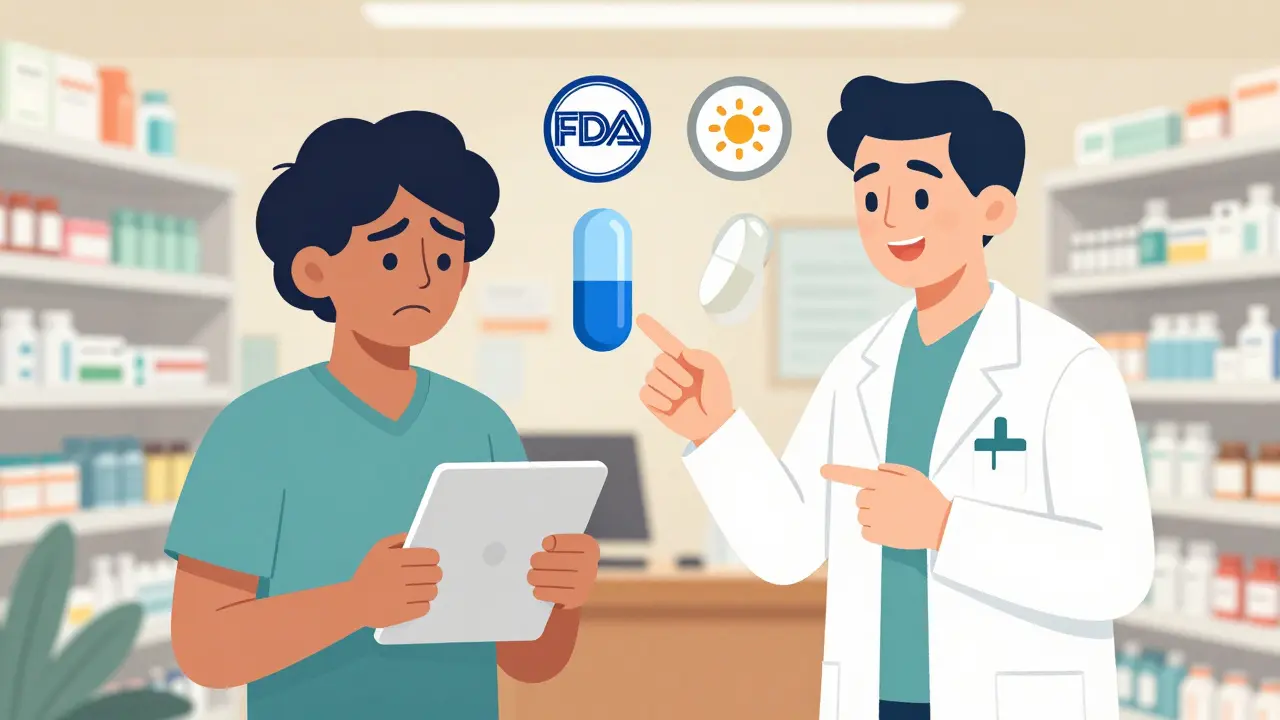
One day, you walk into your pharmacy to pick up your usual prescription, and instead of the familiar blue capsule, you’re handed a white tablet with a different marking. Your heart skips a beat. Is this the same medicine? Will it still work? This is a common moment during a generic transition-when your brand-name drug is replaced by a cheaper, FDA-approved generic version.
It’s not a mistake. It’s not a mix-up. It’s standard practice. In the U.S., about 90% of all prescriptions filled are for generic drugs. They cost up to 85% less than brand-name versions and save patients and insurers billions each year. But even though they’re scientifically identical in active ingredients, many people feel uneasy about the switch. That’s where clear communication with your pharmacy becomes critical.
Why Generic Drugs Are Just as Safe (and Often Better)
The FDA requires every generic drug to meet the same strict standards as the brand-name version. That means the same active ingredient, same strength, same way it’s taken-whether it’s a pill, injection, or inhaler. The only differences are in color, shape, flavor, or inactive ingredients like fillers and dyes.
Here’s what that really means: if your brand-name drug delivers 10 mg of the active ingredient into your bloodstream over 4 hours, the generic must do exactly the same. The FDA’s bioequivalence rule requires the generic’s absorption rate to fall within 80-125% of the brand’s. That’s a tight window. Most generics land right in the middle.
Studies back this up. A 2018 analysis of over 47,000 patients found no meaningful difference in outcomes between those who stayed on brand-name drugs and those who switched to generics-even for chronic conditions like high blood pressure and depression. For most people, the switch is seamless.
When the Switch Might Cause Problems
But not everyone has a smooth transition. For certain medications with a narrow therapeutic index-meaning the difference between an effective dose and a harmful one is tiny-small changes in how the drug is absorbed can matter.
Drugs like levothyroxine (for thyroid), warfarin (a blood thinner), and some epilepsy medications (like phenytoin or levetiracetam) fall into this category. A 2021 JAMA study found that 9.4% of epilepsy patients had more seizures after switching from brand to generic, compared to 5.3% who stayed on brand. That’s not common, but it’s real.
If you’re on one of these drugs, don’t panic. But do speak up. If you notice changes in how you feel-more side effects, less control over symptoms, or even just a strange feeling that something’s off-tell your pharmacist right away. They can help you decide whether to switch back or adjust your treatment.
What You Should Do Before the Switch
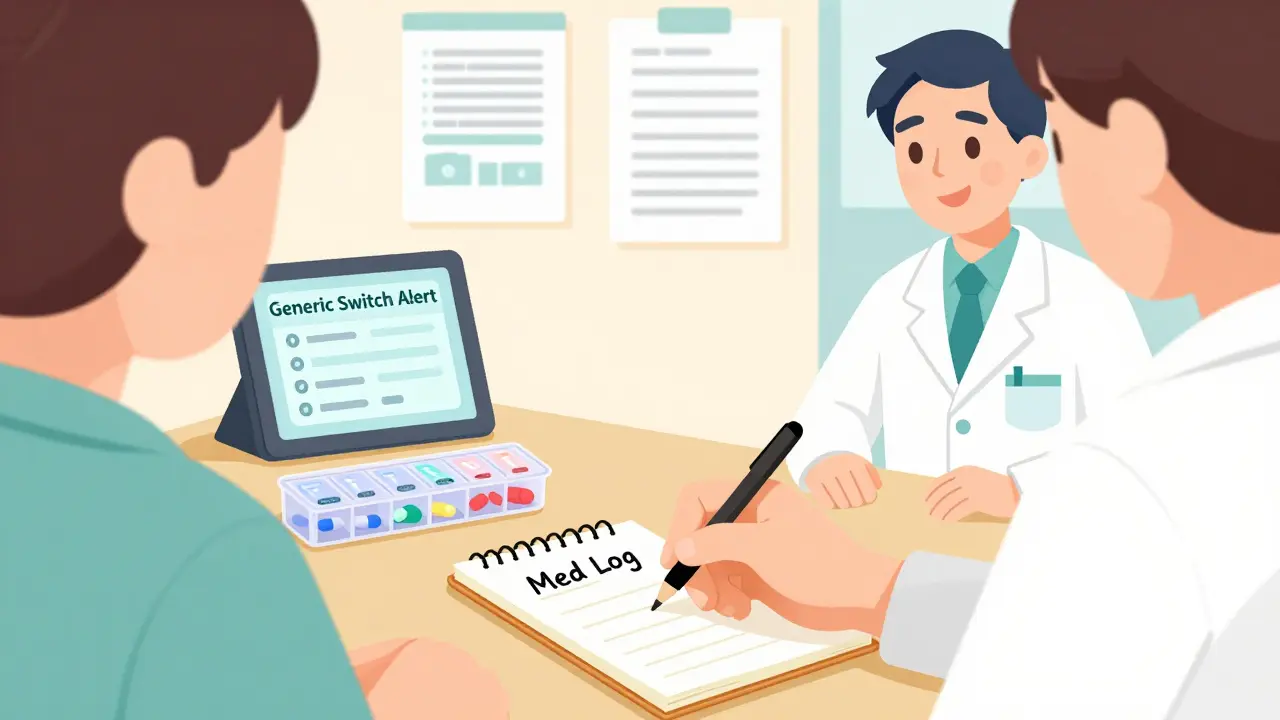
Don’t wait until the day your brand-name prescription runs out. Start talking to your pharmacy at least 30 days before the expected change. Here’s what to ask:
- Is my insurance requiring the switch? Most plans now push generics to save money. Ask if you can stay on the brand with a prior authorization. Some insurers will approve it if you’ve had issues before.
- Will the generic be covered under my plan? Even generics have tiers. Make sure yours isn’t on a higher-cost tier that requires extra paperwork.
- Can I get a sample of the new pill? Some pharmacies keep a few on hand so you can see the size, color, and markings before your full refill.
- Is there a patient assistance program? Generic manufacturers sometimes offer discounts or free starter packs. Ask your pharmacist to check.
Bring your full medication list to every visit. Include supplements, over-the-counter drugs, and herbal products. Pharmacists catch interactions you might miss-like how a new generic antacid could affect your thyroid medication absorption.
What Your Pharmacist Should Do
A good pharmacy doesn’t just hand you a new pill and say, “Here you go.” They’re trained to manage transitions. Here’s what they should do:
- Confirm you understand the change and why it’s happening
- Check for any restrictions-some drugs can’t be switched automatically by law
- Review your entire medication list for possible interactions
- Document your concerns, even if they’re just about the pill looking different
- Offer to call your doctor if you report side effects or reduced effectiveness
Pharmacists are the most accessible medication experts you have. Unlike your doctor, they see your prescriptions every time you refill. They notice patterns. If you’ve had three bad reactions to different generics in the last year, they’ll remember that.
What to Do If Something Feels Wrong
Let’s say you switched to a generic version of your seizure medication and started having more episodes. Or your blood pressure readings jumped after switching your lisinopril. Don’t assume it’s all in your head.
Take these steps:
- Stop taking the new pill and call your pharmacy immediately. Don’t wait until your next refill.
- Ask if they can get your original brand-name version back-even temporarily.
- Request a copy of the generic’s lot number and manufacturer name. This helps track quality issues.
- Ask if your doctor can write a “Do Not Substitute” note on the prescription.
- If your insurance denies the brand-name drug, ask about the 90-day transition period for Medicare Part D or similar protections in your plan.
Many patients report feeling dismissed when they raise concerns. But you have a right to safe, effective care. If your pharmacist brushes you off, ask to speak with the lead pharmacist or pharmacy manager.
How to Stay in Control During Transitions
Here are a few simple habits that make a big difference:
- Use one pharmacy for all your meds. This lets them track everything in one system and catch conflicts.
- Sign up for medication synchronization. This aligns all your refill dates so you pick everything up on the same day. Studies show it improves adherence by 27%.
- Keep a written log. Note the date you switched, the pill’s appearance, and any side effects. Bring it to appointments.
- Ask about electronic transfers. Thanks to a 2023 DEA rule, you can now transfer prescriptions between pharmacies without going back to your doctor-just ask your pharmacist to handle it.
Real Stories: When It Worked-and When It Didn’t
One patient, a 68-year-old on warfarin, switched to a generic and noticed her INR levels fluctuated wildly. Her pharmacist noticed the change in inactive ingredients and suggested switching to a different generic manufacturer. The problem disappeared.
Another person, who took levetiracetam for seizures, had a spike in seizures after switching. She went back to the brand-name version, and her doctor supported the change. Her insurance later approved a prior authorization so she could keep it long-term.
On the flip side, thousands of people switch without issue. A 2023 Healthline survey found 78% of patients noticed no difference at all. The biggest win? Cost savings. Medicare beneficiaries save an average of $265 per medication each year by switching to generics.
What’s Changing in 2026
Technology is making transitions smoother. By 2026, most major pharmacy chains use AI tools to flag patients at higher risk for transition problems-based on age, medical history, and past reactions. Some pharmacies now offer digital photos of your pill before you pick it up, so you know exactly what you’re getting.
Blockchain pilot programs by CVS and Walgreens are tracking every generic batch from factory to pharmacy, so if a problem arises, they can trace it instantly. This transparency is reducing confusion and building trust.
But the most important tool hasn’t changed: talking to your pharmacist. No app, no algorithm, no barcode scan replaces a conversation.
Chloe Hadland
January 23, 2026 AT 12:47Stop stressing over the color change. Your body doesn't care what it looks like.
Michael Camilleri
January 25, 2026 AT 07:06lorraine england
January 27, 2026 AT 01:49Himanshu Singh
January 27, 2026 AT 11:37That little white pill? It's not a betrayal. It's evolution. You're not losing your medicine-you're gaining freedom from price tags that make you choose between rent and refills. The system isn't perfect but your pharmacist? They're your secret weapon. Talk to them like a human. Not a robot. They're on your side.
Izzy Hadala
January 28, 2026 AT 15:31blackbelt security
January 29, 2026 AT 16:37Patrick Gornik
January 31, 2026 AT 02:35Karen Conlin
February 1, 2026 AT 02:25Turns out, the same generic from the same maker? Same pill. But switch manufacturers? Totally different. Now I ask for the manufacturer name every time. It’s a tiny habit. Huge peace of mind. And I save $300 a year. Win win.
asa MNG
February 2, 2026 AT 00:47pharmacist was like 'oh thats normal' and i was like no it's not normal i'm not a lab rat
got my brand back and now they just do prior auth every time. my insurance hates me but my brain loves me. ps i think the generic had glitter in it idk but it felt sparkly and that scared me
Amelia Williams
February 3, 2026 AT 23:33Sharon Biggins
February 4, 2026 AT 13:31