How to Coordinate School Nurses for Daily Pediatric Medications
 Jan, 17 2026
Every morning, hundreds of thousands of children swallow pills, use inhalers, or get insulin shots-not at home, but in classrooms, cafeterias, and gymnasiums. For many kids with chronic conditions like asthma, diabetes, or ADHD, school is where their medication schedule becomes a lifeline. But who makes sure it happens safely? The answer is school nurses-and coordinating them effectively isn’t just helpful, it’s legally required.
Why School Nurses Are the Backbone of Pediatric Medication Safety
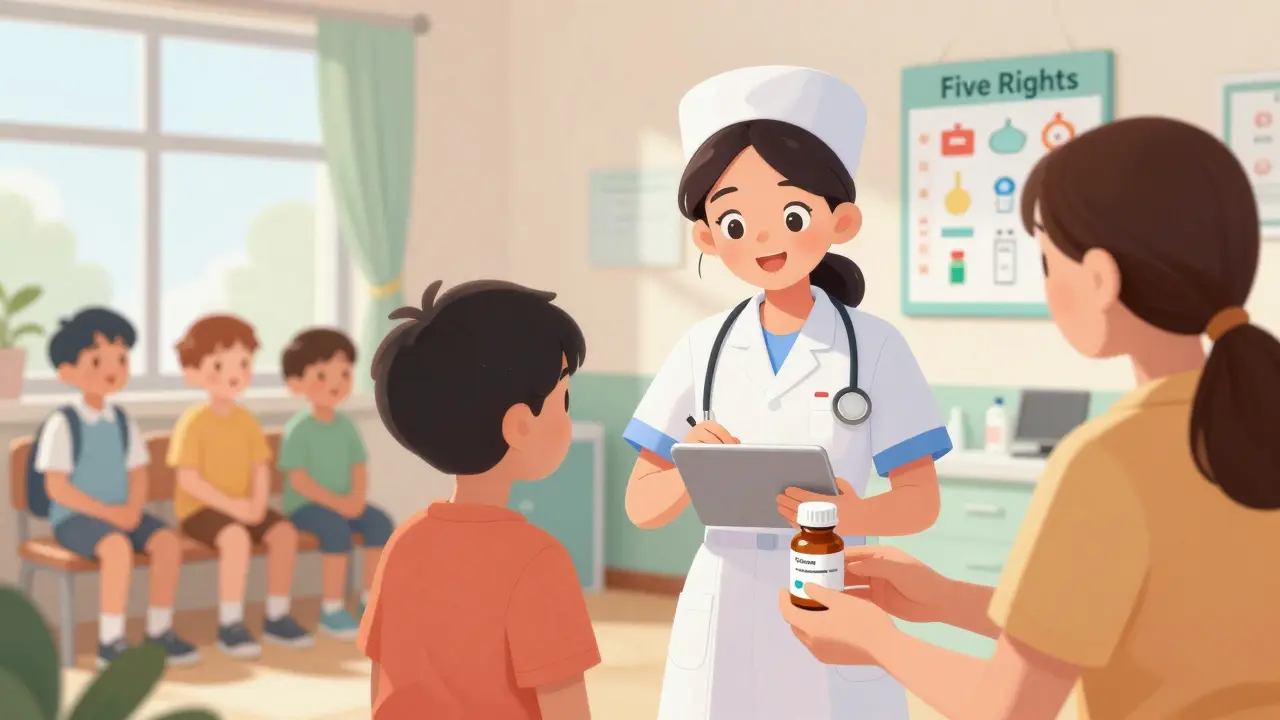
School nurses aren’t just there for scraped knees or headaches. They’re the central point of control for daily pediatric medication administration. Without them, kids with complex medical needs would be forced to miss school, risk dangerous errors, or rely on untrained staff who don’t understand the consequences of a wrong dose. The five rights of medication administration-right student, right medication, right dose, right route, right time-are the non-negotiable foundation. These rules didn’t come from a textbook; they were forged from real mistakes. In 2023, the National Association of School Nurses (NASN) reported that about 1.2% of all school-based medication administrations contained errors. That might sound small, but in a district with 10,000 students, that’s over 120 mistakes in a single year. Some of those errors led to hospitalizations. The American Academy of Pediatrics (AAP) made it clear in its June 2024 policy statement: school nurses must personally assess each child’s needs before delegating any medication task. Skipping that step is how errors happen. One Texas school district saw a spike in insulin misadministration after a teacher was asked to give an injection without a nurse’s evaluation. The child went into hypoglycemia. That’s not a hypothetical risk-it’s a documented failure.What the Law Actually Requires
Federal laws like IDEA and Section 504 don’t just encourage medication support-they require it. If a child’s Individualized Education Program (IEP) or 504 Plan includes medication, the school must provide it. Failure to do so can cost districts millions. In 2022, Houston ISD was fined $2.3 million by the Texas Education Agency for failing to administer seizure medication to multiple students. But federal law doesn’t tell schools exactly how to do it. That’s where state Nurse Practice Acts come in. Thirty-seven states allow trained unlicensed personnel (UAPs)-like teachers, aides, or bus drivers-to give meds under nurse supervision. But the rules vary wildly. In Virginia, a school nurse must personally observe the first dose of any new medication. In Texas, some districts treat medication administration as an administrative task, not a nursing one. That’s a legal gray zone. A 2022 analysis by TASB Legal Services found districts using this model had 14% higher liability risk. The gold standard? NASN’s 2022 Clinical Practice Guideline. It’s the only nationally recognized, evidence-based framework. It says: no delegation without a nurse’s direct assessment. No meds without original, properly labeled pharmacy containers. No paper logs if you can use an electronic system. And no exceptions for field trips or after-school events.The 7-Step Coordination System That Works
Successful districts don’t wing it. They follow a clear, step-by-step process. Here’s what it looks like in practice:- Develop a district-wide policy using NASN’s sample templates. This takes 8-12 weeks to get approved by school boards and legal teams, but skipping this step invites chaos.
- Train school nurses on delegation protocols. A 16-hour certification course is standard. Nurses must know their state’s rules inside and out.
- Screen students using the NYSED three-category system: Nurse Dependent (needs direct help), Supervised (can self-administer but needs oversight), or Self-Administered (can do it alone, with nurse approval).
- Create Individualized Healthcare Plans (IHPs) for every child with a chronic condition. These aren’t forms-they’re living documents. Update them every semester. One study showed IHPs improved medication adherence by 28% compared to simple checklists.
- Train unlicensed staff only after the nurse has judged them competent. Training ranges from 4 hours for simple oral meds to 16 hours for injections or emergency epinephrine.
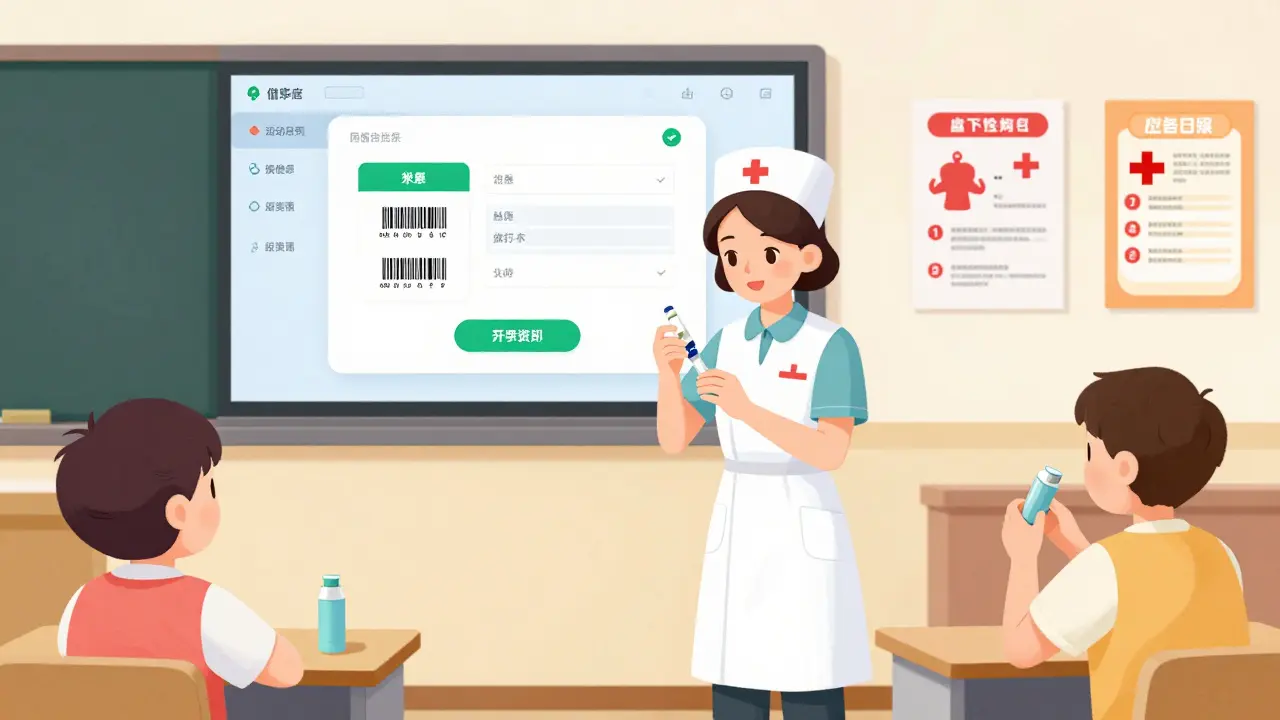
- Use electronic documentation. As of 2023, 98% of districts use digital systems. Fairfax County Public Schools cut documentation time by 45% and improved accuracy by 31% after switching to an electronic system.
- Hold monthly error reviews using a ‘Just Culture’ framework. This means no blame-just learning. One school nurse on Reddit said her district’s anxiety levels dropped 70% after adopting this approach.
Common Pitfalls and How to Avoid Them
Even the best systems fail when people cut corners. Here are the most frequent mistakes-and how to stop them:- Parents bring meds in unlabeled containers. This happens in 38% of districts. Solution: Require parents to sign a form stating they’ll only bring medications in original pharmacy bottles. Montgomery County, MD, ran mandatory parent education sessions and boosted compliance by 52%.
- Medications are given outside the 30-minute window. The AAP says meds must be given within 30 minutes of the scheduled time unless the doctor says otherwise. Rushing or delaying can cause serious harm-especially with insulin or seizure meds.
- Emergency meds aren’t ready. Epinephrine for anaphylaxis must be administered within 5 minutes of symptom onset. Only 87% of U.S. schools have stock epinephrine on hand. Every school should have at least two auto-injectors stored in an unlocked, clearly marked location.
- Documentation is skipped. Nurses spend an average of 2 hours a day on paperwork. That’s unsustainable. Electronic systems help, but only if they’re easy to use. Avoid clunky platforms that require 10 clicks to log a single dose.
Resource Gaps and Real-World Constraints
The ideal system assumes you have enough nurses. Reality? The national average is 1 nurse for every 1,102 students. The recommended ratio for schools with complex medical needs is 1:750. That gap forces districts to rely on unlicensed staff-even when it’s risky. Rural schools are hit hardest. Eighty-two percent of rural nurses report not having enough time for documentation, compared to 68% in urban areas. Many have to travel between multiple schools. One nurse in Nebraska told NASN she spends 90 minutes a day driving between three elementary schools just to administer asthma inhalers. And the problem is getting worse. The National Institute for Occupational Safety and Health projects a 22% increase in school medication needs by 2030, driven by rising rates of diabetes, obesity-related conditions, and mental health medications. Meanwhile, the NASN workforce analysis predicts a 15% nursing shortage by 2027.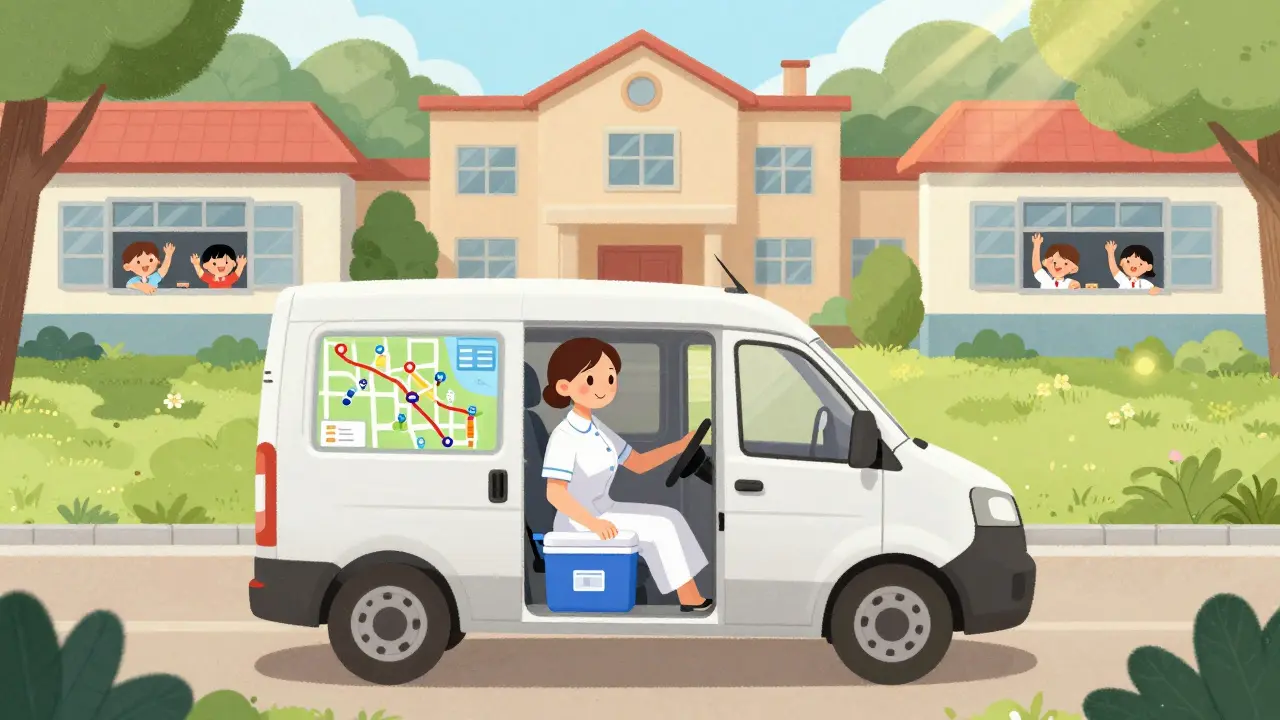
What’s Changing in 2025 and Beyond
The good news? Change is coming. In January 2024, NASN and the AAP launched the School Medication Administration Standardization Initiative. It’s a model law designed to align state rules. Twelve states have already adopted it. By 2026, 45 states are expected to follow. Technology is catching up, too. Sixty-three percent of districts are piloting smartphone-based verification systems. These apps let a nurse or trained aide scan a barcode on the medication bottle, confirm the student’s ID, and log the dose in real time. Some even send alerts if a dose is missed. Telehealth integration is another big shift. Nurses can now consult remotely with a child’s pediatrician during school hours to clarify dosing or side effects. No more waiting for a fax or phone call.What You Can Do Right Now
If you’re a school administrator, parent, or nurse:- Ask your district: Do we follow NASN’s 2022 guideline? If not, why?
- Check that all medications are in original, labeled containers. No Ziploc bags. No unlabeled vials.
- Push for electronic documentation. Paper logs are outdated and error-prone.
- Make sure every child with a chronic condition has an up-to-date IHP.
- Support your school nurse. They’re not just doing paperwork-they’re preventing emergencies.
The stakes are high. A missed dose of seizure medication can trigger a life-threatening event. A wrong insulin dose can lead to coma. But when coordination works-when the nurse, the parent, the teacher, and the system all align-it’s quiet, invisible, and perfect. That’s the goal.
Can a teacher give my child their medication?
Yes, but only if a licensed school nurse has assessed your child’s needs, trained the teacher, and documented that the teacher is competent. Federal law doesn’t require teachers to give meds, but it does require schools to make sure meds are given. In 37 states, nurses can delegate this task under strict rules. Never allow a teacher to give medication without nurse oversight.
What if my child needs medication during a field trip?
The same rules apply. The school nurse must plan ahead. Medications must be in original containers, stored securely, and administered by either the nurse or a trained, authorized person. Emergency meds like epinephrine must be carried by someone trained to use them. Many districts now use portable electronic systems that sync with the school’s main database so dosing is tracked even off-site.
Do I have to use the school’s electronic system?
No, but it’s strongly recommended. While 42 states still allow paper logs, electronic systems reduce errors by up to 31% and cut documentation time by nearly half. If your district uses paper, ask why. If they say it’s cheaper, ask how much it costs when a mistake leads to a hospital visit or legal action.
What if my child’s medication changes during the school year?
The school nurse must be notified immediately. A new prescription form from the doctor is required, and the Individualized Healthcare Plan (IHP) must be updated within 48 hours. The nurse will retrain any staff involved and verify the new medication’s label. Never assume the school knows about changes-always communicate directly with the nurse.
Are school nurses responsible for storing medications?
Yes. All medications must be stored securely, with controlled substances (like ADHD meds) kept in locked, double-locked cabinets with dual-signature logs. Medications should never be left in desks, lockers, or teacher classrooms. The nurse is legally responsible for storage, even if someone else gives the dose.
How can I help my child’s school improve medication safety?
Start by asking if the school follows NASN’s 2022 guidelines. Offer to attend a training session on medication administration. Volunteer to help organize parent education nights. Share your experience with other families. Most importantly, always bring medications in original pharmacy containers and update the school immediately when prescriptions change.
Emma #########
January 19, 2026 AT 04:59My daughter has type 1 diabetes and her school nurse is the reason she’s still in school. I used to panic every morning thinking about who’d give her insulin if something went wrong. Now? She walks to the nurse’s office like it’s no big deal. That’s the quiet magic of this system working.
christian Espinola
January 20, 2026 AT 21:23Let’s be real: if you’re letting teachers give insulin, you’re gambling with kids’ lives. The fact that 37 states allow this is a scandal. No amount of ‘training’ replaces a licensed nurse. This isn’t handing out Tylenol-it’s administering life-or-death drugs. The NASN guidelines exist for a reason. Ignore them at your peril.
Jake Moore
January 22, 2026 AT 13:14One of my former students had severe asthma. We had a nurse who’d come in twice a week. The rest of the time, a trained aide handled his inhaler. The key? The nurse spent a full day training her, then did weekly check-ins. It worked because they didn’t cut corners. This isn’t about blame-it’s about systems that actually protect kids.
Stacey Marsengill
January 23, 2026 AT 20:10They say ‘no Ziploc bags’ like it’s the end of the world. Meanwhile, half the nurses I know are overworked, underpaid, and stuck in a system that treats them like glorified pharmacists. If you want safety, pay them enough to not quit. Stop making them do paperwork for 2 hours a day while kids wait. It’s not the bags-it’s the broken system.
Max Sinclair
January 25, 2026 AT 06:49My cousin’s a school nurse in rural Oregon. She drives 80 miles a day between three schools. She once had to give an epinephrine shot in the back of a bus because the kid had an allergic reaction on a field trip. She didn’t have time to fill out the digital form until 3 hours later. Tech helps-but humanity still runs this show.
Eric Gebeke
January 25, 2026 AT 12:36Wow. So we’re now turning school nurses into compliance officers? The whole point of IDEA and 504 was to include kids-not turn schools into medical bureaucracies. This is just another way to outsource responsibility to underpaid women while parents and teachers get to feel like they’re doing their part. It’s performative care.
Wendy Claughton
January 27, 2026 AT 06:35I’m a parent and a former teacher. I used to think giving meds was a simple task. Then I watched a nurse spend 45 minutes verifying labels, checking IHPs, logging everything in triplicate, and then still get yelled at by a parent because the kid’s meds were 10 minutes late. This isn’t about rules-it’s about respect. Give nurses the time, the tools, and the dignity to do their job.
kenneth pillet
January 27, 2026 AT 21:25Electronic systems are great but most are garbage. One we tried made you click through 7 screens just to log a pill. Nurses started skipping logs. Then we switched to a simple app that just scans the barcode and says ‘done’. Errors dropped. No drama. Sometimes the fix isn’t more rules-it’s less friction.
Chuck Dickson
January 28, 2026 AT 11:48Look, I get the fear. I’ve seen kids go into seizures because meds were late. But here’s the truth: most school nurses are heroes. They’re not asking for praise-they’re asking for support. If you’re a parent, bring meds in the right bottles. If you’re a teacher, don’t assume you know what to do. If you’re an admin? Fund the nurse. Don’t just check the box. Save a life today.
Joni O
January 29, 2026 AT 17:10My son’s IHP was updated last week after his ADHD med changed. The nurse called me at 7pm to confirm the new dosage. She didn’t have to. But she did. That’s the kind of person we need more of. Let’s stop talking about policies and start celebrating the people who make them work.
Andrew Short
January 31, 2026 AT 02:39They say ‘1.2% error rate’ like it’s a statistic. That’s 120 kids a year getting the wrong dose. That’s 120 near-death experiences. That’s 120 families who had to sit in ERs because someone thought ‘training’ was enough. This isn’t a policy issue-it’s a moral failure. And it’s happening in YOUR district right now.
Ryan Otto
January 31, 2026 AT 21:08Interesting how the article conveniently omits the fact that 83% of school nurses are female, and the majority are paid less than custodial staff. This isn’t about safety-it’s about gendered labor exploitation disguised as public health. The real solution? Unionize nurses. Stop pretending delegation is the answer when the root cause is systemic devaluation.
Jay Clarke
February 1, 2026 AT 17:27Let me tell you about the time a teacher gave my kid’s seizure med because the nurse was ‘in a meeting’. My kid had a full-blown convulsion in the hallway. They didn’t even call 911 for 12 minutes. Now? I have a lawyer. And I’m not alone. This isn’t negligence. It’s negligence with a policy manual.
Praseetha Pn
February 2, 2026 AT 10:30So you think electronic systems are the answer? HA! My cousin works in a district that uses one. Guess what? The app crashed during a tornado drill. No one knew who got their meds. Kids were sent home with half-doses because the system was ‘down’. Tech is a crutch, not a cure. Real safety comes from trained humans-not apps that glitch.
Andrew McLarren
February 2, 2026 AT 11:48It is imperative to underscore that the fidelity of adherence to the NASN Clinical Practice Guideline is not merely a best practice, but a non-negotiable standard of care. Deviations from this framework, regardless of administrative convenience or fiscal constraint, constitute a material breach of professional and legal obligations. The integrity of pediatric health outcomes is contingent upon uncompromising compliance.