How to Implement a Personal Safety Checklist for Pharmacy Visits
 Mar, 2 2026
Every year, thousands of people in New Zealand and around the world get the wrong medicine, the wrong dose, or miss important warnings because of simple mistakes at the pharmacy. These aren’t rare accidents. They’re preventable. And you don’t need to be a pharmacist to help stop them.
You’ve probably been there: you walk into the pharmacy, hand over your prescription, and walk out with a bag of pills. You don’t open the box. You don’t check the label. You trust the system. But here’s the truth: pharmacy dispensing errors happen more often than you think. A 2023 study in the New Zealand Journal of Pharmacy found that 1 in 25 prescription fills had at least one mismatch - wrong name, wrong strength, wrong instructions. That’s not a glitch. That’s a system flaw you can protect yourself from.
Why Your Pharmacy Visit Needs a Checklist
Pharmacists are trained professionals. They work hard. But they’re also juggling 10 patients at once, a busy counter, a broken printer, and a rush of refills. Mistakes happen. A label might print wrong. A similar-looking bottle might get picked up by accident. A drug interaction might be missed because the system didn’t flag it.
That’s why you need a personal safety checklist. It’s not about doubting your pharmacist. It’s about adding a second set of eyes - your own.
Think of it like checking your seatbelt before driving. You don’t do it because you think the car will break down. You do it because you know something can go wrong - and you want to be ready.
Your Personal Pharmacy Safety Checklist
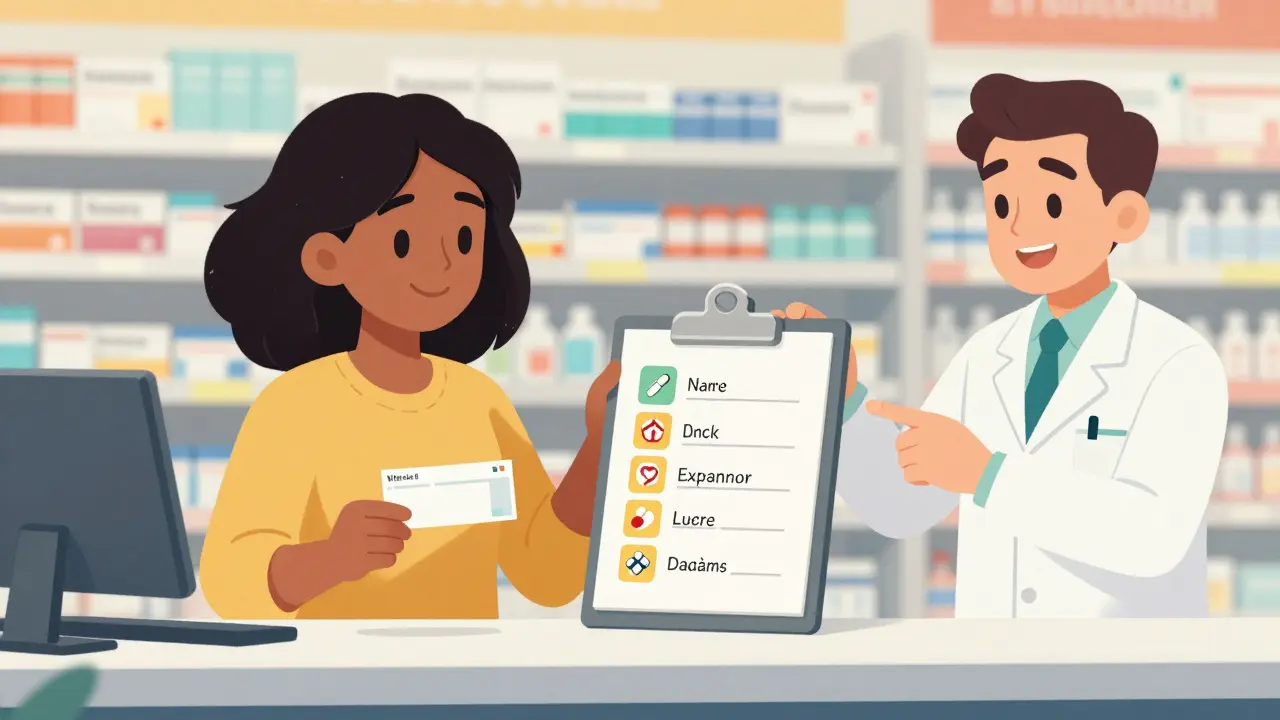
Here’s a simple, real-world checklist you can use every time you pick up a prescription. No special training. No jargon. Just five steps you can do in under two minutes.
- Confirm your name and date of birth - Ask the pharmacist: “Can you confirm this prescription is for [Your Full Name], born on [Date]?” This stops mix-ups with people who have similar names. I’ve seen cases where “John Smith” got “Jon Smith’s” blood pressure pills because the system didn’t catch the spelling difference.
- Check the label against your prescription - Look at the name of the medicine, the strength (like 5mg or 500mg), and how often to take it. Does it match what your doctor wrote? If you’re unsure, ask: “Is this the same as what Dr. Lee prescribed?”
- Read the warning label - Don’t just glance. Read it out loud. Look for things like: “Take with food,” “Avoid alcohol,” “May cause drowsiness,” or “Do not take with aspirin.” If it says something you weren’t told, ask why. A 2024 survey in Auckland found 37% of patients didn’t notice a new warning until they read the label themselves.
- Compare the pills to what you remember - Open the bottle (if it’s safe to do so). Is the pill shape, color, or marking right? If you’ve taken this medicine before, you’ll know what it looks like. If it’s new, ask: “Can you show me what this pill usually looks like?” Some pharmacies have pill images on their website or tablets. Ask for them.
- Ask about interactions and side effects - Say: “I’m also taking [list your other meds, supplements, or vitamins]. Are there any problems I should watch for?” Many people forget they’re on 5 or 6 different things. That’s where dangerous interactions hide.
What to Do If Something Feels Off
What if the pill looks wrong? The label says “take twice daily” but your doctor said “once”? Your gut is telling you something’s off? Don’t ignore it.
Pharmacists are trained to listen. Say: “I’m a bit confused. This doesn’t match what I was told. Can we double-check?” Most will stop what they’re doing and review it. If they brush you off, ask to speak to the manager. You have the right to ask questions - and to walk away if something doesn’t feel right.
Keep a written record. Write down: the date, the medicine name, the dose, the pharmacy name, and who you spoke to. If you get the wrong medicine again, you’ll have proof. It’s not paranoia. It’s protection.
How to Prepare Before You Go
You don’t have to figure this out on the spot. Do a little prep to make your visit smoother.
- Keep a list - Write down every medicine, supplement, and herb you take. Include dosages and why you take them. Update it every time something changes. Keep a copy in your wallet and on your phone.
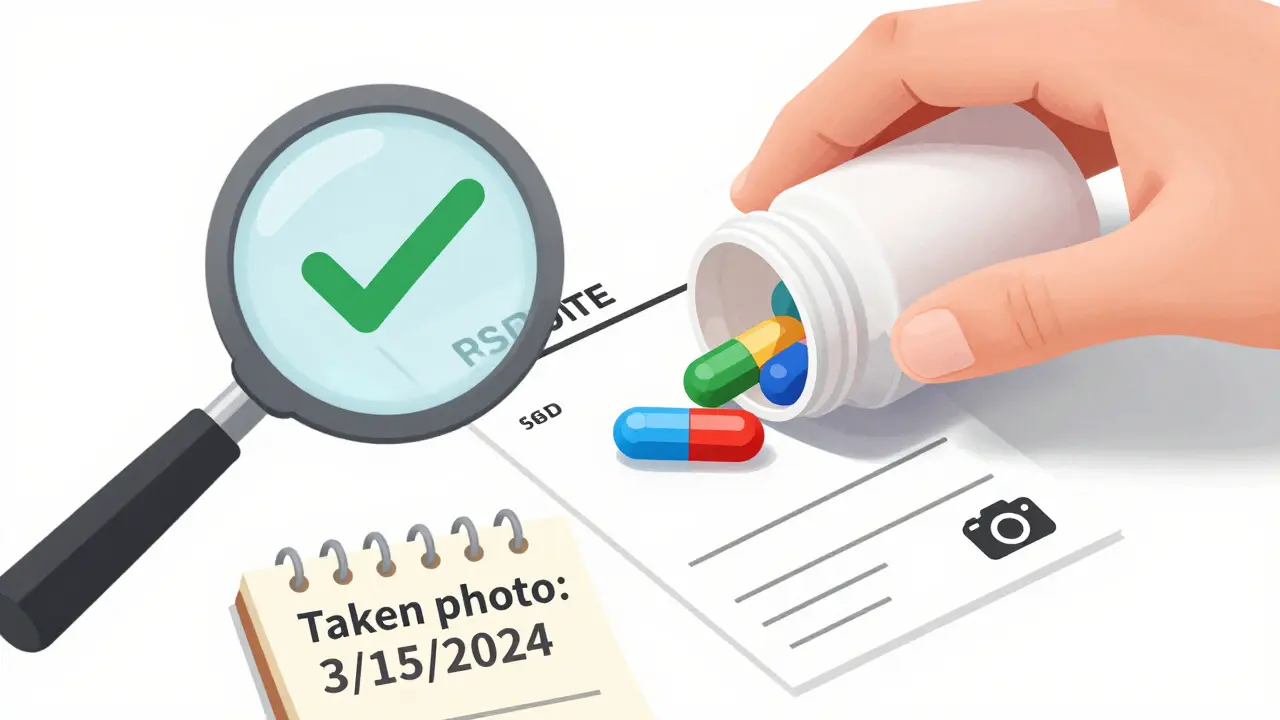
- Take a photo - Snap a picture of the label and pill before you leave. If something goes wrong later, you’ll have a record.
- Ask for a printed copy - Request a printed version of your prescription details. Some pharmacies offer this. If not, ask the pharmacist to write it out for you.
- Bring your old bottles - If you’re picking up a refill, bring the empty bottle. It helps the pharmacist see what you’ve been taking and spot changes.
What You Shouldn’t Do
Some advice you hear is dangerous. Don’t:
- Take medicine from someone else’s bottle - even if it looks the same.
- Ignore a label change because “it’s probably fine.”
- Assume the pharmacy knows everything you’re taking. They don’t. Not unless you tell them.
- Wait until you feel sick to ask questions. Prevention beats reaction.
Real Stories, Real Consequences
A woman in Hamilton took a new blood thinner. The label said “take once daily.” She didn’t check. The pharmacist had accidentally dispensed a double dose. She ended up in the hospital with internal bleeding. She didn’t know until she saw the bottle - the pill was a different color. She’d never taken that brand before.
A man in Christchurch was given a generic version of his heart medication. The dose was correct, but the pill looked completely different. He thought it was fake and threw it out. He stopped his treatment. His blood pressure spiked. He ended up in emergency.
Neither of them used a checklist. Both could’ve been avoided.
Why This Matters More Than You Think
Medication errors aren’t just about pills. They lead to hospital visits, lost work, long-term damage, and sometimes death. In New Zealand, medication-related harm is one of the top five causes of preventable hospital admissions.
But here’s the good news: you have more power than you think. You’re not just a customer. You’re a critical part of the safety chain.
Pharmacies don’t have a checklist for you - because they’re not required to. But you can build your own. And that’s enough.
Start Today
Don’t wait for a mistake to happen. Print this checklist. Stick it on your fridge. Save it in your phone. Use it the next time you pick up a prescription. Even if you think it’s unnecessary. Even if the pharmacist seems busy. Even if you’ve never had a problem before.
Because safety isn’t about fear. It’s about control. And you deserve to be in control of your own health.
tatiana verdesoto
March 3, 2026 AT 21:56RacRac Rachel
March 4, 2026 AT 02:39Jane Ryan Ryder
March 4, 2026 AT 08:29John Cyrus
March 5, 2026 AT 10:11Diane Croft
March 6, 2026 AT 18:12Tobias Mösl
March 7, 2026 AT 01:43Ethan Zeeb
March 8, 2026 AT 21:11Darren Torpey
March 9, 2026 AT 10:39Lebogang kekana
March 11, 2026 AT 07:16Jessica Chaloux
March 12, 2026 AT 08:40Mariah Carle
March 14, 2026 AT 02:50