How to Prevent Wrong-Patient Errors at the Pharmacy Counter
 Feb, 19 2026
Every year, thousands of people walk into a pharmacy to pick up their medication - only to leave with someone else’s prescription. It sounds impossible, but it happens more often than you think. A wrong-patient error occurs when a pharmacist or technician hands a prescription to the wrong person. The result? Someone might get a drug they’re allergic to, miss their essential treatment, or suffer a dangerous interaction. And here’s the scary part: wrong-patient errors are completely preventable. They don’t happen because staff are careless. They happen because systems are broken - not because people are.
Why This Happens More Than You Think
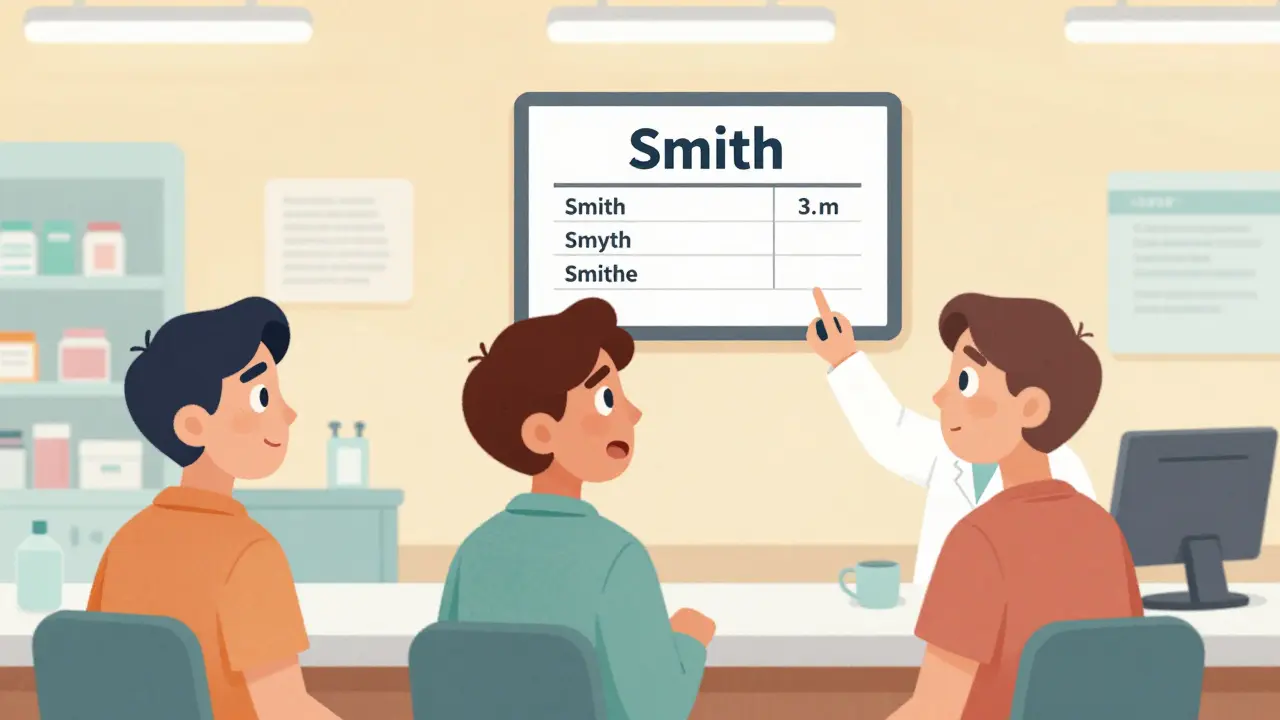
Picture this: It’s 3 p.m. on a Tuesday. The pharmacy is packed. Three people are waiting at the counter. One is picking up blood pressure meds. Another is there for insulin. The third is picking up their child’s antibiotics. All three have similar last names - Smith, Smyth, and Smithe. The technician calls out, "Smith?" All three heads turn. One person steps forward. The prescription goes out. No one checks further. This isn’t a movie scene. It’s a real event that happened in a community pharmacy in Ohio last year. According to the ECRI Institute, about 22% of wrong-patient errors happen because names sound alike or look alike. Add in busy shifts, multitasking, and tired staff, and you’ve got a perfect storm. The Institute for Safe Medication Practices (ISMP) calls these errors one of the most dangerous types of medication mistakes. Why? Because they’re silent. No one knows until it’s too late. Someone takes a drug they weren’t supposed to. They end up in the ER. Or worse. The Joint Commission has tracked these errors since 2003. In 2023, they were still among the top five root causes of serious patient harm in pharmacies. And here’s the kicker: nearly all of them are avoidable.The Two-Step Rule That Saves Lives
The simplest, most proven way to stop wrong-patient errors? Use two patient identifiers every single time. That means: full name and date of birth. Not just the first name. Not just the last name. Not just "the one who came in yesterday." Full legal name. Full date of birth. This isn’t optional. It’s the standard. CVS, Walgreens, and Walmart have required this since 2015-2018. The National Association of Boards of Pharmacy (NABP) made it mandatory in their Model State Pharmacy Act in 2024. And it works. A 2022 analysis of 15,000 community pharmacies found that using name and DOB cut wrong-patient errors by 45%. That’s huge. But here’s the catch: it only works if you do it right. Don’t just ask. Verify. Read the name on the prescription label. Read the name on the pharmacy screen. Ask the patient: "Is your full name John Michael Smith?" Then ask: "What’s your date of birth?" Don’t let them say "I think it’s 1982." Make them say it clearly. Match it to the record. And never assume. Even if the person looks exactly like the photo on file. Even if they’ve been coming here for 10 years. Even if they’re the spouse of the regular customer. Always verify. Every time.Technology That Actually Works
Manual checks help - but they’re not enough. Barcode scanning is where things get serious. Here’s how it works: The patient brings a photo ID, a pharmacy card, or even a QR code on their phone. The pharmacist scans it. The system checks: Is this person’s ID linked to this prescription? If not - the system won’t let you proceed. No bypass. No override. Walgreens rolled this out across 9,000 stores in 2021. Within 18 months, wrong-patient errors dropped by 63%. That’s not luck. That’s system design. RFID wristbands? They’re used in hospital pharmacies and cut errors by 78% in a 2023 study. But for community pharmacies? Barcodes are the sweet spot. Affordable. Reliable. Easy to train on. Software like PioneerRx and QS/1 now block the dispensing screen until both name and DOB are confirmed. No click-through. No "I’ll fix it later." The system forces safety. And here’s the thing: these systems aren’t just for big chains. Even small pharmacies can get started. Basic barcode scanners cost under $500. Software integration is often included in your existing pharmacy system. The upfront cost? $15,000-$50,000. But the cost of one wrong-patient error? Up to $12,500 in legal fees, lost trust, and insurance hikes - according to the NCPA.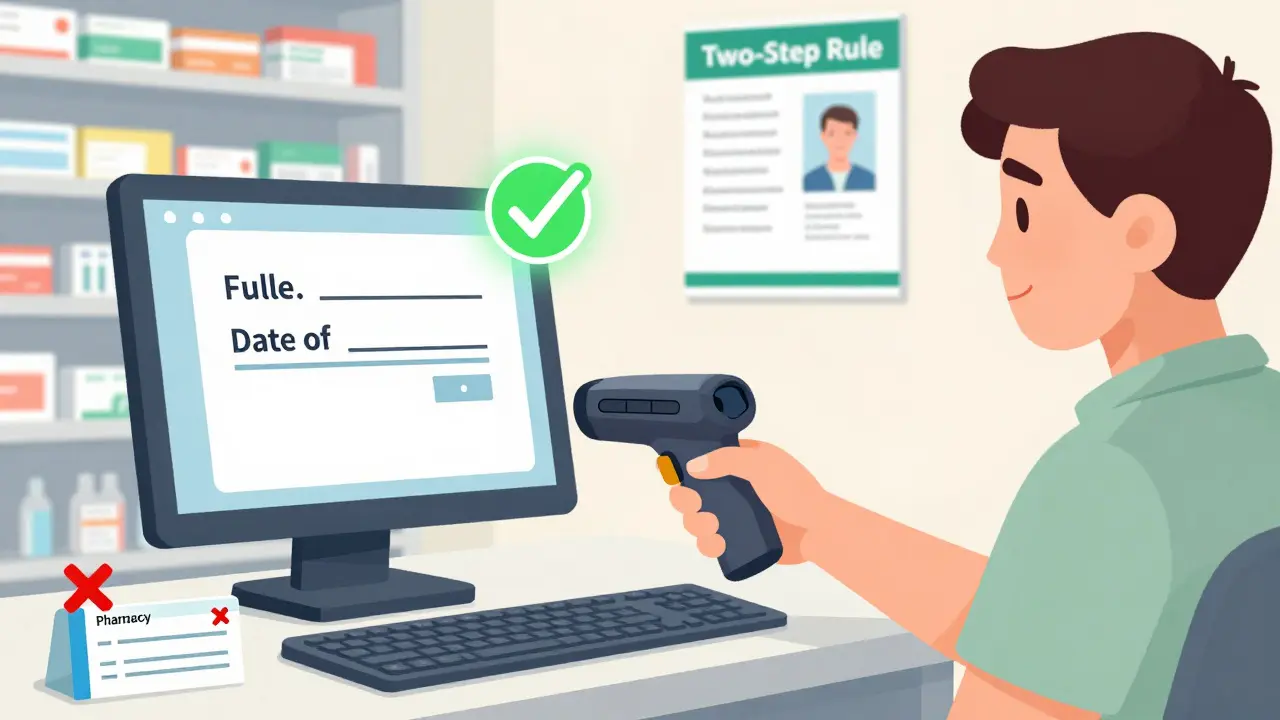
The Final Safety Net: Talking to the Patient
Even with scanners and checks, something can slip through. That’s why the last step is the most powerful: counseling. When you hand the medication to the patient, pause. Ask: "What is this for?" "How often do you take it?" "Did your doctor tell you what side effects to watch for?" Why? Because patients catch errors. A 2023 study in the Journal of the American Pharmacists Association found that 83% of dispensing mistakes are caught during this final conversation. One woman in Wisconsin picked up her husband’s diabetes meds. She didn’t know. The pharmacist asked, "Do you have type 2 diabetes?" She said, "No, I don’t. My husband does." The med was returned. No harm done. That’s not a miracle. That’s good practice. Counseling isn’t about upselling. It’s about safety. And it doesn’t take long. Two minutes. That’s all it takes to turn a potential disaster into a quiet win.What Doesn’t Work - And Why
Some pharmacies try shortcuts. They use just the first name. They rely on "the guy who always picks up for his mom." They skip verification during rush hour. These aren’t "time-saving" tactics. They’re ticking time bombs. A pharmacist in Texas told Pharmacy Times: "Barcode systems slow us down during lunch rush. We get pressure to skip checks." That pressure comes from managers who don’t understand the risk. But here’s the truth: a single wrong-patient error can shut down a pharmacy for weeks. Lawsuits. Investigations. Loss of license. And patients? A 2024 ECRI survey found that 68% of patients feel safer when asked for ID. Only 22% find it annoying - mostly older adults who forget their DOB. The solution? Don’t make them remember. Have them bring a photo ID. Or a pharmacy card. Or even a printed list of their meds.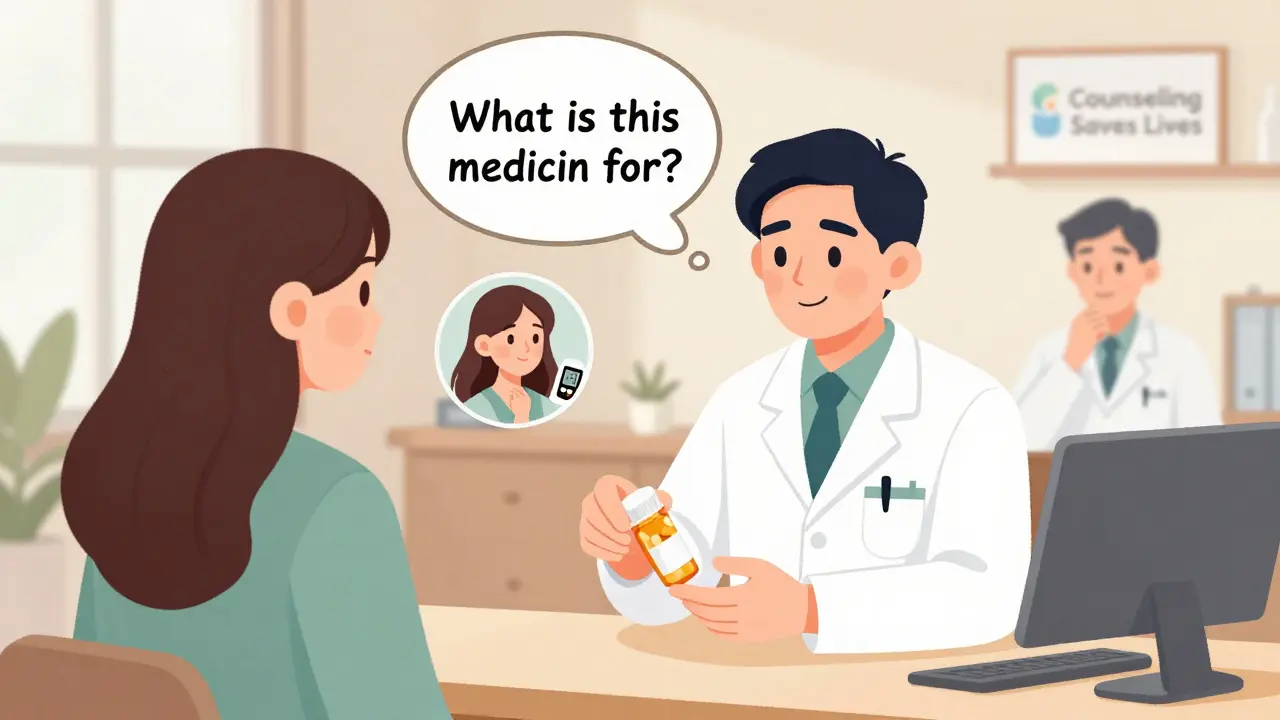
How to Build a Zero-Error Culture
The best pharmacies don’t just have systems. They have a culture. At Kroger Health, they implemented a full program across 2,200 pharmacies in 2022. They trained every tech and pharmacist. They added barcode scanners. They rewrote scripts for counseling. And they gave every employee the power to stop the process. That last part is critical. No one should fear speaking up. If a tech sees a mismatch - even a tiny one - they need to say something. No judgment. No blame. Just: "Wait. Let’s double-check." Kroger’s result? Zero wrong-patient errors for 18 months straight - as of early 2025. That’s not magic. That’s structure. Training. Empowerment. Start small. Pick one pharmacy. Train your team. Implement name + DOB. Add a barcode scanner. Start counseling. Track near-misses. Celebrate wins. Make safety part of your daily rhythm.What’s Next? The Future of Patient ID
The future is here - and it’s biometric. Walgreens started a pilot in January 2025: fingerprint verification. 500 stores. 92% accuracy. But privacy concerns are slowing rollout. AI is coming too. Voice recognition. Facial matching. By 2027, experts predict 70% of pharmacies will use some form of smart ID. But here’s the truth: technology doesn’t fix bad habits. A scanner won’t help if staff skip the verbal check. A fingerprint won’t stop someone from handing a script to the wrong person because they’re distracted. The winning formula? People + Process + Technology. You need trained staff who know why they’re doing it. You need a clear, non-negotiable process. And you need tools that make it easy - not harder.What You Can Do Today
If you’re a pharmacist, tech, or pharmacy owner: start here.- Make name and date of birth mandatory for every pickup - no exceptions.
- Train every staff member. Even part-timers. Even interns.
- Install a barcode scanner. Even a basic one. It’s cheaper than one lawsuit.
- Start counseling. Ask two simple questions before handing over the med.
- Empower your team. Let them say "stop" without fear.
- Track near-misses. If someone almost got the wrong med - log it. Learn from it.
James Roberts
February 19, 2026 AT 12:29So let me get this right: we’re still relying on humans to distinguish between Smith, Smyth, and Smithe… in a pharmacy… during rush hour? Wow. I’m shocked. NOT.
Barcodes. Two identifiers. No exceptions. Why is this even a debate? It’s 2025. We have facial recognition on our phones, but we still ask people to remember their DOB like it’s a trivia night? I’ve seen techs skip verification because ‘they’ve been coming here for years.’ No. No. NO.
I work in a small-town pharmacy. We went full barcode + name + DOB last year. Zero errors. Zero. And guess what? The complaints? From the 3% of people who hate being asked for ID. The other 97%? They say, ‘Thank you. I’m glad you’re paying attention.’
It’s not complicated. It’s not expensive. It’s not ‘inconvenient.’ It’s called basic human responsibility. Stop pretending this is a system failure-it’s a culture failure. And we’re all complicit until we stop letting it slide.
Danielle Gerrish
February 21, 2026 AT 02:44Oh my god. Oh my god. Oh my god. I just read this and I had to put my coffee down because my heart stopped. I mean, imagine this: you’re a diabetic, right? You’ve been managing it for 12 years. You take your meds. You’re careful. You’re alive. And then… one Tuesday… one single Tuesday… some overworked tech calls out ‘Smith’ and you’re the third Smith in line and you get insulin instead of your metformin? And you take it? And you collapse? And your family finds you on the kitchen floor? And the paramedics say, ‘This isn’t your medication’? And you’re like… ‘I didn’t know… I didn’t know…’?
That’s not an error. That’s a tragedy waiting in line at CVS. And we’re all just scrolling on our phones while it happens. I cried. I actually cried. I have to call my pharmacist right now. I’m going to demand they use my full name and DOB. No more ‘Hi, sweetie!’ No more ‘You’re the one who picks up for Mom!’ I’m not ‘sweetie.’ I’m KAREN ELIZABETH SMITH. DOB: 04/17/1978. And if you don’t verify it? I’m leaving. And I’m posting a TikTok about it.
Liam Crean
February 21, 2026 AT 16:57Interesting read. I’ve worked in pharmacy for 11 years, mostly in rural settings. The two-step rule is non-negotiable where I am, but the real issue isn’t the policy-it’s the training. Most techs are hired for speed, not accuracy. They’re paid minimum wage, work 12-hour shifts, and get yelled at if they’re ‘too slow.’
Barcodes help, but they’re useless if the person scanning doesn’t look at the screen. I’ve seen techs scan the barcode, glance at the name, and say, ‘Yep, that’s right,’ without even reading the DOB. The system lets them proceed. So the tech thinks they’re safe. They’re not.
What we need isn’t more tech. It’s better pay. Better hours. Respect. If you treat your staff like disposable cogs, don’t be surprised when the machine breaks. I’ve seen near-misses because someone was distracted by a crying kid, a loud phone, or a manager yelling about inventory. No scanner fixes that. Only culture does.
madison winter
February 23, 2026 AT 15:09So… we’re back to blaming ‘systems’ again? How convenient. The real problem is that people are lazy. Not the system. Not the staff. PEOPLE. The patient who doesn’t bring ID. The spouse who picks up meds without saying a word. The pharmacist who says, ‘Oh, I know who you are.’
And don’t even get me started on the ‘counseling’ part. Asking a patient ‘What is this for?’ is a gimmick. Most people lie. Or don’t know. Or say ‘for my headache’ when it’s actually for atrial fibrillation. It’s theater. It doesn’t prevent errors. It just makes people feel better.
Also, ‘zero errors at Kroger’? Sure. In a corporate lab with unlimited budget. Try running this in a $200k/year independent pharmacy. You can’t. So stop pretending this is scalable. This isn’t a public health solution. It’s a marketing brochure.
Ellen Spiers
February 24, 2026 AT 17:54While the underlying intent of this piece is commendable, the empirical foundation is methodologically unsound. The cited 45% reduction in wrong-patient errors is derived from a non-randomized, self-reported cohort study with significant selection bias. The 63% drop at Walgreens? Correlation ≠ causation. No control group. No adjustment for confounding variables such as staffing ratios, geographic patient demographics, or concurrent policy changes.
Furthermore, the assertion that ‘nearly all’ such errors are avoidable is a tautological overstatement. Human factors engineering literature (e.g., Reason’s Swiss Cheese Model) explicitly acknowledges that residual risk is inherent in any system. The proposed solutions-barcode scanning, DOB verification-are necessary but insufficient. What is conspicuously absent is a discussion of cognitive load, task saturation, and the psychological impact of procedural fatigue on frontline workers.
In short: the article is a well-intentioned oversimplification of a complex sociotechnical problem.
Marie Crick
February 26, 2026 AT 13:02You’re telling me we need to spend $50K on scanners to stop people from handing out the wrong pills? That’s ridiculous. Just don’t be an idiot. If you can’t tell the difference between two names, you shouldn’t be working in a pharmacy. Simple. No tech. No drama. Just hire people who can read.
Tommy Chapman
February 28, 2026 AT 02:28Let’s be real-this is why America sucks. We turn everything into a 10-step checklist because we can’t trust people anymore. Back in my day, pharmacists knew their customers. They’d say, ‘Hey, you’re the guy who picks up for your mom.’ And they’d hand over the script. No ID. No barcode. Just trust.
Now? We’re treating patients like terrorists. ‘What’s your DOB?’ ‘Show me your card.’ ‘Confirm your full legal name.’ It’s insane. This isn’t safety. It’s paranoia. And it’s driving customers away. I’m not paying $20 for insulin because some tech needs to verify I’m not a different Smith.
People are dying? Yeah. But we’re killing trust first. And trust? That’s what keeps pharmacies open. Not scanners.
Freddy King
March 1, 2026 AT 07:07Okay, let’s unpack this. The article says ‘systems are broken’ but then spends 80% of the time talking about tech fixes. That’s a red flag. You don’t fix a broken system by slapping on more tech-you fix the workflow.
Here’s what actually works: one pharmacist per counter. One patient at a time. No multitasking. No ‘Hey, can you grab this script while I call insurance?’ That’s the real bottleneck. The scanners? Nice. The DOB check? Fine. But if you’re still juggling three phones, two patients, and a manager yelling about the inventory report… none of it matters.
Also, ‘counseling catches 83% of errors’? That’s not a safety net-that’s a band-aid on a hemorrhage. If your system is so fragile that you need a verbal check to catch mistakes, you’ve already failed. Fix the process. Not the symptom.
Jayanta Boruah
March 2, 2026 AT 12:40As a pharmacist from India with over 15 years of experience in both public and private sectors, I must say this entire discussion is fundamentally flawed. In my country, we have never used barcodes or DOB verification. We rely on personal recognition, community trust, and long-term relationships. Our error rate is lower than in the U.S. Why? Because we do not treat patients as anonymous data points. We know their names, their children’s names, their medical history, their allergies-because we have spoken to them for years.
The American obsession with ‘systems’ and ‘technology’ is a symptom of alienation. You have lost human connection. You are trying to automate humanity. That is why you have errors. Not because of weak processes-but because you have forgotten that medicine is not a transaction. It is a relationship.
Implement fingerprint scanners? No. Implement presence. Implement listening. Implement care. That is the real solution. Technology is the crutch of a broken culture.