How to Read OTC Children’s Medication Labels by Weight and Age: A Clear Guide for Parents
 Jan, 13 2026
Why Reading OTC Medication Labels by Weight Matters
Every year, over 1.4 million children in the U.S. end up in emergency rooms because of medication errors - and most of them happen because parents gave the wrong dose. It’s not because they’re careless. It’s because the labels are confusing. You’re not alone if you’ve stared at a bottle, wondering if you should give 5 mL or 7.5 mL. That’s why weight-based dosing isn’t just a suggestion - it’s the safest way to give medicine to kids.
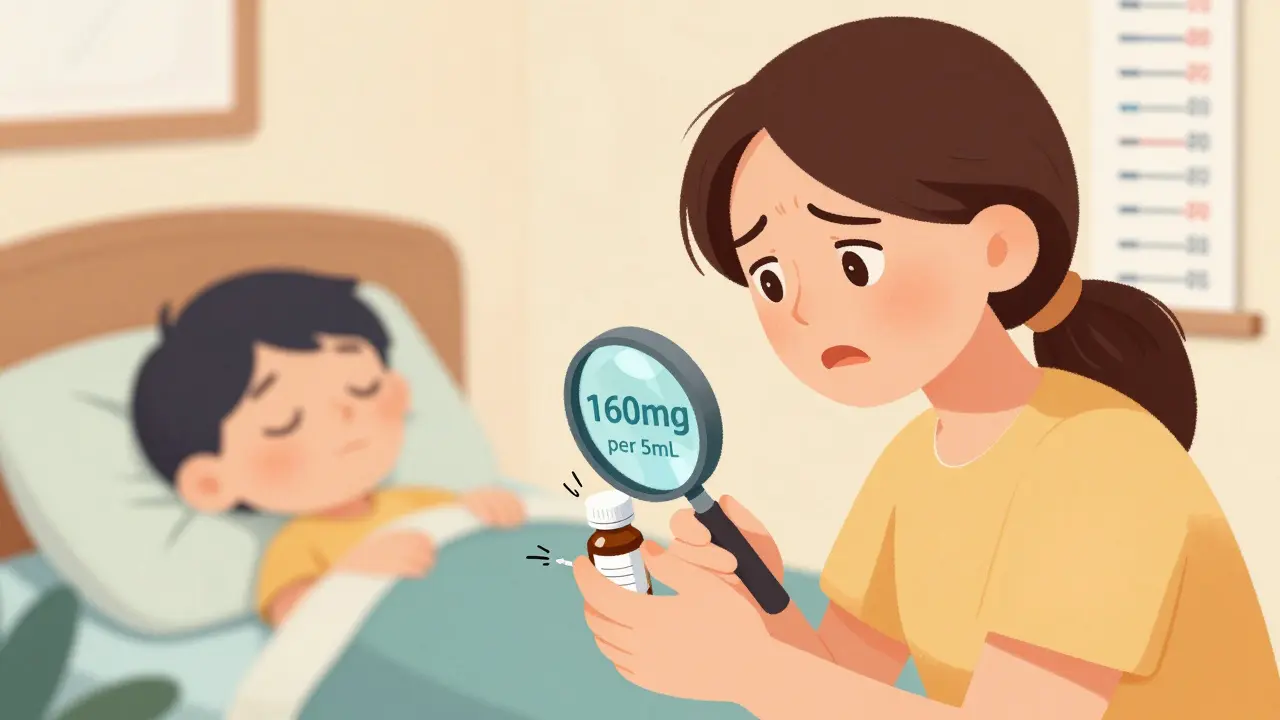
The FDA, the American Academy of Pediatrics, and major drugmakers agreed in 2009 to standardize how children’s OTC meds are labeled. Before that, one brand of acetaminophen might say 160mg per 5mL, while another said 80mg per 2.5mL. Parents mixed them up. Kids got too much. Some got liver damage. Today, every liquid children’s medicine must show the concentration clearly: 160mg per 5mL for acetaminophen, and 100mg per 5mL for ibuprofen. That’s the law. But knowing that doesn’t help if you don’t know how to use it.
Always Use Weight, Not Age - Here’s Why
You’ve probably seen the little chart on the bottle: “For ages 2-3: 5mL.” Easy, right? But here’s the problem: a 2-year-old who weighs 30 pounds needs a different dose than a 2-year-old who weighs 20 pounds. Age is just a rough guess. Weight is the real number that matters.
A 2019 study from Johns Hopkins found that using age instead of weight leads to dosing errors in 23% of cases. That means more than 1 in 5 kids get the wrong amount. Underdosing means the medicine won’t work. Overdosing can cause liver failure - especially with acetaminophen. In fact, acetaminophen overdose is the number one cause of acute liver failure in kids under 12, according to the Acute Liver Failure Study Group.
So if you don’t know your child’s weight, get on a scale. Weigh them in pounds or kilograms - it doesn’t matter which, as long as you’re consistent. Most labels show both. If your child weighs 28 pounds, don’t guess “around 30.” Go with the closest lower weight category. Always round down. It’s safer.
What to Look for on the Label - The 5 Must-Read Parts
Don’t just glance at the front. Read every line. Here’s what you need to find:
- Active ingredient - Is it acetaminophen? Ibuprofen? Or both? Never give two medicines with the same active ingredient. That’s how overdoses happen. A cold medicine might have acetaminophen, and so might the fever reducer you’re already giving. You’ll end up doubling the dose.
- Concentration - Always check the number: “160mg per 5mL” for acetaminophen. “100mg per 5mL” for ibuprofen. If it says “concentrated infant drops,” that’s 80mg per 0.8mL. That’s a totally different dose. Don’t swap syringes between formulas.
- Weight-based dosing chart - Look for a table that lists pounds or kilograms and matches them to mL amounts. Common categories are 12-17 lbs, 18-23 lbs, 24-35 lbs, and so on. If your child’s weight falls between two, use the lower number.
- Age restrictions - Ibuprofen is not safe for babies under 6 months. Acetaminophen can be used as early as 2 months, but only with a doctor’s advice if your child is under 3 months. Never give Benadryl to a child under 2 unless your pediatrician says so.
- Maximum daily dose - Acetaminophen: no more than 5 doses in 24 hours. Ibuprofen: no more than 4 doses in 24 hours, at least 6 hours apart. Don’t be tempted to give it more often just because your child still seems sick.
Never Use a Kitchen Spoon - Use the Right Tool
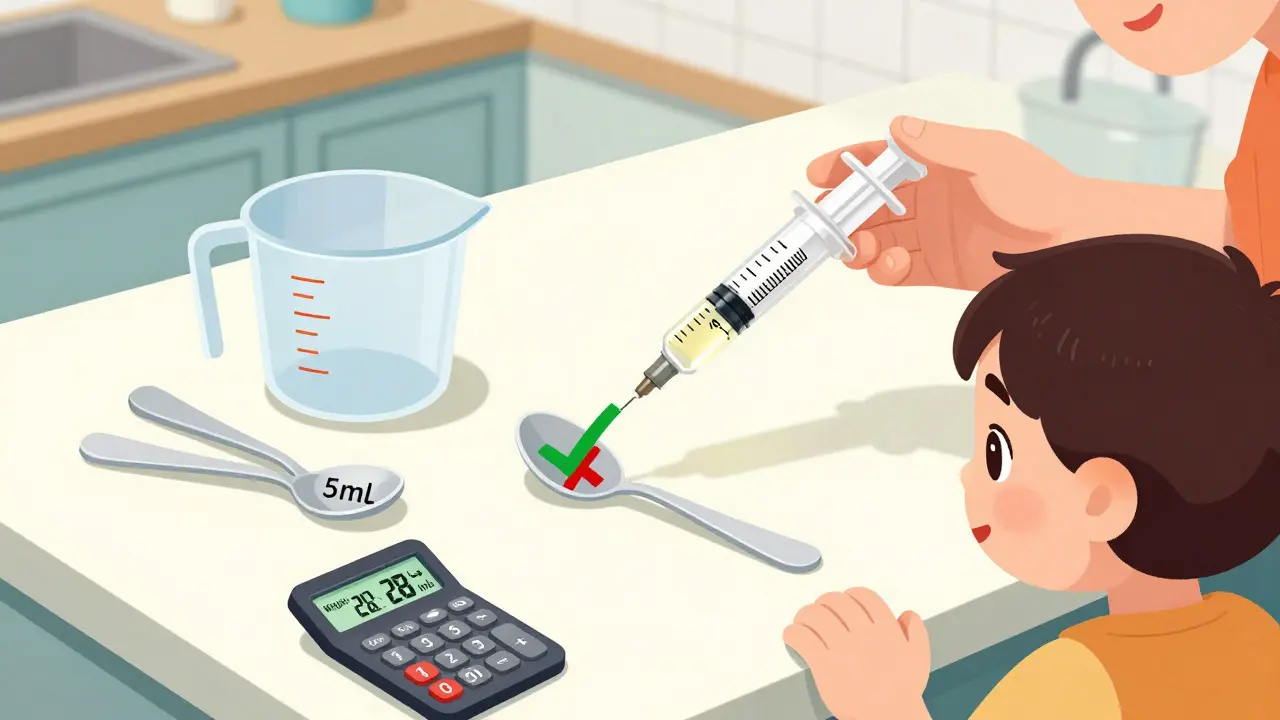
That teaspoon you use for sugar? It’s not accurate. A real teaspoon holds about 5 mL - but your kitchen spoon? It could hold 4 mL. Or 7 mL. Or even 10 mL. A 2022 study from St. Louis Children’s Hospital found household spoons vary by 20-30%. That means your child could get twice the dose you think you’re giving.
Always use what comes with the medicine: a dosing syringe, a cup with clear markings, or a measuring spoon labeled in mL. If you lost it, buy a new one at the pharmacy. They cost less than a dollar. They’re plastic, easy to clean, and have lines that match the label. Write “acetaminophen” or “ibuprofen” on the side with a marker so you don’t mix them up.
Also, know this: 1 tablespoon = 15 mL. 1 teaspoon = 5 mL. If the label says “1 tsp,” that’s 5 mL - not 10. Confusing TBSP and TSP is one of the most common mistakes parents make, according to parent forums and pediatric clinics.
Acetaminophen vs. Ibuprofen: What’s the Difference?
Both work for fever and pain. But they’re not the same.
| Feature | Acetaminophen | Ibuprofen |
|---|---|---|
| Concentration | 160mg per 5mL | 100mg per 5mL |
| How often | Every 4 hours | Every 6-8 hours |
| Max doses per day | 5 | 4 |
| Minimum age | 2 months (with doctor approval) | 6 months |
| Best for | Fever, mild pain | Fever, swelling, inflammation |
Notice something? Ibuprofen is stronger per mL. So a 24-35 lb child gets 5mL of acetaminophen and 5mL of ibuprofen - but the ibuprofen has more medicine in it. That’s why you can’t swap them by volume. Always check the concentration.
Also, ibuprofen is harder on the stomach. Don’t give it on an empty stomach. Acetaminophen is easier on the gut, but harder on the liver. Never give more than 5 doses in 24 hours. That’s the limit.
What to Do If You’re Not Sure
It’s okay to be unsure. In fact, you should be unsure. If the label doesn’t list your child’s exact weight, if the medicine is expired, if your child has other health conditions, or if you’re giving more than one medicine - call your pediatrician. Don’t guess.
Some clinics, like Hyde Park Pediatrics and St. Louis Children’s Hospital, offer free digital dosing calculators. You type in your child’s weight, pick the medicine, and it tells you the exact mL. These tools are accurate 98% of the time. Use them.
And if your child is under 3 months and has a fever? Call your doctor right away. Don’t give any medicine until you talk to them. Fever in newborns can be a sign of something serious.
Common Mistakes Parents Make - And How to Avoid Them
- Mistake: Giving both Tylenol and a cold medicine. Solution: Always check the “active ingredients” list. If both say “acetaminophen,” don’t give them together.
- Mistake: Using a syringe meant for infant drops on children’s liquid. Solution: Infant drops are 80mg/0.8mL. Children’s liquid is 160mg/5mL. One drop from an infant syringe is not the same as one mL from a children’s syringe.
- Mistake: Thinking “more medicine = faster relief.” Solution: More doesn’t help. It hurts. Stick to the schedule.
- Mistake: Assuming “natural” or “herbal” children’s remedies are safe. Solution: Many contain hidden ingredients. Always check with your doctor.
What’s Changing in 2025 and Beyond
The FDA is pushing for even clearer labels. By 2025, most children’s OTC meds will include a secondary measurement in “syringe units” - like 0.2mL, 0.4mL, 0.6mL - so you can count clicks instead of reading tiny mL numbers. That’s already happening on some brands.
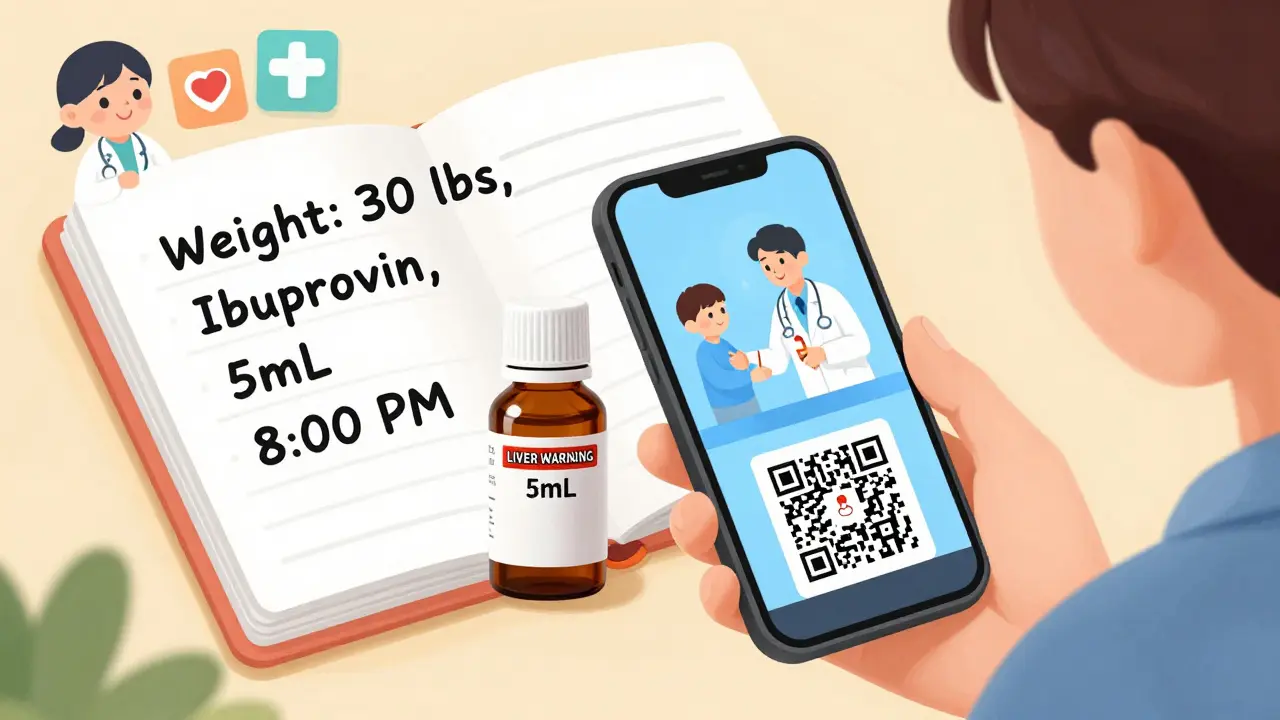
By 2026, 75% of packages will have QR codes. Scan it with your phone, and you’ll get a video showing exactly how to measure the dose. No more guessing.
And now, all acetaminophen labels must say “LIVER WARNING” in bold for kids under 12. That’s new in early 2024. It’s there because 47 children were hospitalized with liver failure from accidental overdoses in just two years.
Final Tip: Write It Down
Before you give medicine, write down:
- Child’s weight
- Medicine name
- Dose in mL
- Time given
Keep a small notebook in your diaper bag or by the medicine cabinet. If you’re tired, stressed, or up all night with a sick kid - you’ll forget. Writing it down prevents double-dosing. It’s simple. It’s proven. It saves lives.
Adam Rivera
January 14, 2026 AT 15:07Just read this whole thing while nursing my sick 18-month-old. Honestly? This should be mandatory reading for every new parent. I used to eyeball the syrup until I nearly gave my kid double the dose because I confused the syringe with my coffee spoon. Learned the hard way. Now I mark my syringes with tape and keep a notebook like they said. Life saver.
Rosalee Vanness
January 15, 2026 AT 22:23As someone who’s spent nights rocking a feverish child while second-guessing every mL, this guide feels like a warm hug from a pediatrician who actually gets it. I used to panic every time the label said ‘24-35 lbs’ and my kid was 26.5. Turns out, rounding down isn’t just safe-it’s smart. I started writing the dose, time, and weight on a sticky note beside the medicine cabinet. No more guessing when I’m half-asleep and my brain’s on standby. Also-QR codes coming in 2026? Thank god. I’d scan one right now if I could.
James Castner
January 17, 2026 AT 15:46While I appreciate the well-intentioned guidelines presented here, I must respectfully assert that the underlying epistemological framework of pediatric dosing remains fundamentally flawed. The reliance on weight as a deterministic variable assumes a homogenous pharmacokinetic profile across all children-a fallacy. Genetic polymorphisms in CYP450 enzymes, adipose tissue distribution, and even gut microbiome variance significantly modulate drug metabolism, rendering standardized weight-based charts statistically reductive. The FDA’s standardization, while commendable in its intent, perpetuates a Cartesian illusion of control over biological complexity. We must move beyond milliliter arithmetic toward personalized pharmacogenomic dosing protocols, ideally integrated with wearable biometric monitors that dynamically adjust dosing in real time. Until then, we are merely managing symptoms with institutionalized guesswork dressed in regulatory garb.
lucy cooke
January 18, 2026 AT 08:15Oh honey. You mean to tell me we’ve been giving our children medicine like we’re measuring sugar for cookies? I mean, really? The sheer *audacity* of the pharmaceutical industry to assume we’re all capable of reading tiny print while sleep-deprived and emotionally shattered. And now they’re going to add QR codes? How very *2024*. I suppose next they’ll send a therapist to our homes to help us cope with the trauma of nearly killing our kids with Tylenol. I’m crying. I’m not crying. I’m just… profoundly disappointed in humanity.
Trevor Davis
January 18, 2026 AT 21:33Okay, I’m not gonna lie-I used to just wing it. I’d give my daughter whatever looked right. Then one night, after she spiked a fever and I gave her the ‘kids’ Tylenol’ thinking it was the same as the infant drops, she got sick again. Turns out I gave her 3x the dose. We spent 8 hours in the ER. I didn’t sleep for three days. Now I have two syringes. One labeled ‘ACETAMINOPHEN’ in Sharpie, one for ‘IBUPROFEN’. I even bought a digital scale that measures to the ounce. I’m not proud of how dumb I was. But I’m proud of how I fixed it. Don’t be like me.
John Tran
January 20, 2026 AT 03:59ok so i just read this whole thing and i think the FDA is doing a good job but like… why do they make the labels so tiny? and why do they use ml instead of tsp? i mean like, who even knows what ml is? i have a 5 year old and i use a regular spoon and it works fine. also i think the liver warning is kinda dramatic? my cousin’s kid took tylenol for a week and he’s fine. also i think the 2026 qr code thing is cool but i dont have a smartphone. my phone is a flip phone from 2012. so what do i do? just dont give medicine? lol
Trevor Whipple
January 22, 2026 AT 02:13Ugh. Of course you guys are all over this. But nobody’s talking about the real problem: parents who don’t read the label at all. I’ve seen moms give Advil to 4-month-olds because ‘it says kids’ on the bottle.’ That’s not a dosing issue-that’s a parenting issue. You don’t get to be a parent if you’re too lazy to read 5 lines. And don’t give me that ‘I was tired’ crap. My kid’s been sick since birth and I never once used a kitchen spoon. You want your kid to live? Read. The. Label. That’s not advice. That’s basic survival.
Lethabo Phalafala
January 23, 2026 AT 03:29I’m from South Africa and I’ve seen this play out in clinics where parents have to choose between buying medicine or food. The labels? They’re printed in English, in tiny font, with no pictograms. No one here has a dosing syringe-they use bottle caps, teaspoons, or even a straw. The system is broken, not the parents. This guide is perfect… if you live in a country with pharmacies, scales, and clean water. For the rest of us? We need affordable, labeled, pre-measured single-dose packets. Not QR codes. Not syringes. Just medicine that doesn’t require a PhD to use.
laura Drever
January 23, 2026 AT 13:02