How to Safely Dispose of Unused Opioids to Prevent Misuse and Overdose
 Dec, 11 2025
Every year, thousands of opioid pills sit unused in medicine cabinets across homes-many of them never taken, but still dangerously potent. These leftover pills aren’t just clutter. They’re a ticking time bomb. In 2021, over 107,000 people in the U.S. died from drug overdoses, and nearly 70% of misused prescription opioids came from friends or family members’ medicine cabinets. The truth is simple: if you have unused opioids, you’re not just holding onto medication-you’re holding onto risk. The good news? You can eliminate that risk in minutes, using methods that are safe, effective, and widely available.
Why Proper Disposal Matters
Opioids like oxycodone, hydrocodone, and fentanyl are powerful painkillers. They work well when used as prescribed. But when they’re left lying around, they become easy targets for misuse. Teens raid cabinets. Visitors steal pills. Children accidentally ingest them. Even pets can get poisoned. A single unused fentanyl patch can kill a child or an adult who doesn’t have a tolerance. The CDC calls safe disposal a Tier 1 intervention in overdose prevention-not because it’s flashy, but because it works.Studies show that when people dispose of unused opioids properly, the rate of diversion drops by up to 82%. Communities that combine multiple disposal methods see 37% fewer opioid-related incidents. And it’s not just about preventing abuse-it’s about saving lives. Dr. Nora Volkow of NIDA says safe disposal could reduce youth initiation of opioid use by up to 40%.
Four Safe Ways to Dispose of Unused Opioids
You have four proven options. Not all are available everywhere, but at least one will work for you.
1. Use a Drug Take-Back Program
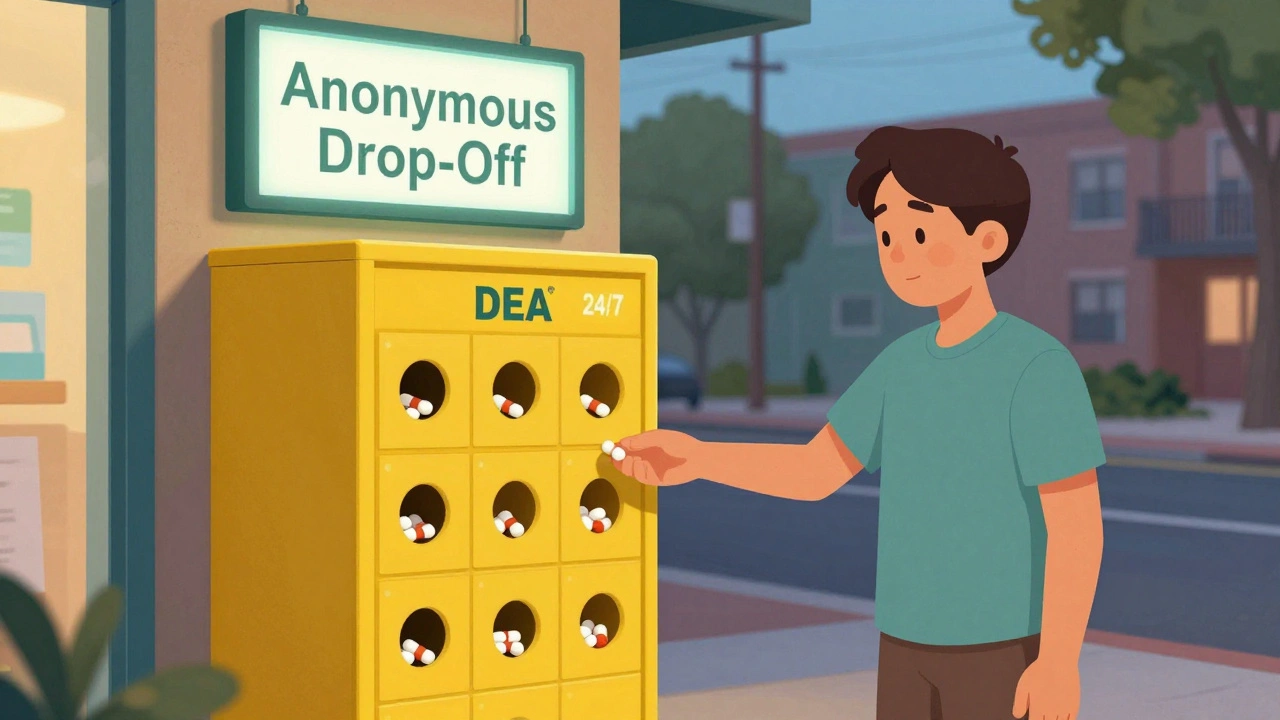
This is the gold standard. Take-back programs collect unused medications and destroy them safely through high-temperature incineration-1,800°F or higher-so nothing remains. There are over 16,900 registered collection sites across the U.S., including pharmacies, police stations, and hospitals.
Walgreens and Walmart alone operate more than 13,000 drop-off kiosks. You don’t need a prescription or ID. Just bring your pills in their original container (or a sealed bag) and drop them in. No questions asked. These kiosks are usually available during pharmacy hours. Many are open 24/7.
Need to find one? Go to the DEA’s Take Back Day locator and enter your ZIP code. It pulls up nearby sites in under 30 seconds. In 2022, the tool was used over 2.3 million times.
2. Use a Deactivation Pouch (Like Deterra or SUDS)
If there’s no take-back site near you, a deactivation pouch is your next best option. These are small, biodegradable pouches you can buy at most major pharmacies-Walgreens, CVS, Rite Aid, and others. They cost between $2.50 and $5.
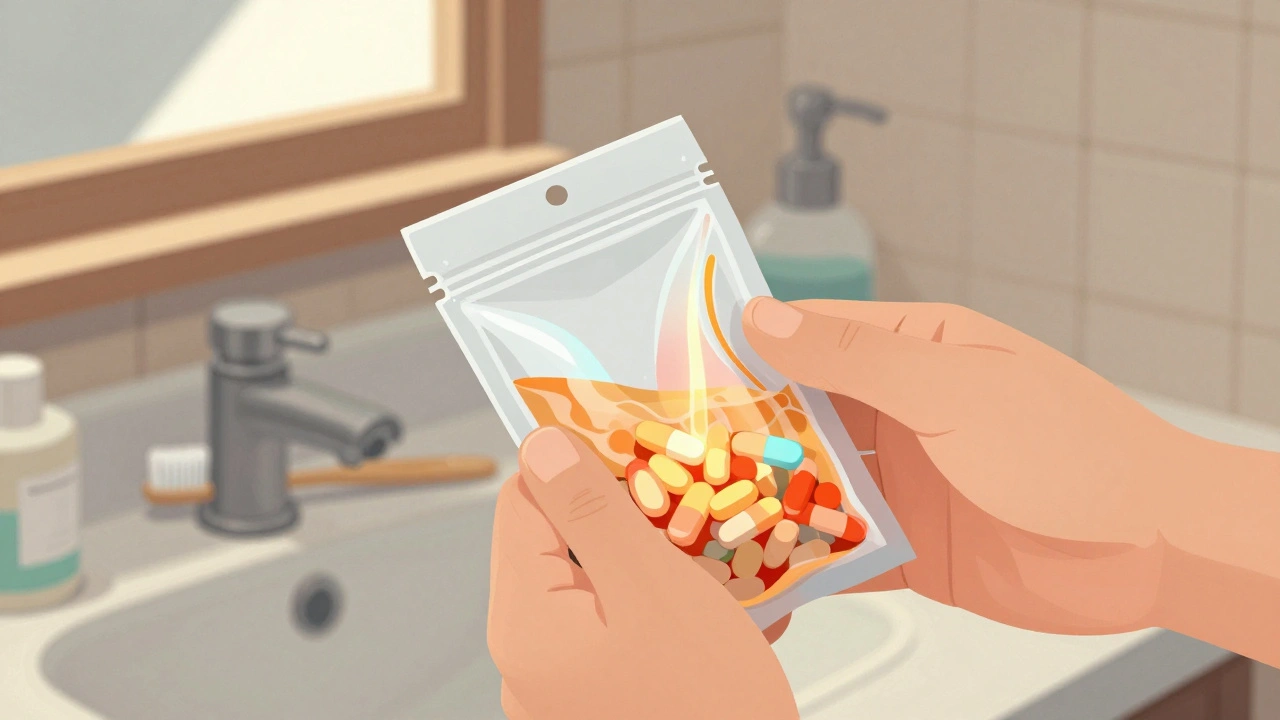
How they work: Drop your pills into the pouch, add warm water, seal it, and shake for 30 seconds. The pouch contains activated carbon and other agents that chemically neutralize opioids within minutes. Independent lab tests show they deactivate 99.9% of the drug. After 10 minutes, the pills are no longer usable or dangerous.
You can throw the pouch in the trash. No special handling needed. Amazon reviews show 4.3 out of 5 stars from over 1,800 users. But here’s the catch: 28% of people don’t use enough water. Always follow the instructions on the pouch. Don’t try to reuse it. Don’t open it after sealing.
3. Household Disposal (When Nothing Else Is Available)
If you can’t get to a drop-off site and don’t have a pouch, you can still dispose of opioids safely at home. This method isn’t perfect, but it reduces diversion risk by 68% when done correctly.
Here’s how:
- Remove pills from their original bottle.
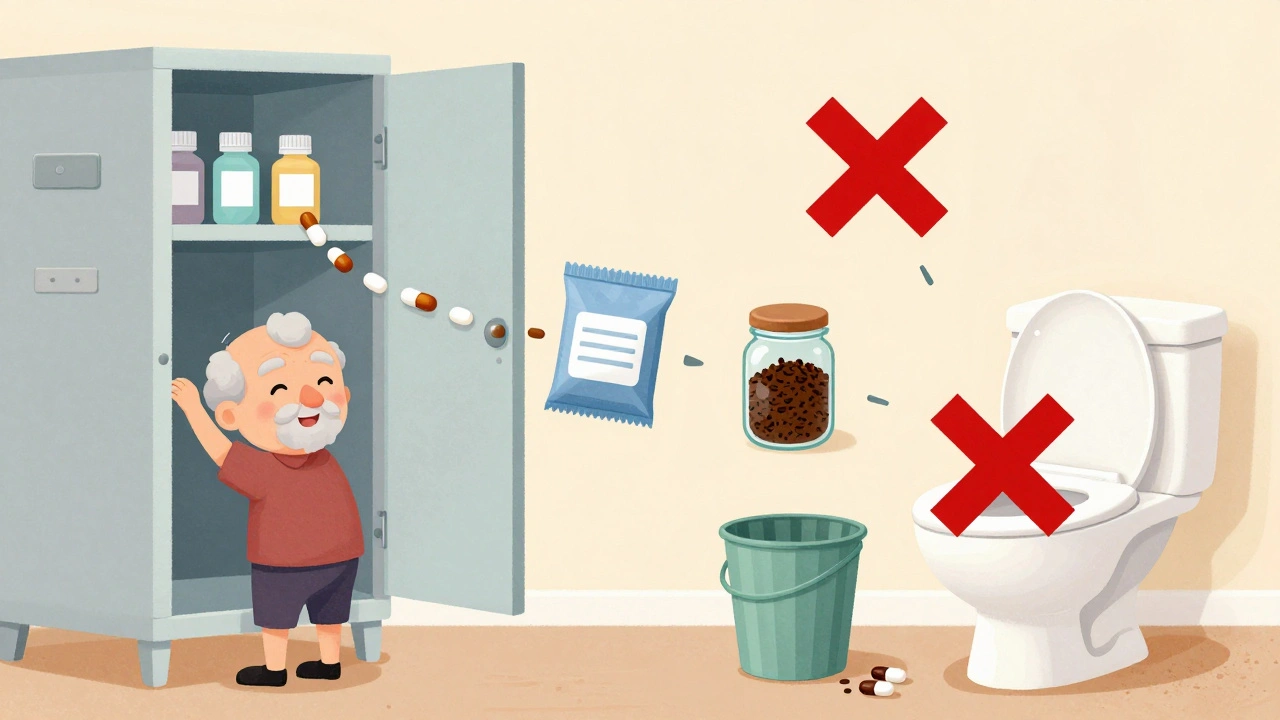
- Mix them with something unappealing-used coffee grounds, cat litter, or dirt. This makes them look and smell gross.
- Put the mixture in a sealable container-a jar, plastic bag, or empty can.
- Cover your name and prescription info on the bottle with a permanent marker.
- Throw the sealed container in the trash.
Do not crush pills before mixing. That can release dangerous dust. Do not flush unless it’s on the FDA’s list (see below). This method works best when you’re honest about the process. People who skip steps-like not hiding the label or using too little coffee grounds-make it easier for someone to fish out pills.
4. Flush Only If It’s on the FDA’s List
Flushing is the last resort-and only for 15 specific high-risk opioids. These are drugs so potent that even a tiny amount can kill a child or pet. The FDA allows flushing only for these because the risk of accidental exposure outweighs the environmental risk.
The list includes:
- Fentanyl patches
- Oxycodone extended-release (OxyContin)
- Morphine sulfate extended-release
- Hydromorphone (Dilaudid)
- Tapentadol (Nucynta)
- Others on the official FDA Flush List
You can find the full list on the FDA website. If your medication isn’t on it, don’t flush. Flushing other drugs pollutes waterways. The U.S. Geological Survey found trace pharmaceuticals in 80% of U.S. rivers and streams. But for the 15 listed drugs, flushing is the fastest way to prevent tragedy.
What Not to Do
Some common habits are dangerous-and surprisingly common.
- Don’t flush unless it’s on the FDA list. Even if you think “it’s just one pill,” you’re adding to a growing problem.
- Don’t pour pills down the sink. Same risk as flushing, but not regulated. It’s not safe.
- Don’t throw pills in the trash without mixing them. Someone could dig them out.
- Don’t keep them “just in case.” You won’t need them again. Pain doesn’t come back like that.
- Don’t rely on old advice. “Flush it” or “bury it” are myths. Only use the four methods above.
What If You’re in a Rural Area?
One in five Americans live in areas with no take-back site within 50 miles. That’s 14 million people. If you’re one of them, deactivation pouches are your lifeline. Many states now distribute them for free through public health programs. Check with your county health department. Some pharmacies mail them out at no cost.
Wyoming and Texas have led the way. In rural Wyoming, 61% of people without nearby sites used household disposal after getting visual instructions. The key? Clear, simple guidance. Don’t guess. Ask your pharmacist. Call your local health line. They’ll help.
What About Privacy?
Some people don’t dispose of opioids because they’re embarrassed. They think others will know they were prescribed opioids. But take-back kiosks and deactivation pouches are completely anonymous. No one asks your name. No one tracks your prescription. The DEA doesn’t share data with insurers or law enforcement. This isn’t about judgment-it’s about safety.
What Should You Do Right Now?
Here’s your action plan:
- Check your medicine cabinet. Find all opioids-painkillers with names like oxycodone, hydrocodone, codeine, fentanyl.
- Look at the bottle. Is it on the FDA Flush List? If yes, flush it immediately.
- If not, check if there’s a take-back site nearby using the DEA locator.
- If no site is close, buy a Deterra or similar pouch at your pharmacy.
- If you can’t get a pouch, mix the pills with coffee grounds, seal them, and toss them.
- Remove your name from the bottle. Mark it out with a marker.
- Do this today. Don’t wait.
Don’t think, “I’ll do it later.” Later never comes. And the longer those pills sit, the more danger they pose.
What’s Changing in 2025?
Things are getting better. The DEA added 1,200 new collection sites in 2023, especially in Native American communities. The FDA is testing QR-code pouches that track usage without names. Hospitals like Mayo Clinic now require disposal instructions with every opioid prescription-and their compliance rate is 89%, compared to the national average of 32%.
By 2025, hospitals will be required to report disposal rates as part of patient satisfaction surveys. And more states are funding free pouches through opioid settlement money. California spent $5 million on kiosks. Wyoming gave out over 100,000 free pouches in 2022.
This isn’t just policy. It’s prevention. And it works.
Frequently Asked Questions
Can I just throw away unused opioids in the trash without mixing them?
No. Throwing pills in the trash without mixing them makes them easy to find and use. Someone-like a child, teen, or visitor-could dig them out. Always mix them with something unappealing like coffee grounds, cat litter, or dirt, seal them in a container, and then throw them away. This reduces the risk of misuse by 82%.
Is it safe to flush opioids down the toilet?
Only if the medication is on the FDA’s official Flush List. That includes fentanyl patches, oxycodone, morphine sulfate, and 11 others. These are high-risk drugs where the danger of accidental ingestion outweighs environmental concerns. Flushing anything else contributes to water pollution. Always check the label or ask your pharmacist before flushing.
Do I need a prescription to use a drug take-back kiosk?
No. Take-back kiosks at pharmacies like Walgreens and Walmart are anonymous. You don’t need to show ID, a receipt, or a prescription. Just drop off your unused pills. The DEA and pharmacies don’t track who drops off what. This is designed to remove stigma and encourage participation.
How do I know if a deactivation pouch is working?
You don’t need to see it work. The pouch uses activated carbon and chemical agents that neutralize the drug inside. After 30 minutes with warm water and shaking, the opioids are permanently deactivated. You can’t reverse it. Just seal the pouch and throw it in the trash. Lab tests confirm 99.9% effectiveness. Follow the instructions exactly-especially using enough water.
What if I have a lot of pills? Can I use one pouch for multiple bottles?
Yes, as long as you don’t exceed the pouch’s capacity. Most pouches can handle 30-50 pills. Check the packaging for limits. If you have more, use a second pouch. Don’t try to cram too many in-it can slow down the deactivation process. It’s better to use two pouches than risk incomplete neutralization.
Are there free disposal options available?
Yes. Many states use opioid settlement funds to give out free deactivation pouches. Check with your local health department, pharmacy, or hospital. Some pharmacies mail them out at no cost. In 2023, Wyoming, Texas, and California distributed over 300,000 free pouches. You don’t have to pay for safety.
Next Steps
Don’t wait. Look in your medicine cabinet right now. Find any unused opioids. Check if they’re on the FDA flush list. If yes, flush them. If not, find a drop-off site or buy a pouch. If you can’t do either, mix them with coffee grounds and seal them in a bag. Then throw them away.
And if you’re helping someone else-like a parent, partner, or elderly relative-help them do it too. One small action can prevent a lifetime of regret.
Lara Tobin
December 13, 2025 AT 03:05Alvin Montanez
December 14, 2025 AT 03:28Jamie Clark
December 14, 2025 AT 20:50Keasha Trawick
December 16, 2025 AT 06:03Webster Bull
December 17, 2025 AT 13:47Bruno Janssen
December 18, 2025 AT 11:52Scott Butler
December 19, 2025 AT 22:29Emma Sbarge
December 21, 2025 AT 09:57Deborah Andrich
December 21, 2025 AT 16:49Tommy Watson
December 22, 2025 AT 18:54Donna Hammond
December 24, 2025 AT 04:51Richard Ayres
December 24, 2025 AT 13:12Sheldon Bird
December 24, 2025 AT 19:46