How to Use Text Message Reminders for Medication Schedules
 Dec, 23 2025
Missing a pill can seem like a small thing-until it isn’t. For people managing chronic conditions like high blood pressure, diabetes, or HIV, skipping doses isn’t just inconvenient. It can lead to hospital visits, drug resistance, or worse. The good news? A simple text message can make a real difference. Text message reminders for medication schedules aren’t just popular-they’re backed by solid research showing they help people stick to their treatment plans. But not all reminders work the same way. If you’re setting one up for yourself or someone else, knowing what actually works can turn a helpful nudge into a life-changing habit.
Why Text Reminders Work (When They Work)
Studies show that text reminders can boost medication adherence by up to 14 percentage points. In one 2017 study of heart attack survivors, people who got daily texts were 94% likely to take their meds on time, compared to just 80% without them. That’s not magic-it’s consistency. The brain remembers routines better when they’re triggered by regular cues. A text message acts like an alarm clock for your health.
But here’s the catch: not every text works. A 2023 study of over 9,500 patients with heart disease found that generic reminders like “Take your medicine” made no difference after a year. Why? Because people got used to them. Texts that feel robotic or irrelevant lose their power fast. The key isn’t just sending a message-it’s sending the right message, at the right time, in the right way.
What Makes a Text Reminder Effective
Effective text reminders have three things in common: personalization, timing, and simplicity.
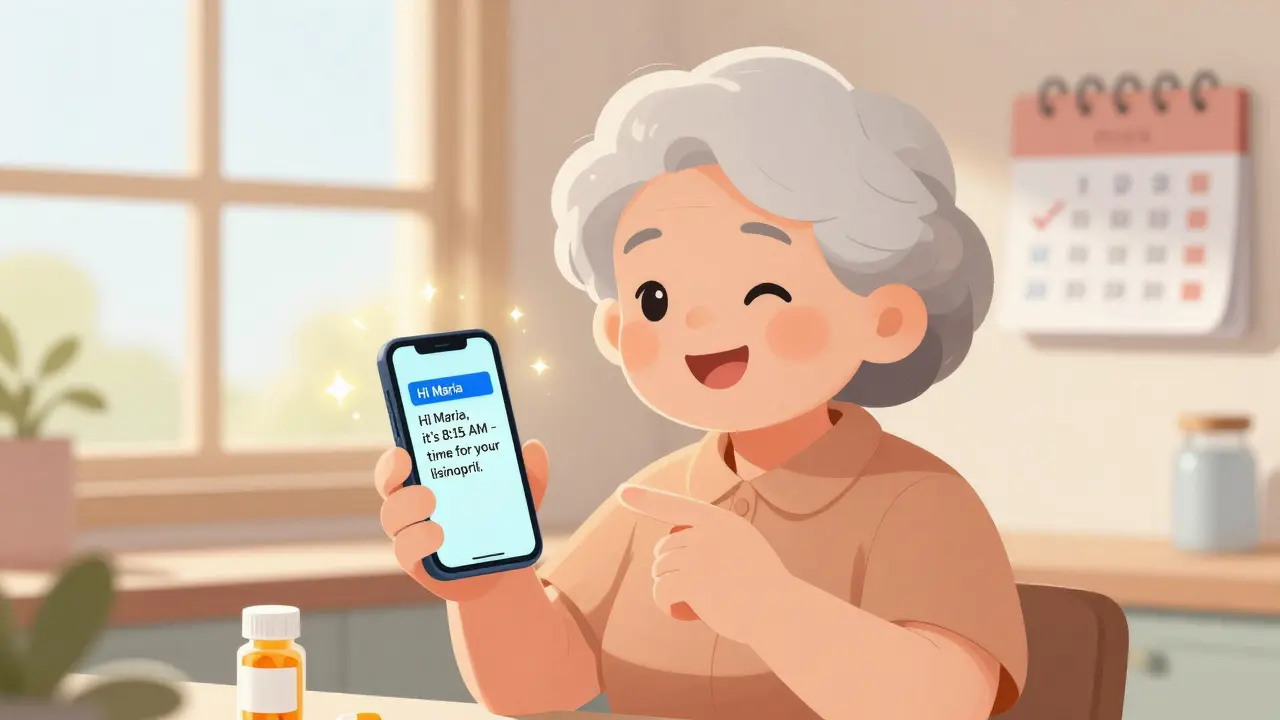
Personalization means the message feels like it’s meant for you. Instead of “Take your medication,” try “Hi Maria, it’s 8:15 AM-time for your lisinopril.” Adding the person’s name and the exact drug name makes it feel less like spam and more like support. Studies show personalized messages are nearly twice as effective as generic ones.
Timing matters more than you think. The best results happen when texts arrive within two hours of the scheduled dose. If you take your pill at 7:00 AM, sending the reminder at 6:30 AM gives you a gentle heads-up. Sending it at 11:00 AM? You’ve missed the window. Most people don’t remember to take meds if the reminder comes too late.
Simple language is non-negotiable. SMS limits mean you only have 160 characters. No room for essays. “Take your metformin now. You’ve got 3 days left on your prescription.” is clear, urgent, and actionable. Avoid medical jargon. Don’t say “antihypertensive”-say “blood pressure pill.”
Which Conditions Benefit Most
Text reminders aren’t equally powerful for every illness. They shine brightest where missing a dose has immediate consequences.
- HIV treatment: 73% of studies showed big improvements. Missing even one dose can let the virus build resistance.
- Tuberculosis: While pills counts didn’t improve much, patients stayed in care longer-critical for ending treatment.
- Heart disease: Daily texts improved blood pressure control by over 50% in several trials.
- Diabetes and asthma: Consistent dosing prevents dangerous spikes and flare-ups.
- Depression and schizophrenia: Regular meds reduce relapse risk. Texts help when motivation is low.
For conditions like high cholesterol or osteoporosis-where effects build slowly over years-texts alone often don’t cut it. That’s not because they don’t work. It’s because those conditions need more than reminders. They need lifestyle changes, regular check-ups, and emotional support.
How to Set Up a Text Reminder System
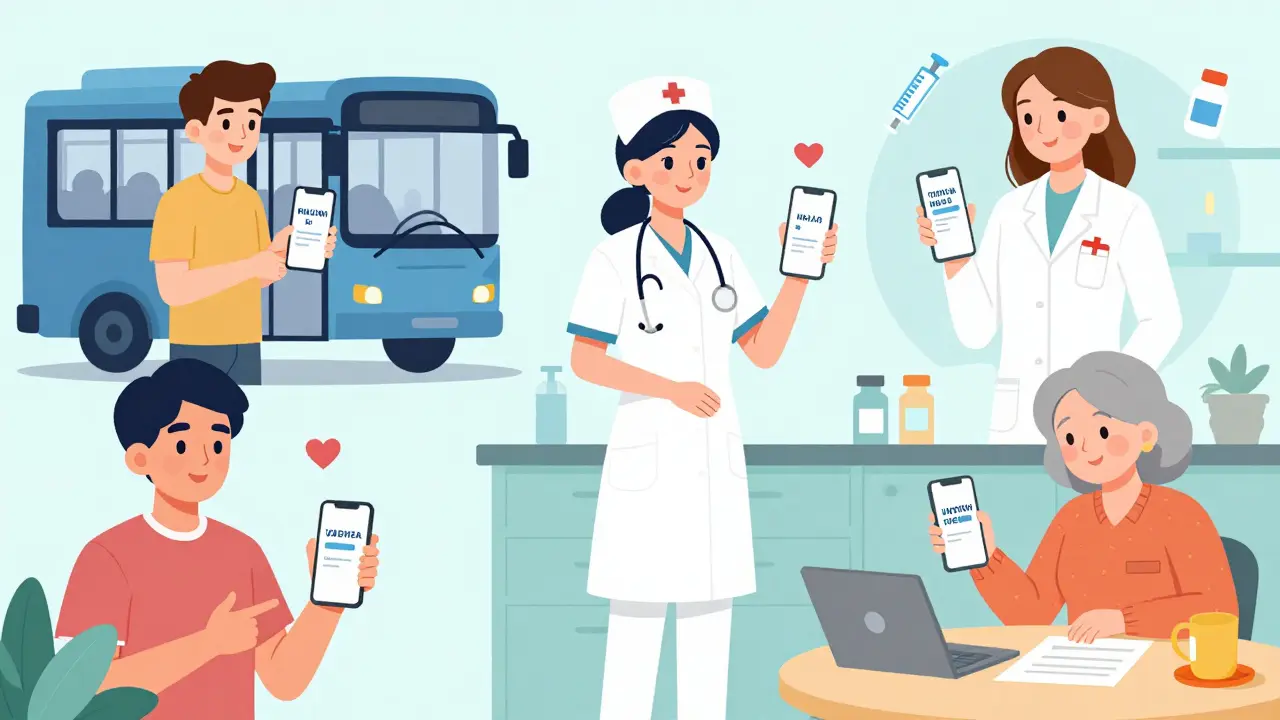
You don’t need a tech degree to set this up. Here’s how to do it right:
- Confirm mobile access. Does the person have a working phone and reliable service? About 85-90% of adults in places like New Zealand, the US, and the UK do. If not, this won’t work.
- Choose the right tool. Use a free app like Medisafe, MyTherapy, or even your phone’s built-in reminders with SMS alerts. For caregivers or clinics, platforms like SimpleTexting or Twilio can send bulk messages tied to patient records.
- Set the schedule. Match the text time to the pill time. If someone takes meds at 8 AM and 8 PM, send two messages. Don’t overload them-once or twice a day is enough.
- Write the message. Use this template: [Name], it’s [time]-take your [medication name]. You’re doing great! Add a smiley if it feels right. Keep it under 100 characters.
- Test it. Send a trial message to yourself. Does it arrive on time? Is it clear? Would you ignore it?
For clinics or family caregivers: integrate with electronic health records. If a patient hasn’t refilled a prescription in 10 days, auto-send a message: “Your [medication] is running low. Need help refilling?” This cuts down on missed doses before they happen.
Pitfalls to Avoid
Even well-intentioned systems fail if they’re poorly designed.
- Too many messages. Three texts a day? You’ll get ignored. Stick to the medication schedule-no extras.
- Wrong timing. Sending a reminder at 3 AM? Bad idea. Most people sleep through it. Avoid late-night or early-morning alerts unless the medication is actually taken then.
- One-size-fits-all. A message that works for a 65-year-old with diabetes might confuse a 28-year-old with epilepsy. Tailor the tone and content.
- No opt-out option. People need to feel in control. Always include “Reply STOP to stop reminders.” It’s not just polite-it’s required under privacy laws.
- Assuming the person took the pill. Texts only remind. They don’t confirm. If someone misses a dose, follow up with a call or visit-not another text.
What the Research Says About Long-Term Use
Here’s the sobering part: most people stop responding after six months. In one study, 23% of users turned off reminders because they felt nagged. Another found that after a year, the benefit of simple texts vanished-unless they were paired with other support.
So what’s the fix? Combine texts with human touchpoints. A nurse calling every two weeks. A pharmacist checking in at refill time. A family member asking, “Did you take your pill today?” Texts work best as part of a team-not the whole team.
And don’t rely on them alone for complex conditions. If someone has memory issues, depression, or lives alone, a text won’t solve the problem. They need care coordination, not just alerts.
Real Stories, Real Results
One user on Reddit said their Medisafe app cut missed doses from 30% to under 5% for their blood pressure meds. Another, a grandmother managing diabetes, said her daughter set up daily texts saying, “Love you. Don’t forget your insulin.” She started taking it every day-even on holidays.
But not everyone wins. One man in a 2023 trial said he got five reminders a day and just deleted them all. “I felt like I was being watched,” he said. That’s why personalization matters. The message should feel like help-not control.
What’s Next for Text-Based Reminders
The next wave isn’t just more texts. It’s smarter ones. New systems use AI to learn your habits. If you usually skip your pill on weekends, the system might send a message Friday night: “Weekend plans? Don’t forget your pill before bed.”
Some apps now let you reply “Done” or “Missed” to a text. That data helps doctors adjust treatment. If you miss three doses in a row, your doctor gets an alert-and can call you before things spiral.
By 2027, most health systems will use these predictive tools. But for now, the simplest version still works best: a clear, timely, personalized text from someone who cares.
Final Tip: Start Small, Stay Consistent
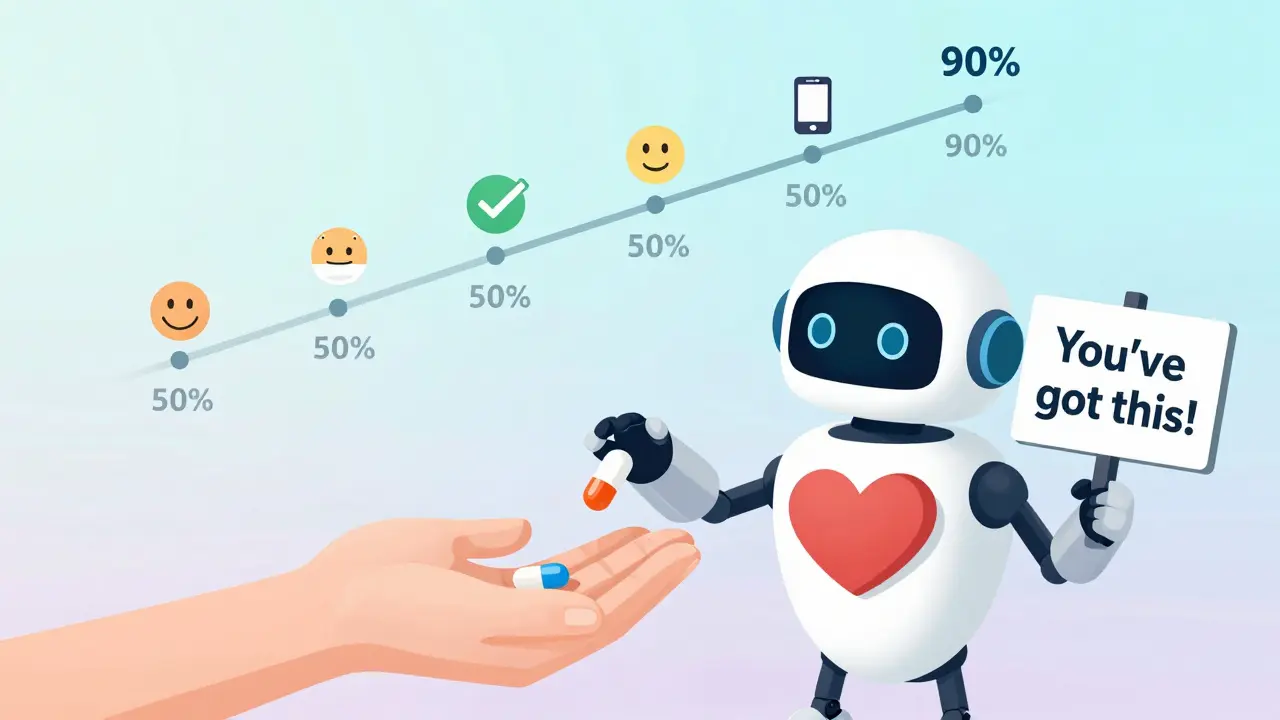
You don’t need a fancy app or a clinic system to begin. Just use your phone’s alarm app, set a recurring reminder, and type in a short message. Test it for a week. Did you take your pill when the alert went off? If yes, keep it. If not, tweak the time or wording. Try adding a personal note: “You’ve got this.”
Medication adherence isn’t about willpower. It’s about design. A good text reminder doesn’t make you responsible-it makes it easier for you to be responsible. And sometimes, that’s all you need.
Can I use my phone’s built-in alarm for medication reminders?
Yes. Most smartphones let you set recurring alarms with custom labels like “Take metformin” or “Blood pressure pill.” You can even add a vibration or tone that’s different from your regular alerts. The key is consistency-set it for the exact time you need to take the pill, and don’t snooze it. Alarms work just as well as texts if you actually respond to them.
Are text reminders safe for my health data?
Standard SMS isn’t encrypted, so avoid sending full names, birth dates, or detailed medical info in texts. Use generic terms like “your pill” instead of “lisinopril 10mg.” For better privacy, use apps like Medisafe or MyTherapy-they store data securely and don’t send sensitive info over SMS. Always check the app’s privacy policy before using it.
What if I don’t have a smartphone?
You don’t need a smartphone. Most basic phones can receive SMS messages. As long as the phone can receive texts, it works. If you’re worried about cost, many carriers offer free SMS plans, or you can use a prepaid phone just for reminders. Some clinics even lend simple phones to patients who need them.
How often should I send reminders?
Only send one reminder per dose. If you take a pill once a day, send one text. Twice a day? Two texts. More than that increases fatigue and lowers compliance. For weekly meds like methotrexate, one weekly reminder is enough. The goal is to remind, not overwhelm.
Can text reminders replace pharmacy counseling?
No. Texts remind you to take your pill-they don’t explain side effects, drug interactions, or what to do if you feel unwell. Always talk to your pharmacist or doctor about your meds. Texts are a tool to support those conversations, not replace them.
What if I keep missing doses even with reminders?
If reminders aren’t helping, it’s not a technology problem-it’s a support problem. Talk to your doctor. You might need a simpler regimen (fewer pills), a different medication, or help with depression or memory issues. Sometimes, a pill organizer or a family member checking in works better than a text. Don’t blame yourself. Find what fits your life.
Usha Sundar
December 24, 2025 AT 16:03My grandma uses SMS reminders for her blood pressure pills. One day she replied "Done" and the system auto-sent her a coupon for free chai. She hasn't missed a dose in 8 months.
Spencer Garcia
December 26, 2025 AT 06:57Used Medisafe for my dad's diabetes meds. Set it up in 5 minutes. The app even texts me if he skips a dose. No more frantic calls at 3 AM. Simple, effective, and it actually works.
Abby Polhill
December 26, 2025 AT 19:25The pharmacokinetic efficacy of SMS-based adherence interventions is statistically significant in chronic disease cohorts, particularly when paired with behavioral reinforcement protocols. That said, the attrition rate after 6 months suggests diminishing returns without layered support systems. The data's robust, but the UX needs refinement.
Bret Freeman
December 28, 2025 AT 06:31People think texting fixes everything. No. It just makes you feel like you're doing something while doing nothing. My uncle got 12 texts a day for his cholesterol meds. He deleted them, then stopped taking them. The system didn't care. It just kept sending. That's not help-that's surveillance.
And don't get me started on apps that track your every pill. Who authorized this? Who owns that data? You think your health info is safe? It's not. It's sold to insurers, advertisers, pharma. You're not being helped. You're being monetized.
Real help is a nurse showing up. A family member sitting with you. Not a damn text that says "You're doing great!" like you're a puppy.
Pankaj Chaudhary IPS
December 28, 2025 AT 21:01In India, we've seen remarkable success with SMS reminders in rural hypertension programs. Even with low literacy, patients respond to voice-enabled SMS in local dialects. The key is not just personalization-it's cultural resonance. A message in Hindi saying "Bhaiya, aaj ka dawa na bhooliye" hits differently than "Take your lisinopril."
Also, clinics should integrate with local telecom subsidies. Many patients get free SMS bundles for health services. That’s the real innovation-not the app, but the ecosystem.
Aurora Daisy
December 29, 2025 AT 08:43Oh wow, another American tech solution for a problem caused by American healthcare. You pay $500 for a pill, then text yourself to take it? Brilliant. Next you’ll get a notification when your heart attack is scheduled.
Georgia Brach
December 31, 2025 AT 01:20Correlation ≠ causation. The 14% adherence increase cited? Likely selection bias. Patients who agree to text reminders are already more compliant. The control group was probably sicker, less educated, or less tech-savvy. No RCT controls for socioeconomic confounders here. This is pseudoscience dressed as public health.
Payson Mattes
January 1, 2026 AT 19:55Did you know the government uses these text systems to track who's taking their meds? It’s part of the biometric ID rollout. If you miss three doses, your SNAP benefits get flagged. I saw it in a leaked memo. They’re building a compliance database. That’s why they push apps so hard. You think it’s about health? It’s about control.
And don’t use Medisafe. They’re owned by a defense contractor. Your pill data goes to DARPA. I’ve got the docs. Reply if you want the link.
Steven Mayer
January 2, 2026 AT 13:06The neurocognitive load of persistent external cueing in medication adherence paradigms induces habituation fatigue, particularly in populations with executive function deficits. The dopamine feedback loop from automated reinforcement is transient, and without concurrent psychosocial scaffolding, the intervention collapses at the 180-day mark. This is why behavioral economics models outperform SMS-only interventions in longitudinal studies.