Insulin, EpiPens, and Nitroglycerin: What Happens When They Expire
 Jan, 3 2026
When your insulin, EpiPen, or nitroglycerin expires, it’s not just about the date on the label-it’s about whether your life will be saved when seconds count. These aren’t ordinary pills you can swallow a week past their expiration. They’re emergency tools. And if they’ve degraded, they might not work at all.
Why These Three Medications Are Different
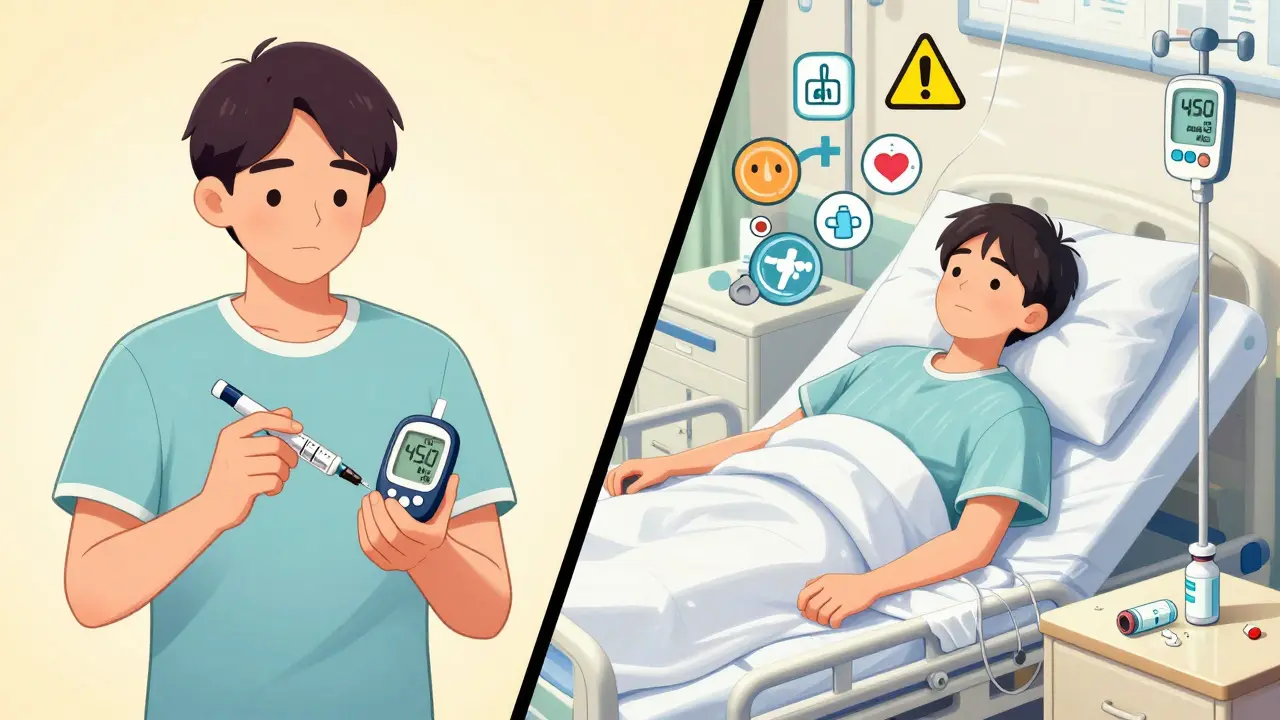
Most medications lose a little potency over time. A 2012 FDA study found that 90% of drugs tested still worked years after their expiration date. But insulin, epinephrine (in EpiPens), and nitroglycerin? They’re exceptions. These aren’t just chemicals. They’re unstable proteins or volatile compounds that break down fast-especially when exposed to heat, light, or air.Insulin is a protein. Protein degrades. Once it expires, especially if left at room temperature, it can lose up to 50% of its strength in just six months. That means your blood sugar could spike or crash without warning. One patient in a 2023 case study developed diabetic ketoacidosis after using insulin three months past its expiration. They ended up in the hospital for three days.
Nitroglycerin, used for chest pain, is even more fragile. A 2018 study in the Journal of Pharmaceutical Sciences showed it loses 20% of its potency within 30 days of opening the bottle-even before expiration. After six months past the date, it can be nearly useless. In a Baptist Health study, 78% of patients who used expired nitroglycerin during chest pain needed emergency care. Those using fresh medication? Only 22% did.
EpiPens contain epinephrine, the only drug that can reverse a deadly allergic reaction. But epinephrine breaks down too. By the time an EpiPen hits its labeled expiration date, it’s already at about 80% potency. Six months after that, it can drop below 50%. One Reddit user described a bee sting that turned life-threatening when their expired EpiPen didn’t work. Emergency responders had to give three doses to stabilize them.
How Storage Changes Everything
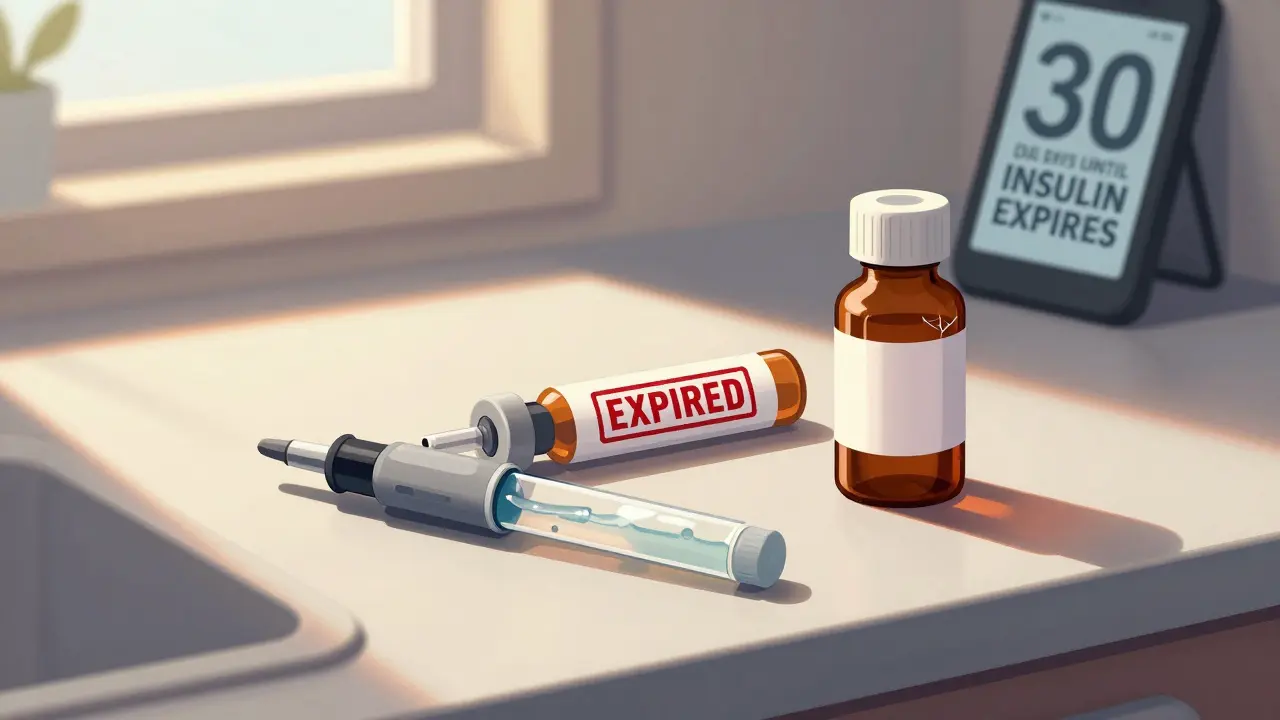
Expiration dates assume perfect storage. Real life? Not so much.Insulin should be refrigerated (between 2°C and 8°C) until opened. Once you start using it, it lasts 28 to 42 days-no matter what the bottle says. Leave it in a hot car, or on a windowsill, and it can ruin in hours. I’ve seen patients keep insulin in their purse all day in summer heat. That’s not just risky-it’s dangerous.
Nitroglycerin tablets are especially sensitive. The original glass bottle with amber coloring? That’s there for a reason. It blocks light. Repackaging them into plastic pill organizers? That’s a fast track to failure. The American Heart Association says to replace your nitroglycerin every 3 to 6 months after opening-even if you haven’t used it.
EpiPens don’t need refrigeration, but they hate heat. Don’t leave them in your glove compartment. Don’t keep them in your beach bag. The liquid inside can turn cloudy or develop particles. If it does, throw it out-even if the date hasn’t passed. The device might still inject, but the medicine won’t be strong enough.
What Happens When They Fail
The consequences aren’t theoretical. They’re documented.Diabetics using expired insulin report wild blood sugar swings-50 mg/dL one hour, 450 mg/dL the next. That’s not just inconvenient. That’s hospital territory. One patient in a 2023 Healthline case study developed a severe skin condition called erythrodermic psoriasis after using old insulin. It required steroids and weeks of recovery.
For someone having a heart attack, expired nitroglycerin means no relief. No chest pain reduction. No time to call for help. In one emergency room study, patients who used expired nitroglycerin were twice as likely to need intubation or vasopressors compared to those with fresh medication.
And anaphylaxis? If your EpiPen doesn’t work, you’re relying on strangers to call 911 and hope paramedics arrive in time. A 2021 study in Annals of Allergy, Asthma & Immunology found expired EpiPens delivered only 52-68% of the labeled dose. That’s not enough to open airways or raise blood pressure in a full-blown allergic shock.
What Experts Say-And What You Should Do
Dr. Robert Hodes from the Cleveland Clinic says it plainly: “Having the wrong dose of these medications could lead to a medical emergency.”Here’s the hard truth: if you’re relying on an expired insulin vial, an old EpiPen, or last year’s nitroglycerin, you’re gambling with your life.
But there’s nuance. The American College of Allergy, Asthma, and Immunology says: if you’re having anaphylaxis and your EpiPen is expired, use it anyway. Better than nothing. But still call 911 immediately. Tell them you used an expired device. They’ll know what to do.
For insulin and nitroglycerin? There’s no “better than nothing.” If it’s expired, replace it. Period.
Here’s what you need to do right now:
- Check every insulin vial or pen. Is it opened? If yes, it expires in 28-42 days. Mark that date on the label.
- Look at your nitroglycerin bottle. When did you open it? If it’s older than six months, toss it-even if it’s not expired yet.
- Grab your EpiPen. Is the liquid clear? Any brown specks? If not, replace it. Is the expiration date past? Replace it.
- Set phone reminders: 30 days before your insulin expires, 6 months after opening nitroglycerin, and 3 months before your EpiPen runs out.
Cost Isn’t an Excuse
I know. These meds are expensive. Insulin can cost $300 a vial. EpiPens run $700 for two. Nitroglycerin isn’t cheap either. That’s why some people stretch them. A 2023 University of Michigan study found 43% of low-income patients use expired insulin because they can’t afford new ones. And 18% of them ended up hospitalized.There are options. Ask your doctor about patient assistance programs. Many insulin manufacturers offer free or discounted vials for those who qualify. Some pharmacies sell generic epinephrine pens for under $150. Talk to your pharmacist about alternatives. There are programs. You just have to ask.
Don’t let cost become a death sentence.

What’s Changing in the Future
Good news: new tech is coming. Sanofi’s Toujeo Max insulin now lasts 56 days at room temperature after opening-double the old standard. Adamis Pharmaceuticals’ Symjepi EpiPen has a 24-month shelf life instead of 18. And Vericel is testing “smart nitroglycerin” that changes color when it loses potency. That’s a game-changer.Regulators are catching up too. The FDA is pushing to shorten EpiPen expiration dates from 18 to 12 months to reflect real-world use. Europe already did it. The U.S. is following.
But none of this helps if you’re still using last year’s bottle. Technology won’t save you if you don’t act.
Final Rule: When in Doubt, Throw It Out
You wouldn’t drive a car with worn brakes. You wouldn’t use a frayed parachute. Don’t use expired insulin, EpiPens, or nitroglycerin.These aren’t medications you can “try one more time.” They’re your lifeline. If the date has passed, if the liquid looks off, if the pen feels weird-replace it. Now.
Your life depends on it working exactly as designed. Not almost. Not mostly. Exactly.
Can I use an expired EpiPen if I have no other choice?
Yes-but only as a last resort. If you’re having a severe allergic reaction and your EpiPen is expired, use it anyway. It might not work fully, but it could still help enough to buy time until emergency help arrives. Call 911 immediately after, and tell responders you used an expired device. Don’t wait to see if it works. Use it, then get help.
How long does insulin last after opening?
Once opened, most insulin lasts 28 to 42 days at room temperature, no matter what the bottle says. Always check the manufacturer’s label for exact timing. Keep it away from heat and direct sunlight. If you’re not sure, throw it out. Better safe than risking a diabetic emergency.
Should I refrigerate my EpiPen?
No. EpiPens should be stored at room temperature (between 20°C and 25°C). Refrigeration can damage the device and affect the delivery mechanism. Avoid extreme heat instead-don’t leave it in a car, near a stove, or in direct sunlight. Check the liquid inside: if it’s discolored or has particles, replace it immediately.
Can expired nitroglycerin cause a heart attack?
It won’t cause a heart attack, but it can fail to stop one. Nitroglycerin works by relaxing blood vessels to improve blood flow during chest pain. If it’s expired, it may not work at all. That means your heart keeps struggling without relief. In studies, patients using expired nitroglycerin were far more likely to need emergency intervention than those using fresh medication.
How do I safely dispose of expired insulin, EpiPens, or nitroglycerin?
Don’t flush them or throw them in the trash. These are considered hazardous waste. Take them to a pharmacy with a drug take-back program. Many pharmacies, especially in New Zealand and the U.S., offer free disposal for expired injectables. If no program is available, call your local waste authority. Some cities have special drop-off days for medical waste.
If you’re managing any of these medications, make a habit of checking expiration dates every month. Set calendar alerts. Keep backups. Talk to your doctor about cost-saving options. Your life doesn’t come with a backup plan-but your meds should.