MAOIs and OTC Cold Medicines: What You Must Know About Hypertensive Crisis and Serotonin Risks
 Jan, 5 2026
MAOI Cold Medicine Interaction Checker
Check Your Medication Safety
Enter your MAOI medication and OTC cold medicine to see if they interact dangerously
Results will appear here after checking.
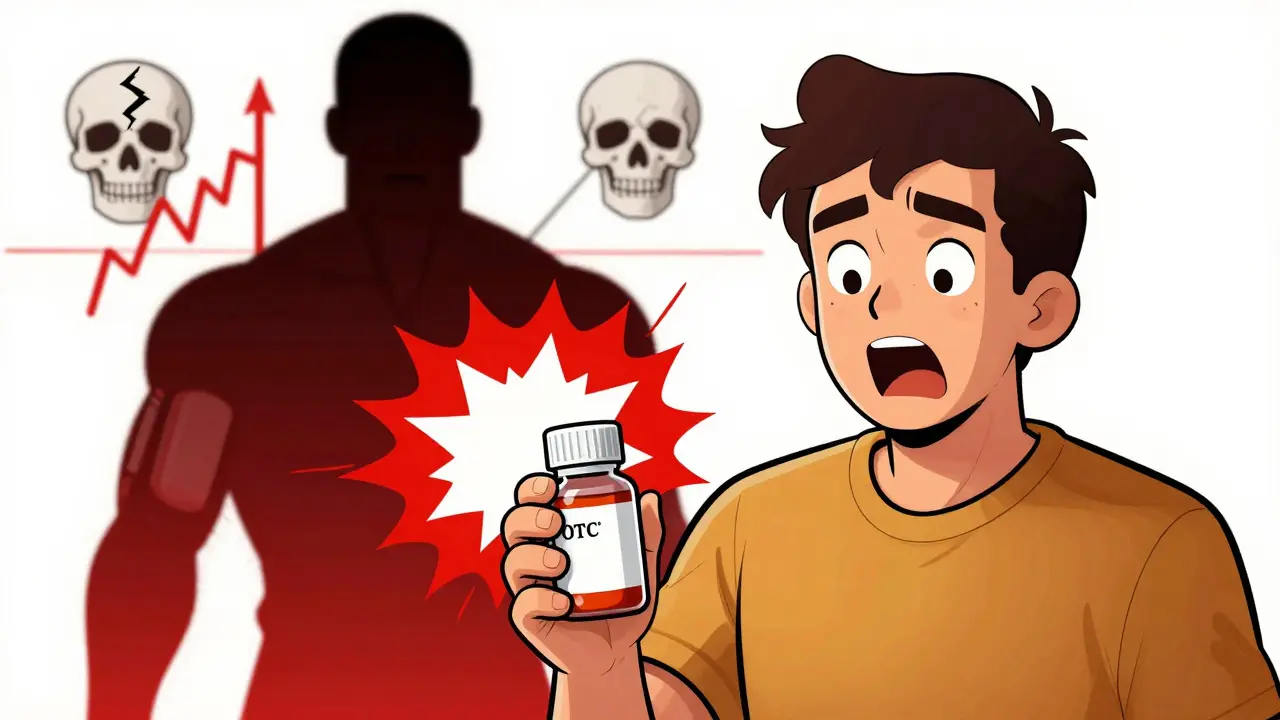
If you’re taking an MAOI for depression, a simple cold medicine could send you to the emergency room. It’s not a myth. It’s not an exaggeration. It’s a documented, life-threatening risk that happens more often than most people realize.
Why MAOIs Are Different
Monoamine oxidase inhibitors - or MAOIs - are antidepressants like phenelzine (Nardil), tranylcypromine (Parnate), and isocarboxazid (Marplan). They work by blocking enzymes that break down brain chemicals like serotonin, norepinephrine, and dopamine. That’s why they help people with treatment-resistant depression. But that same mechanism makes them dangerous when mixed with common over-the-counter cold and flu products. Unlike newer antidepressants like SSRIs or SNRIs, MAOIs don’t just affect serotonin. They also stop your body from clearing out substances like tyramine and sympathomimetics. When these build up, your blood pressure can spike dangerously fast - sometimes within an hour of taking a cold pill.The Dangerous Ingredients in OTC Cold Medicine
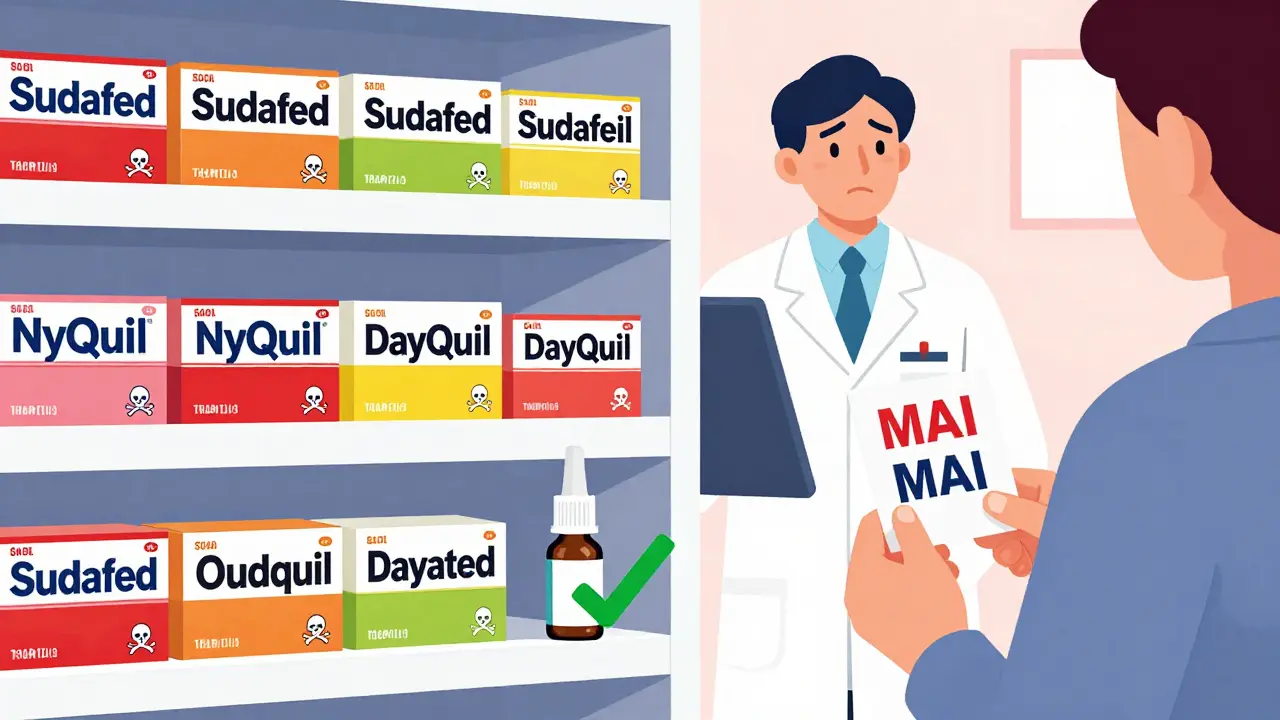
Most cold medicines contain one or more of these high-risk ingredients:- Pseudoephedrine - Found in Sudafed, Claritin-D, and many multi-symptom formulas
- Phenylephrine - Common in Sudafed PE, Zyrtec-D, and store-brand decongestants
- Dextromethorphan - In Robitussin DM, Delsym, DayQuil, and NyQuil
- Phenylpropanolamine - Still in some older products, banned in the U.S. but still found overseas
Hypertensive Crisis: The Silent Emergency
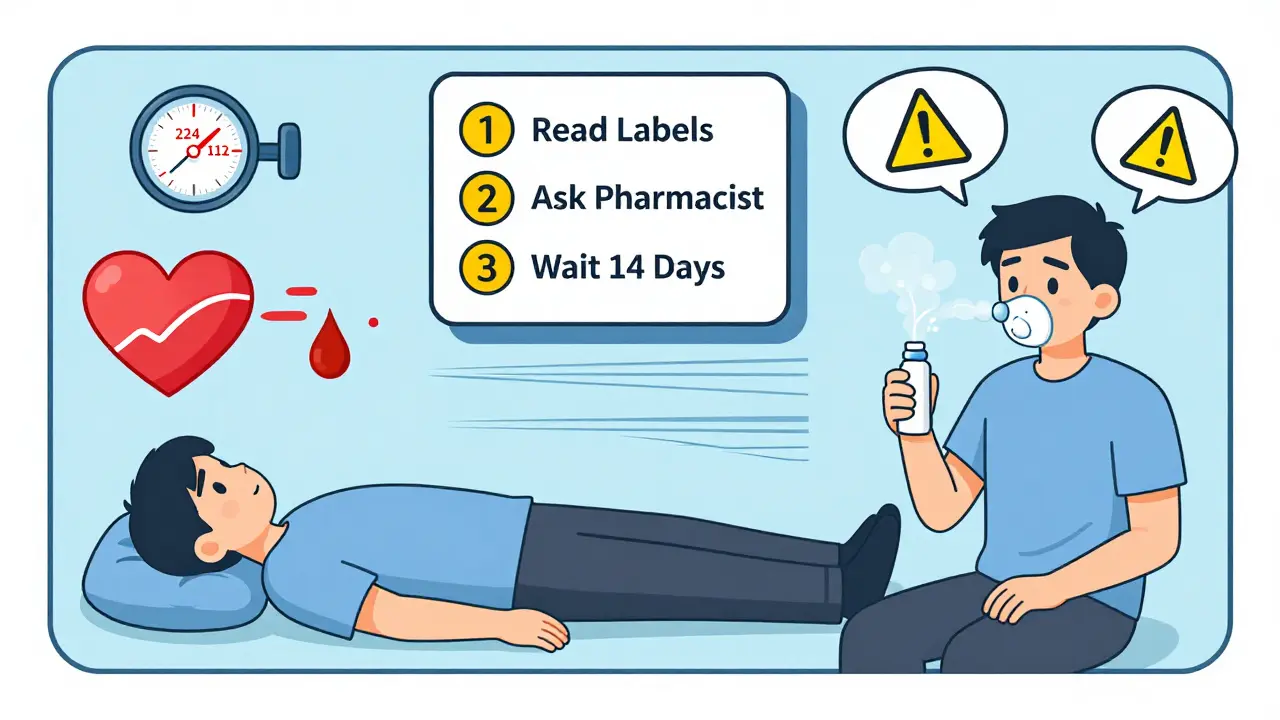
When you take pseudoephedrine or phenylephrine while on an MAOI, your body can’t break down the extra norepinephrine those drugs release. That causes a sudden, massive surge in blood pressure - a hypertensive crisis. Symptoms include:- Severe headache (often described as "the worst headache of my life")
- Blurred vision
- Palpitations or racing heart
- Stiff neck or chest pain
- Nausea, vomiting, or sweating
Serotonin Syndrome: A Different Kind of Danger
Dextromethorphan - the cough suppressant in many cold medicines - is another hidden risk. It increases serotonin levels. So does your MAOI. When you combine them, serotonin builds up too fast. Serotonin syndrome isn’t just "feeling weird." It’s a medical emergency with symptoms like:- Agitation, confusion, or hallucinations
- Fast heart rate and high blood pressure
- Muscle rigidity, tremors, or seizures
- High fever (over 104°F)
- Loss of coordination
What About the Transdermal Patch?
Many people assume the selegiline patch (Emsam) is safer. It’s true that lower doses (6 mg/24hr) don’t require strict dietary changes for tyramine. But here’s the catch: the drug interaction risks with OTC cold medicines remain the same. A 2023 study from the University of Texas Southwestern found that even a single 30mg dose of pseudoephedrine caused an average blood pressure spike of 42/28 mmHg in people using the Emsam patch. That’s enough to trigger a crisis. The patch doesn’t make you immune. It just changes a few other side effects.Safe Alternatives for Cold Symptoms
You don’t have to suffer through a cold. There are safe options - you just have to pick them carefully.- For congestion: Use saline nasal spray or a humidifier. No drugs needed.
- For cough: Guaifenesin (Mucinex) is safe. It loosens mucus without affecting neurotransmitters.
- For fever or pain: Acetaminophen (Tylenol) is generally safe. Avoid ibuprofen or aspirin unless your doctor says yes - they can affect blood pressure too.
- For runny nose: Antihistamines like loratadine (Claritin) or cetirizine (Zyrtec) are usually okay - but check with your pharmacist first.
How to Stay Safe
If you’re on an MAOI, here’s what you need to do:- Get a written list from your doctor or pharmacist of all unsafe OTC medications. Keep it in your wallet or phone.
- Read every label - even if you’ve used the product before. Formulas change.
- Ask the pharmacist every time. Say: "I’m on an MAOI. Is this safe?" Don’t rely on their memory - ask them to check.
- Carry a medical alert card or app notification that says you’re on an MAOI. Emergency responders need to know this fast.
- Wait 14 days before switching from an MAOI to any other antidepressant, and vice versa. That’s the washout period needed to prevent serotonin syndrome.
Why This Still Happens
MAOIs are prescribed to fewer than 1% of people taking antidepressants in the U.S. But for those who need them, they’re often the only thing that works. Studies show up to 50% of treatment-resistant patients respond to MAOIs - compared to 30-40% with SSRIs. The problem? Most doctors don’t get enough training on MAOI safety. Pharmacists are overwhelmed. Patients are told to "avoid cheese and wine" - but never warned about the cough medicine on their shelf. A 2021 study from the University of North Carolina found patients needed 3 to 5 educational sessions with a pharmacist to fully understand the risks. Most get one quick warning at the pharmacy counter - if they get anything at all.What’s Changing?
There’s hope. Newer, reversible MAOIs are in development. One compound, CX-1010, is in Phase II trials and may offer the same benefits without the dangerous interactions. But it’s years away. In the meantime, the FDA still requires black box warnings on every MAOI package - the strongest warning they can give. The American Psychiatric Association updated its guidelines in 2020 to stress that "patients must be counseled repeatedly and clearly." And yet, people still get hurt.If You Think You’re Having a Reaction
If you’ve taken an OTC cold medicine and now have:- A sudden, severe headache
- Heart palpitations you can’t explain
- Confusion or muscle stiffness
Final Reminder
MAOIs saved lives. They still do. But they demand respect. A cold medicine isn’t just a pill. For you, it’s a potential trigger for a life-threatening reaction. The right choices aren’t always obvious - but they’re simple: when in doubt, don’t take it. Ask. Double-check. Protect yourself.Can I take Tylenol with an MAOI?
Yes, acetaminophen (Tylenol) is generally safe to use with MAOIs for pain or fever. It doesn’t affect serotonin or norepinephrine levels. But always check with your doctor or pharmacist before taking any new medication, even over-the-counter ones.
Is pseudoephedrine worse than phenylephrine with MAOIs?
Both are dangerous. Pseudoephedrine is a stronger stimulant and has caused more documented cases of hypertensive crisis. But phenylephrine - even though it’s weaker - still blocks the body’s ability to break down norepinephrine when you’re on an MAOI. Neither is safe. Avoid both completely.
What if I accidentally took a cold medicine with my MAOI?
Monitor yourself closely for symptoms like severe headache, rapid heartbeat, chest pain, confusion, or high blood pressure. If any appear, go to the ER immediately. Even if you feel fine, call your doctor or pharmacist right away. Some reactions take hours to develop. Don’t wait for symptoms to get worse.
Can I use nasal sprays instead of oral decongestants?
Most nasal decongestant sprays (like oxymetazoline - Afrin) are still risky. They’re absorbed into your bloodstream and can trigger the same reactions as oral pills. Saline sprays are safe. Avoid all medicated nasal sprays unless your doctor approves them specifically.
Are there any new MAOIs without these risks?
The transdermal selegiline patch (Emsam) has fewer dietary restrictions at low doses, but it still carries the same interaction risks with OTC cold medicines. New reversible MAO-A inhibitors like CX-1010 are being tested and may offer safer options in the future, but none are approved yet. For now, all MAOIs require the same precautions.
How long do I need to wait after stopping an MAOI before taking cold medicine?
Wait at least 14 days after stopping any MAOI before taking a decongestant or dextromethorphan. This allows the enzyme inhibition to fully wear off. For some people, especially those on long-acting MAOIs, doctors may recommend waiting longer. Always confirm with your prescriber.
Why do pharmacists sometimes say these drugs are safe?
Some pharmacists aren’t trained on MAOI interactions, especially if they’re newer or work in a busy retail setting. Others may confuse MAOIs with SSRIs. Never rely on a pharmacist’s memory alone. Show them your medication list and ask them to verify using a drug interaction checker. If they’re unsure, walk away and call your psychiatrist.
Tiffany Adjei - Opong
January 6, 2026 AT 07:30Okay but let’s be real - if you’re on an MAOI and still using OTC meds without triple-checking, you’re basically playing Russian roulette with your brain. I’ve seen people take Sudafed PE and then post "why do I feel like I’m gonna die" on Reddit at 2am. Spoiler: it’s because they ignored the 12 warning labels on the box. 🤦♀️
Ryan Barr
January 7, 2026 AT 04:35Phenylephrine is useless anyway. Pseudoephedrine’s the real threat. Case closed.
Cam Jane
January 8, 2026 AT 06:54Y’all need to hear this: if you’re on an MAOI, your cold medicine isn’t just a pill - it’s a landmine. I’ve been on Parnate for 7 years and I keep a laminated card in my wallet that says "NO PSEUDOEPHEDRINE, NO PHENYLEPHRINE, NO DEXTROMETHORPHAN" in bold letters. I’ve walked out of CVS three times because the pharmacist said "oh, that’s fine" - and I’m not gonna risk my life because someone’s too busy to check a database. Saline spray? Humidifier? Guaifenesin? YES. Those work. And yes, it’s annoying. But so is being dead. 💪
Wesley Pereira
January 8, 2026 AT 08:34so like… the patch is "safer" but not really? cool. so basically we’re all just walking time bombs with a prescription. thanks, pharma. 🙃 also, why do pharmacists act like they’re reading a fortune cookie when you ask if something’s safe? "uhhh… i think? maybe? ask your doc?" no. just… no. i need a damn flowchart. or a barcode scanner that screams "DO NOT TAKE THIS" when you scan it.
Ashley S
January 8, 2026 AT 20:31People are just too lazy to read labels. This is why we have lawsuits.
Jeane Hendrix
January 8, 2026 AT 21:22wait - so if i take guaifenesin, that’s safe? what about dextromethorphan in the same bottle? is it only the combo that’s bad or is it the dextro itself? i’m confused bc the label says "cough + congestion" and i just want to breathe lol
Kiran Plaha
January 10, 2026 AT 07:41bro i’m from india and we just use tulsi tea and steam for colds. no pills. no stress. just breathe. also, why do americans need 17 meds for a runny nose? 🤔
Kelly Beck
January 11, 2026 AT 10:47ok but seriously - if you’re on an MAOI, treat every OTC med like it’s made of radioactive glitter 🌟💊. i carry saline spray everywhere. i have a little notebook where i write down every med i’ve ever taken and what my dr said about it. i even screenshot the FDA warning and set it as my lock screen. it’s annoying? yes. is it better than being in the ER with a BP of 230/120? ABSOLUTELY. you got this. you’re not alone. 🤗💙
Katie Schoen
January 12, 2026 AT 20:52so the patch is basically a "cool kid" version of MAOI that still kills you if you sneeze wrong? brilliant. just brilliant. 🙄 i’d rather just be sad than risk turning into a human alarm clock with a heartbeat.
Beth Templeton
January 13, 2026 AT 16:0314 day washout? sure. and then what? you just start again? lol. just stop taking MAOIs. problem solved.