Measuring Your Medication Adherence: A Practical Checklist for Better Health
 Jan, 9 2026
Getting your meds on time isn’t just about remembering to take them-it’s about staying alive, avoiding hospital trips, and keeping your condition from getting worse. Medication adherence isn’t a buzzword. It’s the difference between managing your diabetes and ending up in the ER with a diabetic emergency. The World Health Organization says more than half of people with chronic illnesses don’t take their meds as prescribed. And here’s the kicker: it’s not always because they’re forgetful. Sometimes it’s cost. Sometimes it’s side effects. Sometimes it’s just confusion.
Why Adherence Matters More Than You Think
Every missed pill adds up. For someone on blood pressure meds, skipping doses can spike their risk of stroke by 40%. For people with diabetes, poor adherence increases hospitalization risk by 60%. The U.S. spends between $100 billion and $300 billion a year treating problems that could’ve been avoided if people just took their pills. That’s not just a health issue-it’s a financial crisis hidden in plain sight.
But here’s the truth: most doctors don’t know if you’re taking your meds. They see you once a year. You say yes, you’re taking them. They believe you. But studies show people overreport adherence by 30-50%. You think you’re doing fine. The data says otherwise.
What Adherence Really Means
Adherence isn’t just about taking pills. It’s three things:
- Initiation - Did you fill your first prescription?
- Implementation - Are you taking the right dose, at the right time, the right way?
- Persistence - Did you keep going, or did you stop after a month because you felt ‘fine’?
Most people think they’re adherent if they fill the script. But filling it doesn’t mean you opened the bottle. And opening the bottle doesn’t mean you swallowed the pill.
The 5-Point Checklist to Measure Your Own Adherence
You don’t need fancy tech or a clinic visit to know where you stand. Use this simple, no-cost checklist. Answer honestly. This isn’t for your doctor-it’s for you.
- Do you refill your prescriptions on time? Look at your pharmacy records. If you’re running out 3-5 days early or waiting until you’re out, you’re not staying on schedule. The industry standard for chronic meds is Proportion of Days Covered (PDC)-you need at least 80% coverage over 6 months. That means for a 180-day period, you should have meds on hand for 144 days or more. Use your pharmacy app to track it.
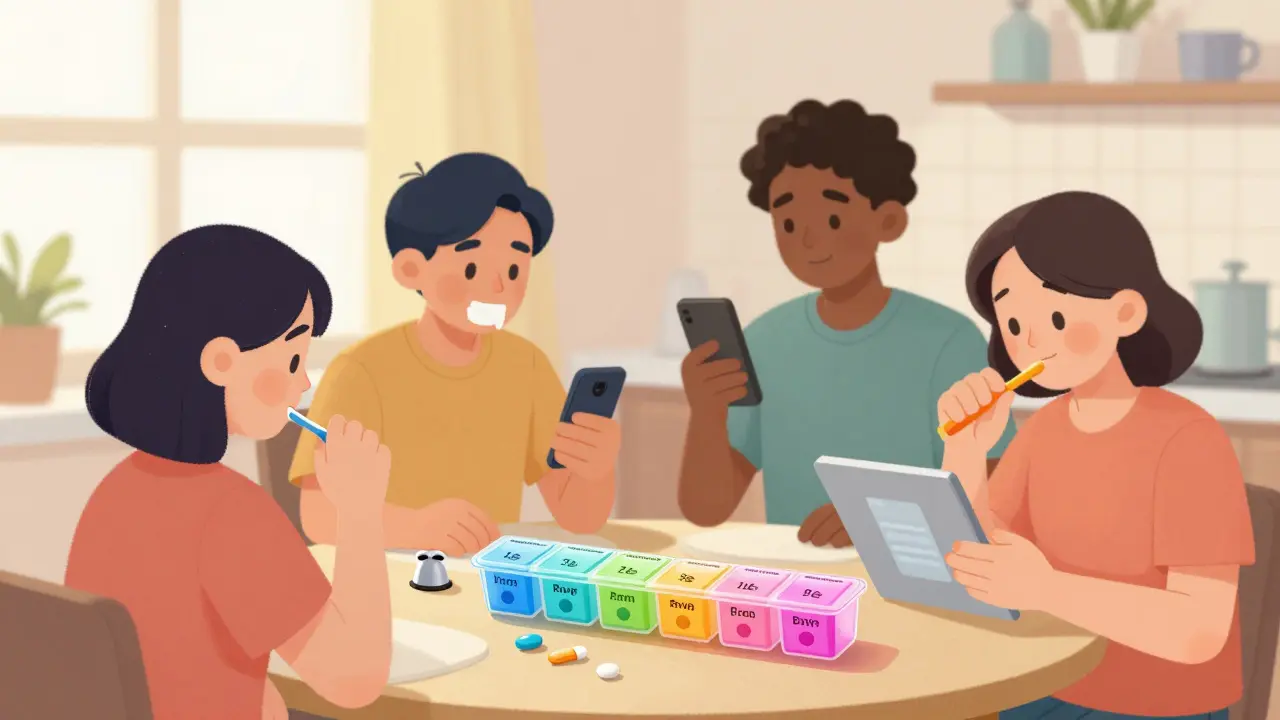
- Do you take your meds at the same time every day? Consistency matters more than you think. A study found people who took their blood pressure meds at bedtime had 45% fewer heart events than those who took them in the morning. Pick a time that sticks with your routine-right after brushing your teeth, with breakfast, before bed. Set a phone alarm. Don’t rely on memory.
- Have you skipped doses because of side effects or cost? If you’ve ever thought, ‘I’ll skip today-I feel fine,’ or ‘I can’t afford this,’ you’re not alone. But skipping doesn’t help. Talk to your pharmacist or doctor. There are often cheaper generics. Or patient assistance programs. Never stop cold. Ask for alternatives.
- Do you use a pill organizer? A simple 7-day box with morning/afternoon/evening slots cuts missed doses by 30%. If you’re on 5+ meds, you need one. Don’t just dump pills in a jar. Label them. Even better-get one with a timer alarm. They cost under $15 at any pharmacy.
- Have you talked to someone about your adherence in the last 3 months? If you haven’t, you’re flying blind. Ask your pharmacist: ‘Am I taking this right?’ Ask your doctor: ‘What happens if I miss a dose?’ Write it down. Bring the list to your next visit. Most people don’t. That’s why adherence stays hidden.
What Tools Actually Work (And What Don’t)
There’s a lot of tech out there-smart bottles, apps, reminders. But not all of it helps.
- Smart caps (like MEMS) - These track when you open your bottle. Accurate? Yes. Practical? Only if you’re in a clinical trial. They cost $50 each and need syncing. Not for daily use.
- Pharmacy refill records - This is how insurers measure you. It’s easy, cheap, and widely used. But here’s the flaw: you can pick up your pills and never open them. It’s a good starting point, but not the full story.
- Self-report questionnaires (like MARS-5) - A 5-question form that asks how often you miss doses. It’s validated, takes 90 seconds, and you can find it online. Score: 5 = never miss, 1 = very often miss. Anything below 4? You’re at risk.
- Apps and reminders - These work if you use them consistently. But if you turn off the alerts, they’re useless. The key isn’t the app-it’s the habit. Use one if it helps. Don’t rely on it alone.
What to Do If You’re Struggling
Adherence isn’t about willpower. It’s about systems.
- Ask for a 90-day supply - Fewer trips to the pharmacy means fewer chances to forget or skip.
- Use a pillbox with alarms - Get one that beeps. Set it for every dose. Even if you’re on just two meds.
- Link meds to a habit - Brush your teeth? Take your pill. Eat breakfast? Take your pill. Tie it to something you already do every day.
- Bring a buddy - Ask a family member to check in once a week. ‘Did you take your blood pressure pill today?’ Simple. Effective.
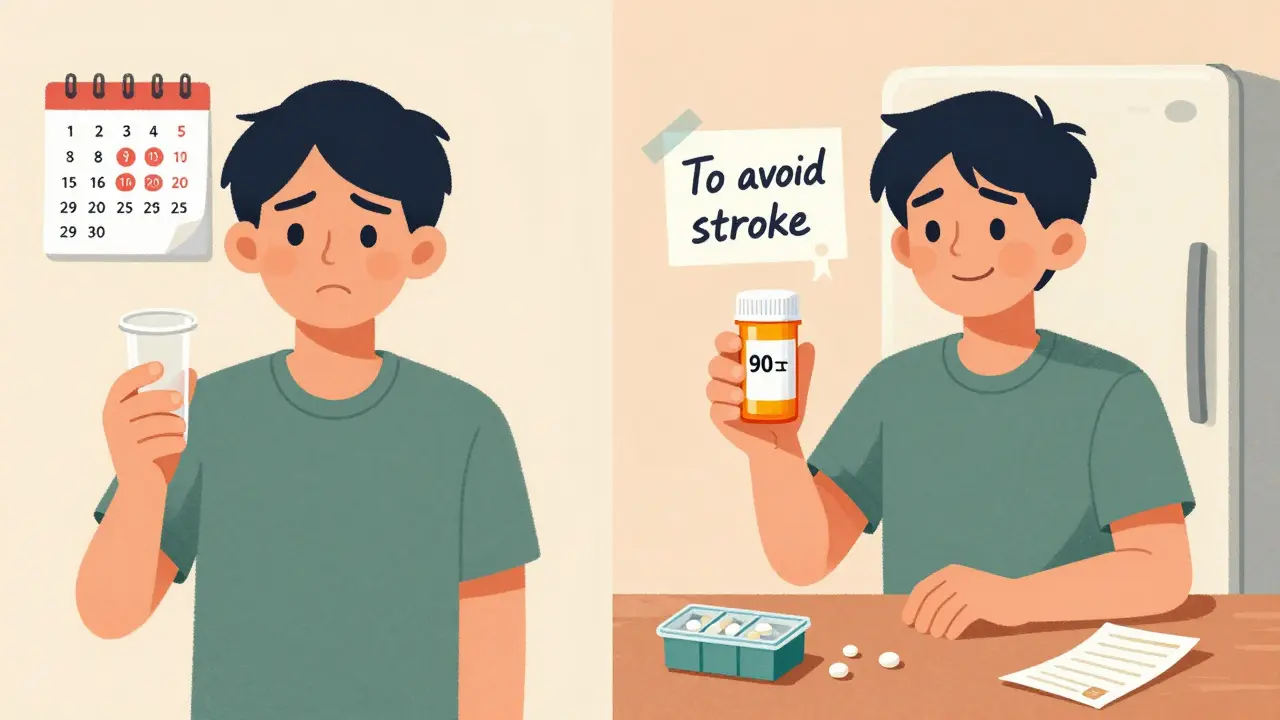
- Know your ‘why’ - Write down why you’re taking this med. ‘To avoid a stroke.’ ‘To keep my kidneys working.’ Put it on your fridge. Read it when you’re tempted to skip.
What Your Doctor Isn’t Telling You
Most doctors don’t measure adherence in real time. They assume you’re fine. But here’s what they should be asking:
- ‘What’s the hardest part about taking your meds?’
- ‘Have you ever stopped taking them because you didn’t feel like you needed them?’
- ‘How do you keep track?’
If they don’t ask, ask them. Say: ‘I want to make sure I’m doing this right. Can we check my adherence?’
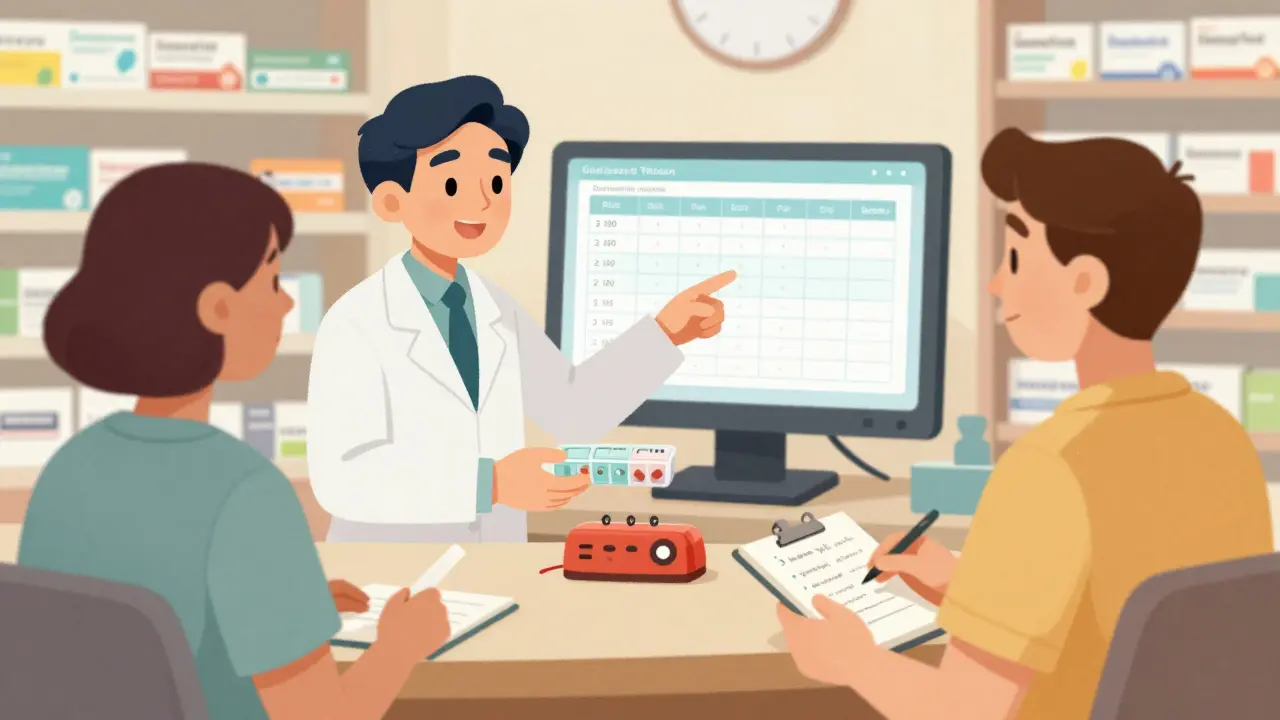
Pharmacists are your secret weapon. They see your refill history. They know if you’re picking up meds every 30 days or every 60. They can spot gaps before you even notice. Talk to them. Don’t wait for your doctor’s visit.
Final Thought: You’re Not Failing. Your System Might Be.
Missing a dose doesn’t make you lazy. It means your routine isn’t built for success. Adherence isn’t about being perfect. It’s about building a system that works even on the days you’re tired, busy, or overwhelmed.
Start with the checklist. Track one thing this week. Maybe it’s your pillbox. Maybe it’s your refill date. Maybe it’s asking your pharmacist one question.
Small steps. Real results. Your health doesn’t need perfection. It just needs consistency.
What is the best way to measure medication adherence at home?
The most practical way at home is using a 7-day pill organizer with alarms and tracking your pharmacy refill dates. Combine that with the MARS-5 questionnaire-a 5-question self-check you can find online. If your refill rate drops below 80% over 6 months, or your MARS score is below 4, you’re at risk. These tools don’t need tech or apps-just honesty and consistency.
Is taking my meds 7 out of 10 days good enough?
No. For chronic conditions like high blood pressure, diabetes, or cholesterol, you need to take your meds at least 80% of the time over a 6-month period to get the full benefit. That’s 144 out of 180 days. Taking them 7 out of 10 days adds up to 70%-which is below the threshold. Studies show even small gaps increase your risk of complications. Don’t wait for a crisis to realize you’re not on track.
Why do I keep forgetting my meds even though I set reminders?
Reminders only work if they’re tied to a strong daily habit. If you set an alarm for 8 a.m. but don’t eat breakfast until 10 a.m., your brain doesn’t link the two. Try linking your pill to something unavoidable-brushing your teeth, using the bathroom, or sitting down for lunch. Also, if you’re taking more than 3 pills a day, use a pillbox. Your brain can’t track dozens of pills. Your organizer can.
Can I use my pharmacy app to track adherence?
Yes-but only partially. Your pharmacy app shows when you picked up your meds, not when you took them. If you refill on time but never open the bottle, the app thinks you’re doing great. Use it as a starting point, not the full picture. Pair it with a pillbox and a weekly self-check. That’s the real way to know.
What if I can’t afford my meds?
You’re not alone. Talk to your pharmacist. Ask if there’s a generic version. Many brands have cheaper equivalents. Ask about patient assistance programs-pharmaceutical companies often give free or low-cost meds to people who qualify. In New Zealand, the government subsidizes many chronic meds. Check PHARMAC’s website. Never skip doses because of cost. There are always options. Your health is worth asking for help.
How do I know if my doctor is tracking my adherence?
Most don’t-unless you’re in a large health network. Ask directly: ‘Do you track how often I take my meds?’ If they say yes, ask how. If they say no, ask if they can check your refill history. Many clinics now use electronic health records that pull pharmacy data. But they won’t look unless you bring it up. Be the one to start the conversation.
Is it okay to stop my meds if I feel better?
Never stop without talking to your doctor. Many chronic meds-like those for blood pressure, cholesterol, or thyroid-work quietly. You don’t feel them working, but they’re preventing damage. Stopping can cause rebound effects: your blood pressure can spike, your cholesterol can climb, your thyroid can go haywire. Feeling better is a sign the meds are working-not that you don’t need them anymore.
Roshan Joy
January 11, 2026 AT 05:34Love this checklist. I use a 7-day pillbox with alarms and it’s a game-changer. Took me 3 months to get used to it, but now I don’t even think about it. Just grab, swallow, move on. My BP’s been stable for a year now. No more ER visits. Small habits, big wins.
Priya Patel
January 12, 2026 AT 16:41OMG YES. I used to skip my statins because I ‘felt fine’… until I had that scare last year. Now I’ve got a sticky note on my mirror that says ‘YOUR KIDNEYS THANK YOU’. It’s cheesy but it works. 🙏
Jason Shriner
January 12, 2026 AT 20:57so like… we’re supposed to be superheroes now? take pills like it’s a daily ritual? and if you miss one, you’re basically a walking time bomb? chill. the system’s broken, not me.
Jennifer Littler
January 14, 2026 AT 16:01Proportion of Days Covered (PDC) is the gold standard in clinical pharmacy practice. While self-report tools like MARS-5 have acceptable sensitivity, they suffer from recall bias. Pharmacy claims data, when paired with electronic adherence monitoring (e.g., MEMS caps), provides a more objective metric-but cost and scalability remain barriers in primary care settings.
Alfred Schmidt
January 16, 2026 AT 05:57YOU’RE ALL MISSING THE POINT!! IT’S NOT ABOUT PILLS OR ALARMS!! IT’S ABOUT A CULTURE THAT TREATS CHRONIC ILLNESS LIKE A PERSONAL FAILURE!! THEY GIVE YOU A 30-DAY SCRIPT AND EXPECT YOU TO BE PERFECT?? WHAT ABOUT THE FACT THAT YOU NEED TO WORK THREE JOBS JUST TO PAY FOR THE MEDS?? THIS CHECKLIST IS A JOKE IF YOU DON’T FIX THE COST FIRST!!
Alex Smith
January 16, 2026 AT 13:46Hey, I get the frustration-but let’s not throw the baby out with the bathwater. The checklist isn’t blaming you; it’s giving you tools to fight the system. If cost’s the issue, ask your pharmacist about patient assistance programs. I’ve helped 3 people get free insulin just by asking. You don’t have to suffer in silence. You just have to speak up.
Adewumi Gbotemi
January 18, 2026 AT 04:21in Nigeria, many people just buy one pill at a time because they can’t afford a whole month. so refill rate means nothing. but they still try. i think the real problem is not the person, it’s the system that makes health a luxury.
Michael Patterson
January 20, 2026 AT 00:45Look, I read this whole thing and honestly? Most of this is just common sense wrapped in jargon. You don’t need a 5-point checklist to know you should take your meds. You just need to be responsible. People who forget are just lazy. And don’t even get me started on those ‘pillbox alarms’-I’ve seen people use them and still forget. It’s not the tool, it’s the person.
Madhav Malhotra
January 21, 2026 AT 07:38in India, we have this thing called ‘dadi ki dawa’-grandma’s remedy. Many people switch to herbal stuff because pills are expensive or make them feel weird. But I tell my cousins: don’t stop. Talk to the pharmacist. Maybe try a generic. I’ve seen people get blood pressure meds for 10 rupees a month. It’s possible. Just ask.
Sean Feng
January 23, 2026 AT 05:06Why are we even talking about this? Take your pills or don’t. It’s your body. Your choice. Stop making it a moral issue.
Priscilla Kraft
January 23, 2026 AT 13:09My mom has diabetes and she uses a pillbox with a timer. It beeps at 7am, 1pm, and 8pm. She doesn’t even look at it anymore-it’s just part of her routine. She also texts me every Sunday to say ‘took all my pills this week’. It’s not tech, it’s love. 💖
Vincent Clarizio
January 23, 2026 AT 15:53Let’s be real-this whole adherence narrative is just another way for Big Pharma and insurance companies to shift blame onto the patient. You want to know why people miss doses? Because the system is designed to fail them. Doctors don’t have time. Pharmacists are overworked. Pills cost more than rent in some places. And now we’re supposed to track our own compliance with a checklist? Please. This isn’t empowerment-it’s gaslighting disguised as wellness.
Sam Davies
January 24, 2026 AT 00:13Oh, how quaint. A checklist. How very… bourgeois. In my circles, we just take our meds when we remember-or when the pain gets unbearable. The rest is just performative health culture. I mean, really. Do you think a man in Lagos is worrying about PDC? No. He’s worrying about eating. But hey, here’s your 80% metric. Bravo.
Vincent Clarizio
January 24, 2026 AT 02:17And yet, here we are, debating pillboxes like it’s some kind of moral victory. The real tragedy? The people who need this the most can’t even afford the damn box. You want adherence? Fix the price. Fix the access. Fix the care. Not the patient.