Prior Authorization: How Providers Secure Approval for Generics
 Mar, 12 2026
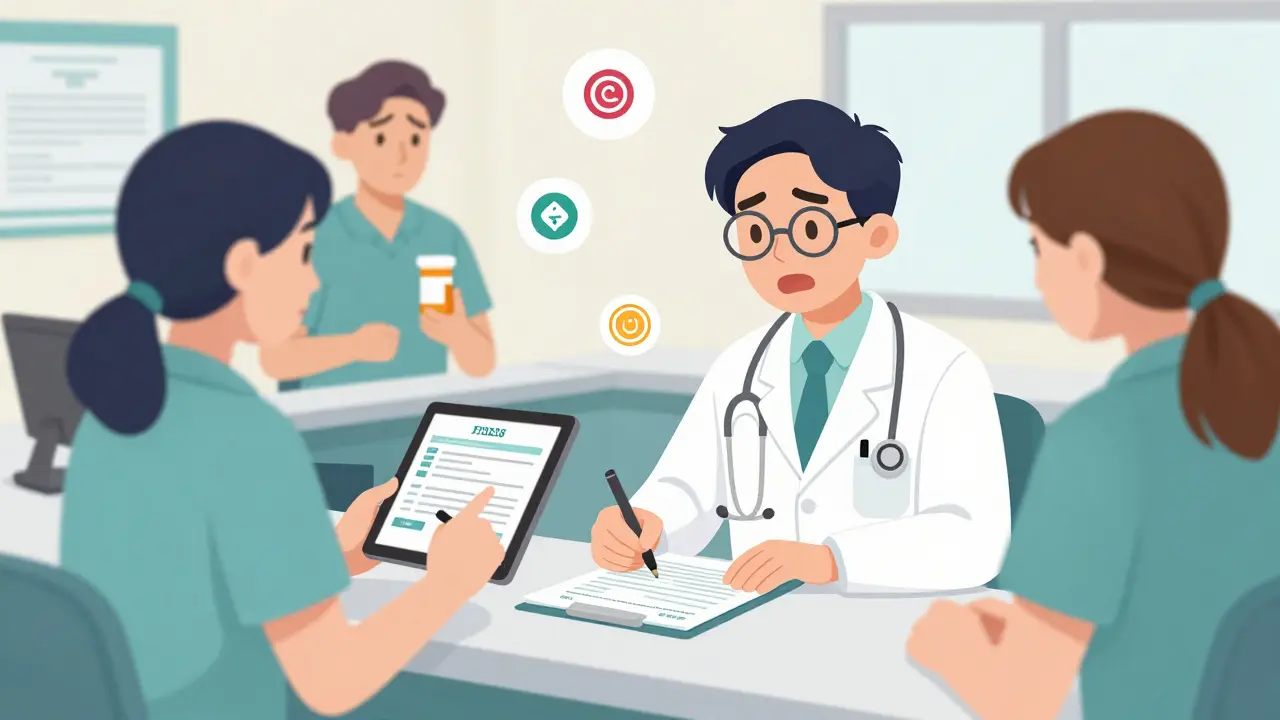
When a doctor prescribes a generic medication, many assume the patient can walk right into the pharmacy and pick it up. But for nearly one in five prescriptions, that’s not how it works. Prior authorization - a bureaucratic gatekeeper built into the U.S. healthcare system - often stands between the prescription and the pill bottle. For providers, it’s not just paperwork. It’s a daily grind that eats into patient care time, delays treatment, and sometimes forces patients to go without needed meds. Yet, when done right, it can keep costs down and prevent misuse. Here’s how providers actually get generic medications approved.
Why Generics Need Prior Authorization at All
You’d think generics - cheaper, FDA-approved copies of brand-name drugs - would be automatically covered. But that’s not the case. Insurance plans and pharmacy benefit managers (PBMs) use prior authorization to control how generics are used. The goal isn’t to block them. It’s to steer patients toward the most cost-effective version when multiple options exist. For example, if a patient needs a proton pump inhibitor like omeprazole, the plan might prefer one generic brand over another because it’s slightly cheaper. Or if the patient requests a 90-day supply when the plan only allows 30 days without approval, the provider must justify why. Even more confusing: some plans restrict which generic manufacturer they’ll cover. If a patient had a bad reaction to one generic version but needs to switch, the provider must prove it wasn’t just a coincidence. According to the American Medical Association, 92.7% of physicians say prior authorization requests have gone up over the last five years. And 28% of all prior authorization requests involve generic drugs - mostly because of quantity limits, duration rules, or therapeutic interchange restrictions. That means even simple, low-cost drugs are caught in the system.The Step-by-Step Process: What Providers Actually Do
Securing approval isn’t a single step. It’s a chain of actions, and every payer has slightly different rules. First, the provider must document why the specific generic is needed. This isn’t just a note like “patient needs medication.” It’s specific: “Patient developed severe nausea and vomiting with the formulary-preferred generic pantoprazole. Switched to omeprazole 40mg daily with documented improvement in reflux symptoms over 6 weeks.” That level of detail matters. Then comes submission. Most insurers - 78% of commercial plans and 63% of Medicare Part D - require electronic submission through systems like CoverMyMeds or Surescripts. Faxes are still used by 22% of plans, but they’re slower. Phone requests? Only 5%, but they happen. The faster the submission, the better the odds. Electronic systems cut processing time by 35-50% compared to fax. After submission, three things can happen:- Auto-approval: If the request matches the plan’s rules exactly - like staying under quantity limits and having no red flags - 41% of generic requests get approved automatically, according to Judi Health.
- Manual review: If there’s a mismatch, the request goes to a pharmacist or clinical reviewer. They check for documented adverse reactions, failed trials of other generics, or clinical evidence supporting off-label use.
- Denial: The most common reasons? Missing documentation (42%), failure to show medical necessity (38%), or not trying the plan’s preferred generic first (20%).
Differences Between Payers
Not all insurance plans are created equal. Medicaid, Medicare Part D, and commercial insurers each have their own rules. - Medicaid: 67% of fee-for-service programs require prior authorization for select generics. But urgent requests must be approved within 24 hours. - Medicare Part D: 89% require prior authorization for some generics. Since January 2024, they must respond to standard requests within 72 hours thanks to federal law. - Commercial insurers: 93% require prior authorization for at least some generics. Approval timelines vary from 5-10 business days. But here’s the kicker: generic requests are often approved faster than brand-name ones. While brand-name drugs might take 3-7 days, generics typically clear in 1-3 days because they’re lower risk and cheaper. One provider on Reddit shared how they got omeprazole approved in just two business days by attaching the endoscopy report showing Barrett’s esophagus - a clear clinical reason for long-term use. That’s the kind of detail that works.
What Goes Into the Documentation
The paperwork isn’t optional. It’s the key to approval. The Pennsylvania Department of Human Services says it must include: chart notes, lab results, diagnostic tests like MRIs or radiographs, and any prior treatment records. For generics, providers need to focus on three things:- Adverse reactions: Did the patient have vomiting, rash, or dizziness with the preferred generic? Document it.
- Therapeutic failure: Did the patient’s condition worsen on the formulary drug? Show lab values or symptom logs.
- Specific formulation needs: Is the patient allergic to dyes in one generic but not another? Is a liquid form needed because they can’t swallow pills? Say it clearly.
Real-World Frustrations
Not every story ends well. On Sermo, a physician wrote about a patient who needed sitagliptin after metformin caused GI distress. The insurer denied it because they required proof of three failed medications - even though the American Diabetes Association says metformin intolerance alone is enough to switch. That’s the kind of red tape that makes providers angry. Another common pain point: patients can’t afford to pay out-of-pocket while waiting. A survey of 1,200 pharmacists found 83% have seen patients go without medication for days or weeks because they couldn’t cover the cost upfront. That’s not just inconvenient - it’s dangerous. And delays? 56% of physicians say they’ve had to write bridge prescriptions - short-term, non-formulary meds - just to keep patients stable while waiting for approval. That’s a workaround, not a solution.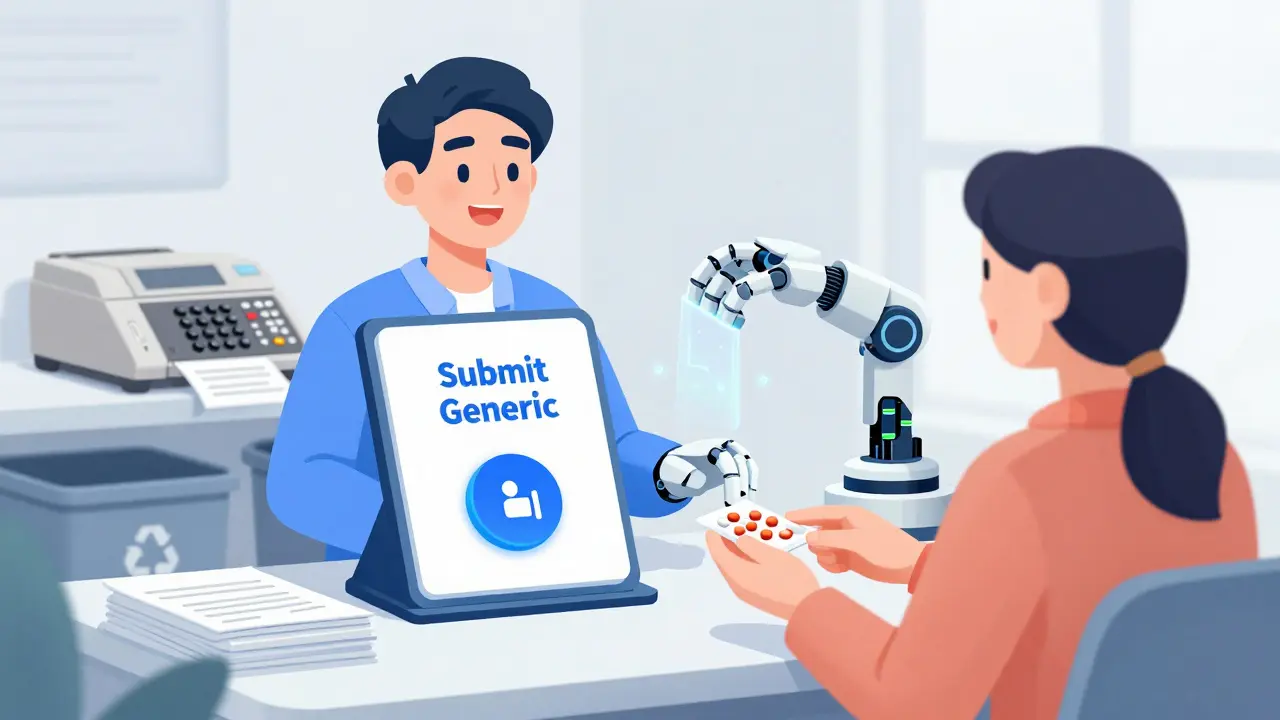
How Providers Are Fighting Back
Smart practices aren’t just reacting - they’re adapting.- Dedicated staff: MGMA data shows medical assistants handle 78% of routine prior auth requests under physician supervision. That frees up doctors to see patients.
- Electronic tools: Systems like CoverMyMeds integrate with EHRs. One click can pull in lab results, past prescriptions, and patient history.
- Payer checklists: Keeping a spreadsheet with each insurer’s requirements - what they accept, how long they take, who to call - saves hours.
- Relationships: Calling the payer’s prior auth line and building rapport with a rep can make a difference. One provider told me they got a denied request overturned just by talking to the same person who reviewed it.
What’s Changing in 2026
The system is shifting - slowly, but it is. - As of July 2024, Medicaid managed care plans must use standardized electronic transactions. That’s expected to cut processing time by 25%. - Express Scripts reported a 40% increase in auto-approvals for generics in 2023. More plans are adopting “if it fits the rules, approve it” logic. - McKinsey predicts that by 2026, 75% of generic prior auth decisions will be handled by AI systems. That could mean approvals in under 24 hours. But there’s a dark side. The Congressional Budget Office warns that if nothing changes, provider administrative costs could hit $1.2 billion by 2026. And the AMA is pushing for state laws to eliminate prior authorization for generics that have been on the market for over five years with multiple manufacturers. Their argument? If there are 10 identical versions of a drug, why require approval at all?Bottom Line: It’s Not About Blocking Generics - It’s About Control
Prior authorization isn’t evil. It prevents misuse. It stops patients from taking PPIs for years when they only need eight weeks. It keeps insurers from overpaying for brand-name drugs when generics exist. But right now, the system is too slow, too inconsistent, and too hard on providers and patients. The fix isn’t to eliminate it. It’s to make it smarter - automated where possible, simplified where appropriate, and human-centered when it matters most. Providers who master this system - who document clearly, submit electronically, and know their payer’s rules - get approvals faster. Patients get their meds on time. And the system works the way it’s supposed to: keeping costs down without sacrificing care.Do all generic medications require prior authorization?
No. Most generic medications are covered without prior authorization. Prior authorization is typically only required when there are multiple generic options and the insurance plan prefers one, when quantity limits are exceeded (like requesting a 90-day supply), when duration limits apply (such as long-term use of proton pump inhibitors), or when the generic is being used for an off-label purpose. For many common generics - like lisinopril or metformin - no approval is needed at all.
How long does prior authorization for generics usually take?
For generics, approval typically takes 1-3 business days when documentation is complete. This is faster than brand-name drugs, which often take 3-7 days. Electronic submissions can cut this time in half. Urgent cases (like cancer or heart conditions) must be approved within 24 hours under Medicaid and Medicare rules. If the request is denied or needs more info, the process can stretch to 7-14 days.
Why are some generic medications denied even when they’re cheaper?
Because insurers don’t just care about cost - they care about control. Some plans restrict which generic manufacturer they cover. If a patient had a bad reaction to one brand of generic omeprazole but needs another, the provider must prove it’s medically necessary. Also, if the patient’s condition doesn’t meet the plan’s criteria - like requesting a 90-day supply without documentation - the request is denied, even if the drug is cheap. It’s about following the rules, not just price.
Can patients pay out-of-pocket while waiting for approval?
Yes, but many can’t afford to. A survey of 1,200 pharmacists found that 83% have seen patients go without medication for days or weeks because they couldn’t pay the full price upfront. Some providers help by writing short-term bridge prescriptions or connecting patients with patient assistance programs. But the system doesn’t make it easy - and that delay can hurt health outcomes.
What’s the best way for providers to improve approval rates?
Use electronic submission tools like CoverMyMeds or Surescripts. Maintain standardized documentation templates for common generic requests. Train a medical assistant to handle routine requests. Keep payer-specific checklists handy. And build relationships with payer reps - a quick phone call can sometimes overturn a denial. Practices that do this see approval rates jump from under 60% to over 85%.
Dylan Patrick
March 13, 2026 AT 16:39This system is broken. I spent three days just getting a 10mg lisinopril approved. Three. Days. For a drug that costs $4 and has been around since the 80s.
My patient didn’t get her meds. Her BP spiked. She ended up in the ER. All because some middle manager in a cubicle in Ohio decided she needed "clinical justification" for a generic.
We’re not saving money. We’re just making people suffer while bureaucrats count beans.
Kathy Leslie
March 15, 2026 AT 08:20I feel you. I had a mom call me crying because her kid couldn’t get his ADHD med because the PBM only covered one generic brand and she’d had a bad reaction to it. We had to fax, call, resubmit, call again. Took 11 days.
Meanwhile, the kid was falling apart in school. And the insurance company? They sent a form letter saying "we’re working to improve efficiency."
Efficiency? We’re literally watching people get sicker while we fill out checkboxes.
Jimmy V
March 17, 2026 AT 05:16Stop whining. If you documented properly, you wouldn’t have issues. I use a template. I click submit. Approval in 47 minutes. End of story.
It’s not the system. It’s the provider. You’re lazy. Stop blaming PBMs and start using the tools that WORK.
Scott Smith
March 18, 2026 AT 08:13Jimmy V has a point - but he’s also ignoring the structural chaos. Every insurer has different rules. One wants lab results, another wants a signed attestation, another demands a prior script from 2021.
There’s no standard. No automation. No interoperability. And now we’re supposed to be superheroes who juggle 17 different portals while seeing 30 patients a day?
It’s not about being lazy. It’s about being set up to fail.
Sally Lloyd
March 19, 2026 AT 13:02Did you know PBMs are owned by insurance conglomerates that also own pharmacy chains? The same company that denies your generic approval? That’s the same company that owns the pharmacy where you have to buy the drug at full price if you pay out-of-pocket.
It’s not a system. It’s a racket. And the "cost savings"? They’re not going to patients. They’re going to shareholders.
They want you to think it’s about safety. It’s about profit. Always profit.
Adam M
March 20, 2026 AT 07:12Anyone who still uses fax is an amateur. If you’re not on CoverMyMeds or Surescripts, you’re doing it wrong. Period.
Noluthando Devour Mamabolo
March 20, 2026 AT 23:28AI-driven prior auth pipelines are the future. We’re already seeing 80% auto-approvals in our EHR-integrated workflow. The key? Structured data capture. I use ICD-10 + RxNorm + SNOMED CT embedded in templated notes.
When you encode the clinical narrative with ontological precision, the system doesn’t just approve - it anticipates. This isn’t paperwork. It’s semantic interoperability.
Stop treating this like a clerical chore. It’s clinical informatics.
Leah Dobbin
March 22, 2026 AT 10:00I used to work at a PBM. Let me tell you - these "generic" approvals aren’t about cost. They’re about market share. The PBM has a deal with one manufacturer. They get kickbacks. The rest? Denied. Even if it’s identical.
Doctors don’t realize they’re being manipulated. The system isn’t broken - it’s engineered.
Ali Hughey
March 23, 2026 AT 14:10THEY’RE LYING TO YOU!!!
They say "prior auth keeps costs down" - but the real cost? It’s in the suicide rates of patients who don’t get their meds. In the ER visits. In the lost wages. In the broken families.
And the worst part? The same people who designed this system? They’re on the board of the PBM. They drive Teslas. They have five houses.
Meanwhile, your patient is choosing between insulin and rent.
THIS ISN’T HEALTHCARE. IT’S CAPITALISM WITH A STETHOSCOPE.
Alex MC
March 23, 2026 AT 22:53It’s frustrating, yes - but we’re not powerless.
I trained a medical assistant to handle 80% of prior auths. We use templates. We keep a Google Sheet with each payer’s requirements. We call one rep every week - just to say hi.
Approval rate went from 58% to 89%. Time dropped from 5 days to 1.5.
Small changes. Consistent effort. It works. We can fix this - one click at a time.
rakesh sabharwal
March 25, 2026 AT 06:19It’s simple: if you’re prescribing generics, you’re not doing real medicine. Real medicine is about brand-name precision, clinical nuance, and proprietary formulations.
Generics are for people who can’t afford to be treated properly. If you’re using them, you’re part of the problem - not the solution.
Stop pandering to cost-cutting. Medicine is an art. Not a spreadsheet.