Risk perception: how patients assess generic drug safety concerns
 Mar, 31 2026
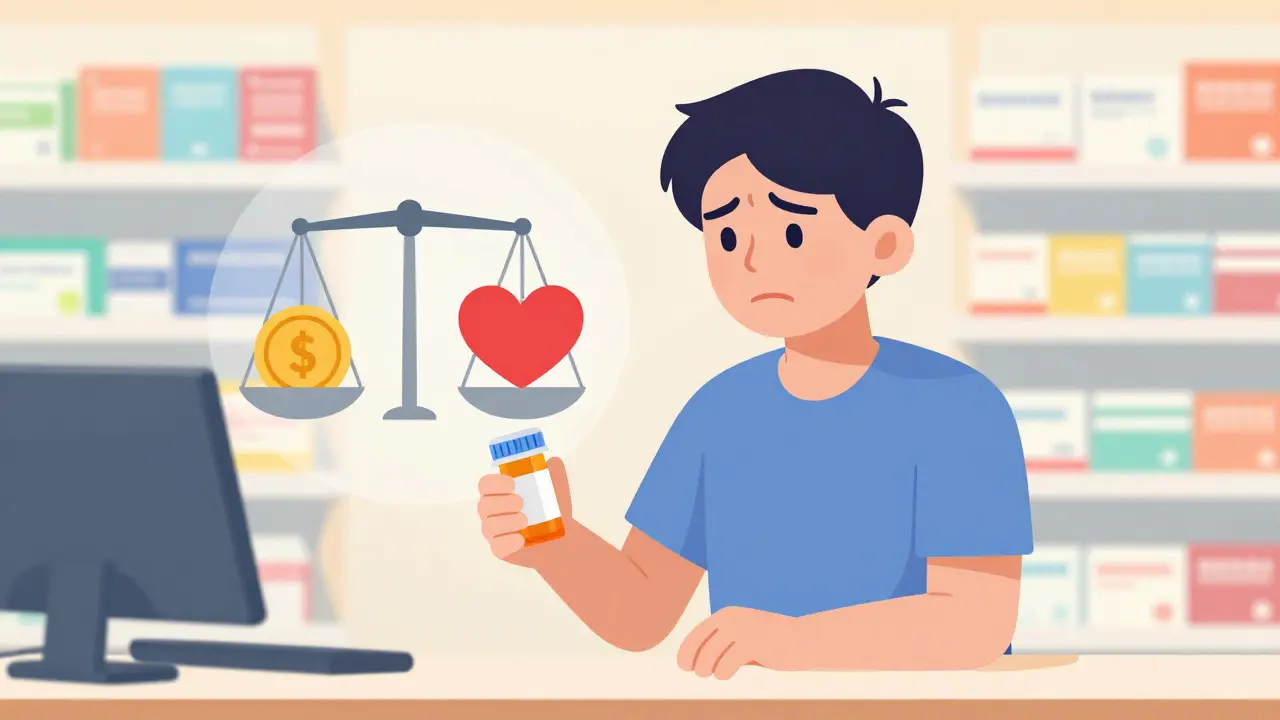
You probably know that generic drugs cost less than their brand-name counterparts. In fact, they save billions annually. Yet, when you walk into a pharmacy, there is still that quiet moment of hesitation. You look at the prescription label, see a different manufacturer name, and wonder: is this safe? This hesitation is called risk perception, specifically regarding how patients assess generic safety.
This isn't just in your head. It's a documented psychological phenomenon where the cost of a medication influences how trustworthy you think it is. Many people assume cheap means low quality. But does the science back up that fear? The short answer is no, but understanding why that belief exists is crucial for your health decisions.
The Science Behind Generic Approval
To understand the safety profile, you have to start with the regulations. In the United States, the path for these medications changed drastically with the The Hatch-Waxman Act
A law establishing modern generic approval pathways
Drug Price Competition and Term Restoration Act. Passed in 1984, it created the modern pathway that allows us to buy these alternatives today.
The U.S. Food and Drug Administration
Federal agency regulating food, drugs, and cosmetics sets strict rules. Before any generic version hits the shelf, it must prove bioequivalence. This is a specific scientific term meaning the generic performs the same way in the body as the original brand-name drug.
- The active ingredient must be identical.
- Dosage form and strength must match.
- Absorption rates must fall within an 80-125% range of the brand drug.
If it doesn't meet these standards, the FDA simply won't approve it. So why do patients remain skeptical? Often, the word "generic" itself triggers a bias. Dr. Aaron S. Kesselheim from Harvard Medical School has shown that higher prices often trigger a cognitive bias where people equate cost with effectiveness. You might feel a branded pill is stronger because it costs more, even if the chemistry is the same.
Who Worries Most About Safety?
Risk perception isn't uniform across everyone. Some groups are statistically much more likely to worry than others. National surveys indicate that between 20% and 40% of patients express uncertainty about whether these alternatives work as well as originals. However, this number shifts dramatically depending on who you ask.
Research highlights distinct demographic patterns:
| Demographic Group | Safety Concern Level | Key Observation |
|---|---|---|
| Low Health Literacy | High | 50% believe generics are less effective |
| Patients over 60 | Moderate-High | Heightened concern about side effects |
| Black and Hispanic Patients | High | 1.8 times more likely to express concerns |
| Rural Populations | Moderate | Fear lower potency requiring higher doses |
Education plays a massive role here. People with lower educational attainment are 1.73 times more likely to perceive these medications as different from branded versions. Interestingly, unemployed or retired individuals sometimes show more positive attitudes than employed ones, possibly due to different pressures regarding medication costs.
The Disconnect Between Data and Experience
There is a gap between what clinical trials say and what happens in daily life. While the data supports safety, anecdotal reports fuel doubt. Have you ever heard someone say, "I switched to the cheap one and my numbers went up"? Stories like this spread quickly in communities and online forums.
These experiences can be real. Sometimes, inert ingredients-fillers or dyes-change between brands. If you are sensitive to lactose or certain colors, a switch could cause reactions unrelated to the medicine itself. A 2024 study using machine learning found that age correlates with concern over side effects, suggesting older adults may have more sensitive systems reacting to formulation changes.
However, large-scale data tells a different story. The Association for Accessible Medicines reports that generics account for 90% of all prescriptions filled in the U.S. despite the lingering fear. If safety was actually compromised, utilization would drop much faster. Instead, we see a conflict where nearly 50% of patients requested brand dispensing in the previous year despite agreeing that generics offer better value.
How Healthcare Providers Influence Trust
Your doctor's attitude matters significantly. Dr. William Shrank's meta-analysis identified physician communication as the strongest predictor of whether a patient accepts a generic. If your provider explains the bioequivalence concept, you are 3.2 times more likely to take the medication.
The timing of this conversation is also critical. Patients who receive explanations about safety right when the prescription is written are 2.8 times more likely to accept it. Without that reassurance, the default assumption is skepticism.
- Pharmacists play a unique role. Counseling sessions increase adherence by 37%.
- Educational Materials matter too. Resources with high health literacy scores get better engagement.
- Trust Gaps exist where patients feel providers prioritize insurance savings over their personal experience.
Despite this, time is tight. The average consultation lasts only 47 seconds for substitutions, leaving little room for deep reassurance.
Economic Impact of Safety Misconceptions
We need to talk about the money. It's not just pocket change; it affects the entire healthcare system. When patients refuse generics due to perceived risks, they pay more. The Congressional Budget Office estimates that overcoming barriers to usage could save $185 billion over the next decade.
Insurance plans have noticed this. Those that implemented $0 copays for generics saw an 18% spike in usage. Conversely, brand manufacturers now sell their own products under generic names, known as authorized generics. This confuses patients further-why would a company sell its own product cheaper unless it's the same? Paradoxically, this tactic sometimes reinforces the idea that the two aren't equal.
The financial stakes are high enough that the FDA continues investing in monitoring. Their Generic Drug User Fee Amendments program has poured $150 million into quality checks since 2012, ensuring safety standards remain high.

Addressing Complex Medications
Not all drugs are simple pills. Inhalers, topical creams, and extended-release tablets are harder to copy perfectly. These complex generics present a legitimate challenge. Bioequivalence is harder to measure for things like an inhaler where how you breathe affects the dose.
Survey data from 2023 indicates that 48% of patients express specific concerns about these complex forms compared to simpler oral solids. This is a rational distinction. For complex delivery systems, slight differences in design might actually impact delivery efficacy. Acknowledging this nuance helps maintain credibility with patients who know their conditions well.
Future Outlook for Patient Confidence
We are moving toward better tools. New predictive models can identify which patients are at high risk for rejecting generics with 87% accuracy. This allows doctors to target their education efforts precisely rather than lecturing everyone equally.
Multilingual campaigns are also showing results. Recent outreach plans targeting Spanish-speaking populations noted a 15% reduction in safety concerns. As information reaches more people in accessible formats, the trust gap should theoretically shrink.
Dr. Randall Stafford of Stanford University noted in a 2022 editorial that until we address the psychological factors making patients perceive generics as riskier, we will continue to see suboptimal utilization. It is not just about proving chemical equivalence; it is about building emotional trust in the process.
Are generic drugs legally required to be the same as brand drugs?
Yes. The FDA requires generic drugs to contain the exact same active ingredient, strength, dosage form, and route of administration as the brand-name drug. They must also demonstrate bioequivalence.
Why do some patients feel generics don't work?
Perception often differs from physiology. Inactive ingredients like fillers can differ, which might affect absorption for some individuals. Additionally, cognitive bias links lower price with lower quality.
Does health literacy affect trust in generics?
Significantly. Studies show patients with inadequate health literacy are twice as likely to believe generics are less effective and less safe compared to those with higher literacy levels.
Can doctors influence patient choice regarding generics?
Absolutely. Physician communication is the strongest predictor. Explaining safety during the prescribing process increases acceptance by 2.8 times.
Are there safety concerns with complex generics like inhalers?
There are higher concerns here. Demonstrating bioequivalence is more difficult for complex delivery devices, and roughly 48% of patients express specific worries about these types of products.
Julian Soro
April 1, 2026 AT 00:13I appreciate the breakdown of how price influences trust in medication. It is clear that many people struggle with the concept of bioequivalence during consultations. My own experience has shown me that hesitation is a normal reaction. The economic impact section highlights a critical issue for the entire system. We cannot ignore the psychological barriers patients face daily.
Rod Farren
April 1, 2026 AT 03:37The pharmacokinetic profile dictates that absorption rates fall within the standard therapeutic window. Bioavailability data supports the claim of interchangeability for most solid oral dosage forms. Clinical trials demonstrate non-inferiority margins well before market release. Regulatory frameworks enforce strict identity testing protocols on active pharmaceutical ingredients. Generic substitution requires maintaining peak plasma concentration consistency.
Molly O'Donnell
April 2, 2026 AT 02:17You are overthinking the chemistry completely.
Jenny Gardner
April 3, 2026 AT 10:16This information is absolutely vital!! Health literacy impacts outcomes significantly!!! I have seen too many people refuse cheap meds unnecessarily!!! The gap between data and patient experience is huge!!
Eleanor Black
April 4, 2026 AT 14:44I have been thinking about this issue for quite some time now. It really matters that we understand the nuance involved here. Many people feel anxious when they see a different label. This anxiety is often justified by past experiences with healthcare systems. We must remember that trust is built over years of consistent care. The statistics mentioned in the post are incredibly informative indeed. It is fascinating how price influences our perception of quality so much. Economic factors play a significant role in psychological acceptance too. Healthcare providers need to spend more time explaining these details. Rushing through a consultation can do more harm than good sometimes. Patients deserve to feel heard regarding their specific concerns fully. The FDA regulations are strict but not always communicated clearly. Education campaigns could bridge this gap effectively in the future. We should focus on building emotional trust rather than just facts. That is my final thought on the matter for today. :)
Cara Duncan
April 6, 2026 AT 01:46I totally agree with your points above! 😊💊 Trust is such a big deal in pharmacy! We all want the best for ourselves right! 🌟 Keep spreading the awareness everyone! ❤️
Christopher Beeson
April 7, 2026 AT 12:17The illusion of efficacy derived from monetary cost is a tragic human flaw. Consumers seek validation through expenditure rather than clinical outcome. Society creates a hierarchy of worth based on manufacturing origin labels. This cognitive bias perpetuates inefficiency within medical infrastructure.
Rocky Pabillore
April 8, 2026 AT 07:21While you attempt intellectual depth, your analysis lacks real-world application. Most individuals simply want assurance without needing a philosophy lecture. The practical reality is simpler than your dramatic phrasing suggests. We rely on established guidelines rather than abstract theories.
Sharon Munger
April 8, 2026 AT 21:31Cost is king though. Savings matter more to families.
Cullen Zelenka
April 9, 2026 AT 17:40Exactly. The financial relief is undeniable for most households. Generics allow access to treatment for people who otherwise could not afford it. Optimism about widespread adoption remains strong despite hurdles. Everyone benefits from lower overall healthcare spending eventually.
Owen Barnes
April 10, 2026 AT 22:29i think thera are plenty of ppl who dont trust brands anyway. why pay more fr tha same thing. its simple math honestly. doctors shud explain better tho.
James DeZego
April 11, 2026 AT 19:16Great observation on the pricing difference! 🙂 Explaining things clearly does help a lot! 👍 Thanks for sharing your take on the situation!
Russel Sarong
April 12, 2026 AT 00:41Why do we fear change??!! Why is the label color enough to stop us??!! Safety is proven yet doubt persists!! We must educate ourselves constantly!!!
Arun Kumar
April 12, 2026 AT 07:04Fear often stems from lack of control over the process. Inclusivity in health education helps reduce this anxiety significantly. Every person deserves the right to feel safe taking medication. We can build a better system together.
Callie Bartley
April 13, 2026 AT 20:25The whole industry lies to keep costs down. Big pharma pushes these cheap options onto people blindly. We will never truly know if it works until we die. This feels like a massive experiment on the public health system.