Severe Pancreatitis from Medications: Warning Signs and Treatment
 Dec, 1 2025
When you take a new medication, you expect relief-not a life-threatening emergency. But for some people, common drugs can trigger severe pancreatitis, a dangerous inflammation of the pancreas that kills up to 30% of those affected. This isn’t rare. Around 1 in 30 cases of acute pancreatitis comes from medications, and when it turns severe, the risk of death jumps dramatically. The worst part? Many doctors miss it. Symptoms look like stomach flu, heartburn, or gallbladder trouble. By the time it’s caught, it’s often too late.
What Exactly Is Drug-Induced Severe Pancreatitis?
Your pancreas sits behind your stomach. It makes digestive enzymes and insulin. Normally, these enzymes stay inactive until they reach your small intestine. But when a drug messes with this system, the enzymes activate inside the pancreas itself. They start digesting your own tissue. That’s pancreatitis. When it’s severe, your body goes into overdrive. Organs start failing. Fluid leaks into your abdomen. Parts of your pancreas die. This isn’t just bad pain-it’s organ failure. About 20% of drug-induced cases become severe, and those numbers are rising. The FDA logged over 4,200 medication-linked pancreatitis cases in 2022 alone, up nearly 13% from the year before.Which Medications Are the Biggest Risks?
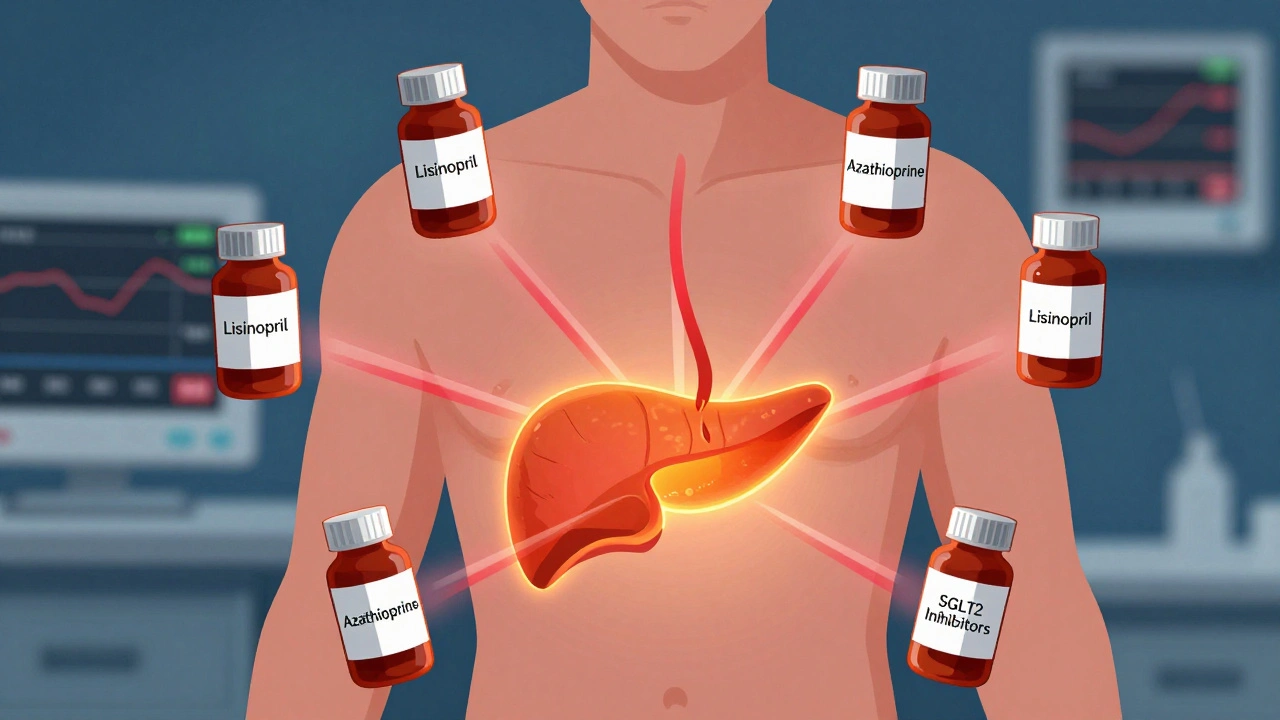
Not all drugs cause this. But eight classes have strong, repeated evidence linking them to severe pancreatitis:- ACE inhibitors like lisinopril and enalapril-used for high blood pressure
- Diuretics like furosemide and hydrochlorothiazide-water pills
- Antidiabetic drugs like exenatide (Byetta) and sitagliptin (Januvia)
- Statins like simvastatin and atorvastatin-cholesterol-lowering meds
- Valproic acid-used for seizures and bipolar disorder
- Azathioprine-an immunosuppressant for Crohn’s, lupus, or after transplants
- Oral contraceptives with ethinyl estradiol
- SGLT2 inhibitors like canagliflozin and dapagliflozin-newer diabetes drugs
Warning Signs You Can’t Ignore
The pain is the biggest red flag. It’s not your usual indigestion. It’s:- Intense, constant pain in the upper abdomen
- Radiating straight through to your back
- Worse after eating, especially fatty meals
- So severe it wakes you up at night
How Doctors Diagnose It
There’s no single test. Diagnosis comes from three things:- Symptoms matching pancreatitis
- Blood tests showing lipase levels at least three times above normal
- Timing-symptoms started within 4 weeks of starting the drug
Why This Is More Dangerous Than Other Types
Gallstones cause most pancreatitis cases. But drug-induced cases are deadlier. A 2022 study found 28% of drug-induced severe pancreatitis patients died within 30 days-compared to 18% for gallstone-related cases. Why?- People on these drugs are often older and on multiple medications, making treatment harder
- Doctors don’t suspect it, so treatment is delayed
- Some drugs make it worse-like NSAIDs or certain antibiotics used to treat infections that come with pancreatitis
What Happens in the Hospital
Treatment is fast and aggressive. There’s no magic pill. It’s about supporting your body while the pancreas heals.- Stop the drug immediately-within 24 hours of suspicion. Delaying increases complication risk by 37%.
- IV fluids-250-500 mL per hour to keep your blood pressure up and your pancreas perfused. Too little fluid = more tissue death.
- Pain control-acetaminophen first, then low-dose morphine if needed. Avoid meperidine-it can make things worse.
- Early feeding-you’ll be NPO (nothing by mouth) at first. But within 24-48 hours, doctors will start feeding you through a tube into your small intestine. Starving the pancreas doesn’t help. Feeding it gently does.
- Antibiotics-only if infection is confirmed. Don’t take them unless there’s clear proof of infected necrosis.
What Happens After You Leave the Hospital
You won’t be able to take the drug again. Ever. Rechallenge is too dangerous. But you’ll need to avoid other drugs in the same class. If you had pancreatitis from lisinopril, don’t switch to another ACE inhibitor. Try a different blood pressure med-like a calcium channel blocker. You’ll also need follow-up scans. Some people develop pseudocysts or strictures in the pancreatic duct. These can cause chronic pain or diabetes later. Blood sugar checks are important-pancreatitis can damage insulin-producing cells.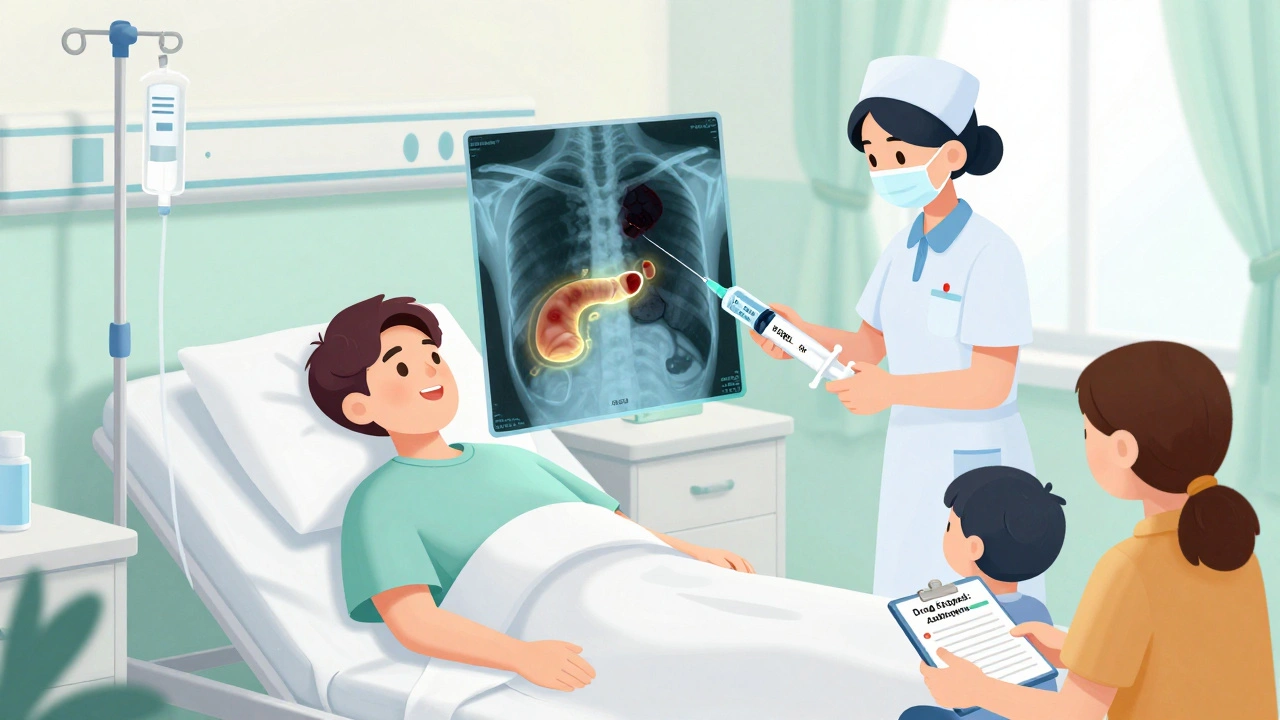
What You Can Do Right Now
If you’re on any of the high-risk drugs listed above and have new, persistent abdominal pain:- Don’t wait. Call your doctor today.
- Ask for a lipase test. Don’t accept “it’s just gas.”
- Bring your full medication list-every pill, supplement, and OTC drug.
- If your pain is severe or you’re vomiting, go to the ER. Don’t wait for an appointment.
Future Changes Are Coming
The FDA and EMA are adding stronger warnings. SGLT2 inhibitors now carry new pancreatitis alerts. The NIH just launched the Drug-Induced Pancreatitis Registry to track cases nationwide. Hospitals are starting automated alerts in their systems-if you’re on azathioprine and come in with abdominal pain, the computer flags it. There’s even research into genetic testing. If you’re about to start azathioprine, a simple blood test can check your TPMT gene. If you have a bad variant, your risk of pancreatitis jumps 10-fold. That test should be routine-but it’s not yet.Final Thought: Your Meds Might Be the Problem
We assume medications are safe. We trust doctors. We trust labels. But drug-induced pancreatitis is silent, slow, and deadly. It doesn’t care if you’ve been on the pill for years. It doesn’t care if your doctor said it was fine. If your body reacts, it reacts. If you’re on a high-risk drug and feel pain that won’t quit-don’t second-guess yourself. Demand a lipase test. Push back. Your life depends on catching it before it’s too late.Can you get pancreatitis from blood pressure meds?
Yes. ACE inhibitors like lisinopril and enalapril are among the most common drugs linked to pancreatitis. Cases often appear after months of use, not right away. If you develop persistent upper abdominal pain while taking one of these, ask your doctor to check your lipase levels. Stopping the drug usually leads to full recovery.
How long does it take for drug-induced pancreatitis to show up?
It can take anywhere from a few days to several months. For drugs like statins or ACE inhibitors, symptoms often appear after 7-14 days of use, but some cases occur after years. The key is timing: if symptoms started within 4 weeks of beginning a new medication, it’s considered likely drug-induced.
Is drug-induced pancreatitis reversible?
Yes, in most cases-if caught early. Stopping the offending drug allows the pancreas to heal completely in 65-75% of mild-to-moderate cases. Even in severe cases, many patients recover fully after hospital treatment. But if the drug isn’t stopped quickly, or if necrosis develops, permanent damage or chronic pancreatitis can occur.
Can you take the drug again after recovering?
No. Rechallenge-taking the drug again-is the only way to confirm it caused the pancreatitis. But it’s almost never done because the risk of a second, potentially fatal episode is too high. Once you’ve had drug-induced pancreatitis, you must avoid that drug and all others in the same class.
Are older adults more at risk?
Yes. About 68% of drug-induced pancreatitis cases occur in people over 60. This is because older adults often take multiple medications (polypharmacy), increasing the chance of a harmful interaction. They’re also more likely to have reduced kidney or liver function, which affects how drugs are processed and cleared from the body.
What should I do if my doctor dismisses my pain?
Insist on a lipase blood test. If they refuse, go to an emergency room. Many patients with drug-induced pancreatitis were initially told they had gastritis or acid reflux. Delayed diagnosis leads to worse outcomes. If you’re on a high-risk medication and have upper abdominal pain that lasts more than a day, demand testing. Your life could depend on it.
Jim Schultz
December 3, 2025 AT 05:11Let’s be real-this post is a godsend. I’ve seen three patients in my clinic alone with lipase levels over 2,500 from ACE inhibitors, and every single one was told it was ‘just acid reflux.’ The fact that the FDA logged 4,200 cases in 2022? That’s not a fluke-it’s a systemic failure. And don’t even get me started on how SGLT2 inhibitors are being pushed like candy to diabetics while the pancreatitis risk is buried in the fine print. Wake up, medical community. We’re killing people with bureaucracy and blind trust in pharma marketing.
Kidar Saleh
December 3, 2025 AT 06:00There is something deeply unsettling about how easily we normalize risk in modern medicine. We take pills like they’re multivitamins-no questions, no scrutiny. And then when the body screams, we blame the patient for being ‘sensitive’ or ‘overreacting.’ This isn’t just about pancreatitis-it’s about a culture that equates convenience with safety. I’ve watched too many elderly relatives suffer because their doctor refused to consider drug-induced causes. It’s not negligence. It’s negligence dressed in white coats.
Chloe Madison
December 3, 2025 AT 14:46As someone who works in clinical education, I can’t tell you how many residents still don’t know that lipase is the gold standard marker-not amylase. This post should be required reading for every med student. Also, the point about early enteral feeding? That’s a game-changer. For years we starved patients thinking it ‘rested’ the pancreas. Now we know it’s the opposite. Evidence-based care saves lives-and this article nails it. Thank you for sharing this with such clarity.
Vincent Soldja
December 5, 2025 AT 07:52Medications cause pancreatitis. Some are riskier than others. Stop taking them if you have pain. Done.
Makenzie Keely
December 6, 2025 AT 18:16THIS. IS. CRITICAL. I just had a patient-a 68-year-old woman on hydrochlorothiazide for 11 years-who went to three doctors before someone finally ordered a lipase. Her levels were 3,100. She had necrosis. She’s lucky she’s alive. We need mandatory alerts in EHRs for high-risk meds. We need pharmacists to flag patients on azathioprine or valproic acid with abdominal complaints. And we need patients to know: if your pain is ‘different,’ if it’s constant, if it radiates to your back-DON’T WAIT. Demand the test. Write it down. Bring it to your appointment. Your life is not a guesswork experiment.
Katherine Gianelli
December 6, 2025 AT 18:57i know this sounds dramatic but i’ve seen friends lose their pancreas to this and i swear if you’re on any of these meds and feel even a whisper of weird pain in your upper belly just… stop. don’t wait. don’t think it’s stress. don’t tell yourself it’ll pass. i wish i’d listened to my gut when i got that gnawing ache after starting simvastatin. now i’m on insulin and i’ll never take a statin again. you don’t get a second chance with your pancreas. please. just listen to your body. it’s screaming louder than you think
Joykrishna Banerjee
December 7, 2025 AT 05:55Pathetic. You're blaming pharmaceuticals for a condition that's overwhelmingly caused by alcohol and gallstones. The 1 in 30 statistic? Cherry-picked. The FDA data? Unverified. And let’s not forget: most of these drugs are metabolized via CYP450 pathways-individual genetic variance explains the outliers. Why not test for TPMT before prescribing azathioprine? Oh wait-you're too lazy to advocate for genetic screening. You'd rather fearmonger about lisinopril. Amateur hour.
Myson Jones
December 7, 2025 AT 10:22Thank you for writing this. I’m a nurse, and I’ve seen too many patients dismissed because their symptoms didn’t fit the textbook. I once had a 72-year-old man on exenatide whose wife begged us to check his lipase-he’d been in pain for two weeks. We did. He had necrotizing pancreatitis. He survived. But he’s diabetic now. And he’ll never take another GLP-1 agonist. This isn’t about fear. It’s about awareness. And awareness saves lives.
parth pandya
December 9, 2025 AT 04:12hey i just want to say i had this happen to me on valproic acid. i was on it for 3 years for bipolar and one day my stomach just… exploded. i thought it was food poisoning. went to er they said gastritis. i went back 2 days later and they did lipase and it was 4200. i was in icu for 12 days. they never told me it could be the med. now i’m on lamotrigine and i’m fine. but if you’re on valproic acid and feel pain like someone is crushing your insides-get tested. dont wait. i almost died
Albert Essel
December 9, 2025 AT 22:29While the risks outlined here are valid and concerning, we must also acknowledge that the benefits of these medications often outweigh the potential for rare adverse events. For many, statins prevent heart attacks. ACE inhibitors prevent strokes. SGLT2 inhibitors reduce cardiovascular mortality. The goal isn’t to eliminate these drugs-it’s to improve surveillance, education, and early detection. Let’s not swing from blind trust to blind fear. Let’s aim for informed caution.
Charles Moore
December 11, 2025 AT 12:21I’ve had patients on azathioprine for Crohn’s who’ve had pancreatitis. I’ve also had patients on statins who’ve had no issues. It’s not about vilifying drugs-it’s about listening. I always ask: ‘What’s different since you started this?’ If the answer is pain, nausea, or fatigue that didn’t exist before? That’s the red flag. Not the drug. The change. We’re trained to look for patterns, not just symptoms. This post reminds us to connect the dots.
Gavin Boyne
December 12, 2025 AT 07:03So let me get this straight-we’re now treating every abdominal pain in a 65-year-old on lisinopril as a potential death sentence? Brilliant. Next we’ll be banning aspirin because someone once got a stomach ulcer. This isn’t medicine. This is fear-based marketing dressed up as public service. The real epidemic here is hypochondria fueled by Reddit posts. Maybe if people stopped Googling their symptoms and started trusting their doctors, we’d have fewer ER visits and more actual healing.
Rashi Taliyan
December 13, 2025 AT 03:47i am from india and my uncle died from this. he was on hydrochlorothiazide for 15 years. no one thought to check his lipase. they said it was gallbladder. he was in pain for weeks. by the time they did the scan-his pancreas was gone. i am sharing this because i don’t want another family to lose someone because no one asked the right question. please. if you’re on a water pill and have pain that doesn’t go away-ask for the test. it takes five minutes. it could save a life.
Kara Bysterbusch
December 13, 2025 AT 07:27This is one of the most comprehensive, meticulously researched, and urgently needed posts I’ve read in years. The breakdown of diagnostic criteria, the emphasis on lipase over amylase, the warning about rechallenge-this is the kind of information that should be embedded in every electronic health record. The fact that genetic testing for TPMT isn’t routine is a scandal. The fact that patients are still being told it’s ‘just gastritis’ is a tragedy. Thank you for elevating this conversation beyond the noise. This isn’t just a post-it’s a lifeline.