Therapeutic Equivalence Codes (TE Codes) Explained: How Generic Drugs Are Approved and Substituted
 Jan, 19 2026
When you pick up a prescription for a generic drug, you might not think twice about whether it will work the same as the brand-name version. But behind every generic pill, capsule, or injection is a strict scientific evaluation that determines if it’s truly interchangeable. That’s where Therapeutic Equivalence Codes (TE Codes) come in.
What Are TE Codes and Why Do They Matter?
Therapeutic Equivalence Codes are a standardized system used by the U.S. Food and Drug Administration (FDA) to tell pharmacists and doctors which generic drugs can be safely swapped for brand-name versions-or for other generics-without affecting how well the medicine works. These codes are published in the FDA’s Orange Book, officially called Approved Drug Products with Therapeutic Equivalence Evaluations. The system was created in 1984 after the Hatch-Waxman Act, which made it easier for generic drug companies to bring affordable versions of brand-name medicines to market. Before TE Codes, pharmacists had no clear guidance on which generics could be substituted. Some states allowed substitution, others didn’t. TE Codes fixed that by creating a single, science-based rulebook used nationwide. The bottom line? TE Codes help save money without sacrificing safety. Generic drugs with an ‘A’ rating typically cost 80-85% less than their brand-name counterparts. In 2022, Americans filled over 6 billion generic prescriptions-most of them TE-rated. That’s billions of dollars saved every year.The TE Code Alphabet: What Do the Letters Mean?
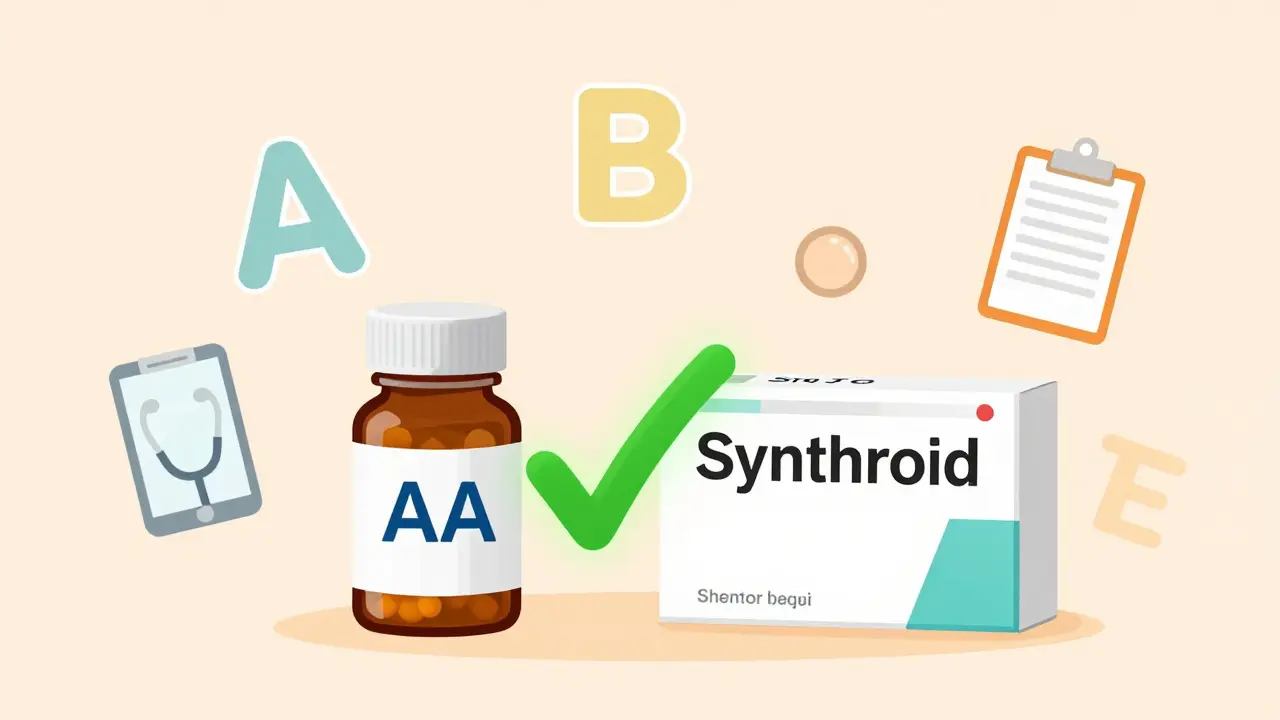
TE Codes are short, two- or three-letter labels assigned to multi-source drugs. They look simple, but each letter carries specific meaning. The first letter is the most important:- A means the drug is therapeutically equivalent to the brand-name version and other generics with the same code. These can be substituted without hesitation.
- B means the drug is not considered equivalent. This could be because of differences in absorption, formulation, or stability. Pharmacists cannot substitute these without a doctor’s permission.
- AA: Powder for oral solution (like some antibiotics)
- AN: Injectable solution
- AO: Oral solution
- AP: Powder for injection
- AT: Topical cream or ointment
- Pharmaceutical equivalence: Same active ingredient, strength, dosage form, and route of administration.
- Bioequivalence: The body absorbs the generic at the same rate and amount as the brand. This is proven through blood tests showing the generic’s concentration in the bloodstream falls within 80-125% of the brand’s.
- Clinical equivalence: No meaningful difference in safety or effectiveness under normal use conditions.
How TE Codes Compare to Other Systems
The U.S. system is unique in its level of detail and legal integration. In Europe, the European Medicines Agency (EMA) doesn’t use a universal coding system. Instead, individual countries decide what can be substituted. In Canada, pricing boards track equivalence but don’t assign standardized codes like the FDA does. Germany takes a different approach entirely: doctors, not pharmacists, decide whether a generic can be swapped. In the U.S., pharmacists are legally allowed to substitute TE-rated drugs unless the prescriber writes “Dispense as Written” or “Do Not Substitute.” This makes the U.S. TE Code system one of the most efficient in the world for enabling automatic substitution. It’s why 90.1% of all prescriptions filled in the U.S. are for generics-and why 97% of hospitals use TE Codes to guide therapeutic interchange programs.
Where TE Codes Work-and Where They Don’t
TE Codes are incredibly reliable for simple, well-understood drugs. Take atorvastatin (the generic for Lipitor). A 2021 study in JAMA Internal Medicine found no difference in LDL cholesterol reduction between multiple TE-rated versions. Patients switching between generics saw the same results. But not all drugs are created equal. Some complex formulations don’t fit neatly into the TE Code system. Inhalers, for example, are tricky. Even if two generic inhalers have the same active ingredient and dose, differences in the propellant, nozzle design, or particle size can affect how much medicine reaches the lungs. In 2019, the FDA withdrew TE ratings for several generic budesonide inhalers after reports of inconsistent delivery. The same applies to some topical steroids and extended-release tablets. Narrow therapeutic index (NTI) drugs are another concern. These are medicines where even small changes in blood levels can cause serious side effects or treatment failure. Warfarin (a blood thinner), levothyroxine, and some anti-seizure drugs fall into this category. While most TE-rated versions are safe, some patients report feeling different after switching-even when clinical tests show no difference. A 2022 study in The American Journal of Managed Care found 12.7% of patients believed their medication stopped working after a generic switch. Most of these cases had no clinical basis, but the perception matters. The FDA acknowledges these gaps. In its 2022 guidance, it stated clearly: “Therapeutic equivalence evaluations are product-specific and do not imply equivalence across all possible clinical scenarios.”How Pharmacists Use TE Codes Every Day
Pharmacists don’t memorize codes. They check the FDA’s online Orange Book database-or their pharmacy software, like Epic or Cerner, which pulls TE ratings automatically. When a prescription comes in for a brand-name drug, the system flags if there’s a TE-rated generic available. The process adds less than 30 seconds to each prescription, according to the Pharmacy Technician Certification Board. Over 98% of 2022 pharmacy graduates passed the NAPLEX exam with full proficiency in TE Code interpretation. Most pharmacists trust the system. A 2022 survey by the National Community Pharmacists Association found 91% have high confidence in substituting TE-rated drugs. One pharmacist on Reddit wrote: “The AA code for levothyroxine has eliminated so many insurance coverage headaches.” But patients sometimes notice differences. A Drugs.com thread from early 2023 had 87 reports of issues with substituted warfarin products. While lab tests showed no change in INR levels, patients reported fatigue, dizziness, or bruising. These aren’t failures of the TE system-they’re reminders that real people respond differently to medicines.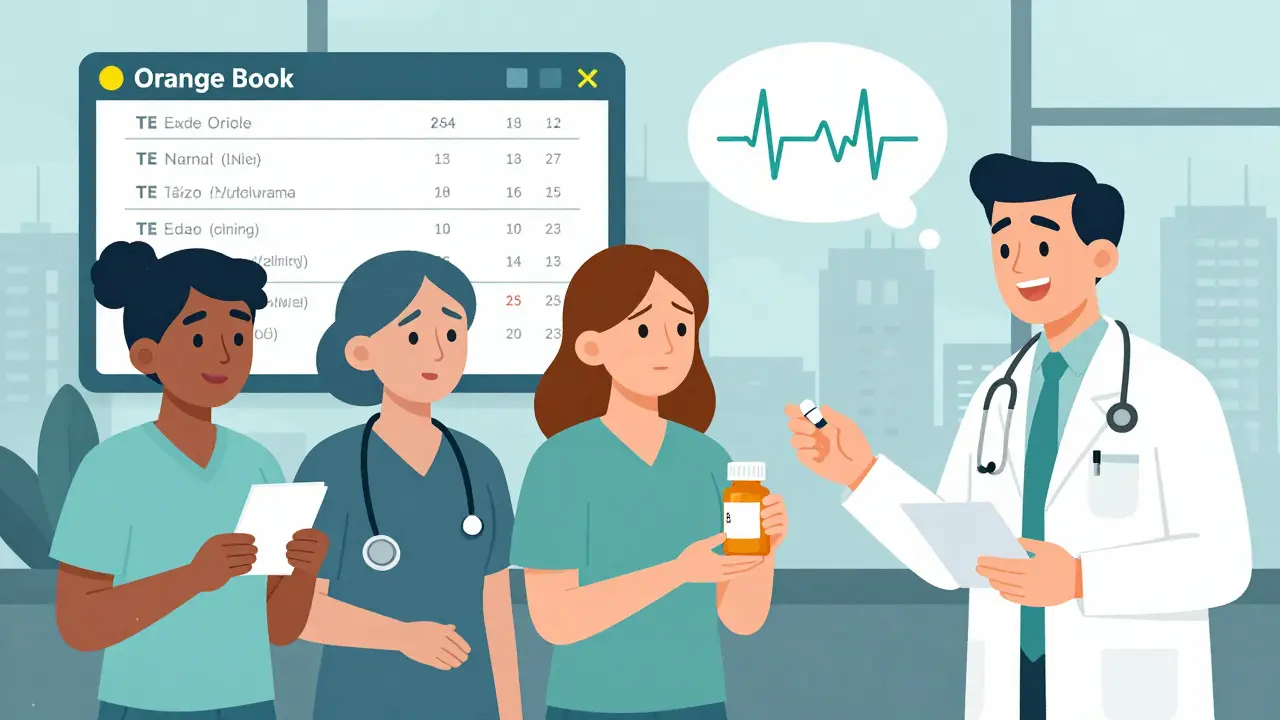
The Bigger Picture: Cost, Savings, and the Future
TE Codes are the backbone of the $130 billion U.S. generic drug industry. Since 1995, they’ve helped save over $2.2 trillion in healthcare costs, according to former FDA Director Dr. Janet Woodcock. Brand-name drug makers lose market share fast once a generic enters the market. Within six months, a TE-rated generic typically captures 76.5% of prescriptions. Without TE Codes, that number would be far lower. The FDA is working to improve the system. In 2023, they announced a pilot program to use real-world patient data-like electronic health records and patient-reported outcomes-to inform future TE evaluations. They’re also developing new codes for biosimilars (biologic generics), expected to launch in 2024. Industry analysts predict that by 2027, 93.4% of all prescriptions in the U.S. will be for TE-rated generics. That’s up from 90.1% today. The goal isn’t just to cut costs. It’s to make high-quality medicine accessible to everyone. TE Codes make that possible.What Patients Should Know
If you’re prescribed a generic drug, it’s likely TE-rated-and safe to use. But if you’ve had issues after switching-feeling different, side effects popping up, or your condition seeming less controlled-talk to your doctor or pharmacist. Don’t assume it’s all in your head. You can always ask for the brand name if you’re concerned. But in most cases, the generic will work just as well. And if your insurance requires a generic, TE Codes ensure you’re getting a product that’s been scientifically proven to do the job. The system isn’t perfect. But for the vast majority of medications-blood pressure pills, statins, antibiotics, diabetes drugs-it’s one of the most reliable tools in modern medicine.What does an ‘A’ rating mean in TE Codes?
An ‘A’ rating means the drug is considered therapeutically equivalent to the brand-name product and other generics with the same code. Pharmacists can legally substitute it without needing permission from the prescriber. This rating is based on proof of pharmaceutical equivalence, bioequivalence, and clinical equivalence.
Can I be sure a generic with an ‘A’ rating will work the same as the brand?
For most medications, yes. The FDA requires rigorous testing to prove that generics with an ‘A’ rating deliver the same amount of active ingredient at the same rate as the brand. Studies involving millions of patients have shown no meaningful difference in outcomes for common drugs like statins, blood pressure meds, and antibiotics. However, for complex products like inhalers or narrow therapeutic index drugs, some patients may notice differences-even if lab tests show equivalence.
Why do some people say generics don’t work as well?
Some patients report feeling different after switching, especially with drugs like warfarin or levothyroxine. In many cases, these reports aren’t backed by clinical data. The FDA and independent studies often find no actual difference in effectiveness. But perception matters. Changes in pill size, color, or inactive ingredients can trigger nocebo effects-where patients expect to feel worse and therefore do. If you’re concerned, talk to your doctor before switching back.
Are all generic drugs TE-rated?
No. Only multi-source generics-that is, those with at least one other approved version-are evaluated for TE ratings. Single-source generics (where only one company makes the generic) aren’t assigned a code. Also, some complex products like certain inhalers, topical creams, or injectables may not receive an ‘A’ rating if bioequivalence can’t be reliably proven. Always check the Orange Book or ask your pharmacist if you’re unsure.
How do I find out if my prescription has a TE rating?
Your pharmacist can check the FDA’s Orange Book database or your pharmacy’s software system, which automatically displays TE codes. You can also search the FDA’s online Orange Book at fda.gov/orangebook. Just enter the drug name and look for the two- or three-letter code next to the product listing. If it starts with ‘A’, it’s interchangeable. If it starts with ‘B’, substitution isn’t recommended without a doctor’s approval.
Jacob Cathro
January 20, 2026 AT 08:35so like... te codes are just a fancy way of saying "this generic is close enough"? lol. i mean, sure, the numbers look good on paper, but have you ever switched from one generic to another and felt like your brain was melting? i did. took me 3 weeks to realize it wasn't my anxiety-it was the damn pill color change. the FDA doesn't care about how your soul feels, only if your blood levels are "within range." 😒
Paul Barnes
January 21, 2026 AT 10:14The therapeutic equivalence system is a scientifically rigorous framework established under the Hatch-Waxman Act to ensure bioequivalence and pharmaceutical consistency across generic drug products. Any assertion that these codes are arbitrary or unreliable is empirically unfounded and misrepresents the FDA's evidence-based evaluation protocols.
pragya mishra
January 22, 2026 AT 14:37Why do Americans even care about this? In India, we just take whatever the pharmacy gives us-no codes, no fuss. If it looks like the medicine, we swallow it. If it doesn't work, we go to another pharmacy. Simple. No bureaucracy. No $200 monthly co-pays. You guys overthink everything. 🤷♀️
kumar kc
January 22, 2026 AT 23:50TE codes save lives. End of story.
Thomas Varner
January 24, 2026 AT 08:33Okay, but… have you ever tried switching between two different AA-rated levothyroxine generics? Like… one’s a little blue pill, the other’s a white oval? And suddenly you’re tired all the time? I swear, it’s not placebo-I checked my TSH, it’s fine… but I still feel like a zombie. I mean, the science says it’s the same… but my body says otherwise?? 🤔 Maybe the fillers? Maybe the coating? Maybe the universe just hates me? I dunno. But I’m sticking with Synthroid now. Even if it costs my cat’s lunch money.
Art Gar
January 25, 2026 AT 21:35While the regulatory framework governing therapeutic equivalence is ostensibly efficient, it nevertheless represents a form of utilitarian cost-containment that may inadvertently marginalize patient-specific pharmacodynamic variability. The assumption of homogeneity across bioequivalent products fails to account for interindividual differences in metabolism, adherence, and psychosomatic response, thereby reducing complex clinical phenomena to a binary code.
Carolyn Rose Meszaros
January 27, 2026 AT 20:42YAS. TE codes are the unsung heroes of affordable medicine 💖 I switched my blood pressure med to generic last year and saved $180/month. My bank account cried happy tears. Also, my pharmacist literally gave me a high-five when she saw the AA code. 🙌
Renee Stringer
January 28, 2026 AT 21:18It’s concerning how many people treat TE codes as absolute truth. The FDA’s system is useful, but it’s not infallible. For drugs with narrow therapeutic indices, even minor formulation differences can have downstream effects. Patients deserve more than a letter on a chart-they deserve individualized care.