Tyramine-Rich Foods and MAO Inhibitors: What You Must Avoid to Prevent Hypertensive Crisis
 Jan, 10 2026
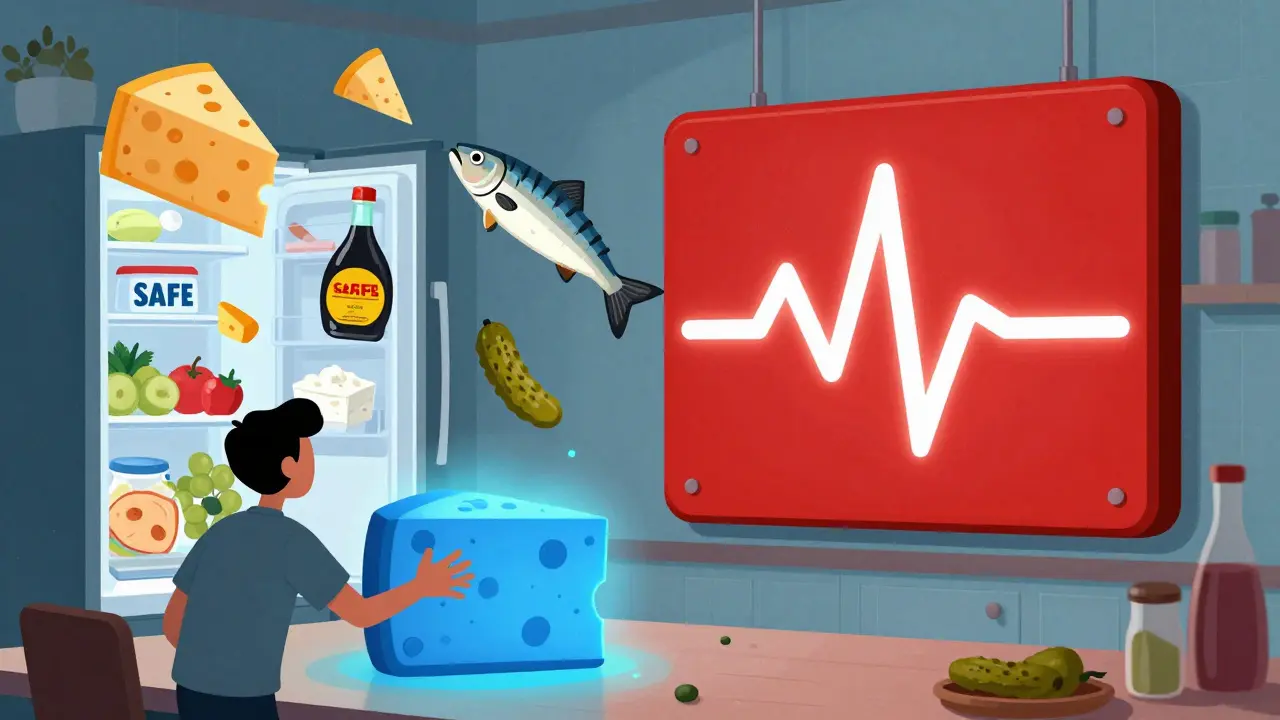
When you're taking an MAO inhibitor for depression, your food choices aren't just about nutrition-they can be a matter of life or death. A single bite of aged cheese, a glass of red wine, or a serving of pickled herring could trigger a sudden, dangerous spike in blood pressure. This isn't a myth. It's a well-documented risk called a hypertensive crisis, and it happens because of how your body handles tyramine when MAOIs are in your system.
What Happens When Tyramine Meets MAO Inhibitors
MAO inhibitors, or MAOIs, work by blocking the enzyme monoamine oxidase. Normally, this enzyme breaks down excess tyramine-a natural compound found in certain foods-before it enters your bloodstream. When you take an irreversible MAOI like phenelzine (Nardil) or tranylcypromine (Parnate), that enzyme is shut down. Tyramine builds up, and your body responds by releasing a flood of norepinephrine. That causes your blood vessels to constrict, your heart to race, and your blood pressure to skyrocket-sometimes by 30 to 50 mmHg in under 30 minutes.The threshold for danger? As little as 5-10 mg of tyramine can trigger a reaction in sensitive individuals. A hypertensive crisis is typically defined as systolic blood pressure above 180 mmHg, often accompanied by a severe headache at the back of your head, pounding heartbeats, nausea, and blurred vision. Without quick treatment, it can lead to stroke, heart attack, or death.
Foods That Can Trigger a Crisis
Not all foods are risky. Fresh meat, vegetables, fruits, and dairy contain minimal tyramine-usually less than 5 mg per 100 grams. The danger comes from aging, fermentation, or spoilage. Here’s what to avoid:- Aged cheeses: Blue cheese, cheddar, Swiss, parmesan, and brie can contain 9-41 mg of tyramine per 100g. Some aged cheeses exceed 400 mg per 100g. A single ounce of strong blue cheese can push you over the limit.
- Fermented soy products: Soy sauce, miso, and tempeh are loaded-soy sauce alone has 20-70 mg per 100ml. A tablespoon of soy sauce can contain more tyramine than a whole apple.
- Cured or fermented meats: Pepperoni, salami, summer sausage, and fermented sausages are high-risk. Pickled herring? Up to 230 mg per 100g.
- Alcohol: Red wine, especially Chianti, has 4-15 mg per 100ml. Tap beer is usually safe, but draft or unpasteurized beer can be risky. Avoid any fermented or aged alcoholic drinks.
- Overripe or spoiled foods: Any fruit or vegetable left too long can develop tyramine. Bananas with brown spots, spoiled yogurt, or leftover meals stored for more than 48 hours can become dangerous.
Here’s the catch: tyramine levels aren’t listed on most food labels. You can’t rely on “natural” or “organic” claims. A block of cheddar aged 6 months is safe? No. Aged 18 months? Potentially lethal.
Not All MAOIs Are the Same
If you’ve been told you need an MAOI but are terrified of the diet, know this: not all MAOIs require the same restrictions.- Traditional MAOIs (phenelzine, tranylcypromine, isocarboxazid): These are irreversible and non-selective. You must strictly limit tyramine to under 15 mg per day. No exceptions.
- Transdermal selegiline (Emsam patch): At the lowest dose (6 mg/24 hours), it only blocks MAO-B in the gut-leaving MAO-A free to break down tyramine. At this dose, you don’t need dietary changes. Higher doses (9 mg, 12 mg) require caution.
- RIMAs (like moclobemide): These are reversible and less likely to cause a crisis. They’re not available in the U.S., but in Canada and Europe, they’re used more often because they’re safer with food.
A 2020 review found that 87% of people on traditional MAOIs said dietary restrictions were the hardest part of treatment. Only 22% of those on low-dose Emsam felt the same way.
What to Do If You Accidentally Eat Something Risky
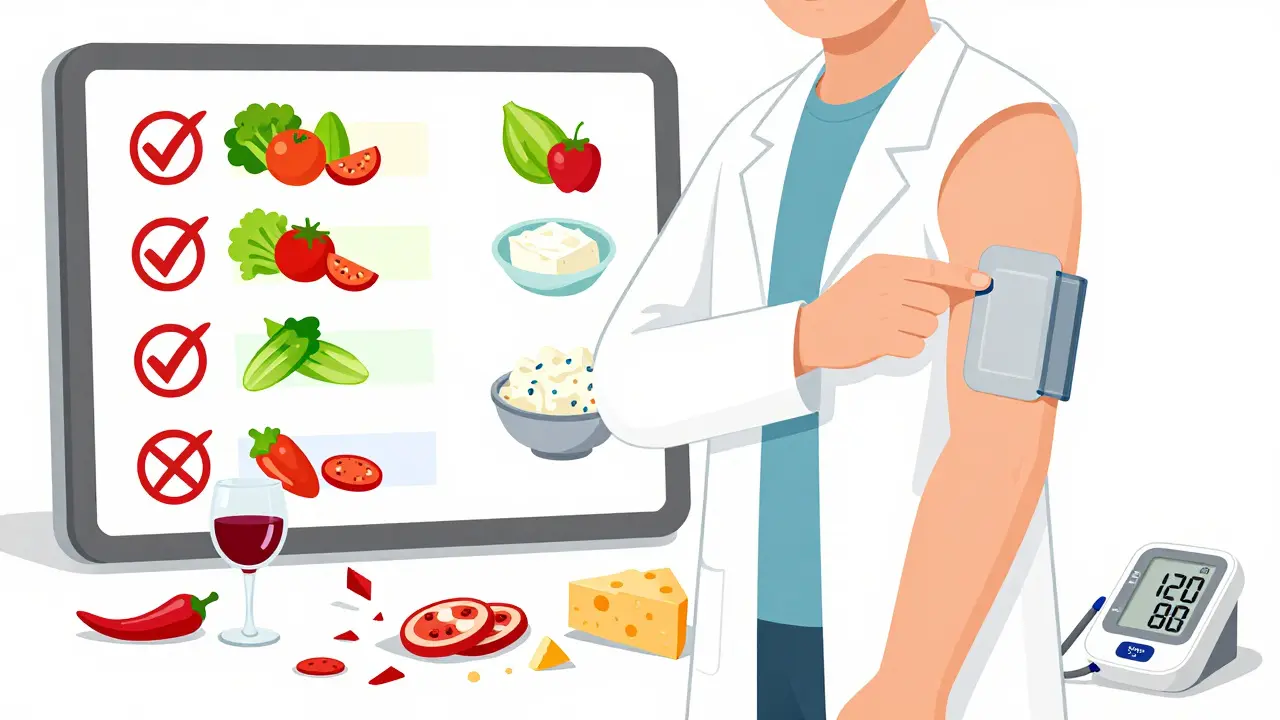
Even the most careful patients slip up. A Reddit survey of 412 MAOI users found that 74% had accidentally eaten a high-tyramine food at least once. Most had mild symptoms: a headache, flushed face, or rapid heartbeat. But 2% needed emergency care.If you eat something risky, monitor yourself. Take your blood pressure if you have a home monitor. If your systolic pressure hits 180 or higher, or you feel a crushing headache at the back of your skull, call emergency services. Don’t wait. Don’t try to “wait it out.”
Hospital treatment now uses nicardipine, a fast-acting blood pressure medication, to lower pressure gradually. Old protocols that dropped pressure too fast could cause strokes. Current guidelines from the American College of Medical Toxicology (January 2024) are clear: slow, controlled reduction is key.
How to Stay Safe Without Feeling Isolated
The biggest reason people quit MAOIs? Social isolation. A 2022 analysis of mental health forums showed that 82% of those who stopped treatment said they couldn’t eat out, go to parties, or travel without fear.There’s a better way. The Massachusetts General Hospital developed a 45-minute educational program that cut dietary violations from 32% to 8% in six months. What worked?
- Specific lists, not vague advice. “Avoid aged cheese” isn’t enough. “Avoid blue cheese, cheddar over 6 months old, and parmesan from a block, not pre-grated.”
- Portion control. One ounce of aged cheese is dangerous. Two tablespoons of soy sauce? Risky. One teaspoon? Usually safe.
- Fresh is your friend. Fresh mozzarella, cottage cheese, cream cheese, and ricotta are safe. Fresh meat, poultry, and fish are safe. Frozen vegetables? Safe. Leftovers? Eat within 48 hours.
- Plan ahead. Call restaurants. Ask for fresh, unaged ingredients. Bring your own soy sauce in a small bottle.
- Use a blood pressure log. The American Psychiatric Nurses Association recommends daily tracking. If your systolic pressure climbs above 160 for two days in a row, contact your doctor.
What’s Changing in 2026
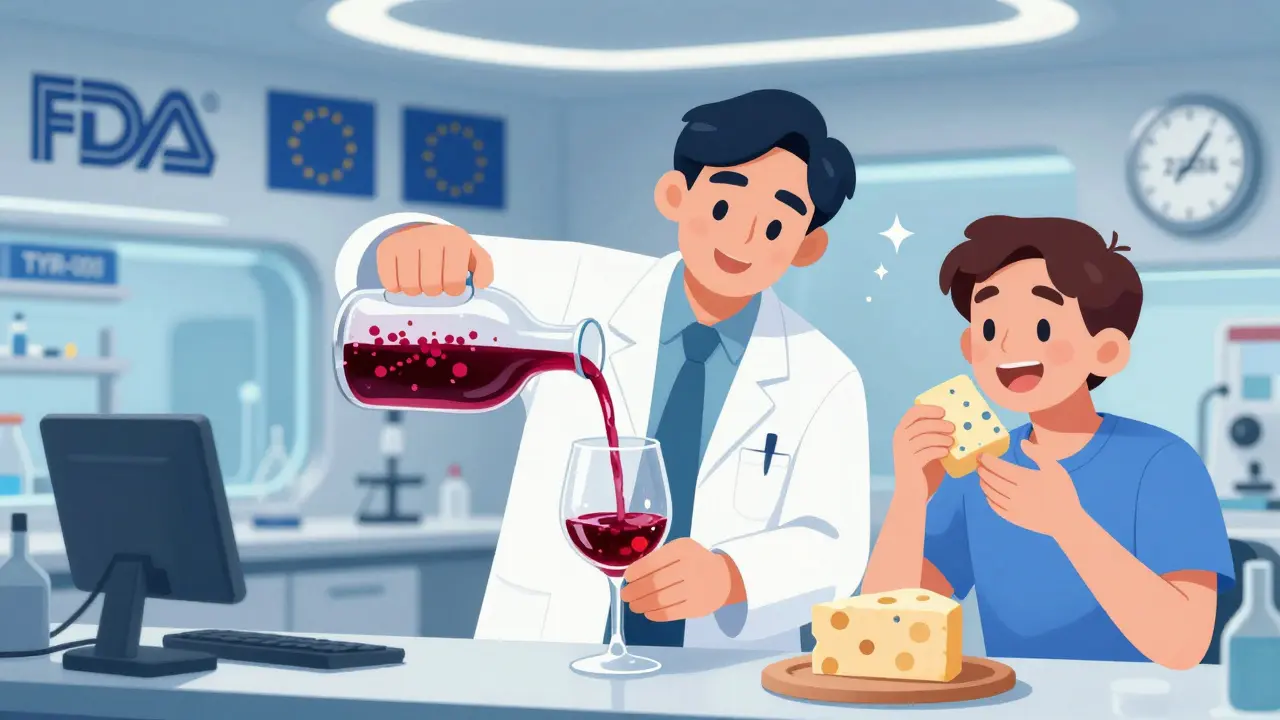
The future is getting safer. In 2024, the FDA gave breakthrough status to TYR-001, a new enzyme supplement that breaks down tyramine in the gut before it can cause harm. Early trials showed people could eat high-tyramine foods without any blood pressure spikes-even at doses up to 50 mg.Meanwhile, the FDA now requires cheese labels in the U.S. to list tyramine content if it exceeds 10 mg per serving. The European Medicines Agency has already relaxed restrictions for Emsam users, saying only extremely high-tyramine foods (over 100 mg per serving) need avoidance.
MAOIs still only make up 2-3% of antidepressant prescriptions in the U.S. But for people who’ve tried everything else and still struggle with depression, they’re often the only thing that works. Response rates in treatment-resistant cases hit 50-60%. That’s life-changing.
For those patients, the diet isn’t just a rule-it’s the price of freedom from depression. And with new tools, education, and better formulations, that price is becoming easier to pay.
Cassie Widders
January 11, 2026 AT 17:53Been on Emsam for a year now. No diet changes needed at 6mg. Life is so much easier. I can eat at restaurants without sweating bullets.
Windie Wilson
January 13, 2026 AT 00:02So let me get this straight… I can’t have blue cheese but I can have cream cheese? What’s the difference, a magic spell? 😒
Darryl Perry
January 13, 2026 AT 17:39The FDA is finally catching up. Labeling tyramine content is long overdue. This isn't 1985 anymore.
George Bridges
January 13, 2026 AT 21:12I’ve seen people quit MAOIs because the diet felt like punishment. But with education and tools like the MGH program, it doesn’t have to be that way. Small changes make a huge difference.
Rebekah Cobbson
January 14, 2026 AT 21:39If you're new to MAOIs, keep a food journal. Write down everything you eat and how you feel. It’s not about being perfect-it’s about learning your body.
Rinky Tandon
January 15, 2026 AT 19:03Let me just say this-people who say 'it's just cheese' clearly have never had a hypertensive crisis. I was in the ER with a BP of 210/120 after a single bite of parmesan. This isn't a suggestion. It's a biological landmine. And if you think you're 'immune'-you're not. You're just lucky. And luck runs out.
MAOIs are not for the careless. They're not for the 'I'll just have one sip' crowd. You think you're being 'rebellious'? You're playing Russian roulette with your brainstem.
The fact that some people treat this like a dietary trend is disgusting. This isn't keto. This isn't vegan. This is survival. And if you're too lazy to read labels or call restaurants? You're not just risking your life-you're risking everyone's time in the ER who has to clean up your mess.
And don't even get me started on the 'but it's organic!' crowd. Organic doesn't mean tyramine-free. Fermentation doesn't care about your morals. Your cheddar aged 18 months? It's not artisanal-it's a biochemical grenade.
TYR-001 is coming? Good. But until then? Stop being a martyr for your palate. Your depression isn't worth a stroke.
Konika Choudhury
January 16, 2026 AT 10:05Why do Americans make everything so complicated? In India we just eat what we want and pray to Shiva. No one dies from cheese
Audu ikhlas
January 17, 2026 AT 17:06MAOIs are for weak minds. Real Africans don't need fancy drugs or food charts. We eat everything and stay strong. This is western weakness
steve ker
January 18, 2026 AT 16:28So you're telling me I can't have soy sauce but I can have miso? That's a joke right? Who decided this?
Sonal Guha
January 20, 2026 AT 15:09Everyone’s acting like this is a new revelation. It’s been known since the 60s. The real issue is psychiatrists who prescribe MAOIs without proper counseling. That’s malpractice
Daniel Pate
January 21, 2026 AT 17:43If MAO-A is blocked in the gut but not in the brain, why does the peripheral system matter so much? Is the norepinephrine surge purely a vascular phenomenon, or is there a central feedback loop being triggered? The literature suggests it's both-but the exact cascade isn't fully mapped. It's fascinating how a single enzyme’s inhibition can unravel an entire homeostatic system.
And yet we treat it like a grocery list. We don't ask why tyramine is metabolized differently in aged vs fresh foods. We don't explore the microbial role in fermentation. We just say 'don't eat this.' It's a bandaid on a systemic ignorance.
Maybe the real crisis isn't the cheese. It's our failure to teach physiology as a lived science, not a set of rules to memorize.
Ben Kono
January 22, 2026 AT 15:15I ate a slice of cheddar last week and felt fine so I guess this whole thing is overblown
Jose Mecanico
January 22, 2026 AT 18:22My mom’s on phenelzine. She carries a blood pressure monitor everywhere. She calls me if it hits 160. I don’t think people realize how much work this is.
Faith Wright
January 24, 2026 AT 00:05Oh so now I’m supposed to call restaurants before I eat? What’s next? Send a DNA sample to the chef? 😏
Monica Puglia
January 24, 2026 AT 08:03Just a gentle reminder: if you're on an MAOI, you're not broken. You're brave. You're doing the hard thing. And if you slip up? Breathe. Check your BP. Talk to your doctor. You're not alone 💛