Urticaria and Angioedema Treatment: How to Manage Acute and Chronic Hives
 Dec, 22 2025
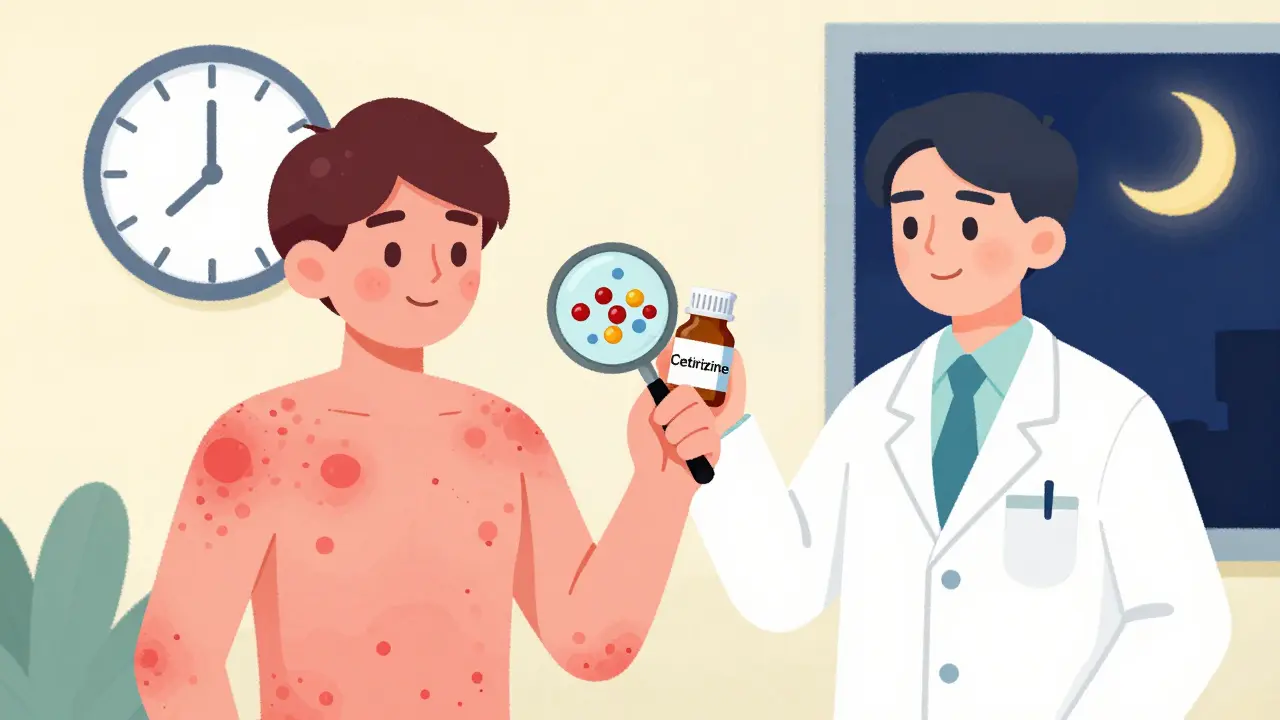
Urticaria and angioedema are not just annoying rashes-they can be terrifying. One moment you’re fine, the next your skin is covered in raised, itchy welts, or your lips and throat are swelling shut. If you’ve ever experienced this, you know how fast it can turn from a nuisance to a medical emergency. The good news? Most cases are treatable. The better news? You don’t need to live with it forever.
What’s the Difference Between Hives and Angioedema?
Urticaria (hives) shows up as red, itchy, raised bumps on the skin. They come and go, often fading within hours. You might see them on your arms, legs, or torso. They’re caused by histamine leaking from mast cells under your skin.
Angioedema is deeper. It’s swelling beneath the skin-usually around the eyes, lips, tongue, hands, or throat. It doesn’t always itch. Sometimes it just feels tight, heavy, or painful. About 1 in 5 people with hives also get angioedema. But you can have angioedema alone, with no hives at all.
Here’s the key: not all swelling is the same. If your throat is swelling and you’re having trouble breathing, that’s a red flag. But if your lips swell after taking an ACE inhibitor like lisinopril, that’s a different problem altogether-and antihistamines won’t fix it.
Acute vs. Chronic: Timing Matters
If your hives or swelling last less than six weeks, it’s called acute. Most of the time, something triggered it: a food, a medication, an insect sting, or an infection. The body reacts, the swelling goes down, and you’re fine.
If it lasts longer than six weeks? That’s chronic. About 1% of people develop chronic spontaneous urticaria (CSU). For most, no clear trigger is ever found. It’s not allergies in the traditional sense. It’s your immune system misfiring-like a smoke alarm going off with no fire.
Chronic cases are frustrating because they don’t follow rules. They flare for no reason, then vanish for weeks. But they’re not dangerous unless they involve your airway. And yes, they can last years-but 65-75% of people see full remission within five years.
First-Line Treatment: Antihistamines
For both acute and chronic hives, non-sedating antihistamines are the gold standard. They block histamine, the chemical that causes the itching and swelling. Common ones include:
- Cetirizine (Zyrtec)
- Loratadine (Claritin)
- Fexofenadine (Allegra)
Start with the standard dose: 10mg of cetirizine once a day. If it’s not working after a week, don’t give up. The guidelines say you can safely double, triple, or even quadruple the dose. That means up to 40mg of cetirizine daily-yes, that’s four pills. Studies show this boosts success from 50% to over 80%.
It’s not magic. You might need to take it every day, even when you’re not breaking out. Think of it like a maintenance dose for your immune system. Many people stop too soon and wonder why the hives come back.
When Antihistamines Aren’t Enough
If you’re on the highest safe dose and still getting flares, it’s time to add more tools.
Step 2: Add a second antihistamine. Some doctors combine cetirizine with famotidine (an H2 blocker), which works on a different histamine receptor. It’s not a cure, but it helps about 1 in 3 people.
Step 3: Try montelukast (Singulair). This is usually used for asthma, but it helps people whose hives get worse with NSAIDs like ibuprofen. About 20-30% of chronic hives patients are sensitive to these painkillers. If you notice flares after taking Advil or Aleve, this could be why.
Step 4: Omalizumab (Xolair). This is a monthly injection that targets IgE, the antibody behind the immune overreaction. It’s not cheap-around £1,200 a month-but it works for 60-70% of people who’ve tried everything else. You’ll need a specialist to prescribe it. Most patients see improvement within 4-8 weeks.
There’s no need to rush to omalizumab. Try the step-up approach first. Most people get control without it.

Angioedema: The Critical Distinction
Not all angioedema is the same. And treating it wrong can be dangerous.
Histamine-mediated angioedema (linked to hives) responds to antihistamines and epinephrine. This is the most common type.
Bradykinin-mediated angioedema is different. It’s caused by a buildup of bradykinin, not histamine. This includes:
- ACE inhibitor-induced swelling (from blood pressure meds like lisinopril)
- Hereditary angioedema (HAE)
Here’s what you must know: Antihistamines, steroids, and epinephrine do nothing for bradykinin-mediated swelling. Giving them wastes time and exposes you to side effects.
If you develop lip or tongue swelling after starting an ACE inhibitor, stop it immediately. Symptoms usually fade in 3-4 months. Switch to an ARB like losartan-though even ARBs carry a 10% risk of angioedema, so monitor closely.
For hereditary angioedema, you need specific drugs: C1 esterase inhibitor, icatibant, or ecallantide. These aren’t available in regular pharmacies. You need a specialist diagnosis and a treatment plan in place before an attack hits.
What to Avoid
Some common triggers make hives worse-and you might not realize it.
- NSAIDs: Ibuprofen, naproxen, diclofenac. These can trigger flares in 20-30% of chronic hives patients.
- ACE inhibitors: Lisinopril, enalapril, ramipril. If you have angioedema, stop these immediately.
- Alcohol: Can worsen itching and swelling in some people.
- Stress: Not a direct cause, but it can make flares more frequent and severe.
- DPP4 inhibitors: Diabetes drugs like sitagliptin (Januvia) are linked to rare cases of angioedema.
Keep a symptom diary. Note what you ate, what meds you took, how stressed you felt, and when the hives appeared. Patterns emerge over time.
When to Go to the ER
Hives alone? Usually fine. But if you have angioedema with any of these signs, call emergency services or go to the ER:
- Difficulty breathing or swallowing
- Stridor (a high-pitched sound when breathing)
- Drooling
- Tongue swelling
- Swelling in the throat or floor of the mouth
Epinephrine is the only thing that can save your airway in these cases. Don’t wait. Don’t hope it gets better. Act fast.

Long-Term Outlook
Chronic hives feel endless. But they’re not permanent. Most people eventually outgrow them. Even if you’re on high-dose antihistamines for months, you can slowly wean off. The Beaumont Hospital guide recommends reducing your dose by one tablet every 6-8 weeks once you’ve been flare-free for several months.
For those on omalizumab, many stay on it for 6-12 months, then try to stop. About half stay in remission. The rest need to restart.
The goal isn’t just to suppress symptoms. It’s to find your personal trigger pattern, avoid what makes it worse, and give your body time to reset.
Special Considerations
Pregnancy: High-dose antihistamines are not recommended. Stick to loratadine or cetirizine at standard doses. Always check with your OB-GYN.
Breastfeeding: Cetirizine and loratadine are considered safe in low doses. Avoid sedating ones like hydroxyzine.
Children: Same antihistamines, but weight-based dosing applies. Always follow pediatric guidelines.
Older adults: Be cautious with sedating antihistamines. They increase fall risk. Stick to non-sedating options.
Final Thoughts
You don’t have to suffer through another flare. Urticaria and angioedema are manageable-even when they’re chronic. The key is understanding the type you have, using the right treatment, and avoiding what makes it worse.
Start with antihistamines. Go up in dose if needed. Don’t waste time on steroids for swelling that won’t respond. Know when to seek emergency help. And remember: this isn’t your fault. Your body’s just confused. With the right approach, it will learn to calm down.
Diana Alime
December 23, 2025 AT 05:25so i had hives for 3 months last year and no one could figure it out until i realized it was my new laundry detergent lmao why do doctors always skip the obvious stuff
Georgia Brach
December 24, 2025 AT 00:44The claim that doubling antihistamine doses is 'safe' is misleading. The FDA hasn't approved dosages beyond 20mg for cetirizine in most populations. This is off-label use disguised as guideline advice-dangerous when presented as standard care.
claire davies
December 24, 2025 AT 16:29I’ve lived with chronic hives for 8 years and let me tell you, the real magic isn’t in the meds-it’s in finding your quiet space. Not just physically, but emotionally. Stress doesn’t cause it, but it holds the door open for it to walk in. I started yoga, stopped scrolling at night, and slowly, the flares became less like storms and more like rain showers. It’s not a cure, but it’s peace. And peace matters more than you think.
Bret Freeman
December 25, 2025 AT 16:19Someone actually wrote a whole article about hives and didn’t mention gluten? Unbelievable. I had chronic urticaria for 5 years, went to 7 doctors, spent $20k, then went gluten-free and it vanished. This is why modern medicine is broken. They treat symptoms, not root causes. You’re not broken-you’re just eating poison and nobody told you.
Austin LeBlanc
December 26, 2025 AT 16:43Wait, so you’re telling me people are just taking 40mg of cetirizine like it’s candy? That’s not medicine, that’s self-medication. And you’re encouraging it? This is how people end up in the ER with QT prolongation. Stop giving out dangerous advice like it’s a recipe for cookies.
niharika hardikar
December 27, 2025 AT 23:36While the pharmacological approach is partially aligned with current guidelines, the omission of mast cell stabilizers such as ketotifen and the lack of reference to IgE-mediated cytokine profiling represents a significant lacuna in the therapeutic algorithm. Furthermore, the conflation of histaminergic and bradykininergic pathways without molecular stratification risks clinical mismanagement.
John Pearce CP
December 29, 2025 AT 20:25Antihistamines are for weak people. In my day, we just toughed it out. If you can’t handle a little itching, maybe you shouldn’t be eating processed food or living in a sterile bubble. This country is soft. We need to stop treating every little rash like a national emergency.
Jillian Angus
December 31, 2025 AT 03:00my doctor said to try the higher dose and it worked but i forgot to tell her i was also drinking kombucha every day so i dont know which one actually helped
Paula Villete
January 1, 2026 AT 02:45Wow. A medical article that doesn’t blame your trauma, your diet, your aura, or your ancestors. Revolutionary. Next they’ll tell us the sun rises in the east and we shouldn’t drink bleach for ‘detox’.
Steven Mayer
January 2, 2026 AT 04:47The omalizumab cost is a joke. $1,200/month? That’s what it costs to keep someone alive. Meanwhile, pharmaceutical execs buy yachts. This isn’t healthcare. It’s a ransom system. And the fact that you’re presenting it as a reasonable next step without calling out the greed behind it is complicity.
Charles Barry
January 2, 2026 AT 14:54They don’t want you to know this but the CDC has been quietly suppressing data linking hives to 5G radiation. ACE inhibitors? Coincidence. The real trigger is the cell towers outside your window. You think your immune system is misfiring? No. It’s screaming. And nobody’s listening.
Rosemary O'Shea
January 3, 2026 AT 18:19I mean, honestly, if you’re still relying on antihistamines in 2024, you’re living in the 90s. Have you heard of epigenetic modulation? Or gut microbiota reprogramming? No? Then you’re not ready for the conversation. This article is charmingly outdated-like a fax machine in a quantum lab.
Joe Jeter
January 4, 2026 AT 20:16They say chronic hives go away in 5 years? That’s just wishful thinking. I’ve had it for 12. And now my kids are getting it too. This isn’t a medical issue-it’s a generational curse. They don’t want to admit that.
Lu Jelonek
January 6, 2026 AT 14:39For anyone new to this: keep a food and mood log. I used a simple Google Sheet. After 3 weeks, I saw a pattern-every time I ate dairy after 8pm, I broke out. Not allergies. Not stress. Timing. Small changes, big results. No magic, just awareness.
Ademola Madehin
January 8, 2026 AT 07:30Bro this post saved my life. I was about to go to the hospital with swollen lips and then I read the part about ACE inhibitors-I was on lisinopril. Stopped it same day. Swelling gone in 48 hours. God bless you.