Adverse Drug Events: Definition, Types, and Prevention Strategies
 Feb, 27 2026
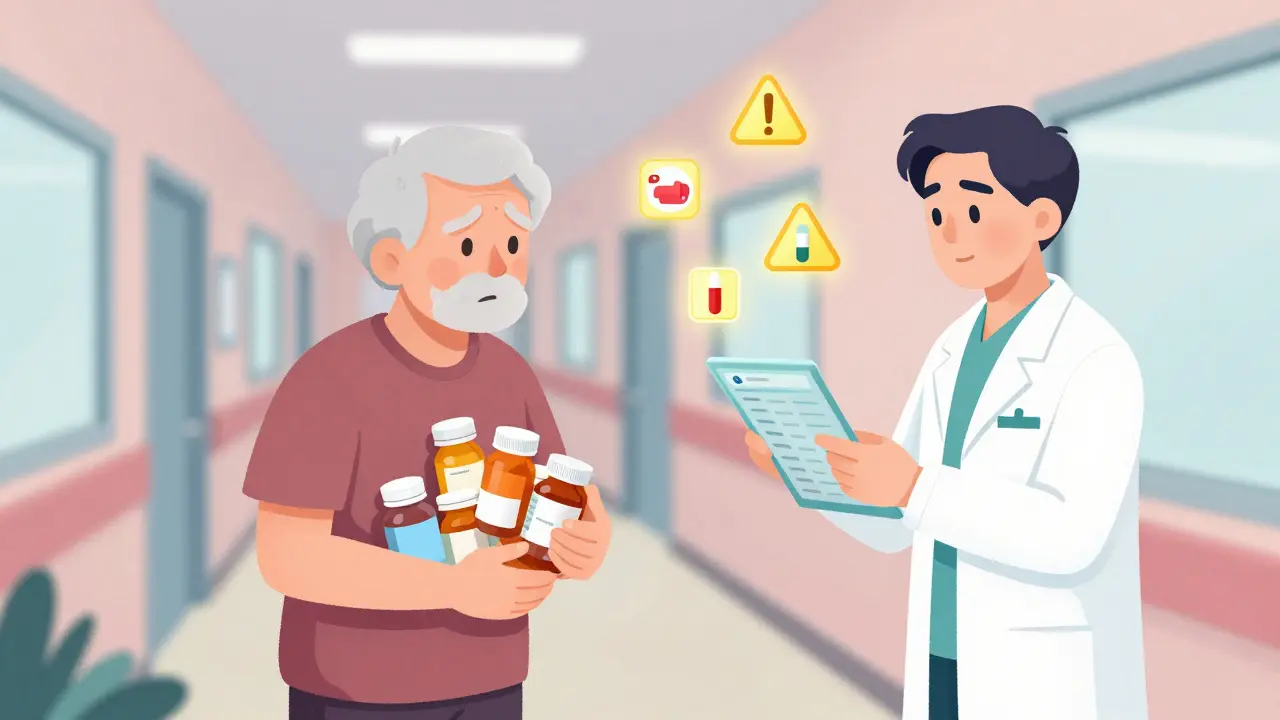
Every year, hundreds of thousands of people in the U.S. end up in the hospital because of a medication they were supposed to take to get better. These aren’t random accidents. They’re adverse drug events - preventable harms caused by how drugs are prescribed, taken, or monitored. Understanding what they are, how they happen, and how to stop them isn’t just a medical topic. It’s a matter of life and death.
What Exactly Is an Adverse Drug Event?
An adverse drug event (ADE) is any injury that happens because of a medication. It’s not just about side effects. It includes mistakes in prescribing, wrong doses, dangerous interactions, and even overdoses - whether accidental or intentional. The key distinction is that an ADE is harm that results from medical care involving a drug. That means if a patient takes a pill correctly and still gets sick, that’s an ADE. If a nurse gives the wrong pill, that’s also an ADE. The Institute of Medicine first brought this into focus in 2000 with its landmark report To Err is Human, which found that medication errors alone were causing at least 7,000 deaths each year in U.S. hospitals.
Today, the numbers are even more alarming. According to the Agency for Healthcare Research and Quality (AHRQ), ADEs lead to 3.5 million doctor visits, 1 million emergency room trips, and 125,000 hospital admissions annually in the United States. That’s more than the total number of people who get diagnosed with breast cancer each year. And the worst part? Up to half of these events are preventable.
The Five Main Types of Adverse Drug Events
Not all ADEs are the same. They fall into five major categories, each with its own patterns and risks.
- Adverse Drug Reactions (ADRs): These are unintended side effects that happen at normal doses. Think of a rash from penicillin or dizziness from blood pressure meds. About 80% of these are Type A reactions - predictable, dose-related, and often avoidable with better monitoring.
- Medication Errors: These happen before the drug even reaches the patient. A doctor prescribes the wrong dose. A pharmacist dispenses the wrong pill. A nurse gives it at the wrong time. These are preventable by design, not bad luck.
- Drug-Drug Interactions: When two or more medications mix in a way that changes how they work. Warfarin, for example, can become dangerously potent when taken with certain antibiotics or even over-the-counter painkillers. This is why 33% of all hospital-related ADEs come from anticoagulants like warfarin.
- Drug-Food Interactions: Grapefruit juice can stop your liver from breaking down statins. Dairy can block absorption of antibiotics. These are often overlooked because they seem harmless. But they’re responsible for thousands of ADEs each year.
- Overdoses: Whether intentional or accidental, overdoses are a leading cause of ADE-related death. In 2021, 70,601 of the 107,622 drug overdose deaths in the U.S. involved synthetic opioids like fentanyl. Many of these weren’t suicides - they were cases where patients didn’t understand their prescriptions or were given too much.
StatPearls breaks ADRs down further into five types: Type A (predictable), Type B (allergic or idiosyncratic), Type C (long-term use effects), Type D (delayed effects like cancer or birth defects), and Type E (withdrawal reactions). But for most people, Type A reactions are the biggest problem - and the easiest to fix.
Top Three High-Risk Medications and Their Hidden Dangers
Some drugs are far more dangerous than others. Three stand out as the biggest culprits behind preventable harm.
Anticoagulants (like warfarin): Warfarin is the single most common medication causing ADE-related hospital admissions. Why? It has a narrow therapeutic window - too little and it doesn’t work; too much and you bleed. In 35% of outpatient tests, patients’ INR levels (a key measure of blood thinning) were outside the safe range. That’s why warfarin causes 33,000 emergency visits every year. The good news? Pharmacist-led anticoagulation clinics have cut major bleeding events by 60% compared to standard care.
Diabetes medications (especially insulin): Hypoglycemia - dangerously low blood sugar - is the most common ADE linked to diabetes drugs. It sends 100,000 people to the ER annually. Sixty percent of those cases involve patients over 65. Older adults are more sensitive to insulin, often take multiple drugs, and may forget to eat. A simple misstep - like skipping a meal after taking insulin - can lead to seizures, coma, or death.
Opioids: Fentanyl and other synthetic opioids are now the leading cause of drug overdose deaths. The CDC reports that in 2021, opioids were involved in 75% of all overdose fatalities. Many of these deaths stem from patients being prescribed higher doses than needed, or from mixing opioids with alcohol or sedatives. Even a small increase in dose can be deadly for someone not used to it.
How to Prevent Adverse Drug Events
Preventing ADEs isn’t about one magic fix. It’s about a system of checks, tools, and teamwork.
- Medication Reconciliation: When a patient moves from hospital to home, or from one doctor to another, their medication list often gets lost. A 2020 study in Annals of Internal Medicine found that formal medication reconciliation - comparing what the patient says they take with what’s in the chart - reduces post-discharge ADEs by 47%.
- Electronic Prescribing: Handwritten prescriptions are a recipe for error. Switching to e-prescribing cuts medication errors by 48%, according to AHRQ. Systems that flag drug interactions in real time stop 15% of dangerous combinations before they reach the patient.
- Pharmacist Involvement: Pharmacists aren’t just pill dispensers. Medication Therapy Management (MTM) services, led by pharmacists, identify an average of 4.2 medication problems per patient. In one study, pharmacists reviewing a patient’s full list of drugs reduced ADE risk by 32%. The VA’s pharmacist-led anticoagulation clinics cut bleeding events by 60%.
- Drug Interaction Monitoring Tools: Tools like Lexicomp and Micromedex don’t just list interactions - they rank them by severity. When integrated into EHRs, they prevent 15% of high-risk interactions that would otherwise go unnoticed.
- Patient Education: A 2021 Cochrane review found that clear, simple education on how to take medications improved adherence by 22%. Many ADEs happen because patients don’t understand why they’re taking a drug or how to avoid interactions.
- Deprescribing: Older adults often take five or more medications. Many of these are no longer needed - or are harmful. The Canadian Deprescribing Guidelines show that checking for unnecessary prescriptions prevents 23% of inappropriate ones. The VA’s deprescribing protocols reduced anticholinergic-related ADEs by 40% in seniors.
Technology is helping too. Johns Hopkins Hospital ran a pilot using AI to predict ADE risk by analyzing 50+ patient variables - from lab results to sleep patterns. The result? A 17% drop in ADEs. These tools are still new, but they show where the future is headed: personalized, predictive prevention.
Where the System Still Fails
Despite progress, big gaps remain. Only 15% of primary care doctors regularly screen elderly patients for inappropriate medications using the Beers Criteria - even though it’s been around for decades. And while 89% of U.S. hospitals use electronic health records, only 45% have fully integrated clinical decision support for high-risk drugs. That means many systems flag a drug interaction, but don’t stop the prescription. The result? A false sense of safety.
Another problem? Pharmacogenomics. Some people metabolize drugs differently because of their genes. For example, 30% of people of Asian descent don’t respond well to clopidogrel, a common blood thinner. But pharmacogenomic testing is used in only 5% of cases today. The Personalized Medicine Coalition predicts that number will rise to 30% by 2027. When it does, it could prevent 100,000 ADEs a year.
The National Action Plan for ADE Prevention, updated in 2023, now includes monitoring for monoclonal antibodies and antipsychotics - two drug classes that have recently shown rising numbers of serious events. But without better training for providers and stronger incentives for hospitals to prioritize safety, progress will stall.
What You Can Do
If you or a loved one is on multiple medications, here’s what works:
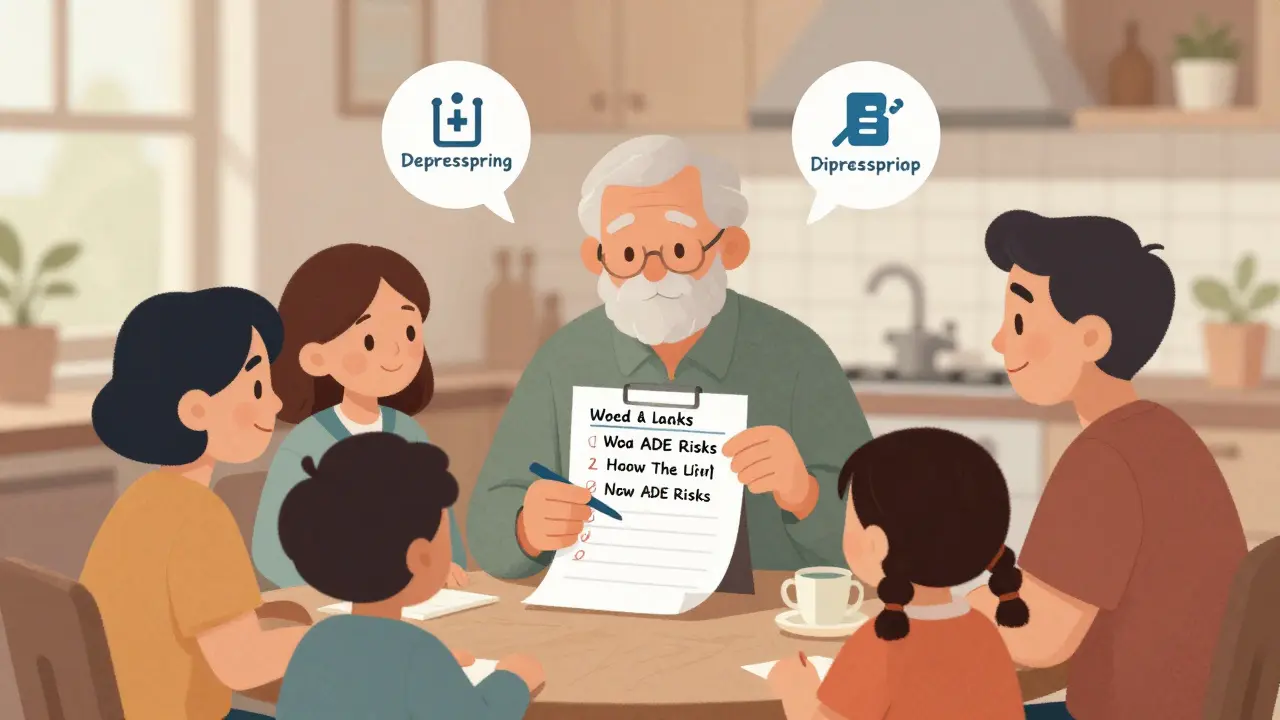
- Keep a written list of every drug - including vitamins, supplements, and over-the-counter pills - and update it every time your doctor changes something.
- Ask your pharmacist: “Could this interact with anything else I’m taking?” Don’t assume they know your full list.
- Ask your doctor: “Is this still necessary?” Especially if you’re over 65 or have changed health status.
- Use one pharmacy for all your prescriptions. It helps them track interactions.
- Know the signs of a bad reaction: unusual bruising, confusion, dizziness, nausea, or swelling. Don’t wait for a crisis to speak up.
Preventing ADEs isn’t just the job of doctors and pharmacists. It’s a shared responsibility. And the best part? Most of these harms are avoidable. With better systems, better tools, and better communication, we can stop thousands of preventable hospitalizations - and save lives.
What’s the difference between an adverse drug event and a side effect?
A side effect is any effect a drug has besides its intended one - even if it’s mild and expected, like drowsiness from an antihistamine. An adverse drug event (ADE) is harm that results from a medication - whether due to a side effect, a mistake, an interaction, or an overdose. All ADEs involve harm; not all side effects do.
Can ADEs happen even if I take my medicine exactly as prescribed?
Yes. Some ADEs occur because of how your body reacts to the drug - like an allergic reaction or a genetic difference in how you metabolize it. These are called Type B adverse drug reactions. They’re rare but unpredictable. Even when you follow directions perfectly, your unique biology can still lead to harm.
Why are older adults at higher risk for ADEs?
Older adults often take multiple medications, have slower metabolism, and may have kidney or liver changes that affect how drugs are processed. They’re also more likely to be prescribed drugs that are risky for seniors - like anticholinergics or benzodiazepines. Plus, memory issues or vision problems can lead to dosing mistakes. These factors combine to make ADEs more common and more dangerous in this group.
How do pharmacists help prevent ADEs?
Pharmacists review all medications for interactions, check for duplicates, verify dosing, and identify drugs that are no longer needed. In medication therapy management (MTM) programs, pharmacists spend 20-30 minutes per patient reviewing their full regimen. Studies show this reduces ADEs by 32% and saves healthcare costs. In hospitals and clinics with pharmacist-led services, preventable harm drops dramatically.
Are electronic prescribing systems enough to prevent ADEs?
Not alone. While e-prescribing cuts errors by 48%, many systems only flag interactions - they don’t stop a prescription. If a doctor ignores the warning or the system doesn’t integrate with the patient’s full history, harm can still occur. The best systems combine e-prescribing with clinical decision support, pharmacist review, and patient education.
What’s being done to reduce ADEs globally?
The World Health Organization launched its ‘Medication Without Harm’ initiative in 2017 to cut severe medication-related harm by 50% by 2022. While it didn’t reach that goal, it did reduce harm by 18% globally through standardized labeling, barcode scanning, and improved training. Countries are now adopting U.S.-style safety protocols - like pharmacist-led monitoring and deprescribing - to make progress.
Full Scale Webmaster
February 27, 2026 AT 18:43Let me tell you something nobody else will: the entire system is rigged. I worked in a hospital pharmacy for seven years, and I saw the same patterns over and over. Nurses getting yelled at for ‘errors’ that were caused by EHRs that auto-filled the wrong dose because the system didn’t know the patient had renal failure. Doctors prescribing warfarin without checking INR trends because the alert popped up too late-after the patient was already bleeding. And don’t even get me started on how pharmacists are treated like glorified cashiers. We’re not just dispensing pills-we’re the last line of defense against a system that’s more interested in billing codes than patient survival. The AHRQ stats? Underestimated. The real number of preventable ADEs is closer to 2 million a year if you count the ones that never made it to the ER because the patient died at home and the death certificate said ‘natural causes.’ And yeah, I’ve seen it. A 72-year-old woman on eight meds, her daughter found her unconscious, no one knew she’d been switched from clopidogrel to ticagrelor two weeks prior. No one. Not the PCP, not the cardiologist, not the damn pharmacist who filled it. That’s not an error. That’s negligence dressed up as protocol.
Brandie Bradshaw
March 1, 2026 AT 13:11It’s not enough to say ‘preventable.’ We must acknowledge that preventability implies intentionality-and intentionality implies accountability. The medical-industrial complex has weaponized ambiguity. ‘Adverse drug event’ is a euphemism for institutional failure. When a patient is given insulin without a concurrent glucose check, and then suffers hypoglycemic seizure, we call it an ADE. But we do not call the prescribing physician negligent. We do not call the hospital system complicit. We do not call the EHR vendor liable. We call it an ‘event.’ A neutral term. A passive construction. This linguistic obfuscation is not accidental; it is structural. Until we reframe these outcomes as crimes of omission-not accidents-we will continue to recycle the same flawed solutions: ‘better education,’ ‘more pharmacists,’ ‘e-prescribing.’ These are Band-Aids on a hemorrhage. The root cause is profit-driven fragmentation. The cure? Nationalization of drug safety oversight. Not reform. Overhaul.
Jimmy Quilty
March 3, 2026 AT 03:37you know what they dont tell you about warfarin? its not the dose thats the problem its the government forcing labs to use standardized INR machines that dont account for regional blood variations. i work in a clinic in dublin and we had a guy bleed out because his INR was ‘normal’ on the american machine but his plasma was 22% more viscous. the fda wont admit this because it would mean admitting the whole system is based on flawed data. and dont even get me started on how the big pharma lobby killed the genetic testing bill in 2018. they dont want you to know your body metabolizes drugs differently. they want you dependent. i read the nih reports. they lie. and the ahrq? theyre funded by the same people who make the drugs
Miranda Anderson
March 4, 2026 AT 09:07I’ve been a nurse for 18 years, and honestly? The most powerful thing we can do is just listen. I had a patient last month-84, on six meds, no family. She came in with confusion. We thought dementia. Turns out, she’d been taking her blood pressure pill with grapefruit juice for three years. Her daughter didn’t know. Her doctor didn’t ask. The pharmacist didn’t flag it. We just sat down. Asked her what she ate. Asked her what she took when. And boom. There it was. No fancy AI. No EHR alert. Just human curiosity. I wish more people knew that prevention doesn’t always mean technology. Sometimes it means asking, ‘What did you take with your breakfast?’ and then waiting for the answer. It’s not glamorous. But it works. And it’s cheaper than a hospital bed.
Gigi Valdez
March 5, 2026 AT 17:40The data presented here is methodologically sound, and the interventions outlined are evidence-based. However, implementation remains the critical bottleneck. Studies consistently demonstrate that pharmacist-led MTM programs reduce ADEs by 28–32%, yet only 12% of Medicare Part D beneficiaries receive such services. This gap is not due to efficacy, but to reimbursement structures. CMS does not reimburse for time spent reviewing polypharmacy in outpatient settings unless it is bundled under chronic care management codes-which require a minimum of 20 minutes of monthly contact. Most primary care practices cannot afford to allocate that time. Therefore, while the solutions are clear, the economic incentives are misaligned. Sustainable change requires federal policy reform to incentivize preventive pharmacotherapy review-not just reactive crisis management. Until then, we are optimizing symptoms, not outcomes.
Byron Duvall
March 7, 2026 AT 08:45fake stats. everything they say about overdoses? lies. the government makes the drugs more dangerous on purpose so they can push more ‘safety’ programs and get more funding. why do you think they banned pill splitters? why do they make all the meds in one-size-fits-all doses? why is insulin so expensive? because they want you to mess up. they want you to end up in the hospital so they can bill more. and don’t tell me about ‘pharmacist clinics’-they’re just fronts for insurance companies. i’ve seen the contracts. they’re paid per admission. so they don’t want you to get better. they want you to stay sick
Katherine Farmer
March 8, 2026 AT 22:41Let’s be honest: the entire ADE narrative is a distraction. The real crisis isn’t medication errors-it’s the erosion of clinical judgment. In 1985, a physician would review a patient’s entire history, consider comorbidities, consult colleagues, and adjust dosing based on intuition honed over years. Now? We click ‘accept’ on an algorithm that says ‘safe.’ We’ve outsourced our brains to software written by engineers who’ve never held a stethoscope. The ‘prevention’ tools you tout? They’re not preventing harm-they’re preventing accountability. When a patient dies because the EHR didn’t flag a drug interaction, who gets blamed? The doctor? The coder? The vendor? No one. And that’s the point. The system is designed to diffuse responsibility. The only way to fix this is to bring back the art of medicine-where a doctor’s word still matters more than a computer’s warning.
Angel Wolfe
March 10, 2026 AT 01:06they want you scared of your own meds so youll keep paying for checkups and labs. insulin? they made it so complex so you need a specialist to tell you how to use it. warfarin? they made the dosing so finicky so you need monthly blood tests. and dont even get me started on how they removed over the counter options for anticoagulants. this is all about control. they dont want you to be able to manage your own health. they want you dependent on their system. and the ‘pharmacists’? theyre just the new gatekeepers. same as doctors. same as insurers. same as the fda. its all one big machine. you think they care about your life? they care about your insurance number
Sophia Rafiq
March 11, 2026 AT 23:27just want to say the deprescribing piece is so underrated. my grandma was on 11 meds. 6 were for things she didn’t even have anymore. we cut 4 in 2 weeks. she stopped feeling foggy, stopped falling, started eating again. no new prescriptions. just stopping stuff. why isn’t this the first thing we do? why do we keep adding instead of subtracting? the system rewards adding. but healing? healing is subtraction. and we’re terrified of it
Martin Halpin
March 12, 2026 AT 21:32you all are missing the point. the real villain here isn't the system-it's the patient education. why do people take grapefruit juice with statins? because they don't know. why do they double up on insulin? because they think 'if one's good, two's better.' why do they mix ibuprofen with warfarin? because their cousin did it and didn't die. this isn't a medical failure-it's an education failure. we need mandatory drug literacy classes in high school. not just 'this is how to take your pill' but 'this is how your body breaks down drugs, why interactions happen, and how to question your doctor.' we treat patients like children. we need to treat them like adults who are capable of understanding their own biology. if we did that, 70% of ADEs would vanish overnight. no new tech. no new laws. just knowledge. and it's free