Brown Bag Medication Review Events: How to Prepare for a Safe Medication Checkup
 Jan, 30 2026
What Is a Brown Bag Medication Review?
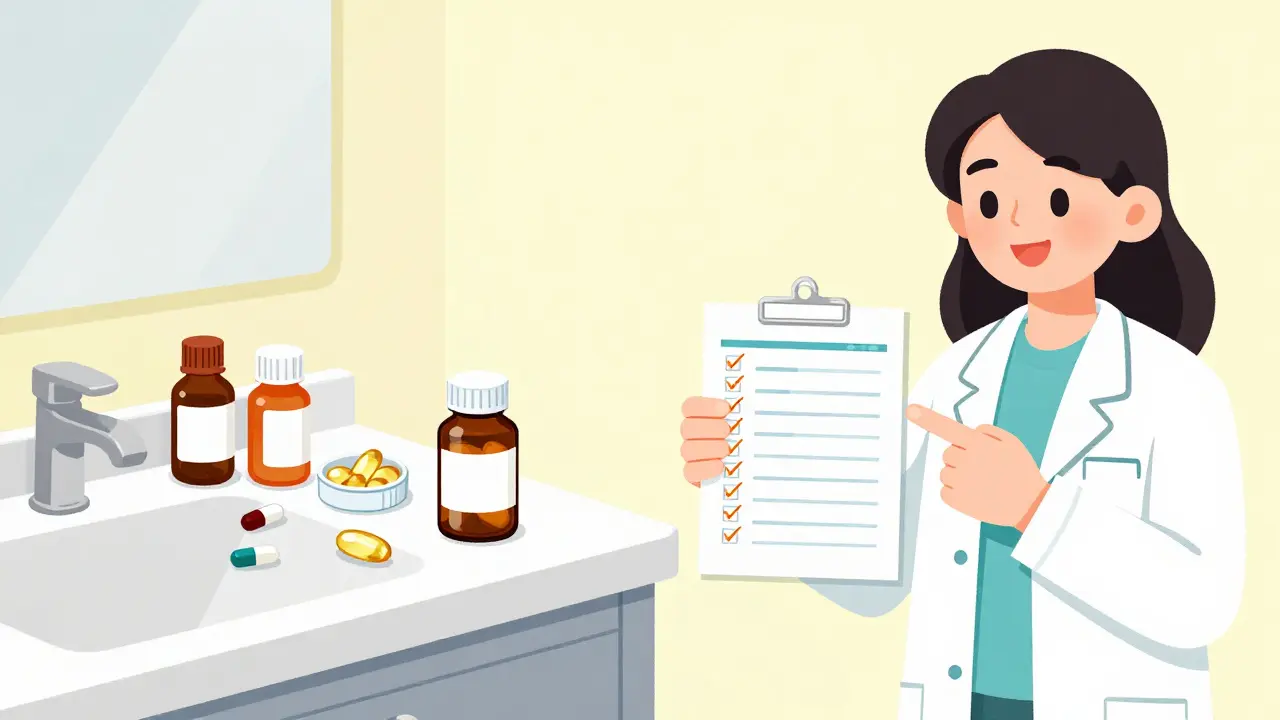
A brown bag medication review is exactly what it sounds like: you gather every pill, liquid, patch, inhaler, vitamin, and herbal supplement you take - all of it - and put it in a brown paper bag. Then you bring it to your doctor or pharmacist for a full checkup. It’s not a fancy procedure. No machines. No blood tests. Just you, your bag of meds, and someone who knows how to spot problems most people miss.
This isn’t just a good idea - it’s a lifesaver. In New Zealand and across the world, up to 20% of hospital admissions for older adults are caused by medication errors. Many of these happen because no one ever saw the full picture of what a patient is actually taking. A patient might be on five prescriptions from different doctors, three over-the-counter painkillers, a stack of supplements from the health food store, and a herbal tea for sleep. No one asks. No one checks. And that’s how dangerous overlaps happen.
The brown bag method started in the U.S. in 1982, when pharmacists gave patients actual brown supermarket bags to collect their meds. Today, it’s used in clinics, aged care homes, and even home visits. In New Zealand, it’s gaining traction in primary care networks serving older populations. The goal? To find duplicates, interactions, expired drugs, and meds that no longer serve a purpose.
Why This Matters More Than You Think
Let’s say you’re 72. You’ve seen five different specialists in the last year. Each one gave you a new prescription. Your GP doesn’t know what the cardiologist prescribed. The pharmacist didn’t get the updated list. You’re taking 11 different things. Some you take daily. Some you take only when you feel bad. Some you forgot about months ago.
That’s not unusual. Nearly half of New Zealanders over 65 take five or more medications. That’s called polypharmacy. And it’s risky. A 2023 study found that 68% of seniors who had a brown bag review were taking at least one medication they didn’t need - or worse, one that was hurting them.
One real case from a clinic in Auckland: a woman kept feeling dizzy and tired. Her blood pressure was normal. Her heart was fine. But when she brought her brown bag, they found she was taking two different blood pressure pills - one from her GP, one from the hospital. Both were the same drug. She was doubling her dose. No one knew. She stopped one pill. Her energy came back in a week.
That’s the power of this review. It doesn’t just fix mistakes. It prevents hospital trips, falls, confusion, and even death.
What Exactly Should You Put in the Bag?
This is where most people get it wrong. You don’t just bring your prescriptions. You bring everything.
- All prescription medicines - pills, capsules, liquids, patches, inhalers, eye drops, creams
- All over-the-counter drugs - painkillers like ibuprofen or paracetamol, cold medicines, antacids, sleep aids
- All vitamins and minerals - even the ones you only take once a week
- All herbal remedies - kava, echinacea, turmeric, ginseng, fish oil, melatonin
- All supplements - protein powders, probiotics, joint formulas
Don’t leave anything out. Not even the ones you think are "harmless." Some herbal teas can interfere with blood thinners. Calcium supplements can block antibiotics. Even something as simple as grapefruit juice can make your heart medication dangerous.
Bring the original bottles. Don’t transfer pills to pill organizers for this appointment. The labels have the dose, the expiry date, and the prescribing doctor’s name - all things the reviewer needs to see.
And if you’ve stopped taking something? Bring it anyway. Sometimes, you’re still taking a drug you thought you quit - or worse, you’re still taking it because you forgot to ask your doctor to stop it.
How to Prepare for Your Appointment
Preparing for a brown bag review isn’t hard, but it takes a few minutes. Here’s how to do it right:
- Set a date. Don’t wait until your next checkup. Call your GP or pharmacist and ask to book a 30- to 45-minute slot just for this. Most clinics now offer it as a separate appointment.
- Gather everything. Go through every drawer, bathroom cabinet, purse, and bedside table. Look for old prescriptions, free samples, and leftover pills from past illnesses.
- Write down your questions. What side effects are you noticing? Are you having trouble swallowing pills? Do you forget when to take them? Write them down so you don’t forget.
- Bring your list - but don’t rely on it. Make a list of what you think you take. But remember: studies show that 80% of people get their own list wrong. The real answer is in the bottles.
- Bring a support person. If you’re worried about forgetting things, bring a family member or caregiver. Two sets of ears are better than one.
Pro tip: If you’re nervous about the bag looking messy, remember - this isn’t about judgment. It’s about safety. Your pharmacist has seen it all. They’ve seen people with 20 bottles. They’ve seen expired antibiotics from 2018. They’ve seen pills in candy jars. None of it surprises them.
What Happens During the Review?
The review usually takes 30 to 45 minutes. The pharmacist or doctor will:
- Check each bottle for the correct name, dose, and expiry date
- Look for duplicates - two drugs with the same active ingredient
- Spot dangerous interactions - like mixing blood thinners with certain painkillers
- Ask why you’re taking each one - and if it’s still helping
- Check if any meds are causing side effects you didn’t connect to them
- Help you simplify your routine - maybe combine pills or switch to once-daily versions
They’ll also use the "teach-back" method: they’ll ask you to explain back what you’re supposed to do. "So, tell me how you take your warfarin?" If you can’t, they’ll re-explain. This isn’t a test - it’s a safety net.
At the end, you’ll get a clear, updated list of everything you should be taking - and what to stop. They’ll send a copy to your GP and pharmacy. You’ll also get a printed list to keep in your wallet or on your fridge.
Why This Beats Electronic Lists
You might think: "Why not just use my phone app or my GP’s electronic record?"
Because those systems are incomplete.
A 2023 study showed that even the best digital records miss about 40% of the medications people actually take - especially supplements, herbal products, and over-the-counter drugs. People don’t report them. Pharmacies don’t always upload them. And if you buy something online or from a store, it’s not in the system.
Meanwhile, the brown bag method catches 92% of medication errors. Why? Because it’s physical. You’re holding the real thing. The bottle. The label. The expiry date. The handwriting on the prescription.
One woman in Wellington brought a bottle of fish oil she’d been taking for years. The label said "1000mg daily." But the bottle was half-empty. The pharmacist asked how long she’d been taking it. "Since my heart scare in 2020," she said. The pharmacist checked the record - no one had ever prescribed it. She’d bought it because a friend said it was good for the heart. She stopped it. No harm done.
Technology helps - but it doesn’t replace the bag.
What If You’re Too Busy or Too Overwhelmed?
Many people skip the review because it feels like too much work. "I can’t find all my pills." "I don’t have time." "It’s embarrassing to have so many."
That’s normal. But here’s the truth: the inconvenience of gathering your meds is nothing compared to the risk of a bad reaction, a fall, or a hospital stay.
Here’s what helps:
- Ask for help. Ask a family member to help you gather your meds. Or ask your home care worker to do it for you.
- Use a reminder. If your clinic sends you a text or call before your appointment, answer it. Studies show this increases attendance by nearly 30%.
- Start small. If you’re overwhelmed, just bring your top five most important meds first. Then bring the rest next time.
- Ask for a bag. Many clinics now give out free brown paper bags with a label that says: "Bring everything. We’re here to help."
And if you’re embarrassed about having so many pills? Remember: you’re not alone. Most seniors have them. The goal isn’t to judge - it’s to protect.

What Happens After the Review?
After your review, you’ll get a clean, updated list. That’s your new medication plan. You’ll also get advice on:
- Which meds to stop - and how to do it safely
- Which ones to keep - and why
- How to simplify your routine - like switching to blister packs or once-daily doses
- What side effects to watch for
Many people find they can stop 1-3 meds after the review. That’s not a loss - it’s a win. Less pills means fewer side effects, lower costs, and less confusion.
One man in Christchurch was taking 12 pills a day. After the review, he was down to 7. He stopped three that were doing nothing, one that was making him dizzy, and two that were duplicates. He said: "I feel like I got my life back."
Your next step? Schedule your next review in 12 months. Or sooner - if you start a new medication, change doctors, or feel different.
Is This Covered by Health Insurance?
In New Zealand, most GP visits are free or low-cost under the public system. Brown bag reviews are usually included as part of your annual health check or chronic disease management plan.
If you’re on a community health program, aged care service, or Medicare Advantage-style plan (like those offered by some private providers), the review may be fully covered. Some pharmacies even offer free brown bag reviews as part of their service - no appointment needed.
Ask your GP or pharmacist: "Do you offer a free brown bag medication review?" If they say no, ask why - and suggest they start. The evidence is clear: this saves money, saves lives, and reduces pressure on hospitals.
Final Thought: This Isn’t Just a Checkup - It’s a Safety Net
Medications are powerful. They can heal. But they can also hurt - especially when no one sees the whole picture.
A brown bag review is simple. It doesn’t require fancy tech or expensive tools. Just honesty. A bag. And someone who cares enough to look.
If you’re over 65. If you take more than three medications. If you’ve ever felt confused, dizzy, tired, or just "off" - this review could be the most important appointment you have this year.
Grab the bag. Bring it in. Let someone help you take control.
Do I need to bring my supplements and herbal remedies too?
Yes. Supplements, vitamins, herbal teas, and natural remedies can interact with your prescription meds. For example, St. John’s Wort can make antidepressants less effective, and ginkgo biloba can increase bleeding risk if you’re on blood thinners. Even if you think they’re "natural" or "safe," they’re still active substances. Bring them all.
What if I forget something at home?
It happens. If you forget a bottle, don’t cancel your appointment. Tell the pharmacist what you missed - the name, dose, and how often you take it. They can still check for interactions and make notes. But don’t rely on memory. The real value comes from seeing the actual bottles - labels, expiry dates, and all.
Can I do this myself without a professional?
You can review your own meds, but you won’t catch everything. It’s easy to miss drug interactions, duplicate prescriptions, or side effects you’ve gotten used to. Pharmacists and doctors are trained to spot red flags you might overlook. A self-review is a good start, but a professional review is what prevents hospital stays.
How often should I have a brown bag review?
At least once a year. But if you’ve recently started a new medication, changed doctors, had a hospital stay, or noticed new side effects like dizziness, confusion, or fatigue - schedule one right away. Medication needs change. So should your review schedule.
Will my doctor think I’m taking too many meds?
No. Your doctor has seen hundreds of patients with the same situation. They’re not judging you - they’re helping you. The goal isn’t to cut pills for the sake of it. It’s to make sure every pill you take is necessary, safe, and working. If you’re taking 10 meds and all of them are helping, that’s fine. The review is about safety, not shame.
April Allen
February 1, 2026 AT 12:06Niamh Trihy
February 2, 2026 AT 17:57Beth Cooper
February 3, 2026 AT 22:26Blair Kelly
February 4, 2026 AT 20:15Rohit Kumar
February 5, 2026 AT 13:07Lily Steele
February 7, 2026 AT 11:35Jodi Olson
February 9, 2026 AT 10:38calanha nevin
February 10, 2026 AT 10:35