Clozapine and Tobacco Smoke: How CYP1A2 Changes Your Medication Levels
 Apr, 27 2026
Clozapine Metabolism & Smoking Estimator
Disclaimer: This tool is for educational purposes only. It provides estimates based on article data and is NOT a substitute for professional medical advice or Therapeutic Drug Monitoring (TDM). Always consult your doctor before changing medication doses.
Estimated Impact
Enter your details to see how changes in smoking habits might affect your Clozapine levels.
If you're taking Clozapine is an atypical antipsychotic used primarily for treatment-resistant schizophrenia and you smoke cigarettes, your medication levels are likely not where they would be if you didn't. This isn't just a minor quirk of biology; it's a potent chemical reaction in your liver that can make your medicine either fail to work or suddenly become toxic. When a patient starts or stops smoking, the risk of a psychiatric relapse or a dangerous overdose spikes because the body's "cleaning system" for the drug shifts gears rapidly.
The Liver's Cleanup Crew: What is CYP1A2?
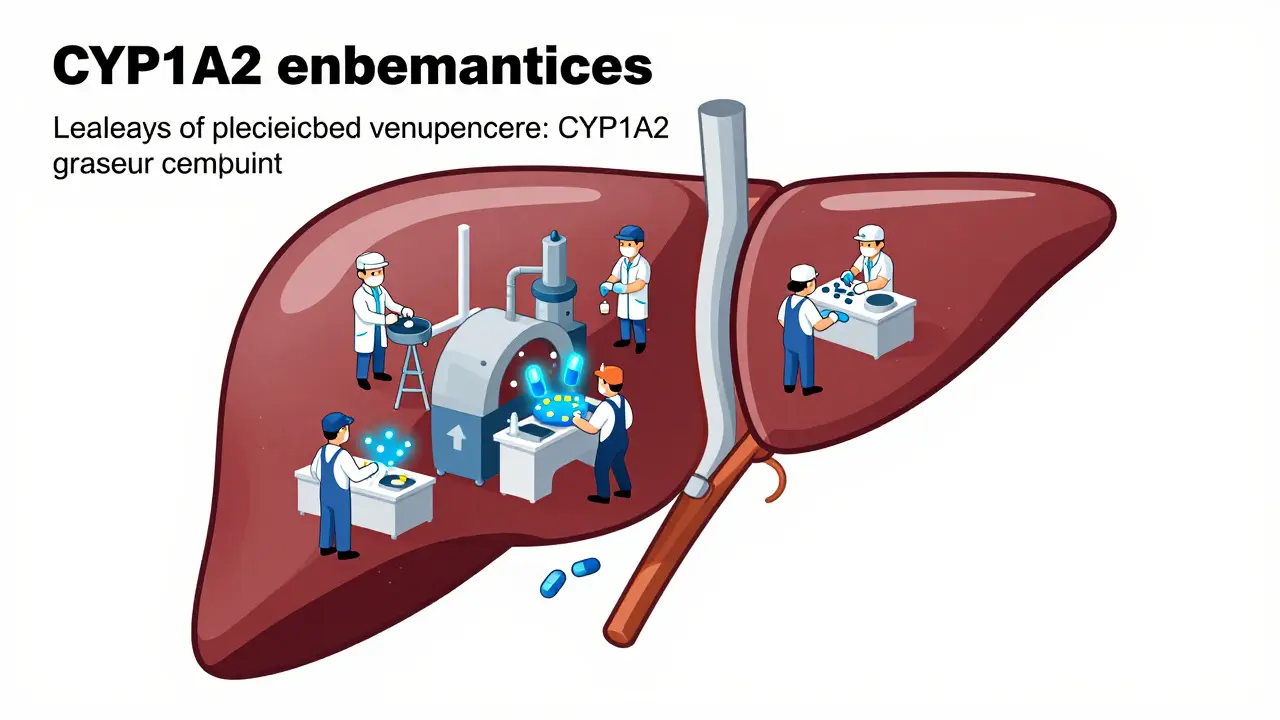
To understand why smoking matters, we have to look at the CYP1A2 enzyme. Think of this enzyme as a specialized worker in your liver whose only job is to break down certain chemicals and medications so your body can get rid of them. In the case of clozapine, CYP1A2 is the primary catalyst responsible for about 60-70% of the drug's clearance from your system.
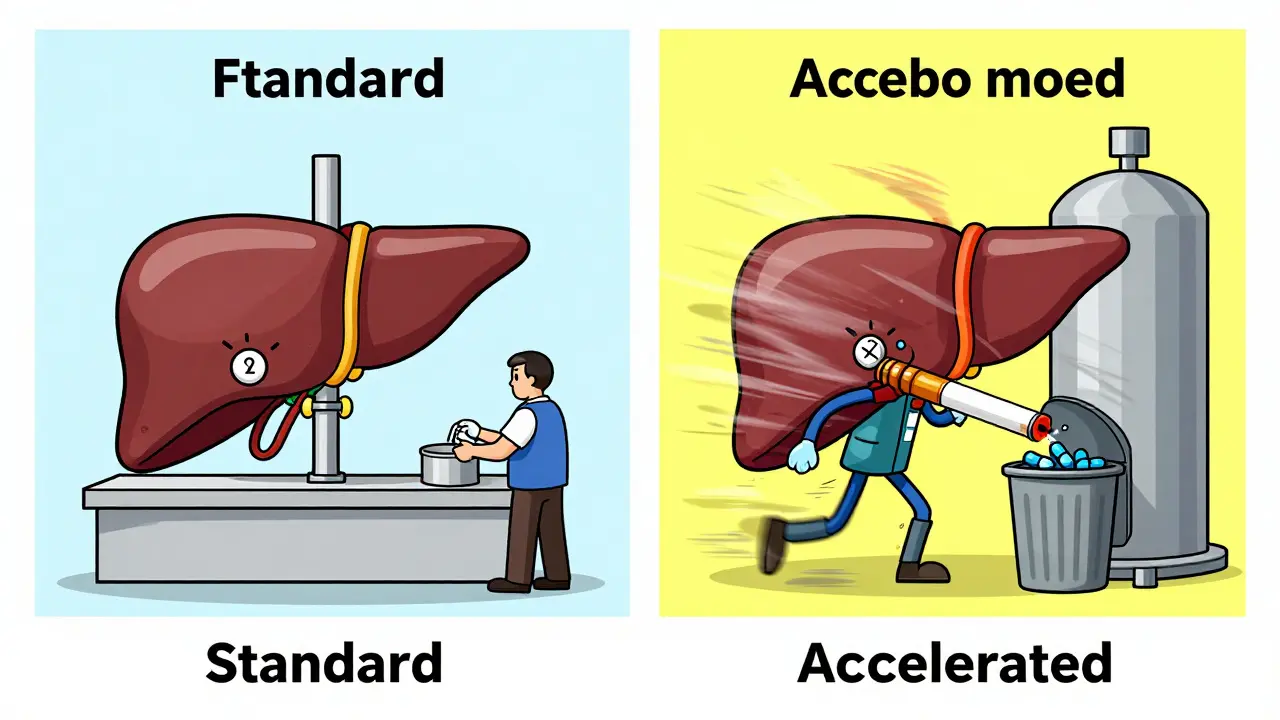
When you smoke a cigarette, you aren't just inhaling nicotine. You're inhaling polycyclic aromatic hydrocarbons. These chemicals act like a "turbo button" for the CYP1A2 enzyme. They bind to something called the aryl hydrocarbon receptor (AhR), which tells your DNA to produce more CYP1A2 enzymes. More enzymes mean the drug is chewed up and flushed out much faster than normal. In plain English: smoking makes your liver destroy clozapine before it has a chance to do its job in your brain.
How Much Does Smoking Actually Change Your Levels?
The impact is substantial. On average, smoking can drop the concentration of clozapine in your blood by about 30%. However, biology isn't a one-size-fits-all deal. Some people are "hyper-inducers," meaning their levels might crash by as much as 50%. This is why two people taking the exact same 300mg dose can have completely different experiences; the smoker might feel like the medicine isn't working at all, while the non-smoker feels heavily sedated.
| Feature | Non-Smoker | Smoker |
|---|---|---|
| CYP1A2 Activity | Baseline / Normal | Highly Induced (Increased) |
| Drug Clearance Rate | Standard | Accelerated |
| Typical Plasma Levels | Higher / Stable | 30-50% Lower |
| Typical Dose Need | Standard Dose | 40-60% Higher Dose |
The Danger Zones: Starting and Quitting
The real danger happens during transitions. If you've been a heavy smoker for years, your doctor has likely adjusted your dose upward to compensate for your "turbo-charged" liver. But what happens if you quit smoking today? The polycyclic aromatic hydrocarbons are gone, and within a week or two, your CYP1A2 levels drop back to normal. Suddenly, your liver is no longer destroying the drug at a high speed, but you're still taking that high "smoker's dose."
This can lead to rapid drug accumulation. When clozapine levels climb too high, you risk severe toxicity. We're talking about dangerous side effects like seizures, tachycardia (racing heart), or even myocarditis. It's a paradox: the very act of improving your health by quitting smoking can put you in the hospital if your medication isn't scaled back simultaneously.
Why Clozapine is More Sensitive Than Other Drugs
You might wonder why this is such a big deal for clozapine but not for every psychiatric med. Many antipsychotics use the same liver pathways, but clozapine has a very narrow therapeutic window. To work effectively without being toxic, it usually needs to stay between 350 and 500 ng/mL. Olanzapine also uses CYP1A2, but it isn't as reliant on it for clearance as clozapine is. Meanwhile, drugs like Risperidone rely on a completely different enzyme called CYP2D6, making them almost entirely unaffected by whether you smoke or not.
Genetic Wildcards and Vaping
Even among smokers, not everyone reacts the same. Some people carry a specific genetic variant called the CYP1A2 *1F/*1F genotype. People with this marker often have normal enzyme levels when they aren't smoking, but they are hypersensitive to tobacco. For them, a few cigarettes a day can trigger a massive drop in drug levels compared to someone without that genetic trait.
And if you've switched to e-cigarettes thinking you've bypassed this interaction, be careful. Recent research suggests that vaping still induces CYP1A2, though the effect is slightly weaker (about 15-20% less) than traditional combustible cigarettes. It doesn't eliminate the risk; it just shifts the numbers slightly.
Managing the Interaction: Practical Steps
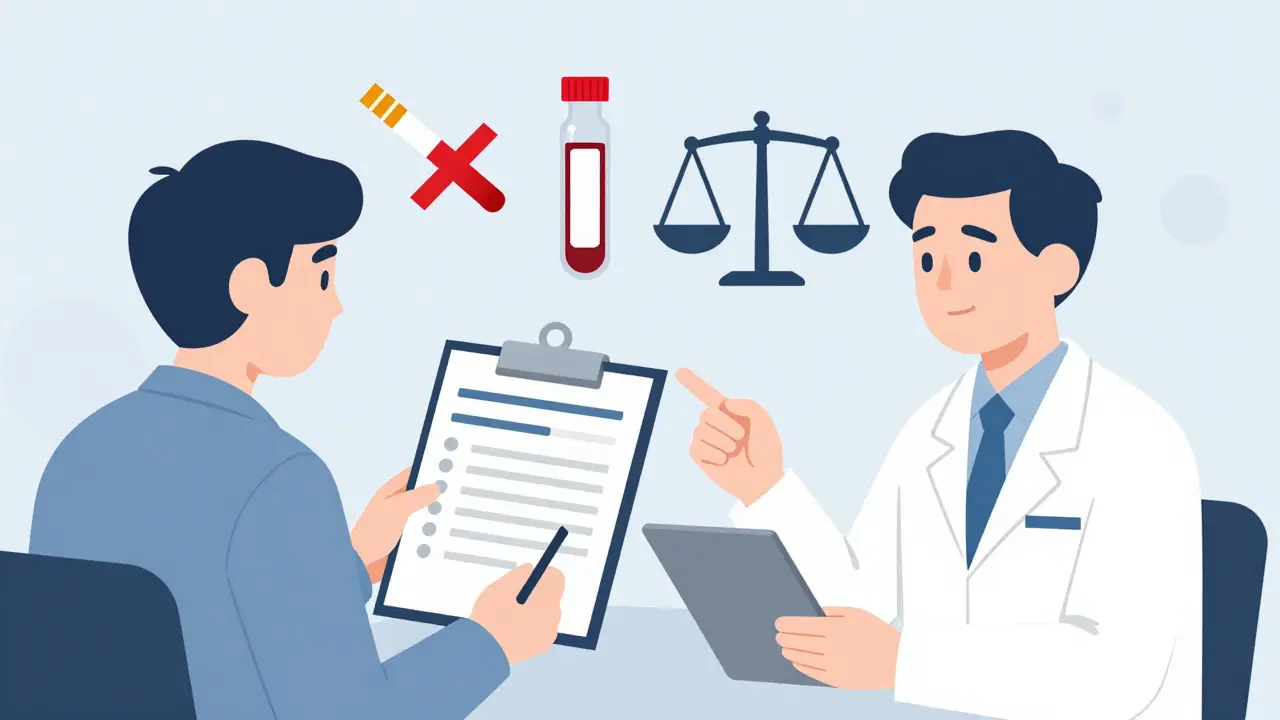
The only way to handle this safely is through Therapeutic Drug Monitoring (TDM). This is a fancy way of saying your doctor needs to keep checking your blood levels. If you are planning to quit smoking, or if you've just started, here is the general approach clinicians use:
- Baseline Check: Get your blood levels tested before any major change in smoking habits.
- The "Quit" Protocol: When stopping smoking, expect a dose reduction of 30-50%. Levels should be re-checked every few days for the first two weeks.
- The "Start" Protocol: If you start smoking, you may need a dose increase of 40-60% to keep your symptoms from returning.
- The 1-Week Rule: Because the enzyme changes take a few days to kick in, blood tests are most accurate 4-7 days after a dose or habit change.
Does nicotine itself cause the drug level drop?
No. Surprisingly, nicotine doesn't do the heavy lifting here. The induction of the CYP1A2 enzyme is caused by the polycyclic aromatic hydrocarbons found in the smoke and combustion process. This is why nicotine patches usually don't cause the same massive drop in clozapine levels that smoking cigarettes does.
What happens if I quit smoking and don't change my dose?
You risk clozapine toxicity. As your liver stops breaking down the drug as quickly, the medication builds up in your bloodstream. This can lead to severe sedation, dangerously high blood pressure or heart rate, and an increased risk of seizures.
How long does it take for levels to change after I stop smoking?
The induction effect begins to fade almost immediately, but it typically takes 1 to 2 weeks for the CYP1A2 enzyme levels to fully return to their baseline state. This is why close monitoring is required for the first 14 days after quitting.
Can other medications interfere with this process?
Yes. Other drugs can either induce or inhibit CYP1A2. For example, certain high-dose anticonvulsants like oxcarbazepine can also induce metabolism, potentially making clozapine even less effective when combined with smoking.
Is there a way to avoid these fluctuations entirely?
Currently, the best method is rigorous blood monitoring and dose adjustment. However, research is ongoing into sustained-release formulations that may be less sensitive to these rapid metabolic shifts.
Next Steps for Patients and Caregivers
If you're a patient, the most important thing you can do is be honest with your psychiatrist about how many cigarettes you smoke per day. Don't hide a smoking relapse or a sudden attempt to quit. Because the margin for error with clozapine is so small, your doctor needs a precise picture of your habits to keep your dose safe.
If you feel suddenly more sleepy, dizzy, or "foggy" after quitting smoking, contact your clinic immediately. These are early signs that your levels are climbing too high. Similarly, if your symptoms of schizophrenia start returning after you've picked up a smoking habit, a simple blood test can determine if your dose needs to be bumped up to overcome the CYP1A2 induction.
Justin Crice
April 29, 2026 AT 13:32The pharmacokinetics of the CYP1A2 isoenzyme are indeed fascinating, particularly regarding the potent induction by polycyclic aromatic hydrocarbons. It is a classic example of enzymatic upregulation causing a significant decrease in the area under the curve for the drug's plasma concentration.
Dale Kensok
April 29, 2026 AT 15:35Only a layman would be surprised by such basic metabolic induction. The overarching narrative here is merely a superficial gloss over the stochastic nature of hepatic clearance. If one possesses even a modicum of understanding regarding the aryl hydrocarbon receptor, this "revelation" is essentially elementary science. The failure of the modern medical system to integrate this into standard practice is a tragedy of intellectual inertia.
Amber McCallum
May 1, 2026 AT 01:24It's just sad that people can't control their own bodies. If you can't even stop smoking a cigarette, how do you expect to find a real balance in your soul? Most people just follow the crowd and ignore the energy of their own liver. It's all about vibes and choices, but some people prefer to stay in the dark.
Trish Perry
May 1, 2026 AT 22:02Makes you think about how we try to chemically fix things while adding other variables into the mix. It's a weird cycle where the habit of coping with the illness actually changes how the cure works. Just a strange loop of biology and behavior.
Sharon Mathew
May 3, 2026 AT 09:43Oh please! As if this is some groundbreaking discovery that suddenly changes everything! I bet most doctors just ignore this anyway and tell us to "be patient" while we suffer through the side effects. This is just more medical jargon designed to make us feel small and confused while they pretend to have all the answers!
Nigel Gosling
May 3, 2026 AT 23:22The sheer audacity of the pharmaceutical industry to sell a drug with such a volatile interaction is practically criminal! We are living in an era of absolute negligence where the patient is treated as a lab rat in a flawed experiment. It's a moral failure of the highest order that we are forced to dance around these chemical minefields just to maintain a shred of sanity. Absolutely pathetic!
Kali Murray
May 4, 2026 AT 19:05this is wild 🤯 honestly just stay safe everyone 🌸✨
Kat G
May 6, 2026 AT 17:37It is very important to follow the advice of your medical provider during these transitions. Maintaining a consistent schedule for blood tests ensures that the dose remains within the therapeutic window.
Jean Robert
May 7, 2026 AT 19:30I really want everyone to know that if you are struggling with this, you are not alone and there are so many people who want to help you get through the process of quitting smoking safely. It can feel like a mountain to climb, especially when you're worried about your meds making you feel sick or not working, but with a supportive doctor and a little bit of patience, you can absolutely find a stable balance that works for your unique body and mind. Just take it one day at a time and remember that every small step toward health is a victory worth celebrating, no matter how long the road seems to be right now.