Congressional Bills Aim to Tackle Drug Shortages in 2025-2026
 Dec, 3 2025
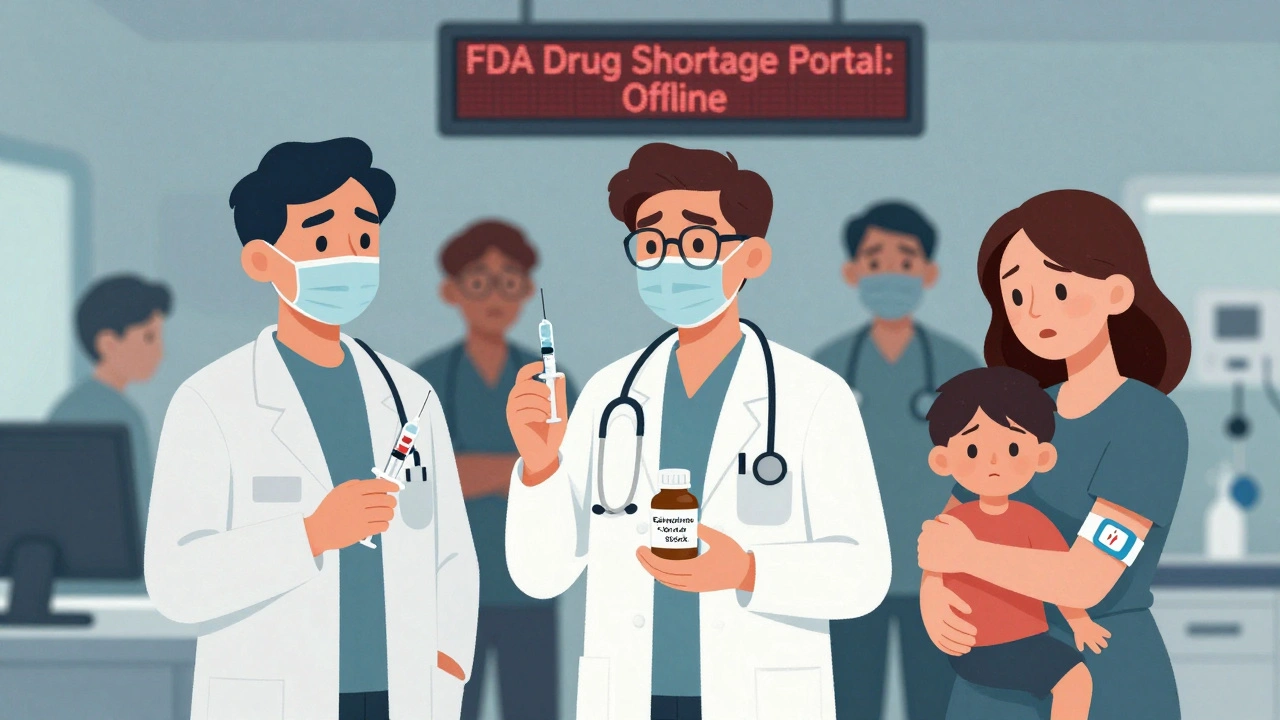
Drug shortages aren’t just inconvenient-they’re life-threatening. In 2025, the FDA listed 287 drugs in short supply, with nearly half classified as critical-medications used to treat cancer, heart failure, seizures, and infections. Hospitals are rationing insulin. Emergency rooms are out of epinephrine. Cancer patients are waiting weeks for chemotherapy drugs that used to be on the shelf. And while patients suffer, Congress has introduced two major bills meant to fix this-but they’re stuck in limbo.
The Drug Shortage Prevention Act of 2025 (S.2665)
S.2665, introduced by Senator Amy Klobuchar in August 2025, is the most detailed legislative response to drug shortages. It doesn’t create new funding or subsidies. Instead, it forces drugmakers to tell the FDA when demand for a critical medication starts to spike. Right now, manufacturers aren’t required to report rising demand until a shortage is already official. By then, it’s too late. Pharmacies are empty. Patients are switching to riskier alternatives.
The bill wants to change that. If passed, drug companies would have to notify the FDA within 72 hours of seeing a surge in orders, a production delay, or a supply chain disruption. The goal? Give the FDA time to step in-find alternate suppliers, fast-track approvals, or warn doctors before a drug disappears entirely.
But here’s the catch: the bill doesn’t say what counts as a “critical drug.” It doesn’t spell out penalties for companies that don’t report. And it doesn’t say how the FDA will handle the flood of notifications it’s likely to get. The agency already has a Drug Shortage Portal, but it’s been glitchy since the government shutdown began in October 2025. With 800,000 federal workers furloughed-including FDA staff-the system isn’t even running at full capacity.
Experts estimate it would cost $45 million a year to properly staff and upgrade the system to handle S.2665’s requirements. With Congress locked in a budget battle and the federal deficit hitting $1.74 trillion last fiscal year, that money isn’t coming anytime soon.
The Health Care Provider Shortage Minimization Act (H.R.1160)
If S.2665 targets drug supply chains, H.R.1160 targets the people who need those drugs. The bill’s title is vague, and its text hasn’t been made public. All we know is that it’s meant to reduce shortages of doctors, nurses, and other frontline health workers.
Here’s the reality: 122 million Americans live in areas where there aren’t enough primary care providers. Rural clinics are closing. ERs are understaffed. Nurses are quitting because they’re overworked. In September 2025, 87% of physicians surveyed by the American Medical Association said drug shortages made their jobs harder-but only 12% had even heard of H.R.1160.
That’s not a coincidence. The bill hasn’t been assigned to a committee. No sponsor list is public. No hearings have been scheduled. Unlike S.2665, which at least has a public record of its committee referral, H.R.1160 is a ghost bill-named, filed, but invisible.
That doesn’t mean it’s unimportant. The American Association of Medical Colleges predicts a shortage of 124,000 physicians by 2034. If H.R.1160 is meant to expand training programs, forgive student loans for rural providers, or fast-track visas for foreign-trained nurses, it could be a game-changer. But without details, it’s impossible to tell. And in a Congress where headlines are dominated by shutdowns and phone record lawsuits, this bill is fading into the background.
The Shutdown That Stopped Everything
The 2025 government shutdown-the longest in U.S. history-isn’t just a political crisis. It’s a public health emergency.
With federal agencies shuttered, the FDA can’t inspect foreign drug factories. The CDC can’t track emerging shortages. The Health Resources and Services Administration can’t update its shortage maps. Even the Drug Shortage Portal, the one tool doctors rely on to find alternatives, is down for maintenance.
And the shutdown isn’t ending soon. The only plan on the table-a continuing resolution proposed by Senate Republicans-extends funding through January 30, 2026. But it doesn’t include a single line for drug shortages or health worker hiring. Congressman Don Beyer called it “a budget that ignores the sick.”
Meanwhile, the economy is bleeding. The Congressional Budget Office estimates the shutdown is costing $1.5 billion a day. That’s money that could be spent on hiring more inspectors, training more nurses, or building better supply chains. Instead, it’s vanishing.
Who’s Really Affected?
It’s not just hospitals. It’s families.
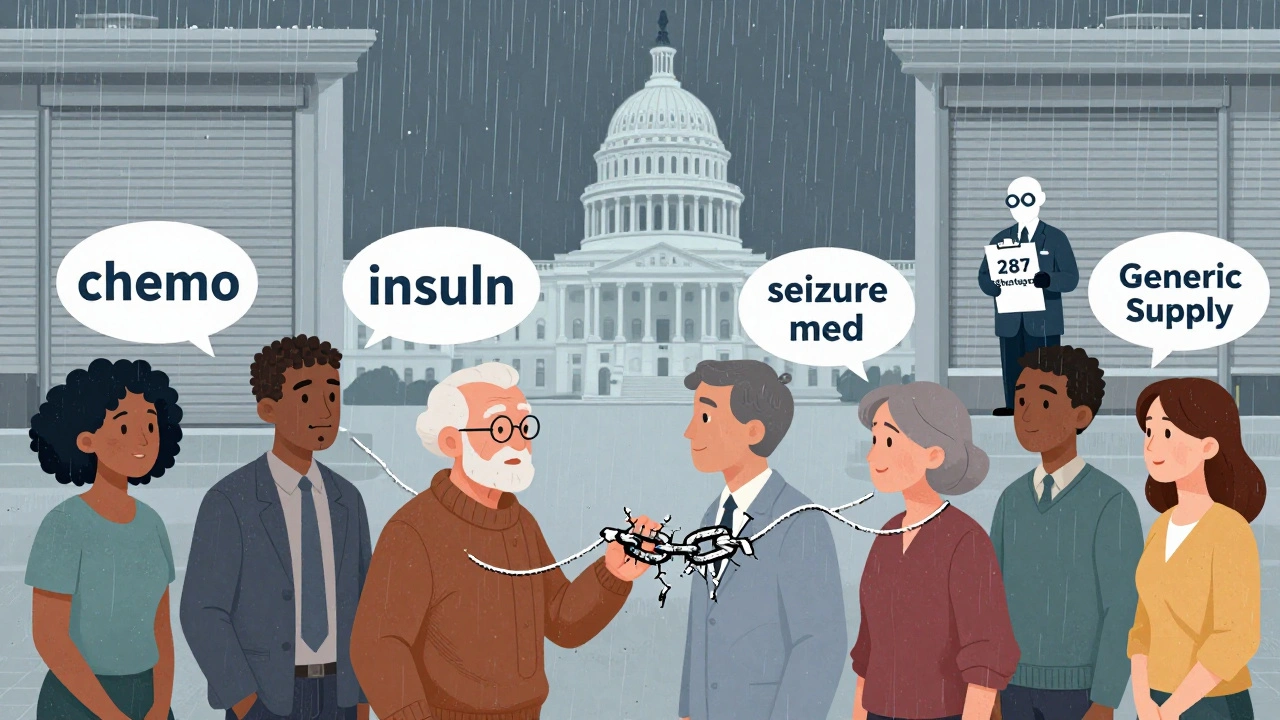
One mother in Ohio spent three weeks trying to find a generic version of her son’s seizure medication. When she finally did, the new brand caused violent side effects. Another patient in Texas had to delay her breast cancer treatment because the drug was out of stock. Her oncologist had to switch her to a more expensive, less effective alternative.
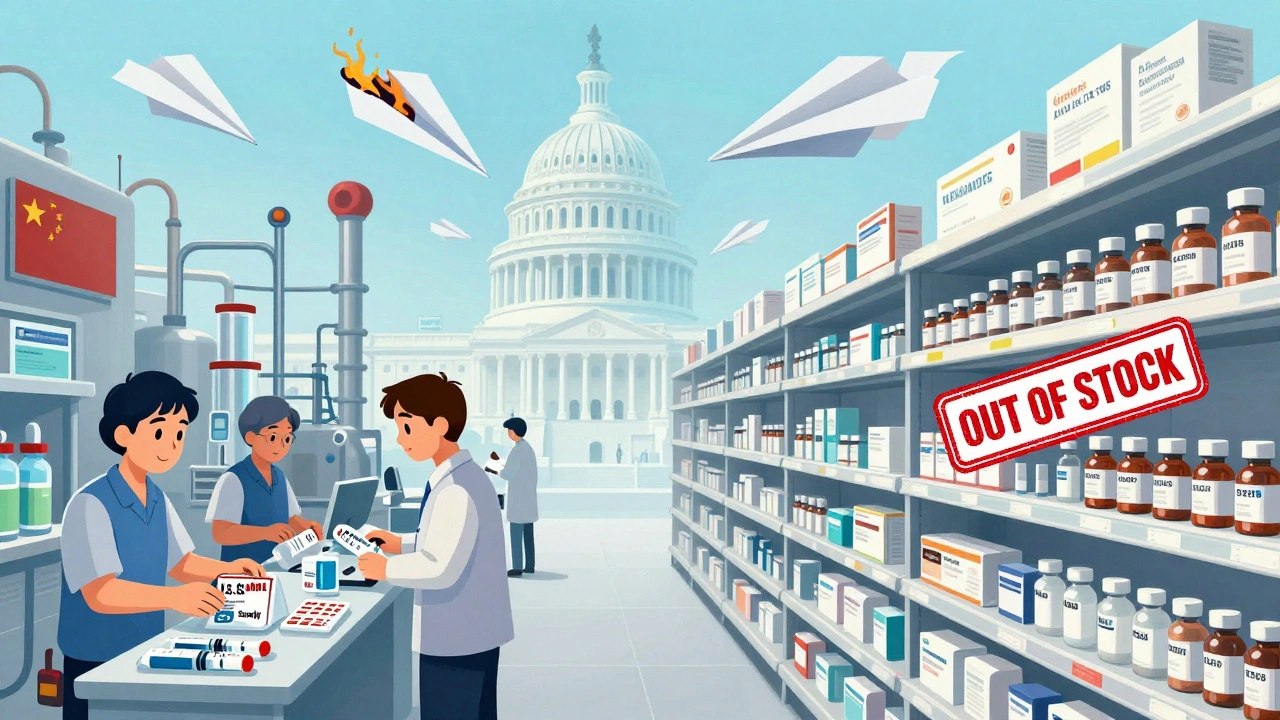
And it’s getting worse. In Q3 2025, 98% of hospitals reported at least one critical drug shortage, according to the American Hospital Association. The biggest culprits? Manufacturing delays-63% of all shortages, per the Association for Accessible Medicines. Most of these delays aren’t caused by natural disasters or war. They’re caused by poor planning, single-source suppliers, and profit-driven decisions.
Companies make more money selling brand-name drugs. Generic versions? They’re cheap. Low profit. Easy to cut corners on. And when a factory in India or China has a quality issue, the whole U.S. supply chain breaks.
What’s Missing From These Bills?
S.2665 tries to fix the signal-but not the noise. It wants manufacturers to report shortages faster. But it doesn’t force them to make more of the drugs. It doesn’t require backup suppliers. It doesn’t punish companies that abandon low-profit medications.
H.R.1160 might help with staffing-but without knowing what’s in it, we can’t say if it’ll fix the real problem: burnout, low pay, and broken training pipelines.
Both bills ignore the biggest driver of shortages: the lack of competition. Right now, just three companies make 80% of the generic injectable drugs used in U.S. hospitals. If one shuts down, the whole system collapses. No other company can step in fast enough.
What we need isn’t just better reporting. We need incentives to build new factories. We need tax breaks for companies that make generic drugs in the U.S. We need penalties for monopolistic behavior. We need the FDA to have the power-and the staff-to approve new suppliers in weeks, not years.
What Can You Do?
If you’re a patient, you’re not powerless. Ask your pharmacist: “Is this drug on shortage?” If they say yes, ask if there’s a safe alternative. Talk to your doctor. Call your representative. Tell them you’ve been affected.
Healthcare workers: Document every shortage you see. Save emails. Keep logs. Share them with advocacy groups like the American Society of Health-System Pharmacists. Data like this is what eventually moves Congress.
And if you’re reading this and wondering why this hasn’t been fixed yet-the answer is simple: it’s not a technical problem. It’s a political one. The money is there. The solutions are known. But without public pressure, bills like S.2665 and H.R.1160 will die quietly in committee. Again.
What is the Drug Shortage Prevention Act of 2025?
The Drug Shortage Prevention Act of 2025 (S.2665) is a Senate bill that requires pharmaceutical manufacturers to notify the FDA within 72 hours of increased demand or supply disruptions for critical drugs. The goal is to give regulators time to respond before a shortage occurs. It was introduced on August 1, 2025, and is currently pending in the Senate Health, Education, Labor, and Pensions Committee.
Why isn’t H.R.1160 getting attention?
H.R.1160, the Health Care Provider Shortage Minimization Act of 2025, has no public details-no sponsor list, no committee assignment, no bill text. Without transparency, it’s impossible for the public or experts to support or critique it. Its silence reflects the broader neglect of healthcare issues in Congress during the 2025 government shutdown.
How many drugs are currently in short supply?
As of September 30, 2025, the FDA listed 287 drugs in shortage, with 47% classified as critical-medications used to treat life-threatening conditions like cancer, heart failure, and severe infections.
Are drug shortages getting worse?
Yes. In 2024, there were 230 drug shortages. In 2025, that number jumped to 287. The main causes are manufacturing delays (63%), reliance on foreign suppliers, and lack of competition in the generic drug market. The government shutdown has worsened the situation by halting FDA inspections and monitoring.
What’s the biggest obstacle to fixing drug shortages?
The biggest obstacle isn’t technology or policy-it’s political will. Solutions exist: incentivizing domestic manufacturing, breaking up monopolies, funding FDA oversight. But without public pressure and a functioning government, Congress keeps postponing action. The 2025 shutdown has frozen progress on all non-essential legislation, including these critical bills.
What Comes Next?
If the shutdown ends before January 30, 2026, S.2665 might get a hearing. H.R.1160 might finally get a sponsor. But if Congress doesn’t act by then, both bills expire. The 119th Congress ends in January 2027. That means another two years of empty shelves, worried patients, and overworked providers.
Drug shortages aren’t a future problem. They’re happening right now. And the people who need these medications don’t have time to wait for politics to catch up.
Abhi Yadav
December 5, 2025 AT 02:54Rachel Nimmons
December 5, 2025 AT 23:28Julia Jakob
December 6, 2025 AT 22:41Robert Altmannshofer
December 6, 2025 AT 23:27Kathleen Koopman
December 7, 2025 AT 07:12Nancy M
December 8, 2025 AT 11:46gladys morante
December 10, 2025 AT 09:40David Ross
December 12, 2025 AT 06:29Craig Ballantyne
December 14, 2025 AT 03:39Victor T. Johnson
December 15, 2025 AT 13:15Nicholas Swiontek
December 16, 2025 AT 18:56Robert Asel
December 17, 2025 AT 19:53Shannon Wright
December 19, 2025 AT 04:22vanessa parapar
December 21, 2025 AT 02:45Ben Wood
December 21, 2025 AT 08:59