Fatigue in Autoimmune Disease: What Causes It and How to Manage It
 Dec, 25 2025
When you have an autoimmune disease, fatigue isn’t just feeling tired after a long day. It’s waking up and feeling like you’ve run a marathon while still in bed. It’s needing to cancel plans because you can’t lift your arms to make coffee. It’s staring at a to-do list and knowing you won’t finish even one item-not because you’re lazy, but because your body refuses to cooperate. This isn’t normal tiredness. This is autoimmune fatigue, and it affects nearly every single person with an autoimmune condition.
Why Is Autoimmune Fatigue So Different From Regular Tiredness?
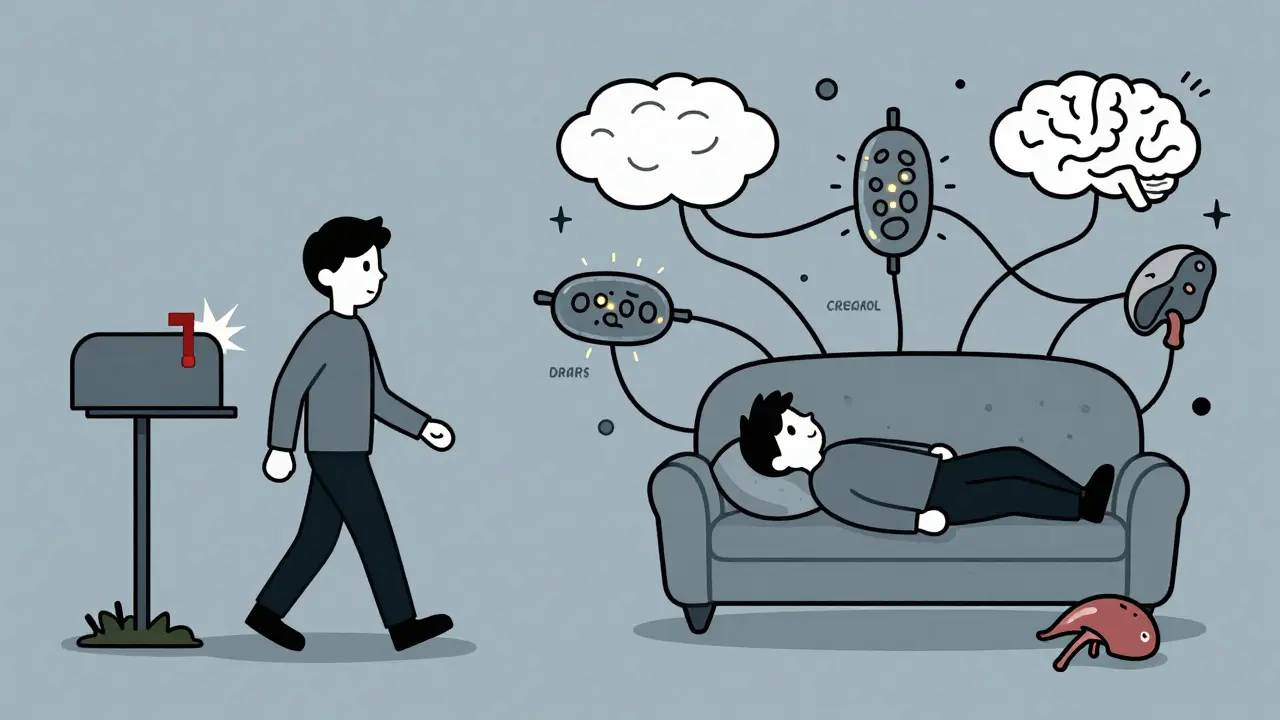
Most people understand fatigue from lack of sleep, overwork, or a rough week. But autoimmune fatigue doesn’t go away with a good night’s rest. It doesn’t improve with caffeine. It doesn’t vanish after a vacation. Studies show that 98% of people with autoimmune diseases report this kind of exhaustion. In healthy adults, only 7-45% experience persistent fatigue. That’s a massive gap. What makes it worse is how it hits your brain. People describe it as brain fog-forgetting names, struggling to find words, losing focus mid-sentence. It’s not just physical. It’s neurological. Research using advanced brain scans shows that over 80% of autoimmune patients with severe fatigue have signs of inflammation in the central nervous system. Inflammatory molecules like IL-6, TNF-α, and IL-1β are flooding the body, crossing into the brain, and disrupting the circuits that control energy, motivation, and alertness. Unlike regular fatigue, autoimmune fatigue often gets worse after even small amounts of activity. This is called post-exertional malaise. You might walk to the mailbox and spend the next two days lying down. Your body doesn’t recover. It crashes. This isn’t weakness. It’s your immune system misfiring and your energy system breaking down.What’s Really Going On Inside Your Body?
The old belief was that fatigue came from pain, anemia, or disease flare-ups. But research now shows that’s only part of the story. Fatigue and disease activity don’t always line up. Someone with mild rheumatoid arthritis might be exhausted, while someone with severe joint damage feels surprisingly energized. Three major systems are involved:- Inflammation: Pro-inflammatory cytokines are elevated 2-4 times higher than in healthy people. These chemicals don’t just cause joint swelling-they directly signal your brain to shut down energy production.
- HPA Axis Dysfunction: Your adrenal glands, which produce cortisol (your body’s natural stress hormone), are often underperforming. Studies show an 18-22% drop in cortisol response after waking. That means your body can’t ramp up energy when it needs to.
- Mitochondrial Dysfunction: Mitochondria are the power plants of your cells. In 65% of autoimmune fatigue cases, they’re producing 40-55% less ATP-the energy molecule your muscles and brain rely on. It’s like having a car with a dead battery, even when the engine is running.
Which Autoimmune Diseases Cause the Worst Fatigue?
Not all autoimmune diseases are equal when it comes to fatigue. Some hit harder than others:- Systemic Lupus Erythematosus (SLE): 98% of patients report severe fatigue. Anti-dsDNA antibody levels correlate with how bad it gets.
- Multiple Sclerosis (MS): 96% experience fatigue. Brain lesions in the thalamus are strong predictors of exhaustion.
- Rheumatoid Arthritis (RA): 94% report fatigue-and for 63% of RA patients, it’s worse than joint pain.
- Sjögren’s Syndrome: 92% have fatigue, with 78% rating it as 8/10 or higher in severity.
- Celiac Disease: Even after going gluten-free, 90% still struggle with fatigue, suggesting other immune triggers remain active.
- Type 1 Diabetes: 88% report fatigue, often tied to blood sugar swings and low-grade inflammation.
How Is It Diagnosed? (It’s Not in Standard Blood Tests)
There’s no single blood test for autoimmune fatigue. Doctors can’t just order a “fatigue panel.” Instead, they rely on patient-reported tools that measure impact, not just numbers. Three validated scales are used in clinics:- Modified Fatigue Impact Scale (MFIS): Rates how fatigue affects physical, cognitive, and psychosocial function.
- FACIT-F (Functional Assessment of Chronic Illness Therapy-Fatigue): A 13-question survey where scores below 34.5 indicate clinically significant fatigue.
- Visual Analog Scale (VAS): Patients mark a line from 0 (no fatigue) to 10 (worst imaginable).
What Actually Works to Manage It?
There’s no magic pill. But combining a few evidence-based strategies can cut fatigue by 45% or more. Here’s what works:1. Pacing (Not Pushing)
The biggest mistake people make is trying to “push through” fatigue. That leads to crashes. Pacing means working in short bursts with rest built in. Use the 50/10 rule: 50 minutes of activity, 10 minutes of rest. Track your energy levels for a week. Notice when you feel best-morning? Afternoon? Schedule demanding tasks then.2. Sleep Optimization
Poor sleep fuels inflammation. Fixing sleep can reduce fatigue by 22-25%. Key steps:- Keep a consistent sleep schedule-even on weekends.
- Avoid screens 90 minutes before bed. Blue light suppresses melatonin.
- Use blackout curtains and keep your room cool (18-20°C).
- Treat sleep apnea or restless leg syndrome if present. These are common in autoimmune patients.
3. Graded Exercise (Done Right)
Exercise isn’t the enemy. But too much, too fast, makes it worse. Graded Exercise Therapy (GET) has helped 32% of patients-but only when it’s personalized. Start with 5 minutes of walking every other day. Increase by 1 minute every 2 weeks. Stop if you feel worse 24 hours later. Many people fail because they’re pushed too hard by well-meaning therapists.4. Cognitive Behavioral Therapy for Autoimmune Fatigue (CBT-AF)
This isn’t just “think positive.” It’s a structured program that helps you reframe thoughts like “I’m lazy” or “I should be able to do more.” It teaches energy budgeting, pacing, and stress reduction. Studies show it’s 27% more effective than standard care after six months.5. Medications (When Appropriate)
- Low-dose hydrocortisone (10-20 mg/day): Helps if your cortisol is low. Shows 35-40% improvement in fatigue scores. - Modafinil: Used for MS-related fatigue. Reduces symptoms 28% more than placebo. - CoQ10 (200 mg/day): Supports mitochondrial function. In trials, it improved fatigue by 29%. - Anti-IL-6 drugs (like tocilizumab): Early trials in RA show 38% fatigue reduction. Not yet approved for fatigue alone-but promising.
What Doesn’t Work (And Why)
Many patients waste time and money on things that sound good but lack proof:- Extreme detoxes or juice cleanses: No evidence they reduce inflammation or fatigue.
- High-dose vitamin D alone: Helpful if you’re deficient, but won’t fix fatigue if levels are normal.
- Over-the-counter stimulants (like energy drinks): They give a short spike, then crash harder.
- Just “rest more”: Sleeping 12 hours a day doesn’t help if your sleep quality is poor.
The Big Picture: Why This Matters
Fatigue is the #1 complaint among autoimmune patients. More than pain. More than joint stiffness. More than skin rashes. In one survey, 89% of lupus patients said they’d trade pain relief for better energy. That’s how powerful this symptom is. It’s not just about feeling better. It’s about being able to work, care for your kids, drive, cook, or even hold a conversation without collapsing afterward. When fatigue is managed well, people regain their lives. New research is moving fast. The NIH just funded $18.7 million for fatigue-specific studies. The first fatigue-targeted treatment for autoimmune conditions could be approved by 2026. Until then, the best approach is a personalized mix of pacing, sleep, gentle movement, therapy, and-if needed-medication. This isn’t about willpower. It’s about biology. Your fatigue is real. It has a name. It has causes. And yes-it can be managed.Is autoimmune fatigue the same as chronic fatigue syndrome?
They’re closely related but not identical. Chronic Fatigue Syndrome (ME/CFS) is diagnosed when fatigue lasts over six months, includes post-exertional malaise, unrefreshing sleep, and cognitive issues-with no other clear cause. Many people with autoimmune diseases like lupus or MS also meet the criteria for ME/CFS. In fact, 89% of ME/CFS patients have a comorbid autoimmune condition. The symptoms overlap so much that experts now believe they share the same root causes: inflammation, mitochondrial dysfunction, and HPA axis disruption.
Can diet help with autoimmune fatigue?
Diet alone won’t fix it, but it can support your body’s ability to recover. Anti-inflammatory diets-rich in vegetables, fatty fish, nuts, and olive oil-can reduce cytokine levels. Avoiding processed sugar and refined carbs helps stabilize energy. For people with celiac disease or gluten sensitivity, going gluten-free is essential. Some find benefit in eliminating dairy or nightshades, but evidence is mixed. Focus on consistency over perfection. A single “perfect” meal won’t help. Daily habits will.
Why do some doctors dismiss fatigue as psychological?
Because until recently, there were no visible biomarkers. Doctors were trained to look for joint swelling, rashes, or lab abnormalities. Fatigue doesn’t show up on X-rays or blood tests. So some assumed it was stress, depression, or laziness. That’s changing. Brain imaging now shows clear inflammation in fatigue patients. Patient advocacy and new research are forcing the medical community to take it seriously. If your doctor dismisses it, ask for a referral to a rheumatologist or autoimmune specialist who uses validated fatigue scales.
How long does it take to see improvement with management strategies?
You might notice small changes in 2-4 weeks-better sleep, less brain fog. But meaningful, lasting improvement usually takes 3-6 months. That’s because you’re rewiring your body’s energy system, not just masking symptoms. Pacing, sleep hygiene, and gentle movement need time to build momentum. Don’t give up if you don’t feel better right away. Consistency beats intensity.
Can supplements like CoQ10 or magnesium really help?
Yes, but only if used correctly. CoQ10 at 200 mg/day improved fatigue by 29% in clinical trials by supporting mitochondrial energy production. Magnesium can help with muscle cramps and sleep, but won’t fix inflammation-driven fatigue. Always check with your doctor before starting supplements, especially if you’re on medications. Some, like vitamin D or omega-3s, are safe and helpful. Others can interfere with immune drugs. Quality matters too-choose third-party tested brands.