FDA Facility Inspections: How the Agency Ensures Quality in Manufacturing
 Nov, 28 2025
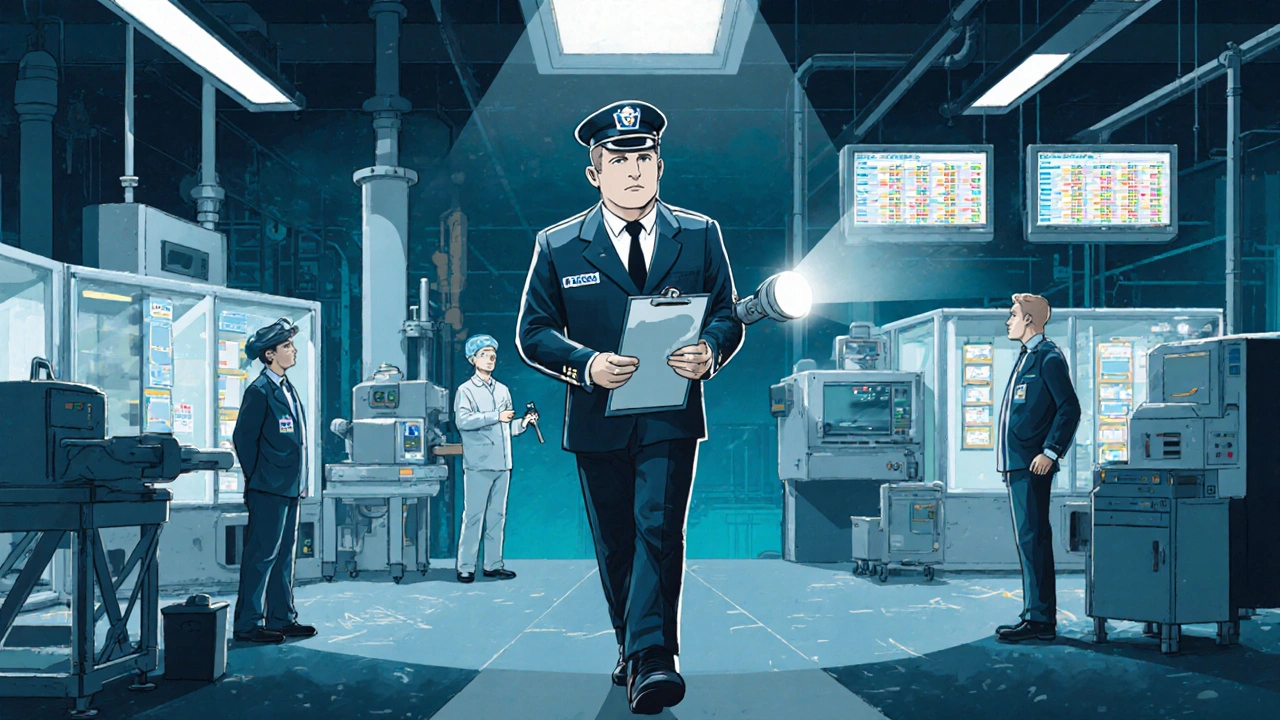
The U.S. Food and Drug Administration doesn’t wait for problems to happen before acting. Instead, it shows up - unannounced or with notice - at factories, labs, and warehouses across the globe to check if the medicines, medical devices, and food products you rely on are being made the right way. These are not routine visits. They’re FDA facility inspections, and they’re one of the most powerful tools the agency has to protect public health.
Why FDA Inspections Matter
Every pill, injection, pacemaker, and bottle of infant formula that reaches your hands had to pass through a manufacturing facility. But how do you know that facility didn’t cut corners? That the equipment was cleaned properly? That the batch records were accurate? That no one falsified data? The FDA doesn’t trust paperwork alone. It sends trained investigators to see for themselves. These inspections are the agency’s way of verifying that companies follow Current Good Manufacturing Practices (CGMP). These rules aren’t suggestions. They’re federal law under 21 CFR Parts 210 and 211 for drugs, and 21 CFR Part 820 for devices. Failure to comply can mean a product is pulled from shelves, a facility is shut down, or worse - a patient gets hurt. In 2022, the FDA inspected nearly 13,000 facilities worldwide. About 12,000 were in the U.S. The rest? In countries like India, China, and Germany - places where a huge portion of the world’s pharmaceuticals are made. The agency doesn’t have unlimited staff. So it doesn’t inspect every place every year. It picks targets based on risk.How the FDA Chooses Where to Inspect
Not all facilities are treated the same. The FDA uses a risk-based model that looks at three things:- Product risk: Is it a life-saving drug for cancer patients? Or a daily vitamin? Higher risk = higher priority.
- Facility risk: Has this site had violations before? Had recalls? Been flagged by whistleblowers?
- Process risk: Are they using new, unproven tech? Or old, well-documented methods?
The Four Types of FDA Inspections
There are four main kinds of inspections, each with a different purpose:- Pre-approval inspections: Done before a new drug or device gets approved. The FDA checks if the facility can actually make the product the way it described in its application. If the inspection fails, approval gets delayed - sometimes for years.
- Routine surveillance: The most common type. These happen every few years, depending on risk. They’re the baseline check to make sure things haven’t slipped.
- Compliance follow-up: The FDA comes back to see if you fixed the problems from a previous inspection. If you didn’t, things get serious fast.
- For-cause inspections: Triggered by red flags - a spike in patient complaints, a whistleblower tip, or a product recall. These can happen with zero notice.

What Happens During an Inspection
When the FDA arrives, things move fast. Inspectors show up with official credentials and hand you FDA Form 482 - the Notice of Inspection. You’re required to let them in. Refusing? That’s a violation. They’ll ask for a tour of the facility - not just the clean rooms, but the warehouse, the maintenance area, even the break room. They’ll want to see how equipment is cleaned, how waste is handled, how air quality is controlled. Then comes the paperwork. Inspectors dig into:- Deviation reports - why did a batch fail? Was it investigated?
- Training records - did every employee get the right training?
- Validation documents - is the equipment proven to work correctly?
- Change control logs - did you document every tweak to the process?
- Batch records - every step, every measurement, every signature.
The FDA Form 483: What It Means
At the end of the inspection, the team gives you FDA Form 483. This isn’t a final verdict. It’s a list of objectionable conditions they observed. Think of it as a checklist of things that need fixing. Common issues? Here’s what industry data shows:- 32% - Inadequate investigation of deviations
- 24% - Missing or incomplete training records
- 15% - Poor validation documentation
- 7% - Weak change control systems
What Facilities Do Right
The best-run facilities don’t wait for the FDA to show up. They prepare like they’re already being inspected. One company we talked to runs quarterly mock inspections. They bring in an outside auditor to simulate an FDA visit - complete with document requests, surprise interviews, and a Form 483. After three rounds, their observation rate dropped by 63%. They also have a single point of contact for inspections - not five people giving mixed messages. And they keep a dedicated inspection room: printers running, computers charged, documents organized by category and date. One facility cut their inspection time by 22% just by having documents ready in minutes, not hours. Another key move? Keeping facility layouts updated. If you move a machine, update the diagram - within 7 days. Inspectors notice discrepancies immediately. And if your floor plan doesn’t match reality, they start questioning everything else.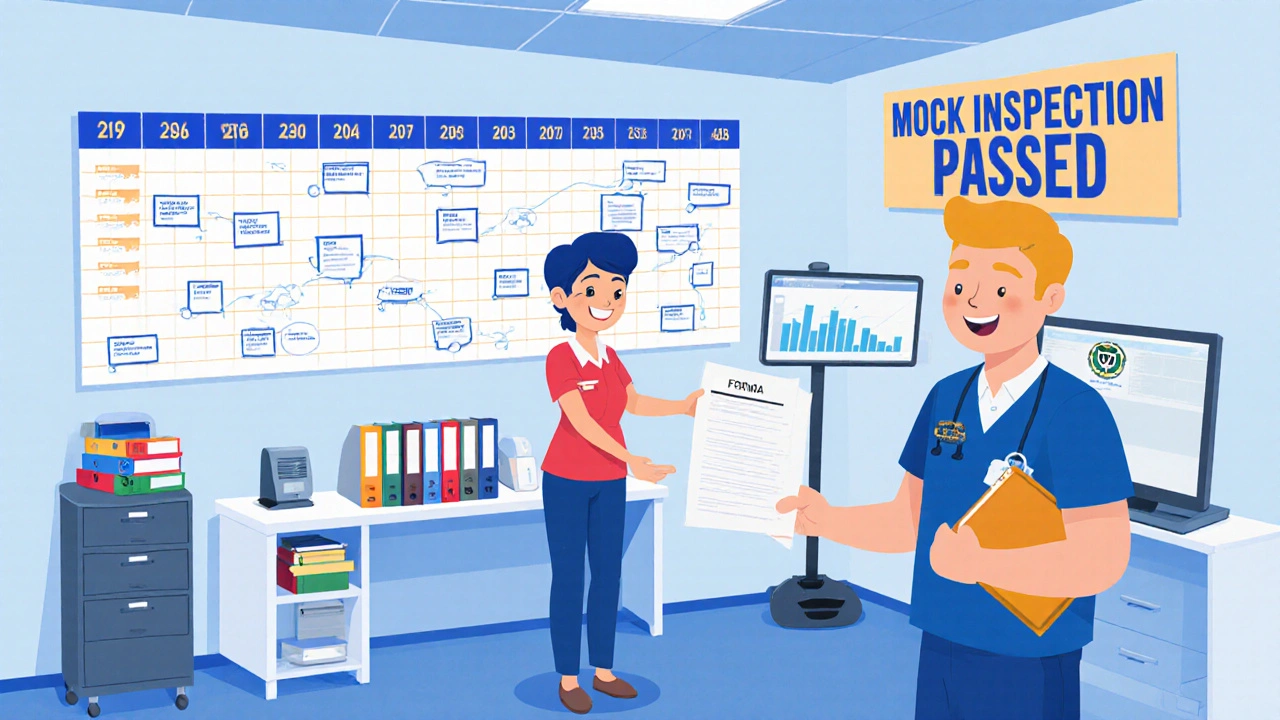
What to Avoid
Don’t try to hide things. Don’t delay giving records. Don’t let staff guess answers. The FDA has seen it all. One common mistake? Staff saying, “I don’t know” or “That’s not my job.” That’s not an answer. It’s a failure of training. If someone doesn’t know how to handle an inspector’s question, the problem isn’t the person - it’s the system. Another? Poor housekeeping. A dirty floor won’t get you shut down. But it makes inspectors wonder: if they can’t keep the place clean, what else are they cutting corners on? And don’t forget record retention. The FDA requires you to keep records for at least two years after a product is discontinued. In 2023, 87% of Form 483 items were about missing or expired records.The Future of FDA Inspections
The agency is changing how it works. By 2026, it plans to use remote tools for 35% of inspections. Virtual tours and digital document reviews are already being tested. In pilot programs, they’ve found remote reviews work just as well as in-person ones for 78% of documentation checks. But here’s the twist: while remote inspections are growing, the number of inspections overall is rising - especially for high-risk products. Medical device makers saw a 7% increase in warning letters in 2023. The FDA is shifting resources to where the risk is highest. By late 2024, the agency will start testing AI tools to scan documents faster - flagging missing signatures, inconsistent dates, or duplicated data. This isn’t about replacing inspectors. It’s about helping them focus on what matters: real problems, not paperwork errors.Bottom Line
FDA inspections aren’t about catching companies doing something wrong. They’re about making sure nothing goes wrong in the first place. The goal isn’t punishment - it’s prevention. If you’re in manufacturing, your job isn’t just to make the product. It’s to prove you can make it safely, consistently, and honestly - every single day. Because when the FDA shows up, they’re not just checking your facility. They’re checking your commitment to patient safety.There’s no shortcut. No magic checklist. Just discipline, documentation, and a culture that puts quality above speed.
Chris Taylor
November 29, 2025 AT 23:49Just read this and had to pause for a second. I work in pharma logistics and honestly, most people don’t realize how much goes into just one pill being safe. The FDA doesn’t play games - they show up, look around, and if something’s off, you’re done. No second chances.
My buddy’s plant got flagged last year for missing audit trails. Took them 8 months to fix it. Lost a whole product line. Scary stuff.
Melissa Michaels
December 1, 2025 AT 18:07The data integrity issue is the most alarming trend here. Forty-five percent of observations tied to electronic records? That’s not just sloppy - it’s systemic. Companies think digitizing processes means they’re modernizing when really they’re just creating new ways to hide errors.
Validation documentation and change control aren’t paperwork - they’re the backbone of patient safety. If you treat them like chores, someone’s going to get hurt. And when that happens, it’s never just one person’s fault.
Nathan Brown
December 2, 2025 AT 02:41You know what’s wild? The FDA’s not trying to be the police. They’re trying to be the mirror. They show you what you’ve become - not what you meant to be.
Every time a company cuts corners on training records or skips cleaning validation, they’re not just breaking rules. They’re saying patient trust is optional. And that’s the real crime here - not the missing signatures, but the silence behind them.
It’s not about fear. It’s about responsibility. We outsourced manufacturing to save money. But we didn’t outsource our moral duty to make sure what we’re selling doesn’t kill.
That’s the quiet crisis. Not the inspections. The fact that we’ve normalized the idea that someone else - some foreign lab, some underpaid technician - should carry the weight of our health.
And now we’re surprised when the system cracks?
It’s not broken. It’s been screaming for years.
Matthew Stanford
December 3, 2025 AT 11:33Mock inspections work. Just did one at my company last month. We found 17 gaps we didn’t even know existed. Turned it into a team-building exercise. Now everyone knows what to do when the FDA walks in.
Also - keep your floor plans updated. Seriously. One misplaced machine and they start doubting everything.
Olivia Currie
December 3, 2025 AT 19:40OMG I just cried reading this. Like - I have a cousin who works in a lab in Hyderabad and she told me they’re pressured to rush batches because of deadlines. This is real. This is life or death. The FDA is the only thing standing between us and disaster. We need to support them, not complain about ‘overregulation’.
Curtis Ryan
December 5, 2025 AT 11:57So the FDA checks everything but no one checks if the inspectors are legit? Like what if some dude just shows up with a fake badge? I mean come on. How do we even know this isn’t all just theater? 🤔
Rajiv Vyas
December 5, 2025 AT 18:19LMAO the FDA is just a front for Big Pharma to crush small labs. You think they really care about safety? Nah. They just want to keep prices high and eliminate competition. Every inspection is a racket. The ‘risk-based model’? That’s code for ‘we pick who to hit based on who doesn’t pay us off’.
And don’t even get me started on AI scanning documents. That’s just the NSA in a lab coat. They’re watching you. Always.
Astro Service
December 6, 2025 AT 20:33Why are we letting foreign countries make our medicine? China and India are dumping crap here and the FDA lets them. We used to make everything here. Now we’re begging for pills from places that can’t even keep their streets clean. This is national suicide.
Build it here. Or shut it down.
DENIS GOLD
December 7, 2025 AT 23:52Oh wow the FDA is ‘protecting public health’? Cute. They’re just a bureaucracy that loves to make small businesses cry while Big Pharma bribes their way out of every 483. I’ve seen it. They’ll shut down a family-owned lab for a typo but let Pfizer slide because they donate to the right charities.
It’s not about safety. It’s about control. And power. And $$$.
Ifeoma Ezeokoli
December 9, 2025 AT 13:12This is beautiful. I’m from Nigeria and we don’t have this kind of oversight. When I saw this, I felt hope. Not because I trust the system - but because someone, somewhere, is trying.
Maybe one day we’ll get this too. Not because of money. Because we care.
Daniel Rod
December 11, 2025 AT 06:19Just thinking about how many people sleep better at night because someone, somewhere, is checking that a vial of insulin wasn’t contaminated by a dirty glove or a skipped step.
It’s not glamorous. No one gets a trophy for it. But it’s the quietest kind of heroism.
And if you think inspections are a burden - imagine being the parent who has to ask, ‘Did they check the machine?’ before giving their child their medicine.
Thank you to every inspector. You’re holding the line.
❤️
gina rodriguez
December 12, 2025 AT 03:42Love this breakdown. My team just finished our mock inspection prep and I’m proud of how far we’ve come. Small wins matter - updating a floor plan, fixing a training log, training staff to answer calmly. It’s not about perfection. It’s about consistency.
And yeah - if you say ‘I don’t know’ during an inspection, that’s on leadership. Not the person. We’re all human. But systems? Those have to be bulletproof.