How Culture Shapes What We Accept - Even When It’s Generic
 Jan, 21 2026
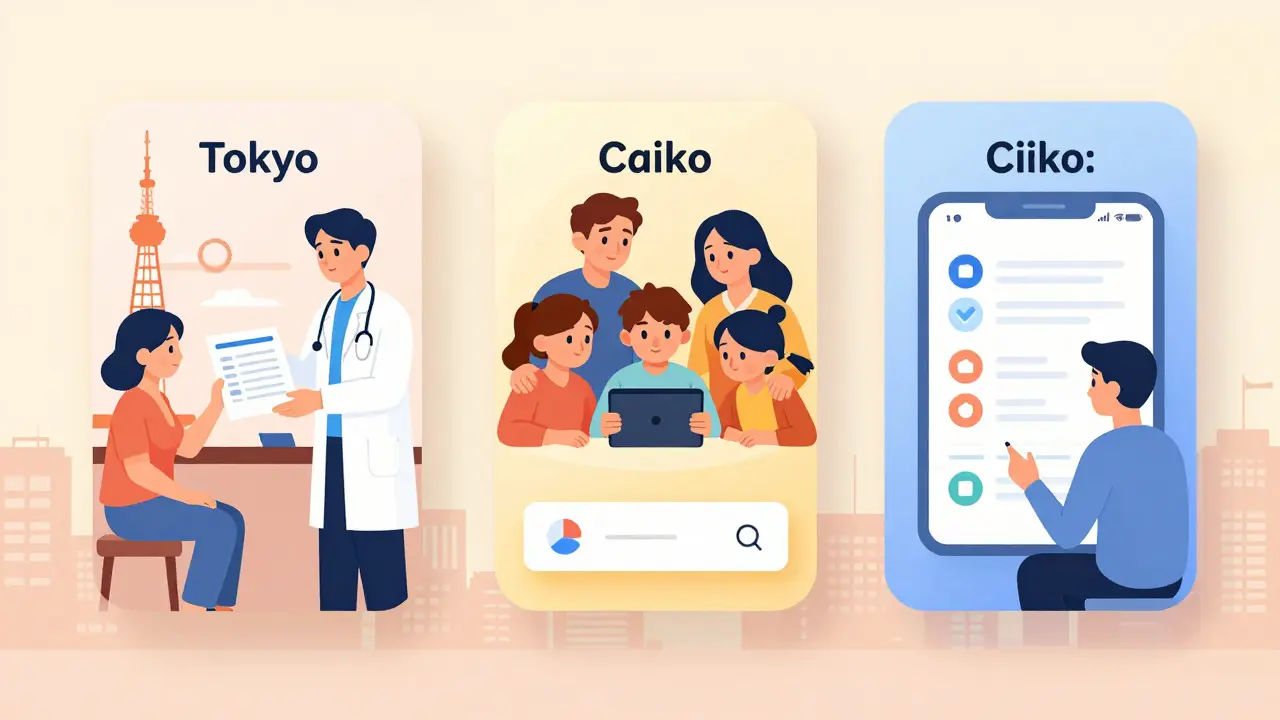
Why does a simple app work perfectly in Tokyo but crash in Cairo - not because of code, but because of culture? The answer isn’t in the server logs or the UI design. It’s in the unspoken rules people live by. Culture doesn’t just influence what we buy or wear. It decides whether we even accept something new - even if it’s just a generic tool, a health app, or a digital form we’re told to fill out.
What ‘Generic Acceptance’ Really Means
When we say something is ‘generic,’ we assume it’s neutral. A checkbox. A login screen. A medication reminder app. But here’s the truth: nothing is truly generic. What feels obvious to one person feels alien to another. In Sweden, a digital health record that lets you view your lab results instantly is a basic right. In Japan, the same system might feel invasive unless it’s wrapped in layers of social trust - like approval from your doctor, or a printed summary handed to you in person. This is cultural acceptance. It’s not about whether the technology works. It’s about whether people feel safe, respected, and understood enough to use it.How Hofstede’s Dimensions Shape Behavior
Back in the 1970s, Geert Hofstede studied IBM employees across 50 countries and found patterns that still hold today. His five cultural dimensions aren’t academic footnotes - they’re real forces shaping how people react to change.- Uncertainty avoidance: In countries like Greece or Portugal, people need clear rules, step-by-step instructions, and printed backups. Skip this, and even the simplest app gets rejected. In contrast, in Singapore or the U.S., people will try something new even if the instructions are blurry.
- Individualism vs. collectivism: In the U.S., a fitness tracker works because it says, “You did great!” In South Korea or Brazil, the same app needs to show, “Your family is proud of you,” or “Your team’s average steps are up.” Without social proof, adoption drops by nearly 30%.
- Power distance: In India or Mexico, people expect authority figures - doctors, nurses, bosses - to guide them. If a health app gives advice without a doctor’s badge or institutional logo, it’s seen as unreliable, no matter how accurate the data.
- Long-term orientation: In China or Germany, people respond to messages like, “This will keep you healthy for years.” In the U.S. or Italy, “Feel better today” works better. One isn’t right. Both are culturally tuned.
Why Western Models Fail Globally
Most tech companies build tools based on the Technology Acceptance Model (TAM) - a framework that says people use tech if it’s easy and useful. Sounds logical. But here’s the catch: in homogeneous cultures like the Netherlands, TAM predicts 40% of adoption. In multicultural settings? That number drops to 22%. Why? Because TAM ignores the emotional and social weight behind a decision. A patient in Italy might refuse a digital prescription not because it’s hard to use - but because handing over data to an anonymous system feels disrespectful to their relationship with their doctor. In Nigeria, a mother might skip a vaccination reminder app because she trusts her neighbor’s advice more than an algorithm. The real failure isn’t bad design. It’s assuming everyone thinks like you.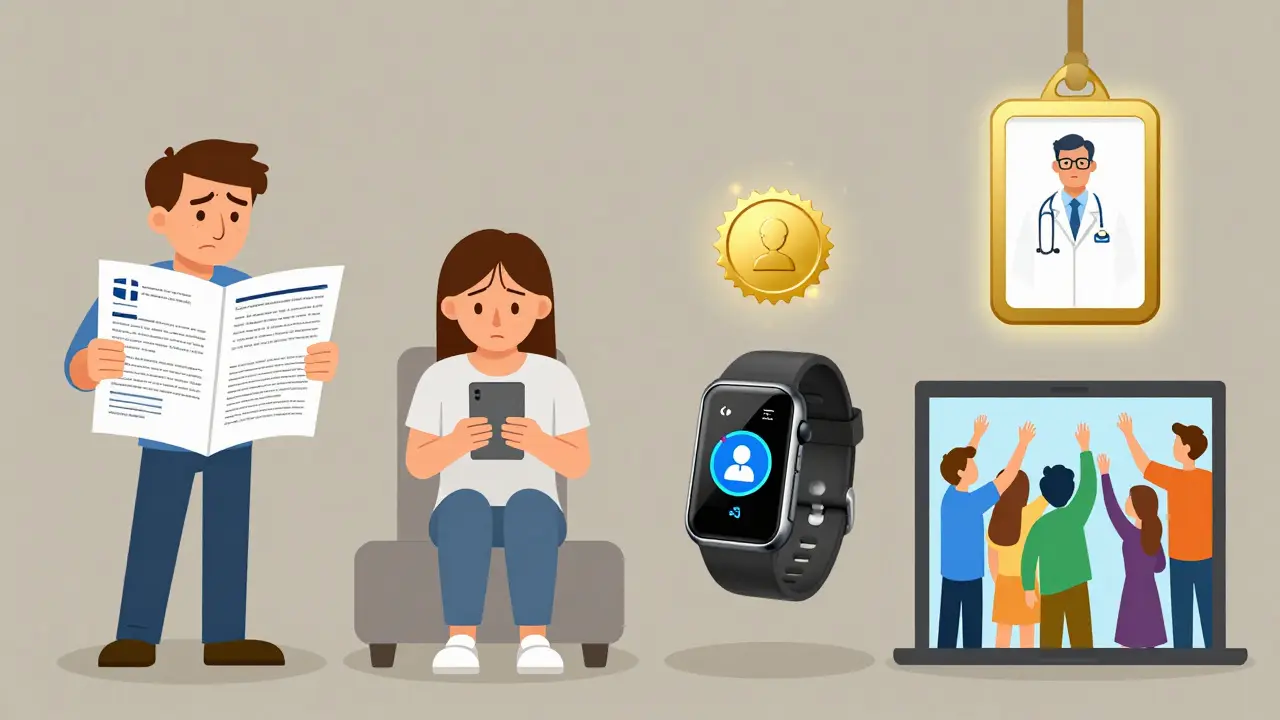
The Hidden Cost of Ignoring Culture
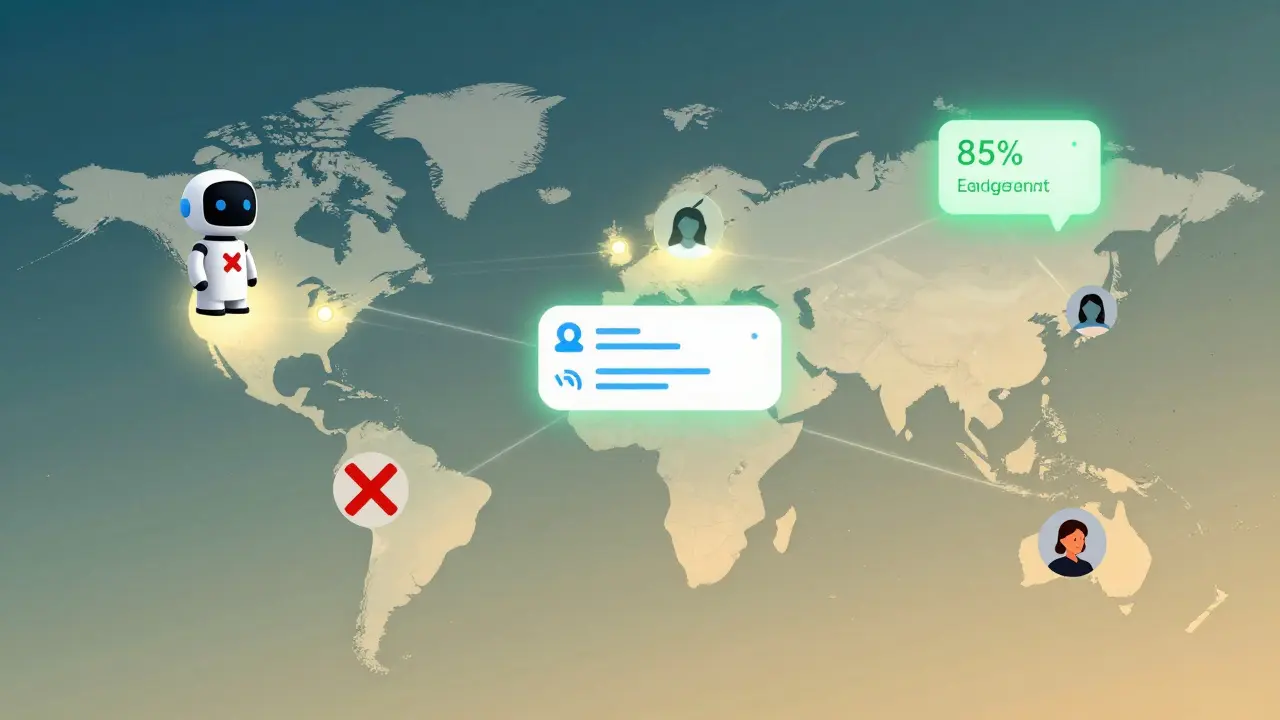
Companies spend millions building apps, portals, and platforms - then wonder why adoption is low. The root cause? They didn’t check the cultural fit. A 2023 survey of 347 software teams found that 68% of failed implementations had ignored cultural factors from the start. In one case, a U.S. company rolled out a mental health chatbot in Germany. It was fast, secure, and AI-powered. But Germans didn’t trust a machine to handle emotional issues. No human backup. No official hospital branding. The result? 92% of users abandoned it after one use. Meanwhile, in the same country, a simple SMS-based reminder system - sent from a local clinic’s phone number - saw 85% engagement. It wasn’t fancy. It was familiar. Cultural missteps don’t just waste money. They erode trust. And once trust is gone, even the best tool won’t bring it back.How to Build for Cultural Acceptance
You don’t need to build 20 versions of your app for every country. But you do need a smart, scalable approach.- Start with assessment: Use tools like Hofstede Insights to map your target markets. Don’t guess. Know the scores for uncertainty avoidance, individualism, and power distance.
- Identify the barrier: Is it lack of trust? Fear of exposure? Discomfort with autonomy? Each culture has its own trigger.
- Adapt, don’t translate: Don’t just change the language. Change the logic. In collectivist cultures, add group features. In high-power-distance cultures, include authority signals. In high-uncertainty-avoidance cultures, offer downloadable PDFs and step-by-step videos.
- Test with real people: Run small pilots. Not focus groups. Real users in their homes, clinics, or workplaces. Watch how they react - not what they say.
- Measure beyond usage: Track not just logins, but retention, referrals, and feedback tone. A 4.1-star rating means nothing if users say, “I only use it because my boss made me.”
The Risk of Stereotyping
Here’s the warning: culture isn’t a checklist. You can’t say, “All Japanese people want X.” That’s how bias creeps in. Dr. Nancy Howell from the University of Toronto points out that individual variation within any culture accounts for 70% of behavior. A 22-year-old in rural India might prefer a voice-based app. A 55-year-old in urban Brazil might trust text messages more than icons. The goal isn’t to box people into national stereotypes. It’s to design systems that allow for cultural cues - without forcing them. Think of it like a door. In some cultures, you knock. In others, you walk in. Your app shouldn’t demand one way. It should let people choose - guided by what feels right to them.What’s Changing Fast - And What’s Not
Gen Z is reshaping norms faster than ever. A 2024 MIT study found their cultural values shift 3.2 times faster than previous generations. Social media, global influencers, and digital identity are blurring old lines. But here’s the twist: even as global platforms homogenize content, people are doubling down on local trust. A TikTok health tip from a Korean nurse might go viral - but if it’s not backed by a local hospital, it’s ignored. The future belongs to hybrid systems: globally scalable, locally trusted. AI can help personalize. But humans still decide what feels safe.What’s Next
In 2025, ISO/IEC 25010 - the global standard for software quality - will officially include cultural acceptance as a required non-functional requirement. That means, if you’re building software for global markets, you’ll need to prove your product works across cultures - or you won’t be certified. The EU’s Digital Services Act already requires platforms with over 45 million users to “reasonably accommodate cultural differences.” That’s not a suggestion. It’s law. The companies winning aren’t the ones with the flashiest tech. They’re the ones who listen - and adapt.Why do some health apps fail in certain countries even when they work well elsewhere?
They often ignore cultural norms like trust in authority, comfort with privacy, or preference for group decision-making. A chatbot might be technically perfect, but if users in a high-power-distance culture don’t see a doctor’s endorsement, they won’t use it - no matter how advanced the AI.
Can cultural acceptance be automated?
Partially. Tools like Microsoft’s Azure Cultural Adaptation Services can detect user behavior patterns and suggest interface changes - like adding authority signals or simplifying menus. But human insight is still needed to interpret context, avoid stereotypes, and ensure ethical design.
Is cultural adaptation expensive and time-consuming?
It adds 2-4 weeks to development, but saves far more in the long run. Studies show that ignoring culture leads to 68% higher failure rates in global rollouts. The cost of fixing a failed product is 10x higher than building it right from the start.
Does culture affect how people use generic tools like forms or checklists?
Absolutely. In collectivist cultures, people prefer forms that show how their input helps a group - like a community health dashboard. In individualist cultures, they want personal feedback - like “You’re 80% done.” Even the wording on a checkbox matters.
What’s the biggest mistake companies make when launching globally?
Assuming that if it works in the U.S. or Europe, it’ll work everywhere. They translate the interface but don’t adapt the experience. Culture isn’t a language pack - it’s the entire logic behind why people trust, use, and stick with something.
Lauren Wall
January 23, 2026 AT 07:24This is why so many apps die in Europe-no one trusts a machine to handle personal stuff, especially health.
Tatiana Bandurina
January 25, 2026 AT 01:45Let’s be real-Western tech companies think ‘global’ means ‘English with a different color scheme.’ They don’t even bother learning that in India, if a doctor doesn’t sign off on it, it’s just spam. And they wonder why adoption is 3%.
It’s not about UX. It’s about authority. You can’t slap an AI chatbot on a form and call it healthcare. People aren’t robots.
And don’t get me started on the ‘personalized feedback’ nonsense. In collectivist cultures, telling someone ‘you did great’ feels like a slap in the face. They want to know how their family’s doing too.
Every time I see a U.S. startup pitch a ‘one-size-fits-all’ mental health app for Asia, I cringe. They’re not building for users. They’re building for their boardroom’s fantasy.
The real failure isn’t bad code. It’s arrogance wrapped in Agile jargon.
Patrick Roth
January 25, 2026 AT 06:52Actually, Hofstede’s model is outdated. It’s 2025. Gen Z doesn’t care about ‘power distance’-they’ll use any app if it’s TikTok-able. Culture’s dead, bro.
Sarvesh CK
January 26, 2026 AT 05:07While the article presents a compelling case grounded in empirical research, one must also consider the evolving nature of cultural identity in an increasingly interconnected world. The notion that cultural dimensions remain static across generations is a dangerous oversimplification.
In rural India, for instance, a 22-year-old may prefer voice-based interfaces not due to cultural conditioning alone, but because of digital literacy gaps, economic constraints, and infrastructural limitations that intersect with cultural norms. To isolate culture as the primary variable risks ignoring the layered realities of poverty, education, and access.
Moreover, while Microsoft’s Azure Cultural Adaptation Services represent a commendable step toward scalability, they risk reducing human nuance to algorithmic patterns. Cultural trust is not a variable to be optimized-it is a lived experience shaped by history, trauma, and community.
True adaptation does not lie in adding doctor avatars or downloadable PDFs, but in co-designing with local communities-not as test subjects, but as equal partners. The most successful digital health initiatives I’ve observed were not those that ‘adapted’ to culture, but those that emerged from within it.
Let us not mistake localization for cultural competence. The former is a technical fix; the latter is an ethical commitment.
Neil Ellis
January 26, 2026 AT 10:59I’ve seen this firsthand in Nairobi-our clinic rolled out a vaccination tracker that looked like a Silicon Valley startup’s dream: sleek, minimalist, zero text. Zero engagement.
We redesigned it with a local nurse’s photo, Swahili voice prompts, and a feature that let users share their kid’s progress with their auntie’s WhatsApp group. Adoption shot up to 78%.
It wasn’t about the tech. It was about making people feel seen. That’s the magic. Tech is just the vessel. Culture is the compass.
And yeah, Gen Z might be weirdly global, but they still want to know: ‘Does this feel like home?’ If the answer’s no, they’ll scroll past it faster than you can say ‘disrupt.’
Stop building for the ‘average user.’ Build for the grandma in Lagos, the student in Jakarta, the farmer in Oaxaca. They’re the real users.
Philip House
January 28, 2026 AT 09:12Let’s cut the BS. The U.S. and Europe built the modern internet. If your culture can’t adapt to a clean UI, maybe your society needs to evolve. No one cares if your grandma doesn’t trust an app. Build better apps, not cultural hand-holding.
Hofstede’s model is 50 years old. We’re not in 1974. People aren’t their national stereotypes. I’ve met Indians who hate collectivism and Swedes who crave hierarchy. This is identity politics dressed as UX design.
Stop infantilizing non-Western users. They’re not children who need a doctor’s avatar to feel safe. They’re adults. Give them a good tool and get out of the way.
And if your app fails in Mexico because it doesn’t have a logo from a hospital? That’s not cultural insight. That’s institutional corruption.
Jasmine Bryant
January 30, 2026 AT 06:43Wait, so if I’m understanding this right-adding a doctor’s photo to a health app in India increases trust? That’s wild. I thought it was all about speed and simplicity.
But then again, I’ve seen my cousin in Chennai refuse to use a diabetes app because it didn’t have her doctor’s name on it-even though the data was perfect. She said, ‘If Dr. Rao doesn’t say it, it’s not real.’
And the part about ‘feel better today’ vs. ‘stay healthy for years’? That makes so much sense. My German roommate literally cried when I told her an app said ‘You’re doing great!’ She said, ‘That’s not how we talk about health here. We say ‘you’re managing it well.’
So… we’re saying the same app needs two different emotional tones depending on where you are? That’s insane. But also… kind of beautiful?
Also-did anyone else notice the part about SMS in Germany working better than AI? That’s the opposite of what we’re told. Tech is supposed to be fancy. But sometimes… the dumbest thing works best.
I’m gonna start asking my friends from other countries how they’d redesign a form. Just to see.
Brenda King
January 30, 2026 AT 18:26Thank you for writing this. So many people think culture is just language and emojis. It’s not. It’s about who you trust, how you show care, and what silence means.
I worked on a mental health app for Japan. We added a printed summary option because users said, ‘I need to hold it.’ Not because they couldn’t read screens-because they needed to feel the paper. That’s culture.
And yes, Gen Z is changing things. But they’re also the ones asking, ‘Who made this? Is it safe? Can I show it to my mom?’
Design isn’t about making things pretty. It’s about making people feel safe enough to breathe.
Also, ISO 25010 including cultural acceptance? Long overdue. If your software doesn’t respect human dignity, it shouldn’t be allowed to exist.