Proton Pump Inhibitors and Osteoporosis: What You Need to Know About Fracture Risk
 Nov, 18 2025
PPI Fracture Risk Calculator
Understand Your Risk
Long-term PPI use may increase fracture risk, especially for:
- Women over 65
- People with low body weight
- Those with prior fractures
- Long-term users (5+ years)
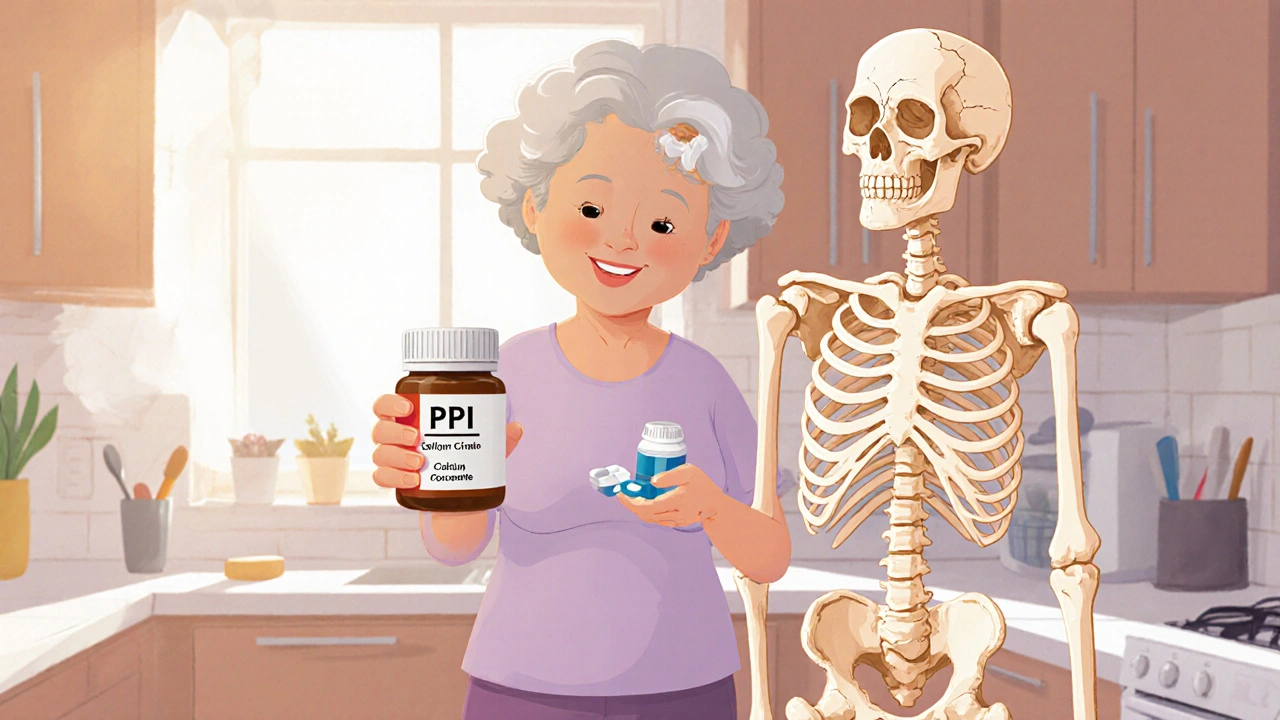
When you take a proton pump inhibitor (PPI) for heartburn or acid reflux, you’re probably not thinking about your bones. But if you’ve been on these meds for years, there’s a quiet, real risk you should know about: proton pump inhibitors may increase your chance of breaking a bone - especially your hip, spine, or wrist.
What Are Proton Pump Inhibitors?
Proton pump inhibitors - like omeprazole (Prilosec), esomeprazole (Nexium), and lansoprazole (Prevacid) - are designed to shut down stomach acid production. They work by blocking the enzyme system in your stomach lining that pumps out acid. These drugs are powerful, effective, and widely used. Millions of people in the U.S. take them every year, often for months or even years at a time.
But here’s the catch: they were never meant to be taken long-term. When they first came out in the late 1980s, doctors were told to use them for just 4 to 8 weeks. Today, studies show that 60 to 70% of PPI prescriptions are for longer than that - often without a clear medical reason. And that’s where the problem starts.
The Bone Connection: How PPIs Might Weaken Your Skeleton
Your bones need calcium to stay strong. And calcium - especially the kind found in supplements like calcium carbonate - needs stomach acid to be absorbed properly. When PPIs reduce acid too much, your body struggles to pull calcium out of food or pills. Over time, this can lead to lower bone density.
It’s not just calcium, either. Reduced acid might also mess with how your body handles other minerals like magnesium and zinc, both important for bone repair. Some research suggests that long-term PPI use triggers a chain reaction: less acid → more gastrin (a hormone) → changes in bone cell activity → weaker bones.
Large studies back this up. A 2019 meta-analysis in the Journal of Bone and Mineral Research found that people who took PPIs for more than a year had a modest but real increase in fracture risk. The risk wasn’t huge - but it was there. And it got worse with time.
Who’s at the Highest Risk?
Not everyone who takes PPIs will break a bone. But some people are much more vulnerable:
- Women over 65, especially postmenopausal women - one study found a 35% higher hip fracture risk
- People with low body weight (under 57 kg or 125 lbs)
- Those who’ve had a fracture before
- People taking corticosteroids like prednisone
- Anyone on high-dose PPIs (twice daily or more) for over 5 years
One study tracked people on PPIs for seven or more years and found they were nearly five times more likely to break a hip than those who didn’t take them. That’s not a small number. It’s a red flag.
PPIs vs. H2 Blockers: Which Is Safer for Your Bones?
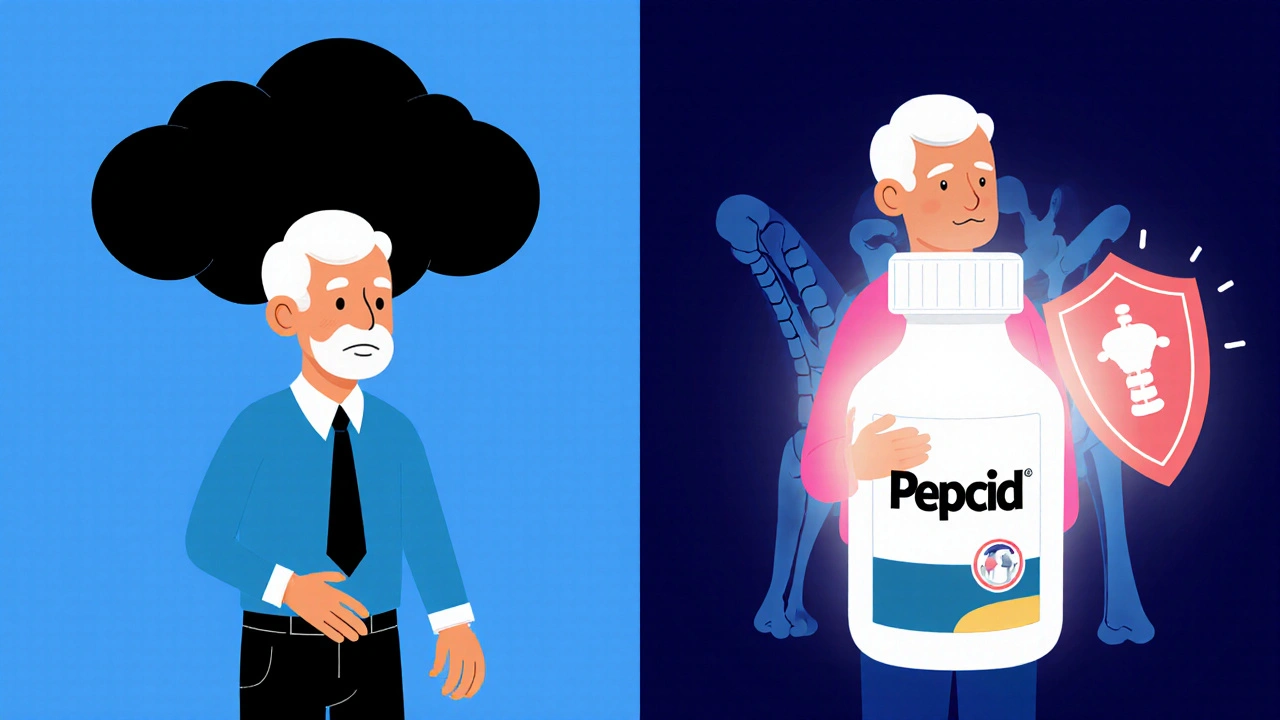
If you’re worried about bone health, you might wonder: what about H2 blockers like famotidine (Pepcid) or ranitidine (Zantac)? These drugs also reduce acid - but not as completely as PPIs.
Studies show H2 blockers have little to no link with fractures. A 2020 study comparing over 100,000 patients found no overall increase in fractures with H2 blockers, while PPI users had a 27% higher risk of hip fractures. Another study showed that people switching from PPIs to H2 blockers saw their fracture risk drop.
That doesn’t mean H2 blockers are perfect - they’re less effective for severe GERD - but if your acid reflux is mild to moderate, they might be a better long-term choice for your bones.
What the Experts Say
The FDA issued a warning in 2010 after reviewing seven studies. Six showed a link between long-term PPI use and fractures. But they stopped short of saying PPIs cause osteoporosis. Their conclusion? The risk is small - but real - and mostly affects older adults with other risk factors.
The American Gastroenterological Association says the same thing: the absolute risk increase is low, and the benefits of PPIs often outweigh the risks - if you truly need them.
But here’s the problem: many people don’t need them. A 2022 study found that nearly half of all long-term PPI prescriptions were inappropriate. That means people are taking these drugs for years, not because they have ulcers or Barrett’s esophagus, but because they had heartburn once and never stopped.
What You Can Do: Practical Steps to Protect Your Bones
If you’re on PPIs and worried about fractures, here’s what actually works:
- Ask your doctor if you still need it. Many people take PPIs long after their symptoms are gone. Try cutting back slowly - under medical supervision.
- Use the lowest dose possible. Don’t take two pills a day unless you really need to. One pill, once a day, is often enough.
- Consider switching to an H2 blocker. Especially if your reflux is mild. Pepcid or Zantac can work well for occasional heartburn.
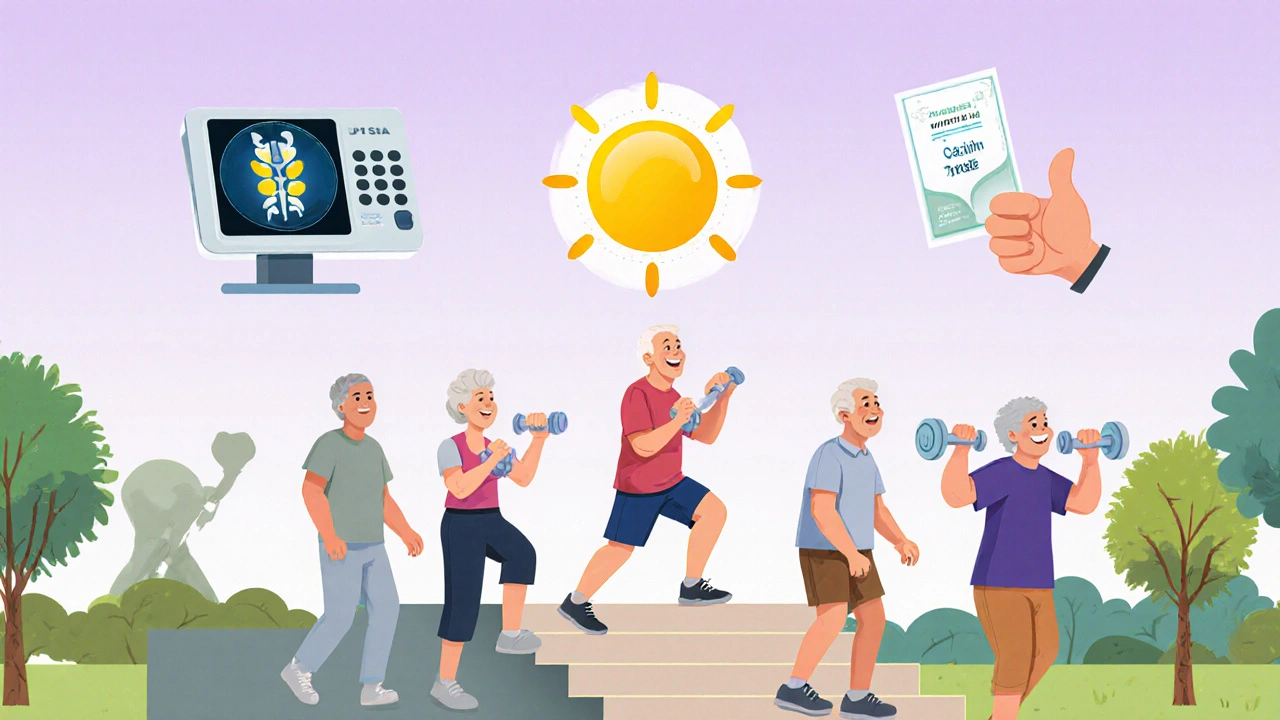
- Take calcium citrate, not calcium carbonate. Calcium citrate doesn’t need stomach acid to absorb. It’s the better choice if you’re on PPIs.
- Get enough vitamin D. Aim for 800-1,000 IU daily. Vitamin D helps your body use calcium. Many people are low, especially in places like New Zealand with limited winter sun.
- Get a bone density test if you’re over 65 or have other risk factors. A DEXA scan is quick, painless, and tells you if your bones are thinning.
- Stay active. Weight-bearing exercise like walking, stair climbing, or resistance training helps keep bones strong.
The Bigger Picture: Why This Matters
Fractures in older adults aren’t just painful - they’re life-changing. A broken hip often leads to surgery, months of rehab, loss of independence, and even higher death risk. One in three people over 65 who break a hip never walk the same way again.
PPIs are not the villain here. For someone with a bleeding ulcer or severe GERD that’s damaging their esophagus, they’re lifesaving. But for someone taking them because they ate too much pizza last night? That’s where the balance tips.
Doctors are starting to pay attention. The American Geriatrics Society now lists long-term PPI use as a potentially inappropriate medication for older adults. Insurance companies are pushing back on refills without review. And new guidelines from the Endocrine Society say: if you’re on PPIs for more than 8 weeks and have other fracture risks, get your bone density checked.
What’s Next?
A major NIH study called PPI-BONE is tracking 15,000 people over five years to get clearer answers. Results are expected in early 2025. Until then, we work with what we have: strong observational data, biological plausibility, and real-world outcomes.
The message isn’t to stop PPIs. It’s to question them. To use them wisely. To treat them like a tool - not a daily habit.
If you’ve been on PPIs for more than a year, talk to your doctor. Ask: Why am I still taking this? Is there a safer alternative? Am I protecting my bones?
Do proton pump inhibitors cause osteoporosis?
PPIs don’t directly cause osteoporosis, but long-term use is linked to lower bone density and higher fracture risk - especially in older adults and those with other risk factors. The mechanism is likely reduced calcium absorption due to low stomach acid, not a direct attack on bone tissue.
How long do you have to take PPIs to increase fracture risk?
Risk starts to rise after one year of daily use, but it becomes significant after five or more years. One study found people taking PPIs for seven years had nearly five times the hip fracture risk compared to non-users. The longer you take them, and the higher the dose, the greater the risk.
Is calcium citrate better than calcium carbonate if I take PPIs?
Yes. Calcium carbonate needs stomach acid to dissolve and be absorbed. If you’re on a PPI, your acid levels are low, so your body can’t absorb it well. Calcium citrate doesn’t need acid - it absorbs just fine even with reduced stomach acid. That’s why experts recommend it for PPI users.
Can I switch from PPIs to H2 blockers to protect my bones?
For mild to moderate acid reflux, yes. H2 blockers like famotidine (Pepcid) or ranitidine (Zantac) reduce acid but not as deeply as PPIs. Studies show they don’t increase fracture risk. They’re a safer option for long-term use if you don’t need the strongest acid suppression.
Should I get a bone density scan if I’m on long-term PPIs?
If you’re over 65, female, have a history of fracture, low body weight, or take corticosteroids, yes. The Endocrine Society recommends a DEXA scan for anyone on long-term PPI therapy with additional fracture risk factors. It’s a simple, non-invasive test that can guide whether you need extra bone protection.
Final Thoughts
PPIs are not dangerous for everyone. But they’re not harmless either. The key is intention. If you’re taking them because you have a real, documented need - like healing a bleeding ulcer or managing Barrett’s esophagus - keep taking them. But if you’re taking them because you felt a little bloated last week, it’s time to reevaluate.
Ask your doctor to help you taper off. Try lifestyle changes first: eat smaller meals, avoid lying down after eating, cut back on caffeine and alcohol. Often, you don’t need a pill to feel better.
Your bones will thank you.
Sherri Naslund
November 19, 2025 AT 23:42so like... if i take prilosec for my heartburn and i’m 70 and thin and broke my wrist last year, does that mean i’m basically a walking bone fracture waiting to happen? bc honestly i’d rather eat pizza than die from a hip fracture but also i don’t wanna be in a wheelchair at 75 so like… what even is life
Ashley Miller
November 20, 2025 AT 15:49lol the FDA ‘warned’ us in 2010. right after the pharma companies paid them off to say it’s ‘small risk’. meanwhile your bones are turning to dust and the doctors are still pushing ppi refills like it’s a subscription box. they don’t care. they get paid for scripts, not for your hip replacement.
Martin Rodrigue
November 21, 2025 AT 10:10While the observational data suggests a correlation between long-term PPI use and increased fracture risk, it is essential to distinguish between association and causation. Confounding variables-such as comorbidities, polypharmacy, and reduced physical activity in elderly PPI users-are not adequately controlled in most studies. The biological plausibility of reduced calcium absorption is sound, yet the absolute risk remains low for most individuals without additional risk factors.
william volcoff
November 22, 2025 AT 21:25My grandma switched from Nexium to Pepcid after her DEXA scan showed osteopenia. Two years later, she’s still walking, no fractures, and her acid reflux is… fine? Not perfect, but manageable. Also, she started walking 30 mins a day. Turns out, moving your body helps more than any pill. Don’t just stop the PPI-replace it with something better.
Freddy Lopez
November 24, 2025 AT 01:46There’s a deeper question here: why do we treat symptoms without addressing root causes? Heartburn isn’t caused by too much acid-it’s often caused by too little, or by a dysfunctional sphincter. We’ve built a billion-dollar industry around suppressing symptoms, while ignoring diet, stress, posture, and sleep. Maybe the real problem isn’t the PPI… it’s the system that prescribes it.
Brad Samuels
November 25, 2025 AT 16:10Just wanna say-this post saved my life. I’d been on omeprazole for 8 years because ‘it worked.’ Never thought about my bones. Got my DEXA scan last month-T-score of -2.4. Scared me straight. Now I’m on calcium citrate, vitamin D, and taking Pepcid only when I eat spicy food. My doctor said I’m already improving. You’re not broken. You just need to relearn how to take care of yourself.
Mary Follero
November 26, 2025 AT 09:01Y’all need to stop freaking out and start acting. If you’re on PPIs, ask your doc for a taper plan. Swap to calcium citrate TODAY. Walk outside for 20 minutes-sunlight + movement = free bone insurance. And if you’re over 65? Get that DEXA scan. It’s 15 minutes. No needles. No pain. Could save you from a year in rehab. You don’t need to be a genius to do this. Just need to care enough to try.
Tyrone Luton
November 26, 2025 AT 19:30Of course the system wants you on PPIs forever. It’s more profitable than teaching people to eat less junk food. The real osteoporosis epidemic? It’s not in your bones-it’s in your culture. We’ve outsourced health to pills because we’re too lazy to chew slowly, sit up straight, or drink water instead of soda. The PPI is just the symptom of a society that treats bodies like disposable machines.
Jessica Engelhardt
November 28, 2025 AT 16:34so like... if i take ppi and i’m american and i don’t have medicaid and i can’t afford a dexa scan then i’m just supposed to die quietly? bc the system ain’t gonna help me and the docs don’t care and the pills are cheap and the bones? they’re just collateral damage. thanks capitalism
Lauren Hale
November 29, 2025 AT 08:45My mom’s 72, took PPIs for 12 years, broke her hip at 70. She’s now on calcium citrate, vitamin D, and does chair yoga twice a week. She’s not ‘cured’-but she’s mobile, pain-free, and proud. The key isn’t fear. It’s awareness + small, consistent action. You don’t need to overhaul your life. Just start with one thing: ask your doctor if you still need the PPI. That’s it. One question. Could change everything.
Greg Knight
November 30, 2025 AT 17:35Look-I’ve been a nurse for 22 years. I’ve seen hundreds of patients on PPIs. Most of them don’t even know why they’re still on them. I always say: ‘If you haven’t had a heartburn episode in 6 months, you probably don’t need it.’ But doctors don’t have time to ask. So the script auto-renews. Your job? Don’t be passive. Bring this post to your appointment. Say: ‘I read this. I want to try tapering.’ You’ve got more power than you think.
Tara Stelluti
December 1, 2025 AT 07:44my aunt took ppi for 10 years and now she’s in a nursing home after her hip broke. they say it was ‘age’ but i know better. it was the pills. they killed her slowly and no one said anything. now i’m terrified to even take tums. what if everything is poison? what if the whole system is lying to us?
Will Phillips
December 1, 2025 AT 18:30Let’s be real-this is all a distraction. The real cause of osteoporosis? Glyphosate. Pesticides in our food. The FDA knows. Big Pharma knows. But they won’t tell you because the PPI market is worth $15 billion. Calcium citrate won’t fix it. You need to eat organic. Grow your own food. Stop trusting doctors. Stop trusting pills. Your bones will thank you… if you survive the corporate war on your health.