Refill-By Dates vs. Expiration Dates: How to Read Your Prescription Label
 Apr, 4 2026
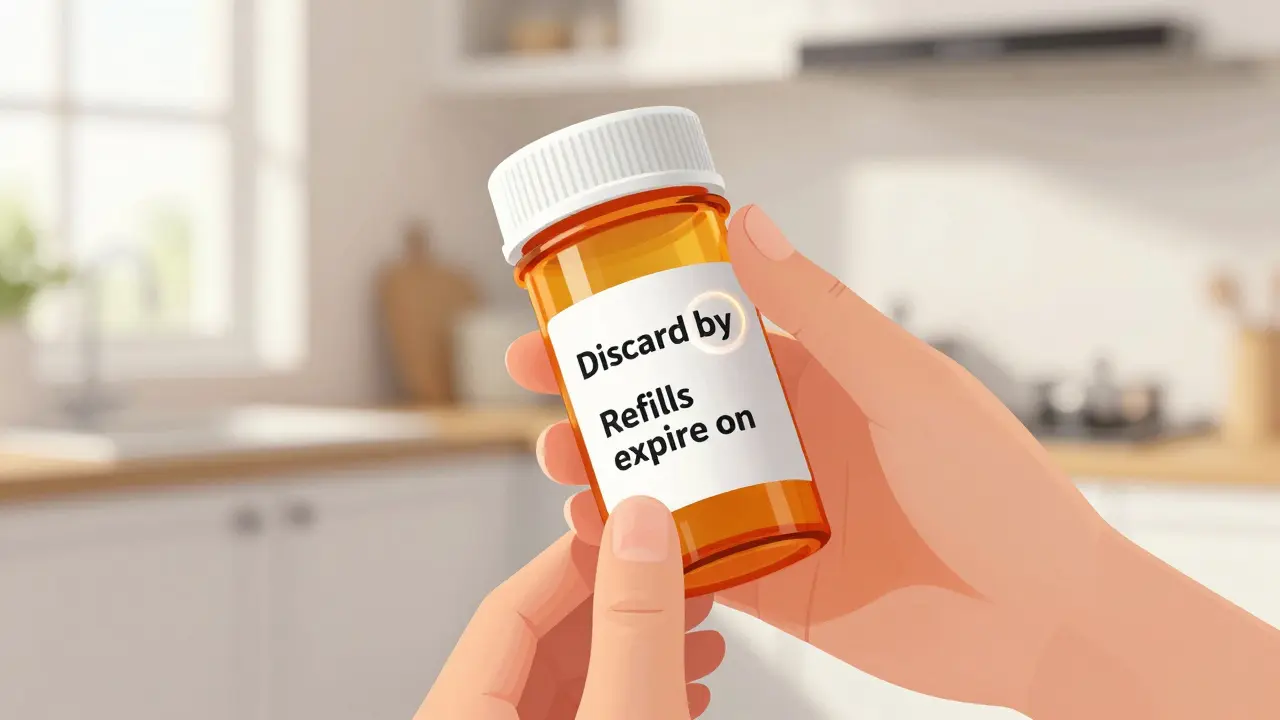
You're standing in your kitchen, looking at your medication bottle, and you see two different dates. One says "Discard by" and the other says "Refills expire on." It’s easy to assume they mean the same thing, but mixing these up can lead to some serious headaches-or worse, a gap in your treatment. Whether you're managing a chronic condition or just taking a course of antibiotics, knowing the difference between a prescription labels refill date and an expiration date is key to staying healthy and avoiding unnecessary trips to the pharmacy.
Basically, one date is about the chemistry of the drug, and the other is about the legal permission to get more. If you get them confused, you might throw away expensive medicine that's still perfectly good, or you might find yourself at the pharmacy counter discovering your prescription has "expired" even though the pills in your cabinet are still potent. Let's clear up the confusion so you can manage your meds without the stress.
Quick Summary: The Main Differences
| Feature | Expiration Date (Discard By) | Refill-Through Date (Refill-By) |
|---|---|---|
| What it means | The drug may lose potency or become unsafe. | The legal window to request more medicine. |
| Who decides it? | The manufacturer (FDA guidelines). | The doctor and state law. |
| What happens after? | Throw the medication away. | Call your doctor for a new prescription. |
| Typical Duration | Varies; often 1 year from dispensing. | Usually 1 year from the first fill. |
What Exactly is an Expiration Date?
When you see a "Discard by" or "Exp" date, you're looking at a safety threshold. Expiration Dates is the point after which a pharmaceutical manufacturer can no longer guarantee the potency, stability, or safety of a medication.
This isn't a random guess. The FDA (Food and Drug Administration) requires companies to run rigorous stability tests to see how a drug holds up over time. If a drug expires, it doesn't always become toxic overnight, but it can lose its strength. For someone treating high blood pressure or diabetes, a medication that is only 70% as strong as it should be can be dangerous because the condition isn't being managed properly.
Most pharmacies set a pharmacy-applied expiration date for non-sterile meds at one year from the day they were dispensed. However, for things that need to stay in the fridge, that window is often much shorter-sometimes only 30 days. If the date has passed, the safest bet is to toss it.
Understanding the Refill-Through Date
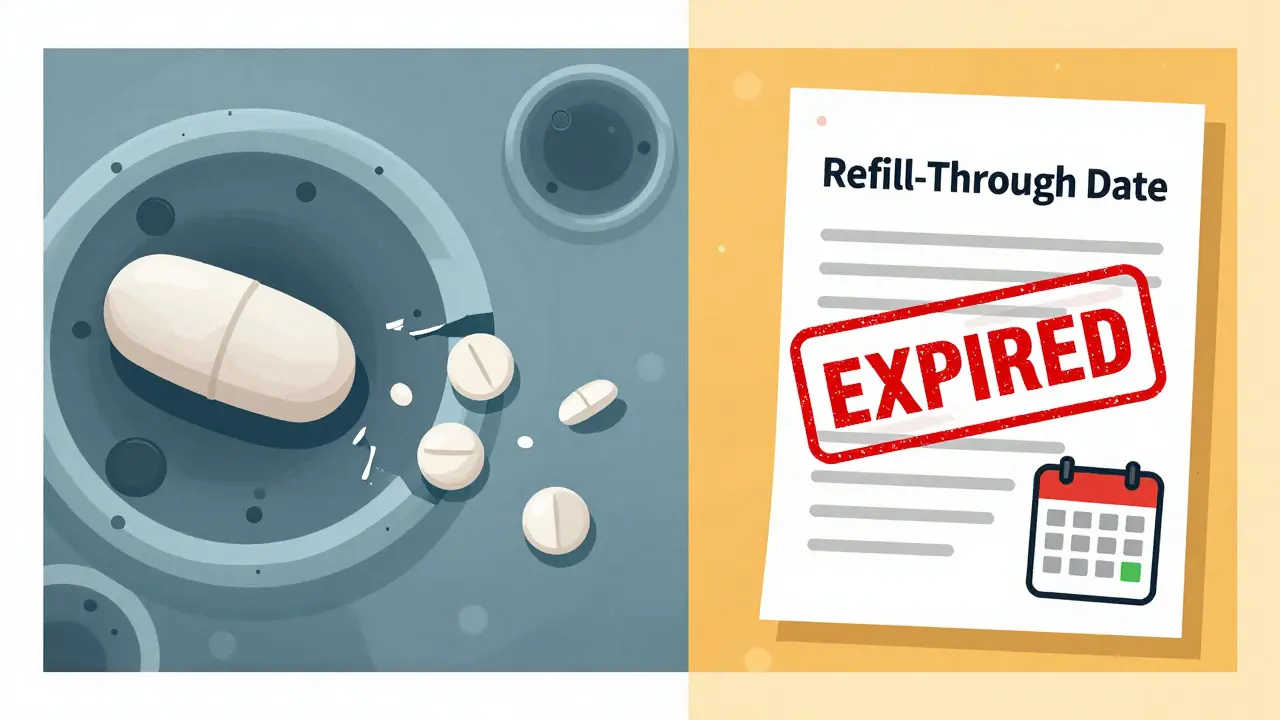
Now, the Refill-Through Date (sometimes called the Refill-By date) is a completely different animal. It has nothing to do with the chemicals in the pill and everything to do with paperwork. This date tells you the last day the pharmacy is legally allowed to give you more medication based on your doctor's current order.
Think of it like a subscription that expires. Your doctor gives you a prescription for a year's worth of medication with 11 refills. The refill-through date is the deadline to use those refills. Once that date hits, the pharmacy can't just "give you another one"-they need a new authorization from your healthcare provider.
For most standard medications, this is one year from the original fill date. But be careful with controlled substances. Under DEA (Drug Enforcement Administration) Schedule II regulations, some prescriptions expire much faster, often within 6 months, depending on the drug and state law.
Why the Confusion Happens (and Why It Matters)
It's easy to see why people mix these up. Both are dates on a small label, and both use words like "expire." But the consequences of the mix-up are very real. A survey by Consumer Reports found that over 50% of people couldn't tell the difference between the two. Some people have accidentally thrown away hundreds of dollars of medication because they saw a "refill expire" date and thought the medicine itself was spoiled.
On the flip side, some people keep taking expired medicine because they see they still have "3 refills left" on the label. They assume that because the prescription is still active, the pills in the bottle are still good. This is a mistake. Just because you have the legal right to get more medicine doesn't mean the medicine you already have is still safe to use.
Confusion like this often leads to "medication gaps." This happens when a patient realizes too late that their refill window has closed, leaving them without their meds for several days while the pharmacy waits for the doctor to send a new script. In some cases, this can cause a flare-up of a chronic condition that leads to an emergency room visit.
How to Manage Your Meds Like a Pro
You don't need to be a pharmacist to keep your medications organized. The goal is to stop guessing and start tracking. Here are a few practical ways to ensure you never run out or take something outdated:
- Set Two Different Reminders: Don't just rely on the bottle. Set a calendar alert for your refill-through date about 7 to 10 days before it expires. This gives your pharmacy and doctor time to coordinate without you panicking on the final day.
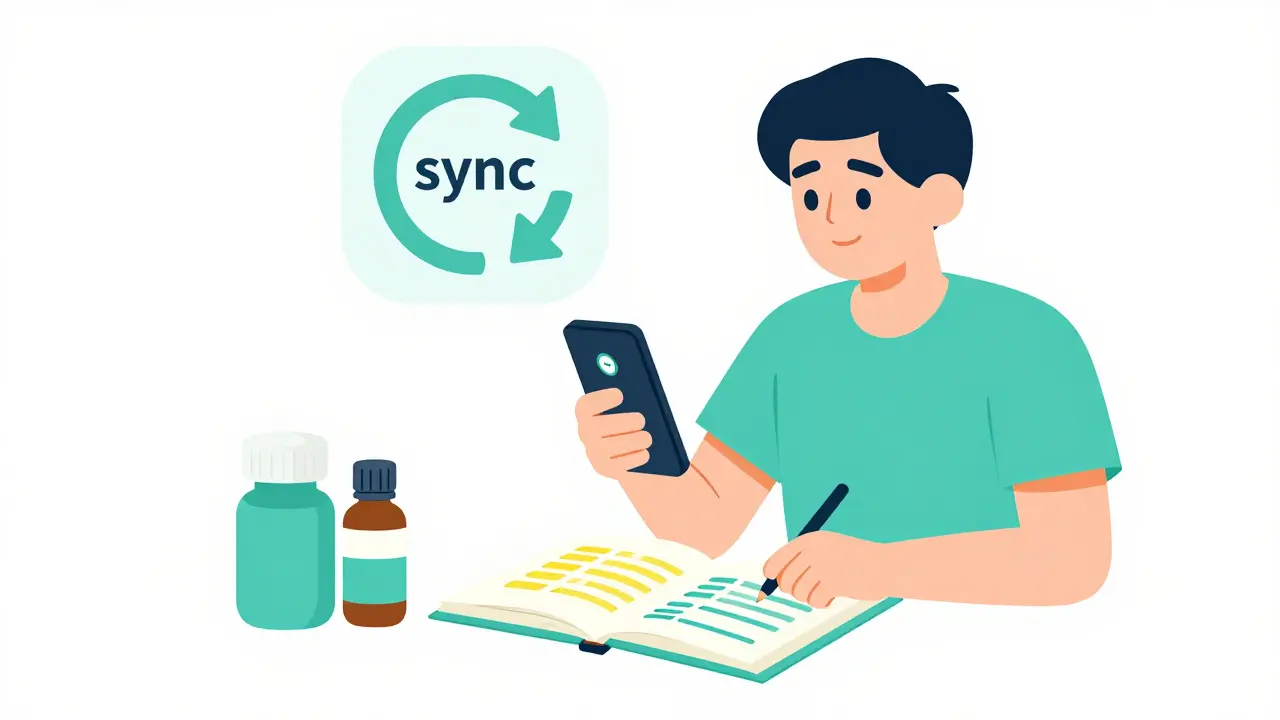
- Create a Simple Medication Log: Keep a notebook or a digital list with the name of the med, the expiration date (when to toss it), and the refill deadline (when to call the doctor).
- Ask for a "Sync": Many pharmacies offer "medication synchronization." They coordinate all your prescriptions so they all refill on the same day each month. This drastically reduces the chance of missing a refill date.
- Scan the QR Code: Some modern pharmacies, like CVS, are using "smart labels." If you see a QR code on your bottle, scan it with your phone; it often provides a video or a simple guide explaining exactly what those dates mean.
When to Call Your Pharmacist
If you're ever unsure, just ask. Pharmacists spend a significant amount of their day verifying these exact dates to prevent errors. You should definitely give them a call if:
- The "Discard by" date is coming up, but you still have half a bottle left.
- You notice the refill date has already passed, but you still have medication in the bottle.
- You're switching pharmacies and want to make sure your refill authorizations transferred correctly.
- You've accidentally stored your medication in a place that might have affected its stability (like a hot car or a humid bathroom).
Can I still take medication after the expiration date?
Generally, you should not. While some medications remain potent for a while after the date, others break down and become ineffective. In some rare cases, certain liquid medications can even become harmful. Always check with your pharmacist before using an expired drug.
What happens if my refill-through date passes but I still have pills?
The pills are still safe to use as long as they haven't reached their expiration date. However, you cannot get a new bottle from the pharmacy. You will need to contact your doctor to get a new prescription authorized.
Why do some refills expire after 6 months instead of a year?
This is usually due to the type of medication. Controlled substances (like certain strong pain meds or stimulants) have stricter rules to prevent misuse. DEA regulations and state laws often require more frequent doctor check-ins for these types of drugs.
Does the insurance company decide the refill date?
Insurance doesn't set the legal expiration of the prescription (the doctor does), but they do set "refill too soon" rules. This means even if you have refills left, your insurance might refuse to pay for a new bottle until you've used a certain percentage of your current supply.
How can I tell if my medication has actually expired?
Look for physical changes: unusual smells, discoloration, or pills that are crumbling/changing shape. However, many drugs look and smell fine even after they've lost their potency. The date on the label is the only reliable guide.
Goodwin Colangelo
April 5, 2026 AT 22:38The medication synchronization tip is a lifesaver. I've seen so many patients struggle with three or four different pickup dates a month, and just aligning them into one trip cuts down on missed doses significantly. It's basically the easiest way to avoid that pharmacy-induced stress.
Dee McDonald
April 6, 2026 AT 11:36Finally someone says it! Stop guessing and start tracking your own health because nobody is going to do it for you!
Lawrence Rimmer
April 7, 2026 AT 05:23The whole concept of an expiration date is just a convenient way for big pharma to keep the conveyor belt moving. We're treating chemical stability like it's some mystical countdown clock when most of these pills are basically rocks that don't change for a decade. It's just another layer of artificial urgency to ensure we keep spending.
Aysha Hind
April 8, 2026 AT 04:52Oh honey, please. You actually believe the FDA is giving you the 'real' stability dates? Give me a break. Those dates are calculated in some sterile lab that has nothing to do with the toxic fumes in our actual homes. It's all a giant shell game to make us feel safe while they rake in the cash from the next 'updated' formula. Total circus.
Hudson Nascimento Santos
April 8, 2026 AT 23:17It is interesting to consider how the legal definition of a prescription's life differs from the biological reality of the compound. We live in a world where the 'truth' of a medicine is split between a regulatory deadline and a chemical decay. It makes one wonder if our adherence to these dates is more about psychological security than actual clinical necessity.
sophia alex
April 10, 2026 AT 10:51Only in America do we have this level of bureaucratic nightmare with our meds! 🙄 It's absolutely pathetic that you need a manual just to read a bottle. In a civilized system, this would be streamlined, but here we are playing detective with our own healthcare. Absolute joke! 💅
Dipankar Das
April 12, 2026 AT 02:05It is imperative that every individual takes full responsibility for their medication schedule. There is no excuse for a medication gap when the tools for organization are readily available. Discipline in health management is the only path to true recovery and long-term stability!
Hope Azzaratta-Rubyhawk
April 13, 2026 AT 15:30I strongly believe that using digital logs is the most effective way to handle this. While some people prefer notebooks, the precision of a phone alert is unmatched for preventing those dangerous gaps in treatment. We must push for better digital integration in all pharmacy services to ensure patient safety is never compromised by a simple misunderstanding of a label.