Why You Must Tell Your Doctor About Supplements and Herbal Remedies
 Dec, 21 2025
Every year, millions of people in the U.S. take supplements - vitamins, fish oil, turmeric, garlic pills, St. John’s wort, and more. Many believe these are harmless because they’re ‘natural.’ But here’s the truth: supplements can be just as powerful - and dangerous - as prescription drugs. And if your doctor doesn’t know you’re taking them, you’re risking your health.
Most People Don’t Tell Their Doctors - But They Should
Only about one in three people who take herbal or dietary supplements tell their doctor. That’s not just a gap in communication - it’s a safety hole. Studies show that even people with chronic illnesses like diabetes, heart disease, or high blood pressure - who are often on multiple medications - still keep their supplement use quiet.
Why? Because patients assume their provider won’t care. Or worse, they think their doctor will judge them. Some believe supplements are ‘just food’ and don’t count as medicine. Others worry their doctor will tell them to stop. But here’s what really happens when you don’t speak up: you’re flying blind.
What Happens When Supplements Mix With Medications
St. John’s wort, a popular herb for mild depression, can make birth control pills fail. That’s not a rumor - it’s a documented interaction. The same herb can also reduce the effectiveness of blood thinners, antidepressants, and even some cancer drugs. Turmeric, often taken for joint pain, can increase bleeding risk if you’re on warfarin or aspirin. Garlic supplements? They can thin your blood too - and if you’re scheduled for surgery, that’s a serious problem.
One Reddit user shared how they didn’t mention their garlic pills until right before minor surgery. They ended up bleeding excessively. Another person took turmeric for years and only found out it was interfering with their blood pressure meds when their cardiologist finally asked. These aren’t rare cases. They’re predictable.
The FDA doesn’t test supplements for safety before they hit the shelf. Manufacturers don’t have to prove they work or are safe. All they need to do is slap on a label that says: ‘Not evaluated by the FDA. Not intended to diagnose, treat, cure, or prevent any disease.’ That’s it. And yet, millions of people trust these products without knowing what’s really inside.
Doctors Aren’t Always Trained to Ask - But They Should
It’s not just patients who are at fault. Only 27% of doctors feel confident talking about supplements. Most medical schools don’t require training on herb-drug interactions. Your doctor might not know that ashwagandha can raise thyroid hormone levels, or that green tea extract can damage your liver when taken with certain statins.
But here’s the good news: when doctors ask directly, disclosure rates jump. One study showed that using a simple five-question checklist during intake - like ‘Are you taking any vitamins, herbs, or supplements?’ - increased patient honesty from 33% to 78%. That’s not magic. That’s just asking.
Providers who specialize in integrative medicine document supplement use in 92% of their records. Primary care doctors? Only 38%. The difference isn’t expertise - it’s habit. If you wait for your doctor to ask, you might wait forever.
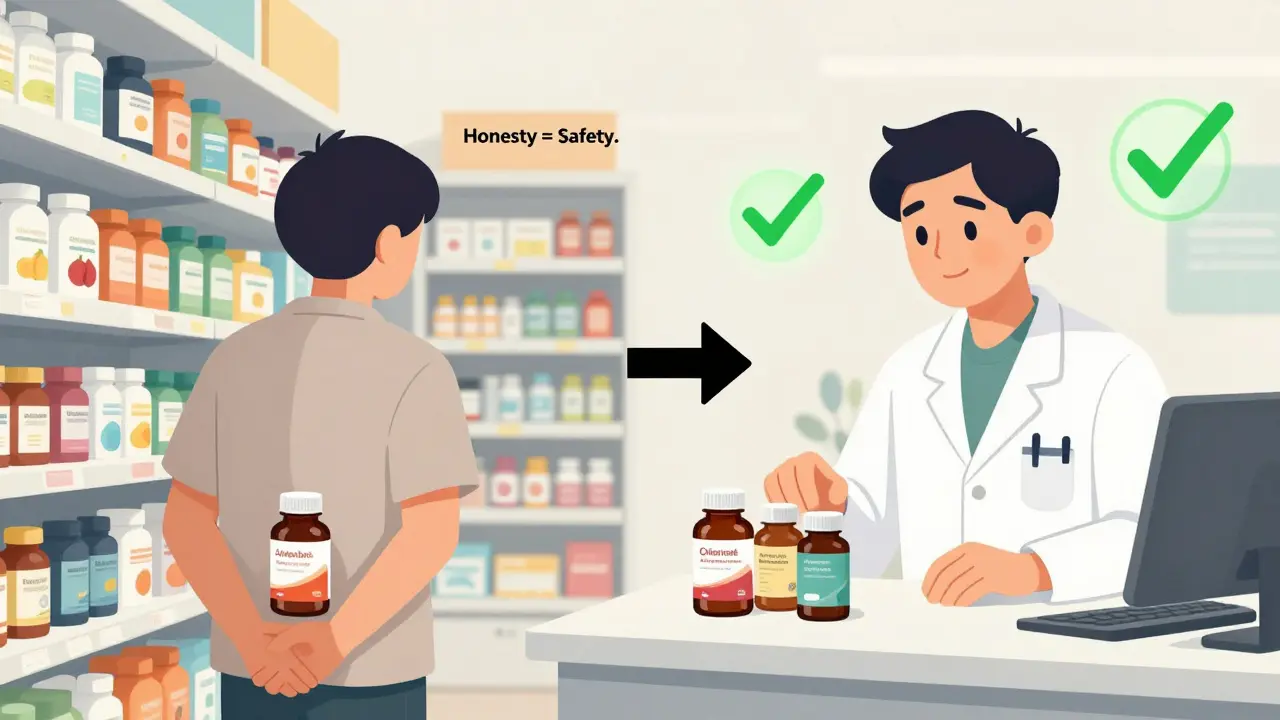
How to Talk to Your Provider - Without Fear
You don’t need to be an expert. You just need to be honest. Bring your bottles. Yes, literally. Take a photo of the label on your phone, or bring the actual container to your appointment. That way, your provider can see the exact ingredients, dosages, and brand. Many supplements contain hidden additives or inconsistent amounts of active compounds. Labels are your best tool.
Don’t say: ‘I take some herbs.’ Say: ‘I take 500 mg of turmeric twice a day for my knees, and I’ve been on it for two years.’ Be specific. Name the supplement. Tell them how often and why you started. If you’re not sure what’s in it, say so. That’s okay.
And if your provider brushes you off? Push back. Say: ‘I’ve read that this can interact with my blood pressure meds. Can we check?’ Most providers will appreciate the initiative. In fact, 78% of patients who disclosed their supplement use said their provider gave them helpful advice - and 63% felt more trusted afterward.
What You Should Tell Your Provider - Even If It Feels Small
You don’t need to wait for your annual checkup. Tell your provider anytime you start or stop a supplement. Especially if:
- You’re starting a new prescription
- You’ve had a recent change in how you feel (fatigue, dizziness, nausea)
- You’re scheduled for surgery or a procedure
- You’re pregnant or planning to be
- You’re taking more than three medications
Even ‘harmless’ things like melatonin, magnesium, or vitamin D can interact. Melatonin can affect blood pressure meds. Magnesium can reduce the absorption of antibiotics. Vitamin D in high doses can raise calcium levels dangerously if you have kidney disease.
And don’t forget about over-the-counter products. Some cough syrups, cold pills, and even energy drinks contain herbal extracts you might not realize are supplements.
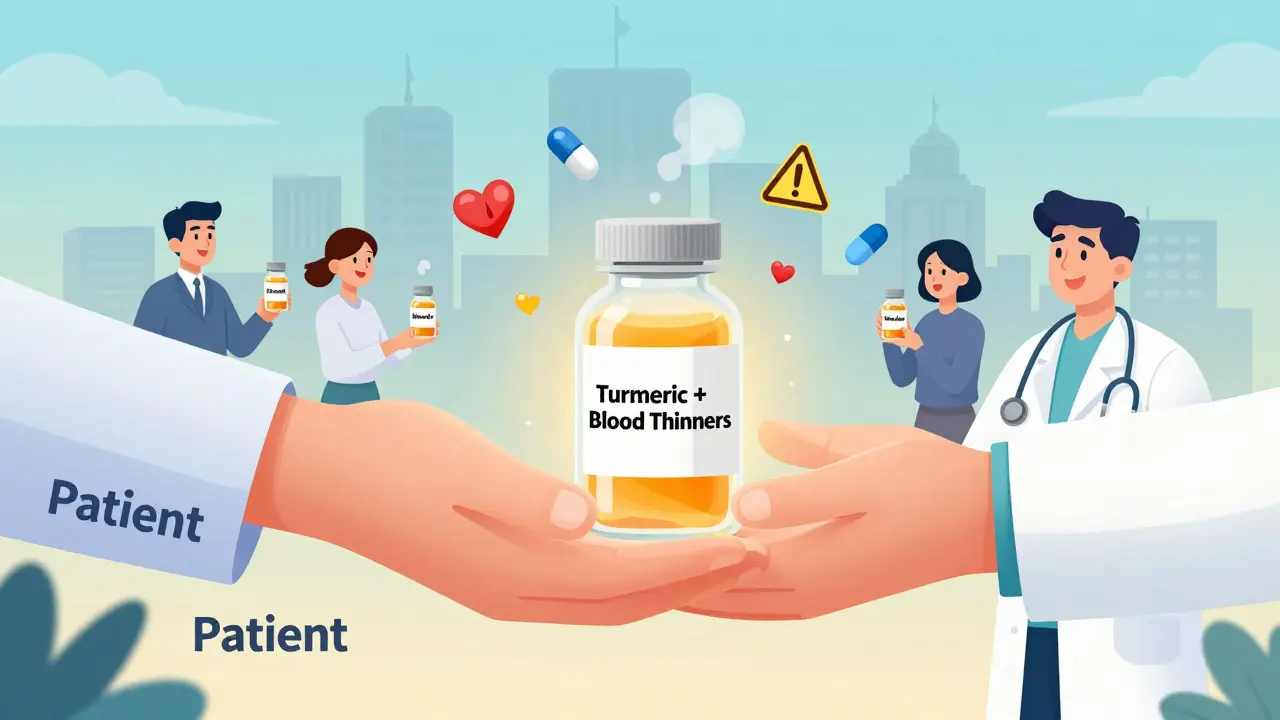
The Bigger Picture: Why This Matters Beyond Your Appointment
Supplement use isn’t going away. In 2022, Americans spent over $55 billion on them. There are more than 85,000 products on the market. The FDA can only act after harm is done - and even then, they only hear about 1% of adverse events.
That means the system is broken. But you have power. By speaking up, you’re not just protecting yourself. You’re helping your provider make better decisions for everyone. When patients report interactions, it adds to the real-world data that eventually leads to better warnings, labeling, and guidelines.
And if your provider doesn’t know how to respond? That’s not your fault. But it’s your opportunity. Ask them to check the National Center for Complementary and Integrative Health’s database. Suggest they use a tool like MyMedList, an app shown to improve disclosure accuracy by 44% in a recent trial.
What to Do Today
You don’t need to wait for your next appointment. Start now:
- Look at every supplement, herb, or vitamin you take. Write down the name, dose, and why you take it.
- Take a photo of each bottle or bring them to your next visit.
- Ask your provider: ‘Do you know how this might interact with my other meds?’
- If they say ‘I don’t know,’ ask if they can look it up - or if they can refer you to someone who can.
- Update your list every time you start or stop something - even if it’s just for a few days.
This isn’t about being perfect. It’s about being safe. Your health isn’t a secret. And your provider isn’t here to judge - they’re here to help you avoid harm.
Do I really need to tell my doctor about vitamins and fish oil?
Yes. Even common supplements like fish oil, vitamin D, or magnesium can interact with medications. Fish oil can increase bleeding risk if you’re on blood thinners. Vitamin D can raise calcium levels in people with kidney disease. Your doctor needs the full picture to keep you safe.
What if my doctor says supplements are a waste of money?
That’s their opinion - not your reason to stay silent. You can still tell them what you’re taking without agreeing with their view. Say: ‘I understand you’re skeptical, but I’d like to make sure it’s safe with my other meds.’ Most providers will respect that.
Can herbal remedies cause serious side effects?
Absolutely. St. John’s wort can cause serotonin syndrome when mixed with antidepressants. Kava has been linked to liver damage. Comfrey and some weight-loss herbs can cause severe liver or kidney injury. These aren’t myths - they’re documented cases reported to the FDA.
Is it safe to take supplements before surgery?
Many aren’t. Garlic, ginkgo, ginger, turmeric, and fish oil can increase bleeding during surgery. Most surgeons ask patients to stop them 1-2 weeks before the procedure. But if you don’t tell them you’re taking them, they won’t know to ask. Always disclose everything - even if you think it’s ‘just a pill.’
What if I’m embarrassed to admit I take supplements?
You’re not alone. Most people feel the same way. But your provider has likely seen dozens of patients taking the same things. They’ve heard it all. Being honest isn’t a sign of weakness - it’s a sign you care about your health. And the more you speak up, the more normal it becomes.
Are there apps or tools to help track supplements?
Yes. Apps like MyMedList and Medisafe let you log everything you take - prescriptions, OTCs, and supplements. They can flag potential interactions and even generate a printable list to bring to appointments. One study showed these tools improved disclosure accuracy by 44%.
Ajay Brahmandam
December 21, 2025 AT 17:49I used to think fish oil was just harmless heart stuff until my dad had a bleed after surgery and they found out he’d been popping 4g daily. Turns out, even ‘natural’ doesn’t mean safe. Now I bring my bottles to every appointment-no shame.
jenny guachamboza
December 23, 2025 AT 04:37LOL so now we’re supposed to trust Big Pharma over grandma’s turmeric tea?? 🤡 The FDA is corrupt, man. They ban natural cures so they can sell you overpriced pills. My aunt cured her arthritis with ginger root and they called it ‘anecdotal.’
Gabriella da Silva Mendes
December 23, 2025 AT 22:25Look, I get it. But let’s be real-this whole ‘tell your doctor everything’ thing is just another way for the medical-industrial complex to control us. Who even ARE these doctors? They don’t know what’s in your supplements because they don’t want to. They’re trained to push pills, not listen. And don’t even get me started on how they dismiss anything that’s not patented. 🇺🇸 WE’RE BEING MANIPULATED.
Kiranjit Kaur
December 25, 2025 AT 01:11My mom took ashwagandha for stress and didn’t tell her doctor-ended up with a thyroid flare-up. She felt so guilty, but now she brings her supplements in a little ziplock bag to every visit. 😊 It’s not about trust, it’s about teamwork. We’re all just trying to stay healthy, right?
Sam Black
December 26, 2025 AT 13:27There’s a quiet revolution happening in primary care-some docs are finally starting to ask. I work in a clinic where we use a simple checklist: ‘What are you taking? Even if it’s ‘just a vitamin.’’ The change in patient openness has been wild. People start bringing photos, labels, even handwritten notes. It’s not about fear-it’s about dignity. You’re not a patient if you’re hiding. You’re a partner.
Johnnie R. Bailey
December 27, 2025 AT 11:21Supplements aren’t magic, but they’re not nonsense either. The real issue is the lack of standardization. One brand’s ‘500mg turmeric’ might have 5mg curcumin, another might have 200mg. And nobody’s testing it. So when someone says ‘it didn’t work,’ maybe it’s because the product was garbage-not because the herb is useless. We need transparency, not fear-mongering. Or worse, blanket dismissal.
Tony Du bled
December 29, 2025 AT 05:40My cousin took melatonin for sleep and didn’t say anything-then her BP went haywire. Turns out, it interacts with her lisinopril. She didn’t know. Her doctor didn’t ask. Now she keeps a sticky note on her pill organizer: ‘Tell the doc.’ Simple. But life-saving.
Art Van Gelder
December 30, 2025 AT 20:25Think about this: we live in a world where you can buy a $20 supplement with zero regulation, but if you want a $5 aspirin, you need a prescription in some states. The system is inverted. We’re told to trust science-but then told to ignore the science that says ‘don’t mix this with that.’ The burden is on the patient to be a pharmacologist, while the provider is too busy to care. That’s not healthcare. That’s survival mode.
Kathryn Weymouth
December 31, 2025 AT 19:17Just a quick note: if you're taking anything-even a daily magnesium-it's worth documenting the exact brand and dosage. Many supplements contain fillers, heavy metals, or unlisted ingredients. One study found 20% of herbal products had contaminants. Your doctor doesn't need to judge you-they need accurate data to protect you.