Compounded Medications: When Custom Formulas Are Needed
 Jan, 24 2026
When a standard pill just won’t work, compounded medications step in. These aren’t mass-produced drugs you pick up at your local pharmacy. They’re made by hand-tailored to your body, your allergies, your swallowing problems, or even your child’s refusal to take bitter medicine. For some people, they’re the only way to get treatment that actually fits.
Why Standard Pills Don’t Always Work
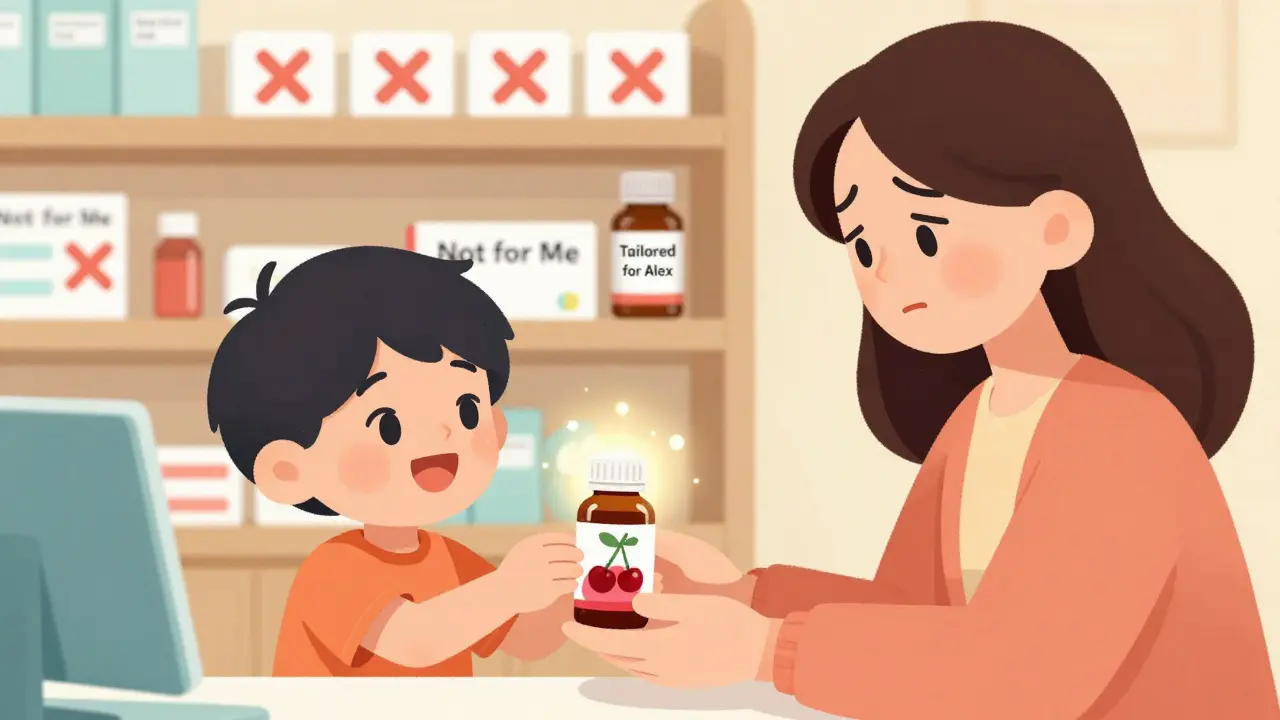
Think about how many people struggle with swallowing pills. Around 40% of adults and up to 80% of kids have trouble with them. Then there are allergies-15 million Americans react to dyes, gluten, or lactose in commercial meds. Some patients need doses that don’t exist on shelves: 1.5 mg of a drug when only 1 mg and 2 mg are made. Others need their meds in cream form because their stomachs can’t absorb pills. These aren’t rare edge cases. They’re real, daily problems for a lot of people.Compounding solves these gaps. A pharmacist takes active ingredients and mixes them into something that works for you. It could be a cherry-flavored liquid for a child with ADHD, a pain-relief gel that avoids stomach side effects, or a hormone blend matched exactly to your body’s needs. These aren’t guesses. They’re precise, doctor-approved formulas built around your biology.
What Compounded Medications Can Do
Compounded meds aren’t just about changing the shape. They change the whole game. Here’s what they can do that store-bought drugs can’t:- Adjust dosages precisely: Need 0.75 mg of a drug? A compounding pharmacy can make it. No more cutting pills or taking extra tablets.
- Remove allergens: No more dyes, gluten, or preservatives that trigger reactions.
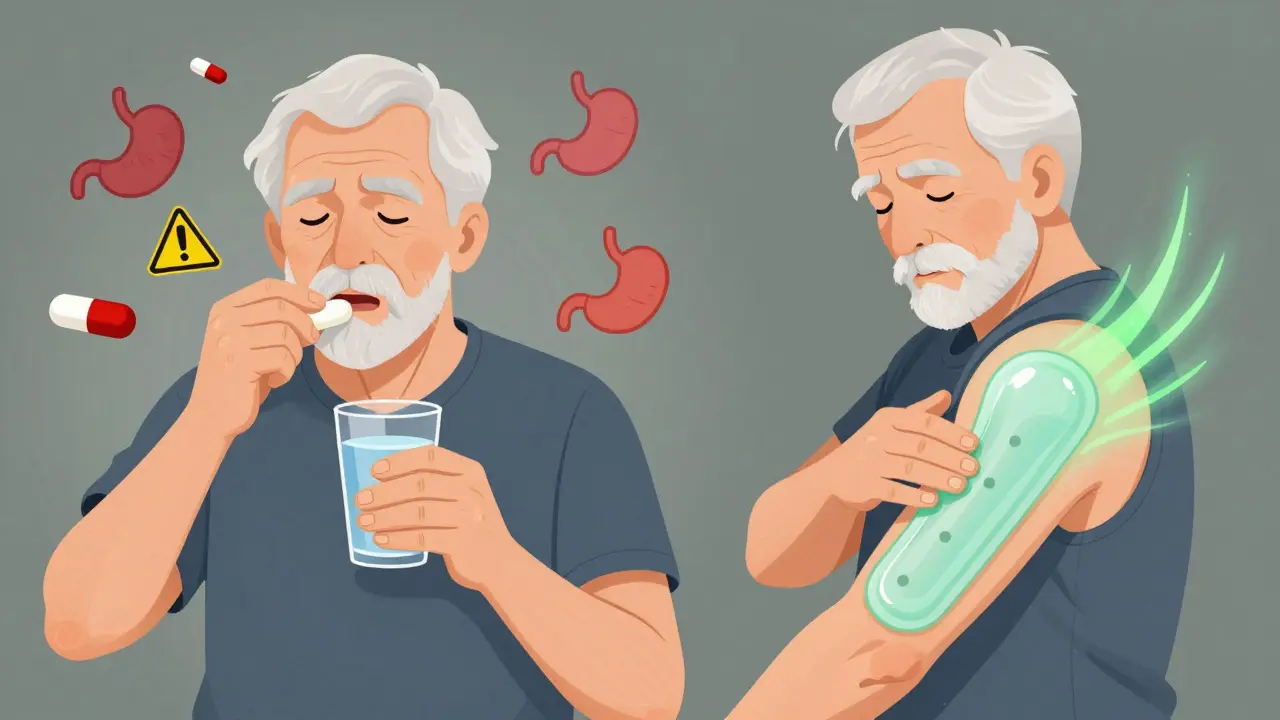
- Change the form: Turn a pill into a cream, gel, lollipop, or suppository. Great for kids, seniors, or people with nausea.
- Combine multiple drugs: Instead of five pills a day, get one capsule with everything you need. This cuts confusion and improves adherence.
- Flavor it right: Studies show flavored liquids boost adherence by 27% in kids. A parent on Reddit said their child went from taking medication 40% of the time to 95% after switching to a cherry-flavored compounded version.
These aren’t theoretical benefits. They’re backed by real patient outcomes. In geriatric care, transdermal gels bypass gut absorption issues that affect 60-70% of older adults on multiple meds. In hormone therapy, bioidentical formulas are customized to match natural hormone levels-something off-the-shelf pills can’t do.
The Risks You Can’t Ignore
Here’s the hard truth: compounded meds aren’t FDA-approved. That means the agency doesn’t test them for safety, strength, or purity before they reach you. The FDA doesn’t inspect every batch. That’s why quality varies wildly.The 2012 fungal meningitis outbreak from the New England Compounding Center killed 64 people and sickened nearly 800. It happened because a pharmacy started mass-producing sterile injections like a factory-not a pharmacy. That’s not compounding. That’s manufacturing without the rules.
Between 2010 and 2020, compounded drugs made up just 1% of prescriptions but caused 17% of drug recalls. Why? Contamination, wrong dosages, inconsistent ingredients. One patient on PatientsLikeMe reported their compounded thyroid med varied so much between batches that their TSH levels swung out of control. That’s not a fluke. It’s a known risk.
Compounding is powerful-but only when done right. And not every pharmacy is equipped to do it safely.
Who Should Use Them?
Compounded medications aren’t for everyone. They’re for people who have no other options. Experts agree: they should be the exception, not the rule.Here are the best use cases:
- Pediatric patients: Kids who can’t swallow pills or hate the taste of medicine.
- Seniors with absorption issues: Those whose bodies can’t process oral meds due to age or disease.
- Allergy sufferers: People reacting to fillers or dyes in commercial drugs.
- Chronic pain patients: Needing topical blends of multiple painkillers to avoid opioids.
- Hormone therapy users: Requiring exact bioidentical ratios not found in standard prescriptions.
- Veterinary patients: Animals needing doses or forms not made for humans.
If a commercial version exists and works for you, stick with it. Compounding should only come in when the standard option fails.
How to Find a Safe Compounding Pharmacy
Not all compounding pharmacies are equal. Of the roughly 7,500 pharmacies in the U.S. that offer compounding, only about 350 are accredited by the Pharmacy Compounding Accreditation Board (PCAB). That’s less than 5%.Here’s how to pick one:
- Look for PCAB accreditation. It’s the gold standard. It means they follow strict quality controls, cleanroom standards, and staff training.
- Ask about USP compliance. They should follow USP Chapter <795> for non-sterile compounds and <797> for sterile ones. These cover everything from air quality to staff handwashing.
- Check reviews. Specialty compounding pharmacies average 4.6/5 stars on Healthgrades. General pharmacies offering limited compounding? Around 3.8/5.
- Ask questions. Do they test every batch? Do they use validated formulas? Can they show you their quality reports?
Don’t settle for a pharmacy that just says, “We compound.” Dig deeper. Your safety depends on it.
Cost and Insurance: What to Expect
Compounded meds cost more than generics. A basic non-sterile compound might run $30-$100. A sterile IV bag? $200-$500. Compare that to a $10-$50 generic pill.Insurance coverage is spotty. Medicare Part D covers only 42% of compounded claims. Private insurers vary wildly. Some require prior authorization. Others won’t cover it at all.
Always check with your insurer before starting. Ask: Is this covered under my plan? Do I need a prior auth? Will I pay more out of pocket than a commercial alternative?
Some patients pay hundreds more-but say it’s worth it because the alternative is no treatment at all.

The Regulatory Maze
After the 2012 outbreak, Congress passed the Drug Quality and Security Act. It created two paths:- Section 503A: Traditional compounding. Regulated by state pharmacy boards. No FDA inspection. Limited to prescriptions for individual patients.
- Section 503B: Outsourcing facilities. Registered with the FDA. Must follow FDA manufacturing rules (CGMP). Can produce in bulk-but only if they report adverse events and meet strict quality standards.
As of 2023, 65% of compounding pharmacies are 503A. Only 350 are 503B. That means most are under state oversight only. The FDA can step in if there’s a safety issue-but they don’t inspect every pharmacy regularly.
In 2022, the FDA issued 12 warning letters to compounding pharmacies for problems like poor sterilization, mislabeling, or making drugs in bulk without a prescription. The agency is now cracking down on pharmacies compounding weight-loss drugs like semaglutide at factory scale. Commissioner Robert Califf said: “We’re not going to let pharmacies operate like drug manufacturers without the same safety rules.”
The Future: Personalized Medicine Meets Precision Compounding
The next wave of compounding isn’t just about flavor or form. It’s about genetics.Some labs are now using pharmacogenomic testing to create meds tailored to how your body metabolizes drugs. For example, if you have a CYP2D6 gene variant, you might break down certain meds too fast-or too slow. A compounded version can adjust the dose based on that. Early data from Innovation Compounding shows a 30% improvement in outcomes for patients using these genetically matched formulas.
But here’s the catch: the FDA still says compounding can’t replace FDA-approved drugs. It’s not a loophole. It’s a last resort.
As Dr. Lucinda Maine of the American Association of Colleges of Pharmacy put it: “The path forward requires elevating compounding standards while preserving its essential role in addressing unmet patient needs.”
That’s the balance. Innovation without safety is dangerous. But refusing to adapt when patients need something different is just as harmful.
What You Need to Know Before Asking for a Compounded Med
If you think you need a compounded medication:- Start with your doctor. They must write the prescription and explain why a commercial drug won’t work.
- Work with a qualified pharmacist. Don’t just pick the cheapest option. Ask about accreditation and testing.
- Know the cost. Compare it to alternatives. Ask about insurance.
- Watch for red flags. If the pharmacy ships large quantities without prescriptions, or doesn’t answer questions about quality control, walk away.
- Track your results. If you’re on a compounded med, monitor symptoms and lab values. Report any changes to your provider.
Compounded medications save lives. But they also carry risk. The difference between success and danger comes down to one thing: how carefully they’re made-and who makes them.
Are compounded medications FDA-approved?
No. Compounded medications are not FDA-approved. The FDA does not test them for safety, effectiveness, or consistency before they’re given to patients. That’s why choosing a reputable, accredited compounding pharmacy is critical. Only FDA-registered 503B outsourcing facilities are subject to federal manufacturing standards.
Can I get compounded medications without a prescription?
No. Federal law requires a valid prescription from a licensed provider-like a doctor or nurse practitioner-for every compounded medication. Any pharmacy offering compounded drugs without a prescription is operating illegally and poses serious safety risks.
Why do compounded meds cost more than regular ones?
They cost more because they’re made by hand, one batch at a time, using specialized equipment and strict quality controls. Sterile compounds require cleanrooms, testing, and trained staff-all of which add expense. A generic pill might cost $15; a custom compounded version could be $75 or more, depending on complexity.
How do I know if my compounding pharmacy is safe?
Look for accreditation from the Pharmacy Compounding Accreditation Board (PCAB). Only about 350 of the 7,500 U.S. compounding pharmacies have this. Ask if they follow USP <795> or <797> standards. Check their reviews and ask if they test every batch. If they can’t answer clearly, find another pharmacy.
Can compounded medications replace FDA-approved drugs?
No. Compounded medications are meant for patients who can’t use FDA-approved drugs due to allergies, dosage needs, or formulation issues. If a commercial version exists and works for you, it’s the safer, more reliable choice. Compounding should be a backup-not a first option.
SWAPNIL SIDAM
January 25, 2026 AT 23:30My kid used to cry every time we tried to give him his medicine. Then we found a compounding pharmacy that made it taste like grape candy. Now he asks for it. No joke. Life changed.
Best $80 I ever spent.
Geoff Miskinis
January 26, 2026 AT 22:52Let’s be brutally honest: compounding is the pharmaceutical equivalent of a garage mechanic claiming they can ‘tune’ a Ferrari better than the factory. Sure, sometimes it works-but 90% of these operations operate under state-level regulatory vacuum, with zero batch testing, and zero accountability. The 2012 outbreak wasn’t an anomaly. It was inevitable.
And yes, I’ve seen the ‘cherry-flavored ADHD med’ testimonials. Cute. Doesn’t make it safe. Or evidence-based.
Ashley Karanja
January 27, 2026 AT 20:43Okay, but can we just pause for a second and appreciate how *human* this is? 🫂
We’re talking about real people-kids who gag on pills, seniors with failing digestion, folks with allergies to every filler known to man-and the system says, ‘Here’s your one-size-fits-all tablet.’
Compounding isn’t magic. It’s *care*. It’s a pharmacist sitting down with a doctor and a patient and saying, ‘How do we make this work for YOU?’
Yes, there are bad actors. But the answer isn’t to ban the tool-it’s to fund accreditation, enforce USP standards, and stop treating compounding like a loophole. It’s a lifeline. And we owe it to people to make it safe, not scary.
Neil Thorogood
January 28, 2026 AT 13:25So let me get this straight-you’d rather your 7-year-old choke down a bitter pill than give them a lollipop that actually works? 🤡
And you’re mad because someone made it taste like strawberries instead of regret?
Also, ‘FDA-approved’ doesn’t mean ‘safe.’ It means ‘we didn’t kill anyone *yet*.’
My aunt’s thyroid med was wild until she switched to a PCAB-compounded version. Her TSH? Stable. Her mood? Better. Her pharmacy? Cleanroom. Certificates on the wall. You’re not scared of compounding-you’re scared of *personalized care*.
Robin Van Emous
January 29, 2026 AT 04:41I get both sides. On one hand, I’ve seen people saved by custom creams for chronic pain. On the other, I know a guy whose compounded vitamin D had 3x the dose he was supposed to get. He ended up in the ER.
So yeah-compounding can be a miracle. But it’s also a minefield.
Accreditation matters. Asking questions matters. Not just grabbing the cheapest option matters.
It’s not about being anti-compound. It’s about being pro-safety.
And honestly? If your pharmacy can’t show you their batch logs, walk out.
Angie Thompson
January 31, 2026 AT 02:20My dog needed a liquid version of his seizure med because he’d spit out the pill. The vet said, ‘Try compounding.’ We did. Now he licks it off a spoon like it’s peanut butter. 🐶💖
And it’s cheaper than his last ER visit.
Why are we still treating medicine like it’s one-size-fits-all? We don’t make shoes like that. Why do we make pills like that?
Compounding isn’t weird. It’s just… logical. 😊
James Nicoll
February 1, 2026 AT 10:37Ah yes, the classic ‘but it’s personalized!’ argument.
Let me guess-you also think homeopathy is ‘holistic medicine’ and that your crystals balance your chakras?
Compounding isn’t innovation. It’s a regulatory loophole dressed up as compassion. The FDA doesn’t approve it because it’s *too risky* to approve. Not because they’re ‘bureaucrats.’
And no, ‘cherry flavor’ doesn’t make a drug safe. It just makes it taste better while you’re still getting inconsistent dosing.
It’s not magic. It’s medicine with a side of wishful thinking.
Ashley Porter
February 1, 2026 AT 15:03My endocrinologist switched me to a compounded bioidentical hormone blend after 3 years of side effects from the commercial version. My mood stabilized. My energy returned. My labs? Perfect.
Is it more expensive? Yes. Is it covered? Not really.
But I’d pay $200/month for this over $50/month of feeling like a zombie.
And yes, my pharmacy is PCAB-accredited. They send me a certificate with every batch. I keep it in my binder.
It’s not a gamble. It’s a calculated choice.
Peter Sharplin
February 3, 2026 AT 03:13One thing no one talks about: compounding pharmacies are often the only option for rural patients. No big pharma rep visits a town of 2,000. But a local compounding pharmacist? They know every patient by name.
And yes, I’ve seen the horror stories. But I’ve also seen the quiet wins-the kid who finally takes their meds, the grandma who doesn’t need a feeding tube because her pill turned into a gel.
Don’t throw out the baby with the bathwater. Push for better oversight. Demand PCAB. Ask for batch reports. But don’t dismiss the people who rely on this.
It’s not about being pro or anti-compounding. It’s about being pro-patient.