How to Carry Injectables, Syringes, and Sharps on Airplanes: A Clear Guide for Travelers
 Dec, 10 2025
Traveling with injectable medications like insulin, EpiPens, or hormone treatments doesn’t have to be stressful-if you know the rules. Thousands of people fly with syringes and sharps every day, but many still face delays, confusion, or even denial at security. The good news? The rules are clear, and with the right preparation, you can move through security smoothly. This guide cuts through the noise and gives you exactly what you need to know, based on current TSA guidelines and real traveler experiences as of 2025.
What You’re Allowed to Bring
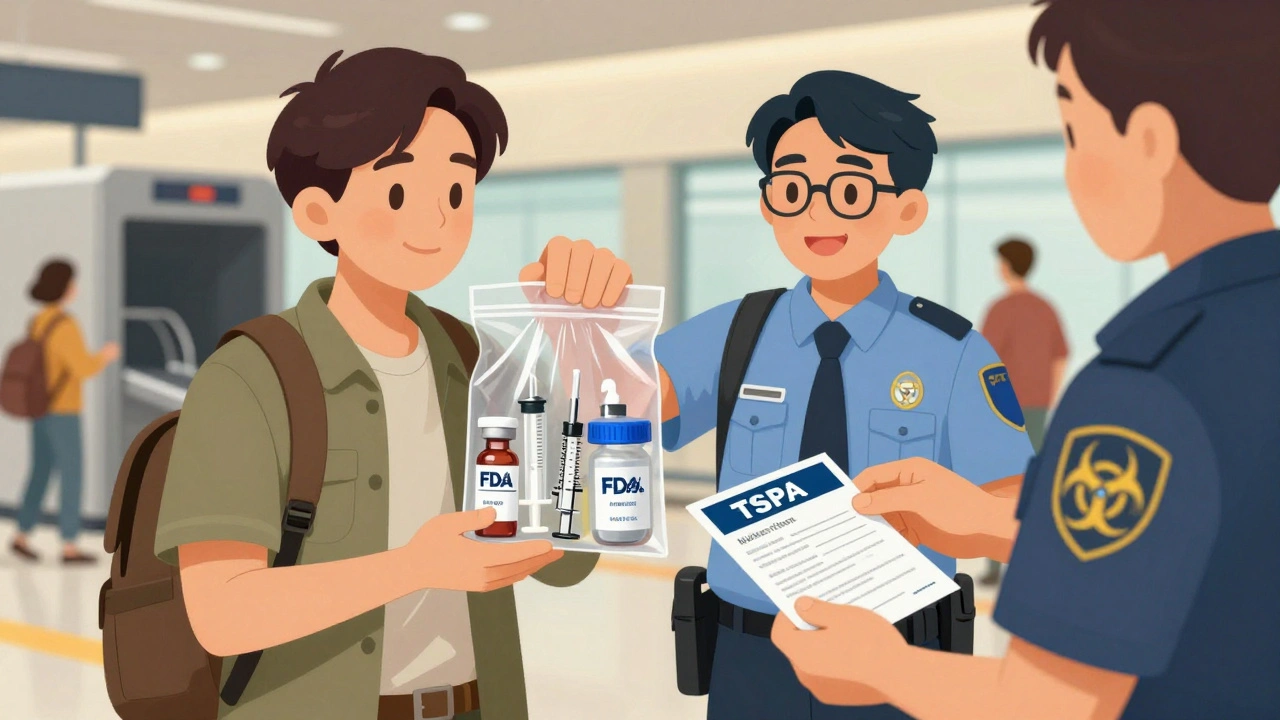
You can bring injectables, syringes, and sharps on a plane-no limits on quantity. Whether you need one shot a day or ten, TSA allows it all. The only requirement? The medication must be for your own medical use. You don’t need a prescription or doctor’s note to bring insulin, glucagon, or other injectables through security. But here’s the catch: syringes must be accompanied by the medication they’re meant to deliver. Bringing a box of unused syringes with no medication? That’s a red flag. TSA officers are trained to spot this, and it can lead to extra screening or questions.
Liquid medications can exceed the standard 3.4-ounce (100ml) limit. You’re not stuck with tiny travel bottles. If you need 100ml, 200ml, or even 500ml of insulin, you can bring it. Just declare it at the security checkpoint. Don’t try to hide it in your carry-on. If you do, it will be found during screening-and that’s when problems start.
Sharps Containers: Non-Negotiable
Used syringes? They must go in a proper sharps container. Not a pill bottle. Not a coffee can. Not a plastic water bottle. You need an FDA-approved sharps container that meets IATA Packing Instruction 650 standards. These are rigid, puncture-resistant, and labeled with the universal biohazard symbol. You can buy them at any pharmacy, medical supply store, or online for under $10. Some even come with pre-paid return labels for disposal after your trip.
Why does this matter? Flight crews have been stuck with needles from improperly stored sharps. Between 2018 and 2022, there were 17 documented needlestick injuries among airline staff. That’s why TSA and airlines take this seriously. If you show up with syringes loose in your bag, you’ll be asked to repack them-or worse, have them confiscated.
Temperature-Sensitive Medications
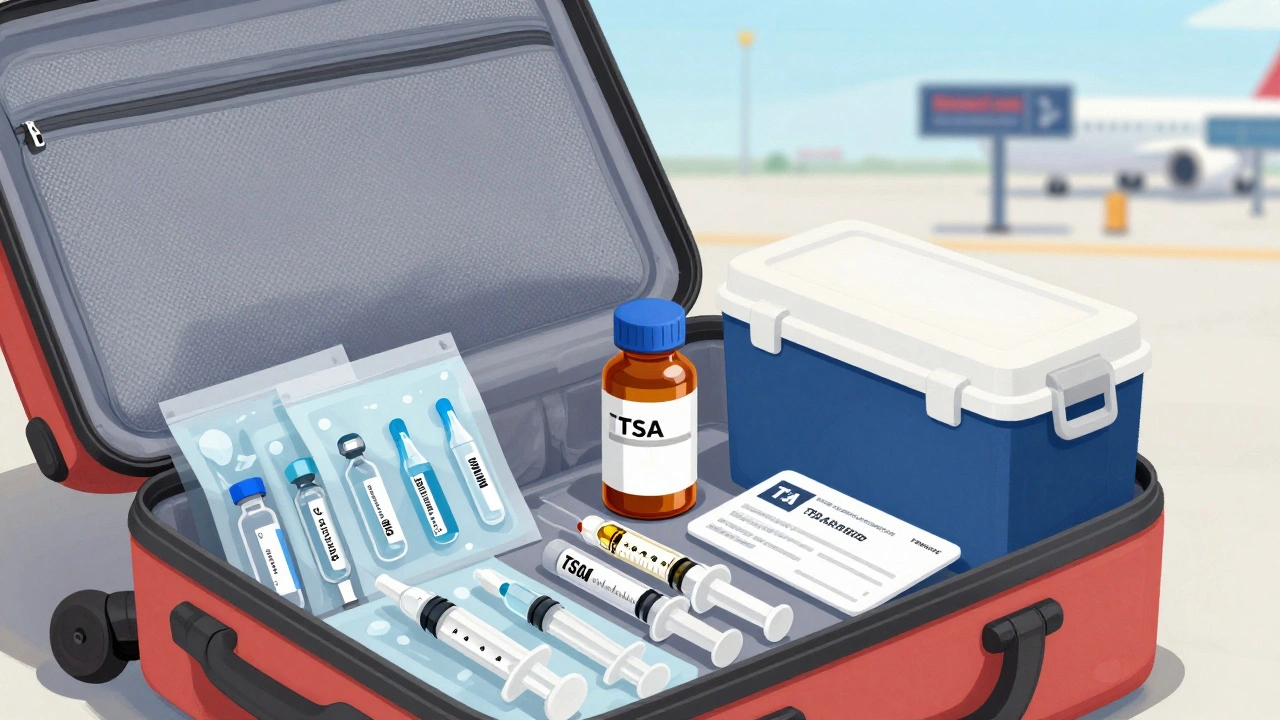
If your medication needs to stay cool-like insulin, growth hormone, or certain biologics-you can bring ice packs, gel packs, or even small coolers. There’s no size limit. But they will be screened. Some travelers report being asked to open the cooler or have the pack tested. To avoid delays, keep your medication and cooling items together in a clear, easy-to-access bag. Don’t tuck them deep inside your suitcase. Let security see them right away.
Never put temperature-sensitive meds in checked luggage. Bags can be exposed to extreme cold in the cargo hold. One traveler lost three weeks’ worth of insulin because her bag froze overnight in Chicago. She had to fly home early. Don’t let that be you.
Documentation: Helpful, Not Required
TSA doesn’t legally require a doctor’s note, prescription, or ID matching the medication label. But here’s the truth: having one makes things easier. A 2022 TSA report showed that passengers who used the TSA Notification Card (Form TSA-11-032) had 29% fewer delays. You can print it from tsa.gov, fill it out, and hand it to the officer before you reach the checkpoint. It says: “I have medically necessary items. Here’s what they are.” Simple. Clear. Effective.
Also, keep your medication in its original pharmacy bottle. It should have your name, the drug name, and the prescribing doctor’s info. If your insulin vial says “Jane Doe” and your boarding pass says “J. Doe,” you’re fine. But if it says “John Smith” and you’re Jane? That’s a problem. Officers aren’t mind readers. They need to match the name on the bottle to the name on your ID.
Domestic vs. International Travel
Inside the U.S., TSA rules apply everywhere. But international travel? That’s a different game.
European airports follow EASA rules, which sometimes require documentation in the local language. Japan requires a special permit for more than 10 syringes. Australia and Canada allow injectables but may ask for proof of medical need. Always check the destination country’s rules at least 30 days before you fly. Don’t assume U.S. rules apply overseas.
Some countries ban syringes entirely unless you have a doctor’s letter translated and notarized. Others allow them but require you to declare them upon arrival. One traveler was detained for 4 hours in Dubai because she didn’t know syringes needed prior approval. She had her insulin, but no paperwork. She missed her connecting flight.
Real Tips That Work
- Always declare your medical supplies before you get to the X-ray machine. Say, “I have injectable medication and sharps.” It saves time.
- Keep everything in your carry-on. Checked bags get lost, delayed, or exposed to temperature extremes.
- Use a clear plastic bag for your meds, syringes, and sharps container. It makes screening faster.
- Request a visual inspection for your medication if you’re worried about X-rays. TSA officers can do this. You don’t need to argue-just ask.
- If you have an insulin pump, wear it under your clothing. Don’t remove it unless asked. TSA allows pumps to stay on during screening.
- Bring extra supplies. Flights get delayed. Layovers get long. Pack at least 20% more than you think you’ll need.
What Not to Do
- Don’t tape syringes to your body. It looks suspicious and can trigger alarms.
- Don’t put sharps in ziplock bags. They’re not puncture-resistant. TSA will make you repack them.
- Don’t lie about what you’re carrying. Officers are trained to spot inconsistencies. If you say “I have insulin” but they find five different vials with no labels, you’ll be questioned.
- Don’t wait until the last minute. Practice packing your bag before your trip. Try it at home. See how long it takes to get everything ready.
What to Expect at Security
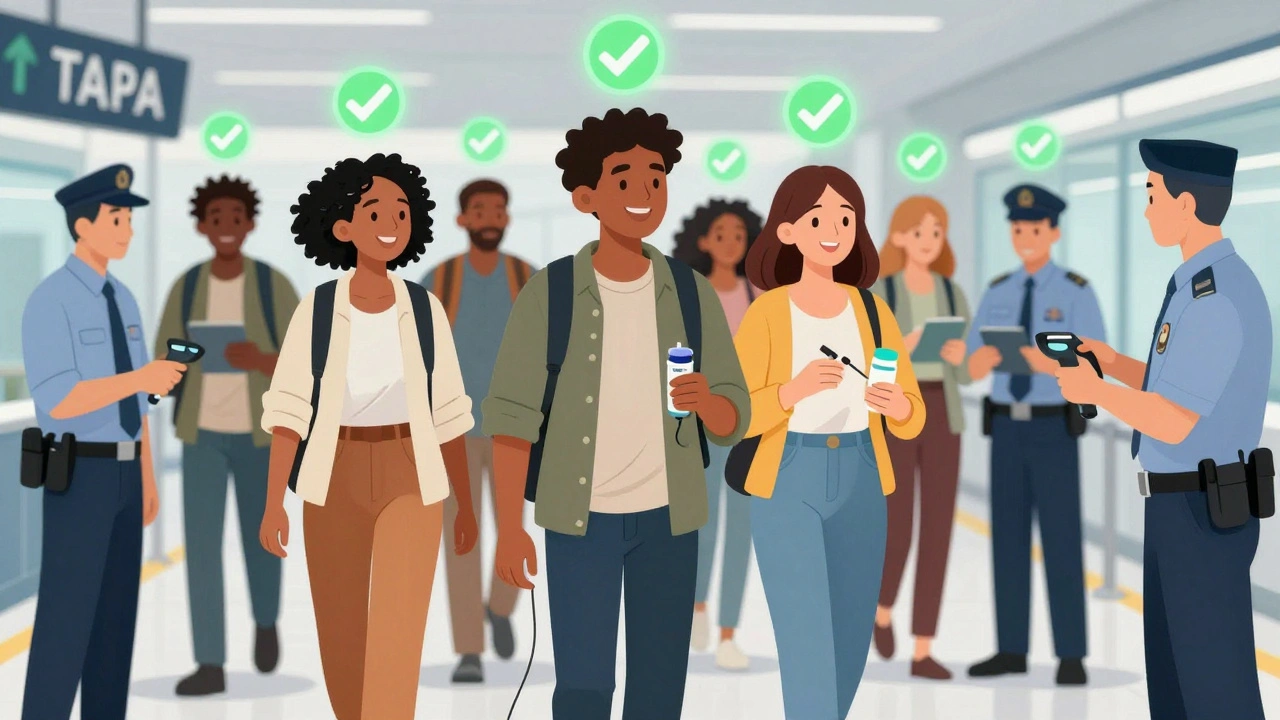
Plan for an extra 30 to 45 minutes at security if you’re carrying medical supplies. Even with PreCheck, you’ll likely be pulled aside for a manual check. That’s normal. Officers aren’t being difficult-they’re following protocol.
Be polite. Say “thank you” when they’re done. Most TSA agents appreciate travelers who are prepared. One passenger on Reddit shared that after handing the officer a printed TSA card and her insulin box, the officer said, “I have a brother with diabetes. I’m glad you’re taking care of yourself.” That’s the kind of moment that makes the whole process worth it.
What’s Changing in 2025
TSA is rolling out new medical screening lanes at 50 major U.S. airports by the end of 2025. These lanes have officers trained specifically in medical equipment handling. They use handheld devices that can identify medication components without opening bottles. This means fewer delays and less handling of your supplies.
Also, airlines are now required to train staff on medical travel under the Air Carrier Access Act. If you’re denied boarding because of your injectables, you have rights. File a complaint with the airline and the Department of Transportation. Discrimination based on medical need is illegal.
Final Thought
You’re not asking for special treatment. You’re asking for the right to manage your health while traveling. That’s not a privilege-it’s a basic need. With the right prep, you’ll breeze through security, stay safe, and get to your destination without a single hiccup. Pack smart. Declare early. Stay calm. And remember: you’re not alone. Millions of people do this every year. You’ve got this.
Can I bring insulin on a plane without a prescription?
Yes. TSA does not require a prescription or doctor’s note to bring insulin or other injectable medications on a plane. However, you must have the medication with you, and it should be labeled with your name. Keeping it in the original pharmacy container helps avoid delays.
Can I put syringes in my checked luggage?
No. Always keep syringes and injectables in your carry-on. Checked baggage can be exposed to extreme temperatures, which can ruin insulin and other temperature-sensitive medications. Also, if your bag is lost or delayed, you’ll be without your meds when you need them most.
Do I need a sharps container for unused syringes?
No. Unused syringes don’t need to be in a sharps container. But they must be with the medication they’re meant to use. Used syringes, however, must go in an FDA-approved sharps container that’s puncture-resistant and labeled with the biohazard symbol.
Can I bring ice packs for my insulin?
Yes. TSA allows ice packs, gel packs, and small coolers for temperature-sensitive medications with no size restrictions. They may be screened separately, so keep them easily accessible in your carry-on. Don’t freeze them solid-they’ll be harder to screen.
What if I’m flying internationally?
Rules vary by country. While the U.S. allows unlimited injectables, countries like Japan, Australia, and some in Europe require permits, translations, or limits on syringe numbers. Always check your destination’s health or aviation authority website at least 30 days before you fly.
Will TSA scan my insulin with X-ray?
It’s possible, but you can request a visual inspection instead. TSA officers are trained to handle medical items without X-ray screening. Just ask politely: “I’d prefer a visual inspection for my insulin.” Most will accommodate you.
What if I’m denied boarding because of my syringes?
You have legal rights under the Air Carrier Access Act of 1986. Denying boarding because of medically necessary equipment is illegal. Ask to speak to a supervisor, file a complaint with the airline, and report the incident to the U.S. Department of Transportation’s Aviation Consumer Protection Division.
Aileen Ferris
December 12, 2025 AT 00:37also who even has time to buy those fancy sharps containers? i reuse old soda bottles. its fine.
Sarah Clifford
December 12, 2025 AT 11:02Ben Greening
December 13, 2025 AT 08:54Mia Kingsley
December 15, 2025 AT 01:45Aman deep
December 15, 2025 AT 15:43one thing i learned: always put your meds in a clear pouch with your name on it. not just your boarding pass name-your full legal name. i had a flight in tokyo where they asked for a doctor’s note in japanese. i had no idea. so now i carry a simple translation printed out.
also, the ice pack tip? lifesaver. once my insulin froze in a checked bag in denver. i had to beg a hotel front desk for a fridge. never again. you’re not alone. we got this.
Sylvia Frenzel
December 15, 2025 AT 22:53Regan Mears
December 17, 2025 AT 20:54Vivian Amadi
December 18, 2025 AT 17:07matthew dendle
December 19, 2025 AT 07:12you know what’s easier than all this? not needing meds. just saying.
also sharps container? i use a pen cap. works great. TSA didnt even notice. they were too busy arguing about my coffee