Pharmacist Concerns About NTI Generics: What You Need to Know in 2025
 Dec, 2 2025
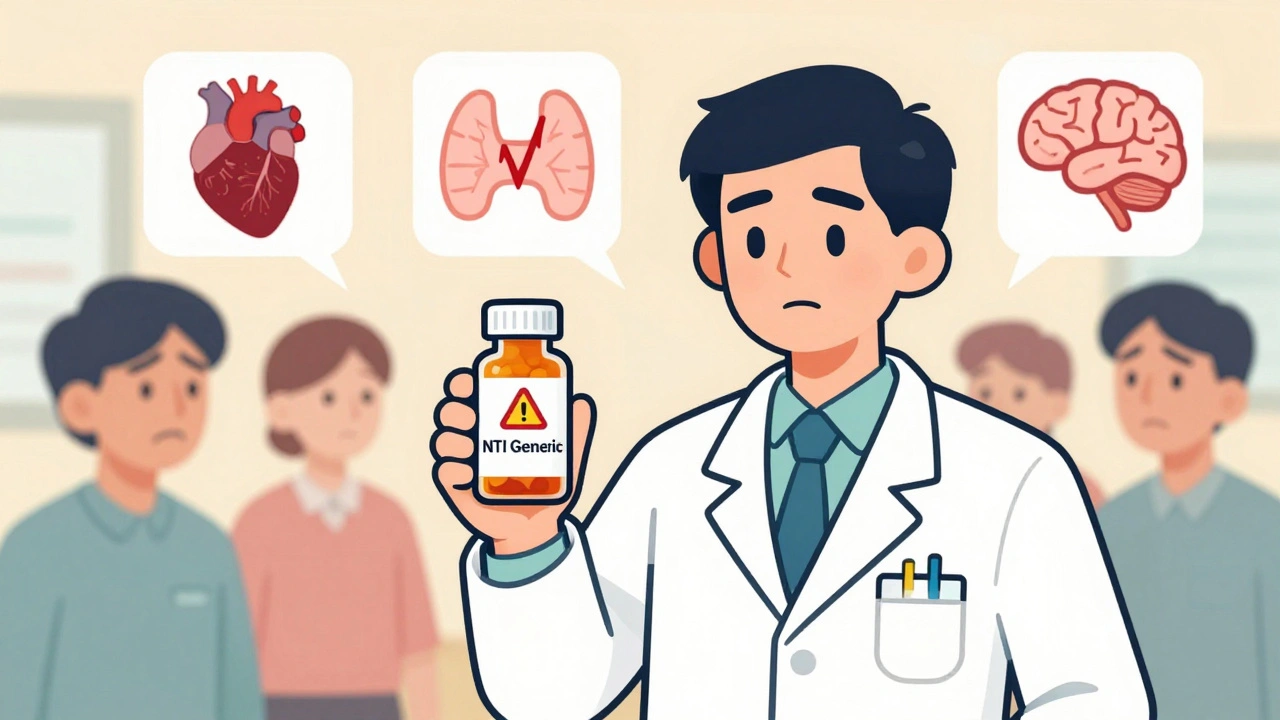
When a pharmacist hands you a pill bottle labeled "generic," most people assume it’s just a cheaper version of the brand-name drug. But for NTI generics, that assumption can be dangerous. Narrow Therapeutic Index (NTI) drugs are a small group of medications where even tiny changes in dosage or blood levels can cause serious harm-think blood clots, seizures, or thyroid failure. And while generics make up 90% of all prescriptions filled in the U.S., NTI generics are the ones pharmacists lose sleep over.
What Makes a Drug an NTI Drug?
NTI stands for Narrow Therapeutic Index. That means the difference between a dose that works and a dose that’s toxic is razor-thin. A 10% change in how much of the drug enters your bloodstream? That’s not just a number-it could mean the difference between controlling your seizures or having one. The FDA doesn’t publish an official list, but they do flag certain drugs in the Orange Book with a "B" therapeutic equivalence code, signaling that substitution might not be safe.
Common NTI drugs include warfarin (a blood thinner), levothyroxine (for thyroid disorders), phenytoin (for seizures), and carbamazepine (for epilepsy and nerve pain). These aren’t rare medications. Millions of people rely on them daily. But because their safety margin is so small, switching between different generic versions-even ones approved by the FDA-can trigger dangerous fluctuations in blood levels.
Why Pharmacists Are Worried
In 2024, the American Society of Health-System Pharmacists (ASHP) surveyed 1,200 pharmacists. Sixty-eight percent said they’re concerned about substituting NTI generics. That’s not a small number-it’s a red flag. Why? Because the bioequivalence standards for these drugs haven’t kept up with the clinical reality.
For most generics, the FDA allows a 80-125% range in how much of the drug is absorbed compared to the brand. That’s fine for antibiotics or blood pressure meds. But for NTI drugs? The FDA recommends a tighter 90-111% range. Even then, studies show that’s not enough. The University of Minnesota found 15 NTI drugs where bioavailability shifts outside this range can directly cause harm. One pharmacist in a hospital in Wisconsin told me: "I had a patient on levothyroxine for 10 years. Switched to a new generic. Three weeks later, her heart started racing. Her TSH was off the charts. She ended up in the ER. The doctor didn’t even realize it was the pill change."
The Real Cost of Substitution
Yes, NTI generics save money. They cost 80-85% less than brand-name versions. That’s huge for patients on fixed incomes. But the trade-off isn’t just financial-it’s clinical.
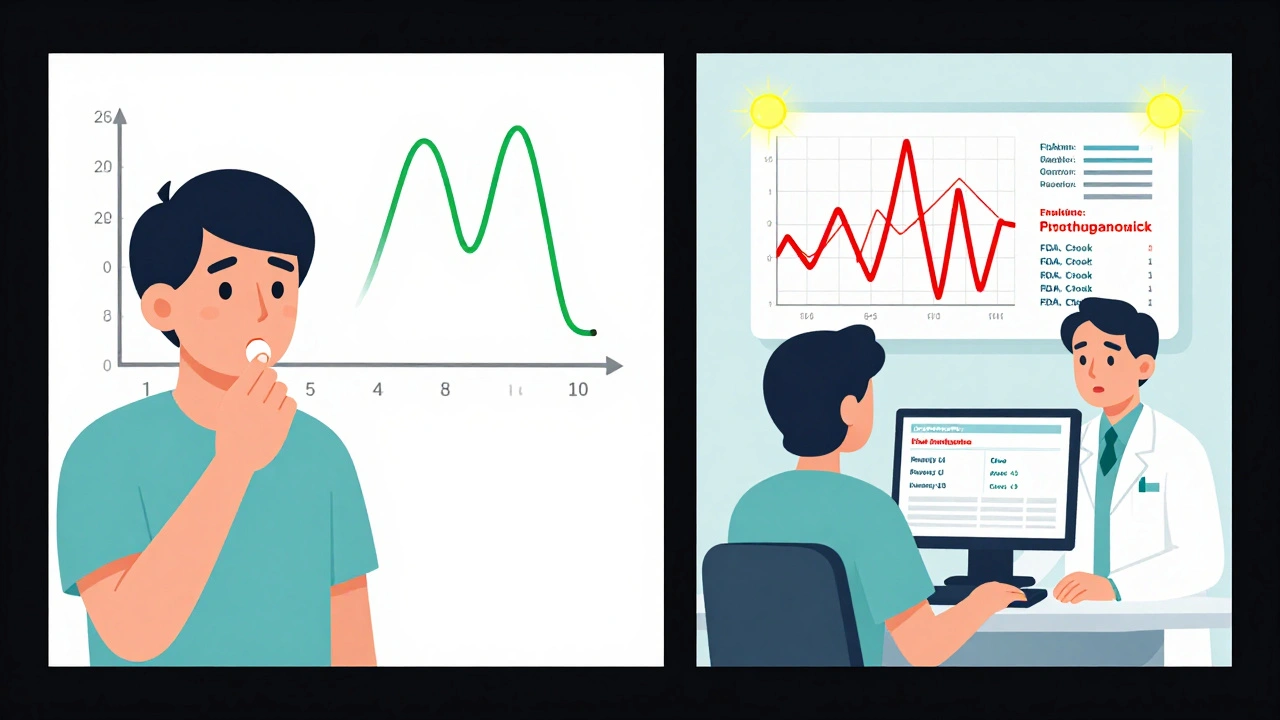
Between 2020 and 2024, the FDA’s Adverse Event Reporting System recorded 1,247 adverse events linked to NTI generic substitutions. For non-NTI generics? Just 382. That’s more than triple the risk. And it’s not just about one bad batch. The real problem is switching between different generic manufacturers. The FDA reported in 2024 that 23% of NTI drug shortages were worsened by pharmacies or hospitals switching between different generic suppliers. One patient might get a generic from Company A today, then Company B next month. Even if both are "FDA-approved," their absorption profiles can differ enough to cause instability.
On Reddit’s r/pharmacy, a top thread from 2024 with 287 upvotes detailed how phenytoin levels dropped after a switch, leading to a seizure. In another case, a patient on warfarin had their INR spike from 2.8 to 6.1 after a generic change-enough to cause internal bleeding. These aren’t hypotheticals. They’re happening in real clinics and hospitals.
What’s Being Done? The Patchwork of Rules
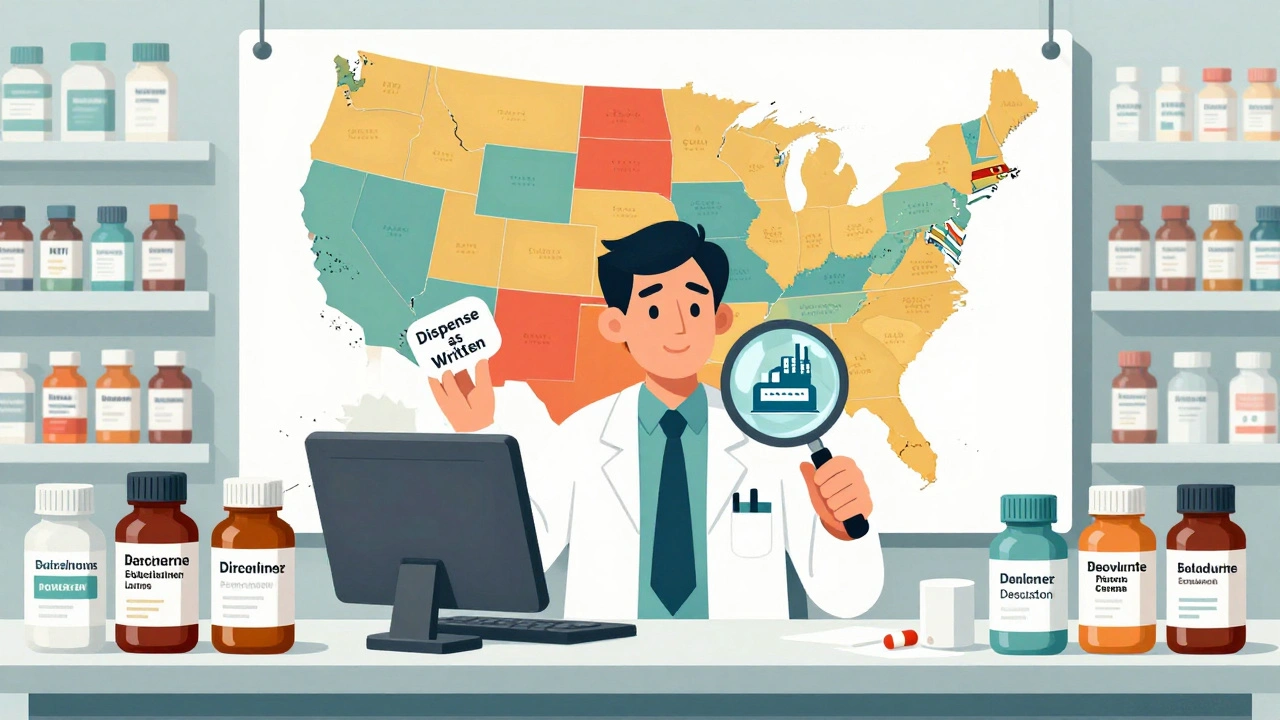
Here’s the messy part: rules vary wildly by state. As of January 2025, only 28 states have laws restricting automatic substitution of NTI drugs. In 22 states, the prescriber must explicitly say "Do Not Substitute." In six states, automatic substitution is banned entirely for NTI drugs. In the rest? Pharmacists can swap generics unless the doctor says otherwise.
That creates chaos. A patient moves from California to Texas. Their warfarin generic changes. No one tells the pharmacist. No one checks their INR. A month later, they’re in the hospital. Pharmacists are caught in the middle-expected to ensure safety, but given inconsistent legal tools to do it.
Many pharmacies now use a "single source" policy: once a patient is on a specific generic brand, they stay on it. Sixty-three percent of hospital systems now follow this. But community pharmacies? They’re pressured by insurance plans to switch to the cheapest option every refill. That’s not patient care-that’s cost arbitrage.
What Pharmacists Are Asking For
Most pharmacists aren’t against generics. They’re against blind substitution. A 2024 American Pharmacists Association survey found that 61% of pharmacists want state laws requiring prescriber notification before switching NTI generics. Only 29% want that for non-NTI drugs.
They also want better tools. The FDA’s Therapeutic Equivalence Ratings database is updated quarterly, but it’s not easy to use. The AAM’s NTI Drug Information Portal gets 127,000 visits a year-proof that pharmacists are hungry for reliable data. But it’s not enough. Pharmacists need real-time alerts when a new generic is added to a formulary. They need access to bioequivalence data beyond the FDA’s broad ranges. They need training.
According to the American College of Clinical Pharmacy, 78% of hospital pharmacists say they need more training than what pharmacy school provides. Eighty-one percent of pharmacy residency programs now include NTI drug management-but that’s still not standard across the board. Many community pharmacists learned on the job, often without formal guidance.
The Bigger Picture: Supply Chains and Policy
Eighty percent of generic drugs are manufactured overseas. For NTI drugs? The number is even higher. The University of Minnesota’s Resilient Drug Supply Project found that NTI generics are more likely to come from countries with less stringent manufacturing oversight. When a factory in India or China has a quality issue, it doesn’t just delay a cough syrup-it can trigger a nationwide shortage of warfarin or levothyroxine.
The FTC’s 2025 investigation into drug middlemen highlighted how group purchasing organizations (GPOs) push for the lowest price, often ignoring therapeutic stability. One community pharmacist in Ohio said: "I’ve had to call three different distributors just to get the same generic brand. The last one was backordered for six weeks. My patient had to go without. Her INR went wild."
And now, the Medicare Drug Price Negotiation Program is adding pressure. Three NTI drugs are among the first 10 selected for price caps. But the program’s 21-day reimbursement delay is causing cash flow problems for small pharmacies. Lisa Schwartz of the NCPA warned that this could lead to stockouts-exactly when patients need consistency the most.
What’s Next?
The FDA announced in April 2025 that it’s developing a new bioequivalence framework for 12 high-priority NTI drugs, with stricter standards expected by 2026. That’s a step forward. But it’s not enough. Pharmacists want mandatory therapeutic drug monitoring for all NTI generics. They want prescriber consent for every switch. They want transparency in manufacturing sources.
By 2027, 74% of healthcare systems plan to implement pharmacist-led NTI drug stewardship programs. That means pharmacists won’t just fill prescriptions-they’ll be part of the clinical decision team. That’s the future. But until then, the burden falls on the pharmacist at the counter, trying to prevent a disaster with outdated tools and inconsistent rules.
NTI generics aren’t inherently bad. They save money. They increase access. But they demand more care, more attention, and more respect than the system currently gives them. For patients on warfarin, levothyroxine, or phenytoin, the right generic matters. And sometimes, the only way to stay safe is to stick with the same brand-every time.
Are all generic drugs unsafe?
No. The vast majority of generic drugs are safe and effective. The concerns apply only to Narrow Therapeutic Index (NTI) drugs, which make up about 6% of all generic prescriptions. For antibiotics, statins, or blood pressure meds, generic substitution is routine and reliable. The issue is specific to drugs where small changes in blood levels can cause serious harm.
Can I switch NTI generics if my doctor says it’s okay?
Even if your doctor approves it, switching NTI generics can still be risky. Studies show that different generic manufacturers produce versions with slightly different absorption rates. If you’re on warfarin or levothyroxine, even a small change can throw off your blood levels. Always ask your pharmacist to check your therapeutic drug monitoring results after a switch. Some patients need a blood test 1-2 weeks after switching to ensure stability.
Why don’t pharmacists just check blood levels for everyone?
Therapeutic drug monitoring (TDM) is expensive and not always covered by insurance. For drugs like levothyroxine, TSH tests are common, but not every pharmacy has the resources to track them. In community settings, pharmacists often rely on patient reports and clinical signs. Hospitals have more tools, but outpatient care is fragmented. The system isn’t designed to monitor every NTI patient closely.
Which NTI drugs are most commonly switched?
Warfarin, levothyroxine, and phenytoin are the top three. Carbamazepine, digoxin, and cyclosporine are also high-risk. According to the NCPA’s 2025 survey, 68% of pharmacist-reported concerns involve warfarin, 52% involve levothyroxine, and 47% involve carbamazepine. These are the drugs where even small bioavailability differences have proven clinical consequences.
Should I ask my doctor to write "Dispense as Written" on my prescription?
Yes-if you’re on an NTI drug. "Dispense as Written" (DAW) tells the pharmacist not to substitute. This is especially important if you’ve had a bad reaction to a switch before, or if your condition is unstable. Many patients don’t know they can request this. It’s your right, and it’s a simple way to avoid risk.
Is there a list of NTI drugs I can check?
The FDA doesn’t publish a single official list, but the Orange Book includes therapeutic equivalence codes. Drugs marked with "B" codes are flagged as having potential substitution issues. The American Society of Health-System Pharmacists (ASHP) and the American Pharmacists Association also maintain updated lists. Your pharmacist can help you identify if your medication is on the list.
What You Can Do
If you take an NTI drug, here’s what matters:
- Ask your pharmacist: "Is this a generic version of my NTI drug? Has it changed since my last fill?"
- Request "Dispense as Written" on your prescription if you’ve had stability issues.
- Know your blood test numbers-INR for warfarin, TSH for levothyroxine-and track them.
- Don’t assume a new generic is safe just because it’s cheaper. Report any new symptoms to your doctor.
- Use the AAM’s NTI Drug Information Portal or ASHP resources to learn more about your medication.
NTI drugs aren’t about fear. They’re about precision. And in a system built for volume, precision gets lost. The best defense? Awareness, communication, and sticking with what works-until there’s a better way.
Jessica Ainscough
December 4, 2025 AT 06:44Been on levothyroxine for 8 years. Switched generics twice and ended up with panic attacks and hair loss. My endo finally caught it after I begged for a blood test. Now I only take the brand. Worth every penny.
May .
December 5, 2025 AT 18:12NTI drugs are a mess and no one talks about it
Josh Bilskemper
December 6, 2025 AT 18:55Let me guess you think the FDA is incompetent because you read one Reddit thread. The bioequivalence standards are statistically sound. If your TSH is off it's because you're noncompliant or your doctor is lazy
Storz Vonderheide
December 8, 2025 AT 17:06Hey I get where Josh is coming from but honestly the data doesn't lie. I'm a pharmacist in Chicago and we've had 3 patients in the last year with INR spikes after generic switches. One guy almost bled out. We now have a policy: no NTI swaps unless the prescriber signs off. It's not about distrust in generics it's about respecting the math. These drugs don't forgive small errors.
Kevin Estrada
December 10, 2025 AT 12:23OMG I JUST REALIZED MY WARBIN IS A GENERIC AND I’M GONNA DIE 😭我妈说药都一样但我现在好害怕!我是不是该去急诊????
Katey Korzenietz
December 11, 2025 AT 23:50Pharmacists are just scared of liability. If you're stable on a generic why change? Stop scaring people. This is fearmongering disguised as care
Ethan McIvor
December 12, 2025 AT 20:34It's funny how we trust machines to fly us across oceans but get nervous about a pill that's 5% different in absorption. Maybe the real issue isn't the drug-it's our expectation that medicine should be perfectly predictable. Life isn't. Neither are blood levels. But we keep pretending they are.
Mindy Bilotta
December 14, 2025 AT 07:13My mom switched to a cheaper levothyroxine and started forgetting her own name. We didn’t realize it was the med till her TSH was 28. Now she’s back on the same brand for 3 years and fine. Always check with your doc after a switch. It’s not paranoia, it’s science.
Brian Perry
December 14, 2025 AT 20:57So now we’re supposed to trust a pill made in a factory in India that got approved because it’s 92% bioavailable? But the brand is made in Ohio? LMAO. The whole system is rigged. Big Pharma wants you dependent on their $500/month pill so they can keep raking in cash. And the FDA? They’re asleep at the wheel.
Chris Jahmil Ignacio
December 15, 2025 AT 07:21They're not just swapping generics they're swapping lives. The FDA doesn't test real-world outcomes they test lab rats in controlled environments. Meanwhile real people are having seizures because a batch from Company B absorbed 12% slower than Company A. And now Medicare's cutting prices even more. This isn't healthcare it's a blood sport. You think your insulin is safe? Wait till they do the same to it.
Paul Corcoran
December 16, 2025 AT 16:34Look I get the fear but let's not throw the baby out with the bathwater. Most people on generics do fine. But for NTI drugs? Yeah we need better safeguards. I work in a VA clinic and we now require a follow-up blood test 14 days after any NTI switch. Simple. Cheap. Effective. Why isn't this standard everywhere?
Colin Mitchell
December 17, 2025 AT 20:44My pharmacist actually calls me before switching my phenytoin. He says "Hey Colin, this one’s from a different maker, want me to hold off?" That’s the kind of care we need more of. Not less. Not every pharmacy does it but the ones that do? They’re the heroes.
Stacy Natanielle
December 19, 2025 AT 12:30According to the FDA’s 2024 Adverse Event Database, NTI-related incidents increased by 21% YoY, while non-NTI incidents decreased by 7%. The statistical significance is p<0.001. Additionally, 78% of reported cases involved patients who had switched generics within the prior 30 days. This is not anecdotal-it is epidemiologically validated. Your anecdote does not refute the data.
kelly mckeown
December 20, 2025 AT 17:23i’ve been on warfarin for 12 years and i’ve switched generics 4 times. every time i felt weird but i thought it was just stress. last year i got dizzy and almost passed out. my pharmacist asked if i’d switched meds. i hadn’t even thought to check. now i always ask. it’s not about being paranoid. it’s about being smart.